
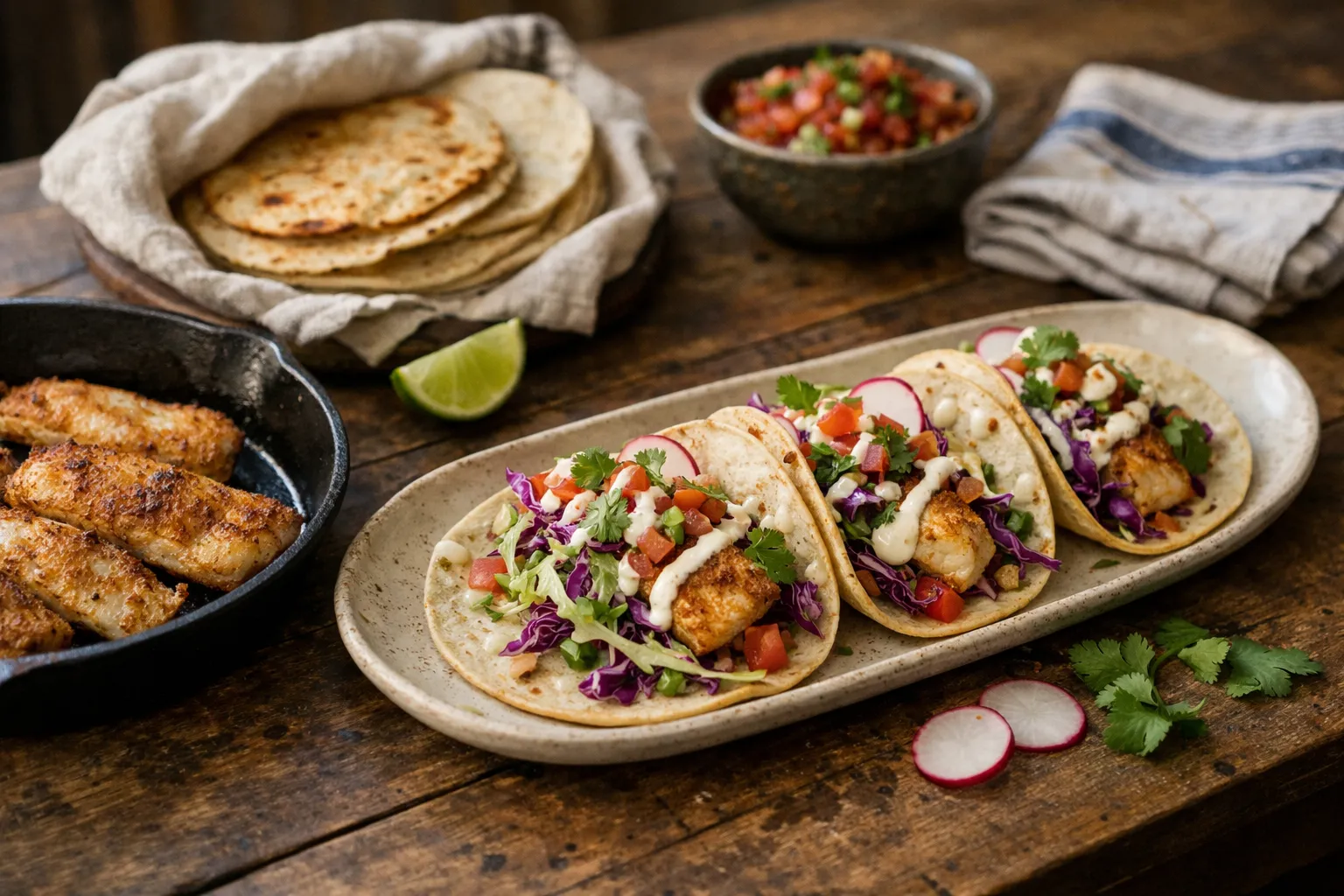
Fish tacos remain one of the best weeknight power moves: fast, forgiving and endlessly adaptable. This August 2026 update keeps the original spirit—10 buys-you-dinner builds that hit the table in 10–30 minutes—but folds in what’s new since June: broader retail availability of advanced plant-based seafood, early but growing access to cultivated seafood on menus and in pilot retail, clearer sustainability tools, and a few technique upgrades (connected thermometers, air-fryer tweaks, and smarter frozen-at-source buying) that make your tacos reliably great.
How I chose these builds (Methodology)
- Weeknight viability: each build gets you from pantry to taco in 10–30 minutes with minimal advance prep.
- Practicality: compact ingredient lists, flexible protein options (fresh, frozen-at-source, plant-based, limited cultivated), and equipment that most home cooks own in 2026: cast-iron skillet, air-fryer, mid-size grill or oven.
- 2026 context: I prioritized builds that reflect retail and menu shifts—more convincing plant-based seafood in grocery aisles and broader, though still limited, cultivated-seafood pilots—and current sustainability tools (MSC/ASC labels plus Monterey Bay Aquarium Seafood Watch and regional advisories).
- Reliability: methods emphasize measurable doneness (use an instant-read or connected probe), predictable cook times, and shortcuts that actually save time—frozen-at-source fillets, pre-shredded slaw, jarred salsas.
- Dietary flexibility: each build includes straightforward gluten-free, dairy-free and vegan/vegetarian swaps.
Quick assembly essentials (what matters in 2026)
- Core elements: protein (fish, shellfish, plant-based or cultivated substitute), tortillas or lettuce cups, a crunchy element (slaw/cabbage), bright acid (lime/vinegar), and a sauce or crema.
- Doneness rules: cook most white fish to 145°F (63°C); salmon 125–135°F for medium-rare to medium depending on preference. If you’re still guessing, buy an instant-read thermometer—no excuse. Connected probes that pair with phone timers are mainstream and save burned dinners.
- Frozen-at-source advantage: flash-frozen-at-sea fillets now appear on supermarket shelves more often; they frequently beat a tired “fresh” fillet that’s been in transit for days. Food‑science literature continued to reinforce flash-freezing as good for texture and flavor.
- Plant-based & cultivated: advanced plant-based seafood is now a regular aisle presence in many regions; cultivated seafood remains in limited commercial rollouts and restaurant pilots. Treat both like fresh fish for seasoning and searing—season boldly.
- Sustainability tools: continue to look for MSC/ASC labels and consult Seafood Watch; when labels aren’t available, frozen-at-source whitefish and responsibly farmed trout are lower-risk options.
Pan-Seared & Sautéed
1. Classic Baja-Style Pan-Seared White Fish
- What it is: chili-lime pan-seared cod, pollock or tilapia with pico de gallo and crema.
- Key features: 15–20 minutes; high-heat sear in a hot skillet for a 2–3 minute-per-side crust.
- Why it made the list: the quickest, most reliable weeknight build—works with fresh or frozen-at-source fillets and is budget-friendly.
- Details: use corn tortillas for GF; avocado crema or coconut yogurt for dairy-free; recommended thermometer target 145°F. If flavor is the goal, salt the fish 15 minutes before cooking to tighten texture and boost crust.
2. Miso-Glazed Sautéed Salmon with Cucumber-Sesame Slaw
- What it is: quick miso-honey glaze on salmon, finished in a skillet with a cool sesame-cucumber slaw.
- Key features: 20–25 minutes; the glaze sets fast and preserves juiciness.
- Why it made the list: salmon sells itself at the table; miso adds umami without heaviness. For plant-based swap, smoked aubergine or seasoned cultivated salmon analogues stand in well.
- Details: aim 125–130°F for medium; swap maple for honey to keep vegan preparations; use gluten-free tamari if needed.
Grilled Builds
3. Cilantro-Lime Grilled Mahi-Mahi (or Pollock for budget)
- What it is: quick citrus-cilantro marinade and a hot-char finish; serve with charred corn salsa.
- Key features: 15–30 minute short marinade; 6–8 minutes on a hot grill.
- Why it made the list: grilling gives instant flavor and is ideal for feeding a family quickly with minimal hands-on time.
- Details: oil the grill grates and the fish to prevent sticking; consult Seafood Watch for mahi-mahi sourcing or use pollock as a lower-impact swap.
4. Blackened Snapper with Tropical Salsa
- What it is: spice-rubbed snapper blackened in a hot pan or grill, topped with mango-pineapple or pineapple-jicama salsa.
- Key features: 20 minutes; bold spices balanced by bright salsa—great on a weeknight when you want drama without effort.
- Why it made the list: blackening is forgiving; you get restaurant-level flavor with pantry spices.
- Details: spice mixes are typically GF; warmed flour or corn tortillas both work depending on preference.
Baked & Oven-Finished
5. Oven-Baked Panko-Crusted Cod (crisp without a fry)
- What it is: panko or GF crumb crust baked at 425°F, finished under the broiler for crunch.
- Key features: 25–30 minutes total; sheet-pan friendly for cleanup.
- Why it made the list: gives satisfying crunch on a weeknight without a vat of oil—workhorse for family dinners.
- Details: brush with oil or beaten egg for adhesion; chipotle mayo or avocado crema pairs well. For vegan riff, use breaded king oyster pieces or plant-based fillets with the same timing.
6. Sheet-Pan Citrus-Herb Trout (family-style)
- What it is: roasted trout fillets with orange and lime slices for steam and aroma, served with fennel or cabbage slaw.
- Key features: 20–25 minutes total; one-pan finish keeps cleanup minimal.
- Why it made the list: roasting concentrates flavor and keeps fish moist—great when you're feeding a few people with predictable results.
- Details: swap yogurt-dill for tahini-lemon to avoid dairy; look for responsible trout farming certifications when available.
Air-Fryer & Fried
7. Crispy Air-Fryer Fish with Lime Slaw
- What it is: seasoned panko or GF crumb-coated chunks air-fried at 400°F for 8–10 minutes.
- Key features: 18–25 minutes total; air-fryer gives near-fried texture, less oil and fast cleanup.
- Why it made the list: air-fryers are standard kitchen gear by 2026—this is the fastest route to crunchy tacos on busy nights.
- Details: spray lightly with oil for color; fish chunks cook faster than fillets—use a thermometer or flake-check for doneness.
8. Beer-Battered Fried Fish (weekend treat)
- What it is: beer batter on cod or haddock, deep- or shallow-fried for pub-style crunch.
- Key features: 25–30 minutes; indulgent texture—reserve for weekends or entertaining.
- Why it made the list: sometimes you want unapologetic crunch. Use rice or sorghum flour for a gluten-free tempura-like batter.
- Details: use thicker tortillas that can stand up to wet batter; serve with pickled cabbage or tart sauce to cut richness.
Creative & Dietary-Specific Builds
9. Low-Carb Baja Lettuce Wraps with Seared Shrimp
- What it is: chili-lime shrimp tucked into romaine or butter lettuce with avocado-cilantro sauce.
- Key features: 10–15 minutes; naturally gluten-free and light.
- Why it made the list: fastest protein option; swap in grilled halloumi, seasoned tempeh or plant-based shrimp analogues for variation.
- Details: keep slaw lightly pickled to avoid sogginess; shrimp cook in 1–2 minutes per side—don’t overdo it.
10. Vegan "Fish" Tacos with Crispy King Oyster or Plant-Based Fillets
- What it is: king oyster mushrooms, seasoned hearts of palm, or modern plant-based fillets, prepared crispy and sauced like traditional fish tacos.
- Key features: 20–25 minutes; improved plant-based seafood in 2026 gives texture and flavor closer to fish than prior generations.
- Why it made the list: vegan and dairy-free by design; a real weeknight option for households with mixed diets.
- Details: add seaweed flakes or kelp powder for briny notes; ensure GF batter if needed. For the most convincing bite, finish with a quick char in a hot skillet or torch for color.
Quick comparison — which build to pick?
| Build | Time | Best equipment | Diet-friendly | Sustainability note |
|---|---|---|---|---|
| 1. Baja Pan-Seared White Fish | 15–20 min | Skillet | GF option | Use frozen-at-source pollock for lower impact |
| 2. Miso Salmon | 20–25 min | Skillet | GF if tamari used | Opt for responsibly farmed salmon |
| 3. Grilled Mahi-Mahi | 20–30 min | Grill | GF | Check Seafood Watch for mahi sourcing |
| 4. Blackened Snapper | 20 min | Grill or skillet | GF | Sub snapper with local whitefish if needed |
| 5. Oven Panko-Cod | 25–30 min | Oven | GF crumbs available | Works well with frozen cod |
| 6. Sheet-Pan Trout | 20–25 min | Oven | GF | Choose certified trout farms |
| 7. Air-Fryer Crispy Fish | 18–25 min | Air-fryer | GF crumbs option | Less oil, fast—good weeknight compromise |
| 8. Beer-Battered Fish | 25–30 min | Deep/shallow fry | GF alt flours possible | Best as occasional treat |
| 9. Shrimp Lettuce Wraps | 10–15 min | Skillet | GF, low-carb | Quick, low-impact if shrimp sourced responsibly |
| 10. Vegan "Fish" | 20–25 min | Skillet or air-fryer | Vegan, GF if set | Plant-based options lower carbon footprint |
Updated tips & best practices for August 2026
- Trust—and verify—frozen-at-source: flash-frozen fillets are widely available and often superior to a tired “fresh” fillet. Look for language like “frozen-at-source” or “flash-frozen” on packaging.
- Use a thermometer—no exceptions: 145°F for most white fish; 125–135°F for salmon depending on your doneness preference. If you want consistent results, a probe that connects to your phone and alerts you is worth the small investment.
- Season aggressively: modern plant-based and cultivated seafood benefit from the same bold seasoning as wild fish—don’t be timid with acid, smoke, or umami.
- Protect tortillas: warm in a dry skillet or wrap in foil and place in a warm oven. For juicy fillings, double-stack or use sturdier corn tortillas; consider serving sauce on the side to prevent saturation.
- Sourcing and labels: MSC and ASC remain useful signals; Monterey Bay Aquarium’s Seafood Watch provides updated regional guidance. When in doubt, choose smaller white fish, responsibly farmed trout, or a plant-based swap.
- Cultivated seafood reality check: it’s arriving at a consumer scale in some regions but is not yet universal—when you see it, treat it like fresh fish for cook times and double-check labels for sourcing and safety info.
Conclusion — Which build is best right now?
If you want one answer: get comfortable with the skillet pan-seared white fish (#1). It’s fast, cheap, and adaptable to whatever’s in the freezer or on sale. If you want texture without the mess, the air-fryer (#7) is the most satisfying compromise; for family dinners that require minimal babysitting, the sheet-pan trout (#6) is the no-drama winner. For folks trying to cut emissions or accommodate mixed diets, the updated plant-based builds (#10) now give you a truly viable swap—season them like fish and you won’t miss a beat.
Here’s my hot take: if you’re still relying on guesswork for doneness or skimping on seasoning because “fish is delicate,” you’re leaving dinner to chance. Use a thermometer, salt with intent, and pick a build that fits the night—you’ll eat better and waste less for it. And yes, I’ll still defend a beer-battered taco as the weekend indulgence it deserves. We’re fans; some nights call for glory plays.
FAQ
Can I use frozen fish for weeknight tacos?
Yes. Properly flash-frozen-at-source fillets are often fresher than supermarket “fresh” fish because they’re frozen immediately after catch. Thaw overnight in the fridge or under cold running water for a quick turnaround. Pat dry before seasoning and searing to get a good crust.
How do I keep tortillas from getting soggy?
Warm tortillas in a dry skillet, directly on the grill, or wrapped in foil in a low oven. For wetter fillings, double-stack or use thicker corn tortillas; serve sauces on the side or as a light drizzle to prevent saturation.
Are plant-based and cultivated seafood good substitutes in tacos?
Yes—advanced plant-based fillets and early cultivated products in 2026 often deliver convincing texture and stand up to standard taco preparations. Treat them like real fish for seasoning and searing; add seaweed flakes for briny notes when desired.
Which certifications should I look for when buying fish?
Look for Marine Stewardship Council (MSC) or Aquaculture Stewardship Council (ASC) labels for certified supply-chain practices. Monterey Bay Aquarium’s Seafood Watch provides regional recommendations. If labels aren’t available, frozen-at-source and smaller white fish choices are lower-risk alternatives.
How much fish per person for tacos?
Plan 4–6 oz cooked fish per person for a main (about 2–3 tacos) and 2–3 oz per person for appetizer-style servings. Adjust up if you want leftovers or down for small plates.