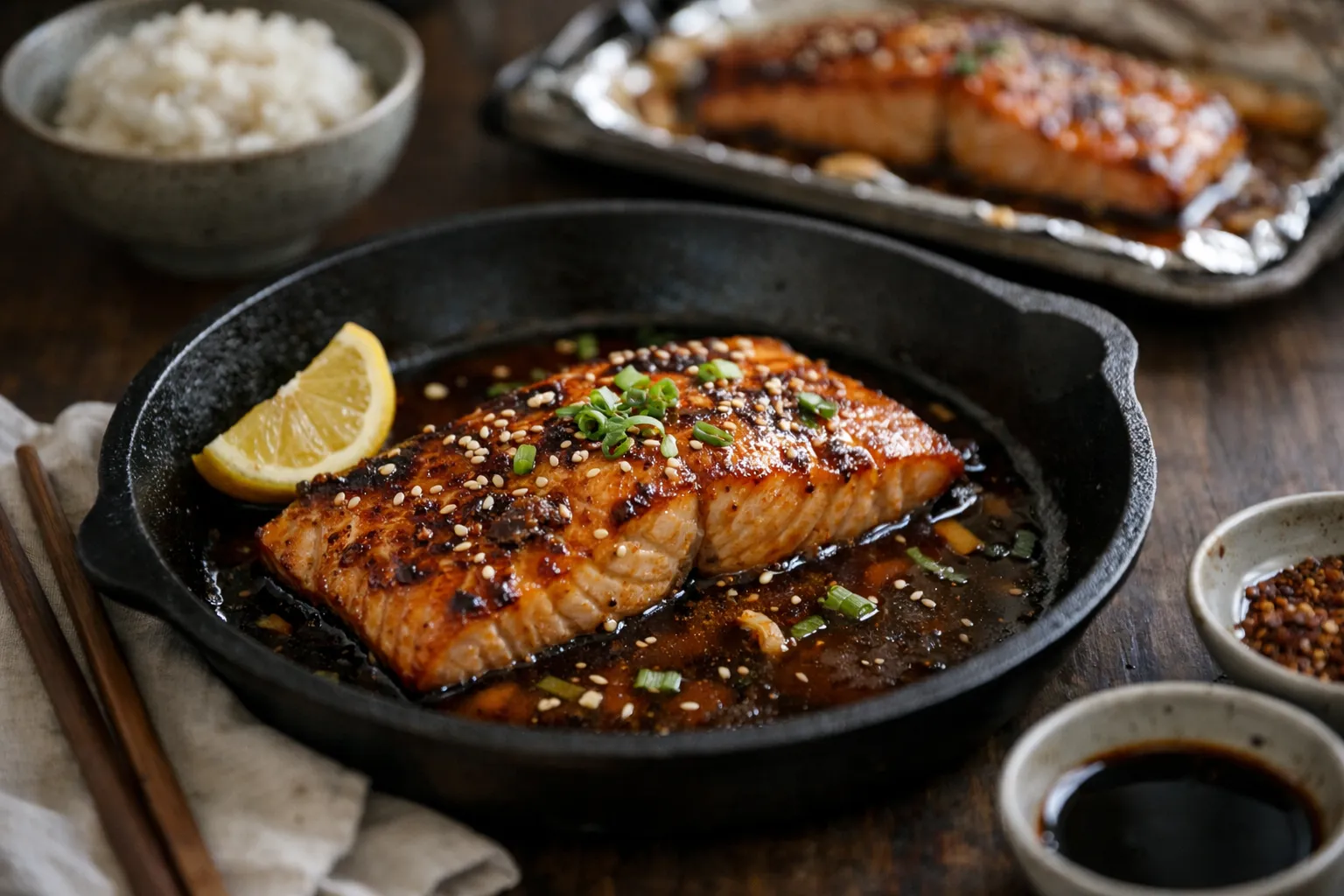
What you'll learn
You will cook glossy miso-butter salmon in 15 minutes using two dependable methods (pan-sear for crispy skin or broil for a hands-off finish), choose gluten- or dairy-free swaps, and apply 2026 best-practice updates for sourcing, food safety, and texture.
What you'll need
- Time: 5 minutes prep, 6–10 minutes cook (total 11–15 minutes)
- Tools: heavy skillet (cast-iron or stainless-steel), fish spatula, instant-read thermometer, rimmed sheet pan (for broil), paper towels
- Pantry: neutral high-smoke-point oil, white or sweet miso (or low-sodium), unsalted butter or vegan butter, tamari or soy sauce (tamari for GF), honey or mirin
- Optional: small blowtorch or kitchen thermometer for precise finishing; allow 20 extra minutes if you pre-salt and air-dry skin in the fridge (see Step 1)
Why this still works in 2026
The miso-butter glaze gives immediate umami and sheen without long marinating. In 2026 more home cooks prioritize quick, flavor-forward dinners plus transparent sourcing—look for MSC/ASC labeling, or ask your fishmonger about feed, origin and harvest date. The techniques below balance speed, texture and safety.
Ingredients (for 2 servings)
- 2 salmon fillets, skin-on, 6–7 oz each (about 1–1¼" thick)
- 1½ tbsp white or sweet miso (choose certified gluten-free if needed)
- 1½ tbsp unsalted butter, softened (or vegan butter/extra-virgin olive oil)
- 1 tsp honey or mirin (maple syrup for vegan)
- 1 tsp low-sodium soy sauce or tamari (tamari for gluten-free)
- 1 small garlic clove, grated (optional) and 1 tsp lemon juice
- 1 tbsp neutral oil with high smoke point (grapeseed, avocado, or refined sunflower)
- Flaky sea salt, freshly ground black pepper; finishing: toasted sesame seeds, sliced scallions, lemon wedges
Prep (5 minutes; optional extra 30–60 minutes)
- Optional advance step for extra-crisp skin: Pat fish very dry, season skin lightly, place uncovered on a rack in the fridge for 30–60 minutes. This air-dry step is widely used by chefs in 2026 to speed skin dehydration and improve crispness.
- Pat salmon dry with paper towels; season both sides lightly with flaky salt and pepper.
- Whisk glaze: combine miso, butter, honey/mirin, soy/tamari, garlic, and lemon. It should be spreadable; add a teaspoon of warm water if needed.
- Preheat: for pan-searing, heat a heavy skillet over medium-high; for broiling, position rack 6–8 inches from broiler and preheat to high.
Method A — Pan-sear and baste (best for crispy skin)
- Heat 1 tbsp neutral oil until shimmering but not smoking. Expect a 1–2 minute heat-up on a medium-high burner.
- Place fillets skin-side down and press gently for 5–8 seconds to ensure even contact. Cook skin-side down 3–5 minutes for a 1" fillet (longer if thicker). You want deep golden, crisp skin — it should release easily from the pan when ready.
- Flip and cook flesh-side 30–60 seconds to form a light crust. Use a fish spatula to avoid tearing.
- Lower heat to medium-low. Add the miso-butter to the pan; when it melts and foams, tilt the pan and spoon the glaze over the flesh repeatedly for 30–60 seconds to build shine without overcooking.
- Check doneness with an instant-read thermometer: aim for 125–130°F (52–54°C) for medium (carryover will add ~3–4°F). If thicker, finish 1–2 minutes in a 350°F oven off the direct heat.
- Transfer to plates, spoon remaining glaze, garnish, and serve immediately.
Method B — Broil (hands-off, consistent finish)
- Line a rimmed sheet with foil, oil lightly, and place fillets skin-side down.
- Brush half the glaze over the flesh (reserve the rest for finishing).
- Broil for 4–6 minutes for 1" fillets; 6–8 minutes for 1¼". Watch closely—edges should bubble and caramelize; flesh flakes when done. Avoid prolonged broiling to prevent miso sugars from burning.
- Brush with remaining miso-butter, rest 1–2 minutes, then serve.
Timing guide by thickness
- ¾": Pan—skin 2–3 min, flip 30–45 sec. Broil—3–4 min.
- 1": Pan—skin 3–4 min, flip 45–60 sec. Broil—4–6 min.
- 1¼": Pan—skin 4–5 min, flip 60–90 sec. Broil—6–8 min.
2026 updates and best-practice tips
- Sourcing matters: Look for MSC or ASC certification or direct-sales traceability (pack date, origin) at your retailer. Transparent labeling has grown in 2024–26; ask your fishmonger about farm feed and harvest month if sustainability is a priority.
- Flavor variations: Swap white miso for red miso for a richer profile (use 1 tbsp red miso + ½ tbsp white to balance salt). Use a splash of brewed coconut aminos if you avoid soy—it's become more common in 2025–26 kitchens.
- Texture control: If you like restaurant-quality medium-rare interiors, remove from heat at 125°F. For safer, firmer fish preferred by some households (pregnant or immunocompromised diners), take to 145°F, per longstanding food-safety guidance and then rest.
- Low-waste habit: Make a double batch of glaze; it keeps refrigerated up to 5 days and makes last-minute dinners easier while reducing food waste.
Serving suggestions
Pair with quick steamed rice, garlic-sauteed broccolini, a fast cucumber-sesame salad, or cauliflower rice for a low-carb option. In 2026, plant-forward sides (charred asparagus, quick kimchi) remain popular complements.
Storage and make-ahead
- Glaze: refrigerate up to 5 days in a sealed jar; re-whisk before use.
- Cooked salmon: refrigerate within 2 hours in an airtight container; consume within 2 days for best quality.
- Reheat gently: 300°F oven for 6–8 minutes or re-plate cold over salads. Avoid aggressive reheating that dries the fish.
Troubleshooting
- Skin not crisp? Ensure fish is dry and the pan is hot; avoid overcrowding. The optional fridge air-dry step (30–60 minutes) improves results significantly.
- Glaze burning under broiler? Move rack farther from heat, broil in shorter bursts, or apply glaze after the initial broil and finish with 30–60 seconds under heat.
- Overcooked center? Use an instant-read thermometer; reduce cook time by 30–60 seconds next time and rely on residual carryover heat.
Next steps
- Try the pan method tonight for crisp skin; note your preferred internal temperature on a sticky note for future cooks.
- Buy a small jar of certified miso and a bottle of tamari/tasting-size coconut aminos to experiment with flavor and dietary swaps.
- If sourcing sustainability matters, ask your retailer for ASC/MSC-labeled options or a harvest/pack date—transparency has improved in 2026 and your questions help keep it that way.
Can I use frozen salmon?
Yes. Thaw in the refrigerator overnight or under cold running water for faster use. Pat very dry before cooking—moisture prevents crisping.
Is miso safe for people avoiding gluten?
Not always. Some miso contains barley or wheat. Choose certified gluten-free miso or tamari and confirm labels; tamari is the safer gluten-free soy sauce option.
How do I get a crisp skin if I don’t have a heavy skillet?
Use the hottest pan you have, add a little more oil, and ensure the fish skin is very dry. Alternatively, broil skin-side up for the last 60–90 seconds to encourage crisping, watching closely to avoid burning.
Can I make the glaze ahead and freeze it?
Yes. Miso-butter glaze freezes well in small portions for up to 2 months. Thaw in the fridge and re-whisk before using.