
By David Park, Real Estate & Tax Correspondent — recipe updated from Maria Santos’ January 2026 guide. Updated August 2026.
What You'll Learn
- How to make a thick, spoon‑coating shakshuka in ~20 minutes using pantry staples.
- August 2026 updates: current pantry cost context, practical plant‑based egg and pasteurized egg options, and faster batch + freeze workflows to lower grocery spend.
- How to repurpose and store the tomato base so you can turn it into a fast weeknight meal or a freezer asset for multi‑week meal planning.
What You'll Need
Time: 20 minutes total (prep 5, cook ~15)
Tools:
- 10–12 inch skillet with a tight‑fitting lid (or a plate to cover)
- Wooden spoon or spatula
- Small bowls or cups for cracking eggs
- Can opener
- Reusable silicone freezer containers or 1–2 cup freezer bags (for batch portions)
Ingredients (serves 2–3 as main)
- 2 tbsp olive oil
- 1 small onion, thinly sliced (or 1 tbsp onion powder)
- 3 cloves garlic, minced (or 1 tsp garlic powder)
- 1 tsp ground cumin
- 1 tsp smoked paprika
- Pinch chili flakes or 1–2 tsp harissa (optional)
- 1 (28 oz / 800 g) can crushed tomatoes (or whole peeled tomatoes crushed)
- 1 tbsp tomato paste
- 1/2 tsp kosher salt, plus more to taste
- 4–6 large eggs (or pasteurized eggs / plant‑based egg substitute)
- 1–2 tbsp chopped parsley or cilantro
- Feta or yogurt to finish (optional)
2026 pantry notes: By mid‑2026 plant‑based liquid egg alternatives (mung‑bean, chickpea, and pea protein bases) are widely stocked in major supermarket chains and online. Pasteurized shell eggs (sold in cartons) are increasingly available—useful if you prefer soft yolks but want reduced pathogen risk. When selecting canned tomatoes, look for BPA‑free lining or Tetra Pak cartons; many brands list lining material on the label in 2026.
Step-by-Step Instructions
1) Warm the pan and soften the onion (3–4 minutes)
- Heat your skillet over medium and add 2 tbsp olive oil.
- Add sliced onion and a pinch of salt. Cook, stirring, until translucent and glossy—about 3–4 minutes.
What you should see: Onions will relax and look slightly golden but not browned. This step develops sweetness without long simmering.
Why it matters for wealth‑minded cooks: Short, high‑signal prep multiplies over weeks—learning this 20‑minute template lets you avoid higher‑cost takeout on busy nights.
2) Bloom spices and garlic (30–60 seconds)
- Add garlic, cumin, smoked paprika, and chili/harissa if using. Stir constantly 30–60 seconds until fragrant.
Tip: On induction stoves (now common in many 2026 kitchen remodels), reduce heat quickly if spices begin to brown; induction transfers heat rapidly.
3) Build a thick tomato base fast (6–8 minutes)
- Stir in crushed tomatoes and 1 tbsp tomato paste; mix to dissolve paste.
- Season with 1/2 tsp kosher salt. Bring to a lively simmer, then reduce to medium‑low.
- Simmer uncovered 6–8 minutes, stirring periodically, until sauce coats the spoon.
What it should look like: A sauce that parts when you drag a spoon through it and doesn’t immediately flood back. If still watery, simmer 2–3 minutes more.
Pro tip: If your tomatoes taste bright or acidic, a small pinch of sugar (1/4–1/2 tsp) or a splash (1 tsp) of red wine vinegar will round the flavor. Tomato paste is the fastest way to add body.
4) Make egg wells (1 minute)
- Create 4–6 wells with the back of a spoon; keep sauce at a gentle simmer.
Why it matters: Wells keep eggs separated and help the whites set neatly—important if you plan to plate for guests or portion for meal prep.
5) Add eggs and cover to set (5–7 minutes)
- Crack eggs into small cups, then slide into wells. For pasteurized or plant‑based eggs, pour the product into wells and watch consistency (timing can be shorter).
- Cover skillet; cook 5–7 minutes. Check at 5 minutes—yolks should jiggle slightly if you want them soft.
Safety note: The CDC continues to advise fully cooked eggs for pregnant people, young children, older adults, and immunocompromised individuals. For those groups, use pasteurized eggs or cook until yolks and whites are firm.
6) Finish and serve (1 minute)
- Turn off heat; sprinkle herbs and crumble feta or dollop yogurt if using.
- Serve from the pan with bread, rice, or roasted potatoes.
Serving math: Use 4 eggs for 2 hungry people, 6 eggs for 3–4. Leftover tomato base stores better without eggs—refrigerate up to 4 days or freeze.
Screenshots/Visual Cues (What You Should See)
- After blooming spices: oil has an orange tint and aroma is toasty.
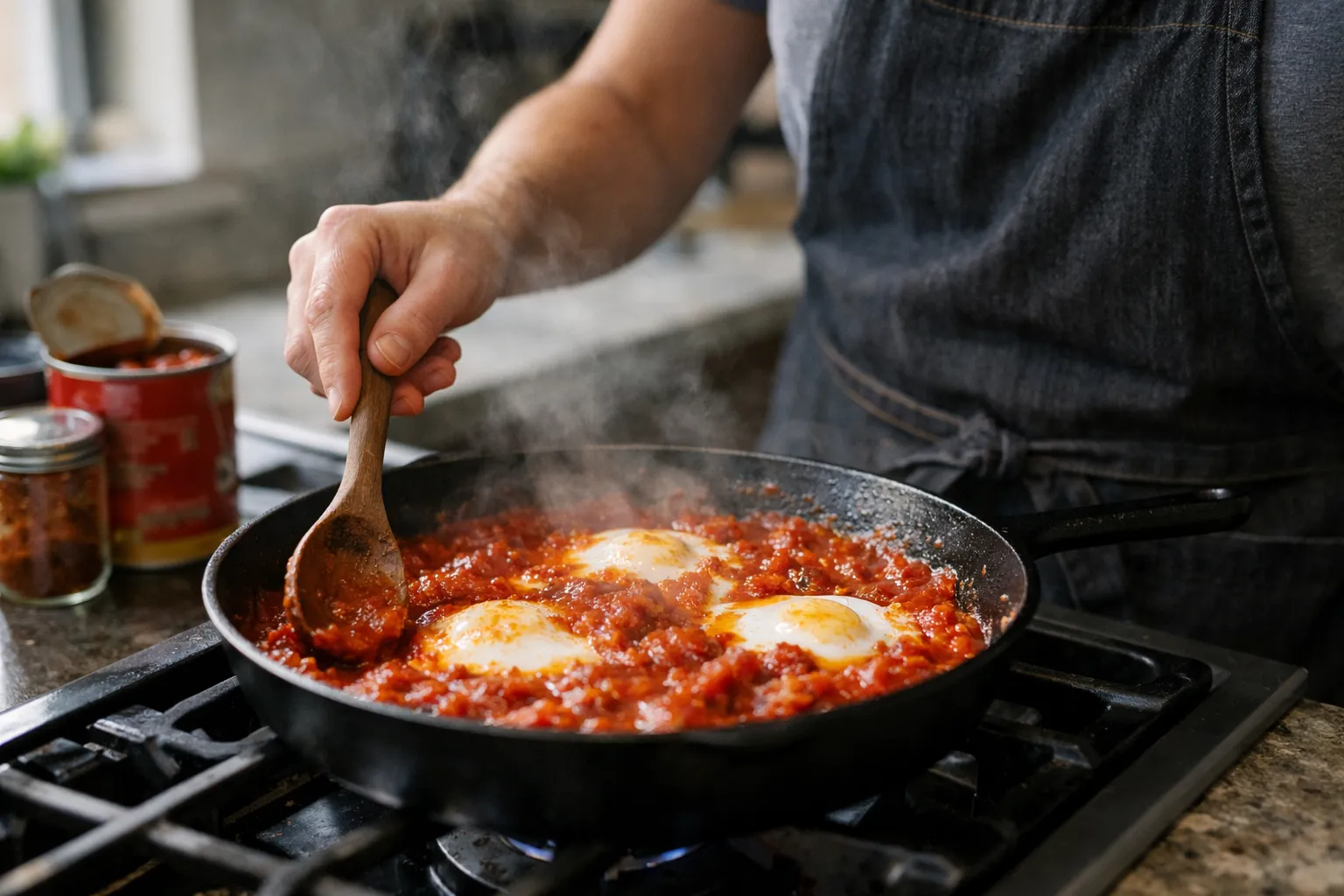
- Before eggs: sauce parts when spoon is dragged; it clings to the spoon.
- Eggs halfway: whites opaque at edges, yolks domed and shiny.
- Ready: whites set, yolks softly wobble (or firmer if preferred).
Troubleshooting
Your sauce is watery
- Fix now: Remove eggs to a plate, simmer sauce uncovered 3–5 minutes, then return eggs.
- Prevent: Use tomato paste and simmer uncovered; if using whole canned tomatoes, drain excess liquid before crushing.
Eggs overcooked (chalky yolks)
- Fix now: Serve with a spoonful of yogurt or crumbled feta to add creaminess.
- Prevent: Check at 5 minutes; residual heat continues to cook eggs after you turn off the burner.
Tastes flat
- Fix now: Pinch of flaky salt, squeeze of lemon, or 1 tsp red wine vinegar and a drizzle of olive oil.
- Prevent: Bloom spices in oil and taste the sauce before adding eggs.
Budget, Batch & Sustainability Tips (Aug 2026)
- Batch the tomato base: Double the sauce and freeze in 1–2 cup portions. Reheating and adding eggs reduces dinner time to ~8 minutes and cuts per‑meal cost versus repeating fresh sauce each night.
- Cost perspective: With grocery prices moderating in many regions in 2026, a pantry shakshuka typically runs in the low single‑dollars per serving when you use bulk canned tomatoes and eggs—still a fraction of delivery or restaurant costs when you factor in frequency.
- Sustainability: Choose boxed (Tetra Pak) tomatoes or brands that disclose can‑lining materials, and prefer producers with clear sourcing statements. When possible, buy eggs from local farms with transparent welfare practices to reduce food miles and support generational farm value.
Next Steps
- Turn this into a weekly template: add a can of drained chickpeas or a handful of spinach to stretch protein and retire one night of delivery per week.
- Batch and freeze: Make 3× the base on a weekend and portion for quick weeknights; label with date and intended use (e.g., "shakshuka base — 8/2026").
- Experiment conservatively: Swap in coriander, a whisper of cinnamon (1/8 tsp), or a roasted pepper paste—start small and taste as you go.
FAQ
Can I use plant‑based egg substitutes in shakshuka?
Yes. Liquid plant‑based egg products (mung‑bean, chickpea, or pea‑protein based) work well. Pour into wells and watch set—timing is often shorter than chicken eggs. Finish with fresh herbs and olive oil. For texture closer to whole eggs, choose products labeled for "scramble" or "cooking."
Should I use pasteurized eggs if I like soft yolks?
Yes—pasteurized shell eggs give you the lower pathogen risk of fully pasteurized product while allowing you to enjoy softer yolks. If pasteurized eggs are unavailable, cook yolks fully for high‑risk household members or use pasteurized liquid eggs.
How long can I store the tomato base?
Refrigerate the sauce (without eggs) up to 4 days. Freeze in 1–2 cup portions for up to 3 months; thaw in the fridge overnight and reheat on the stovetop before adding eggs. Label portions with the date so you use older stock first.
Can I make shakshuka in other cookware (air fryer, broiler)?
Yes. You can start the base on the stovetop then transfer a covered oven‑safe skillet under a broiler to set eggs (watch closely—broilers vary). Some air fryer skillets also work; follow manufacturer guidance for heat and timing. The stovetop‑covered method remains the fastest and most consistent for a 20‑minute result.
Recipe testing note: This method was refined using a 12‑inch stainless‑steel skillet and a 28 oz can of crushed tomatoes. Times were consistent on gas and induction; adjust slightly for your burner. The goal: repeatable, fast dinners that free up budget and time for bigger financial goals—decisions that compound over years the same way a stocked pantry compounds into household resilience.