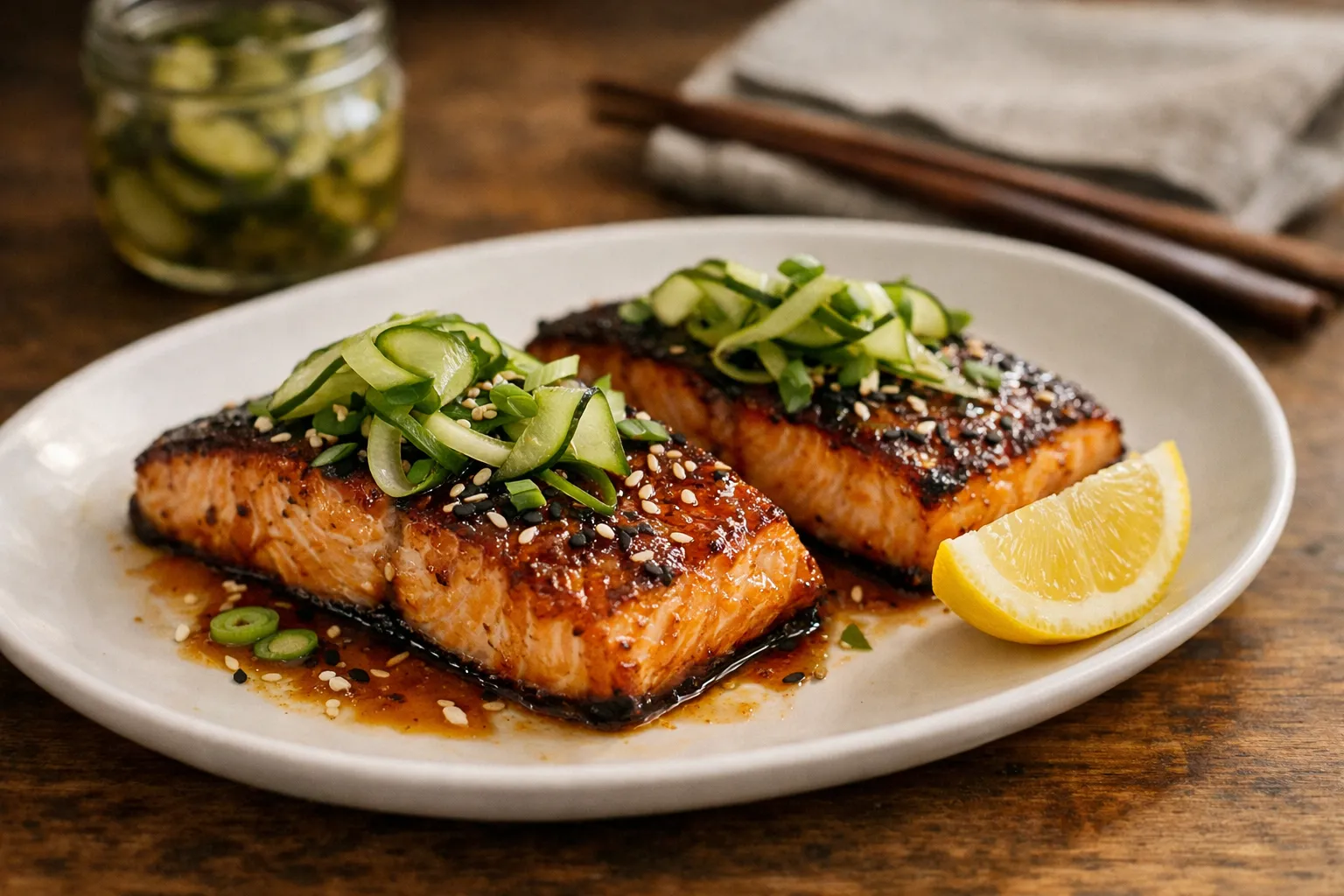
What you'll learn: You will cook a restaurant-quality miso-maple pan-roasted salmon in 25 minutes, achieve crisp skin and an even glaze, and apply 2026 sourcing and food-safety updates (including air-fryer and plant-based alternatives).
What you'll need
- Time: 25 minutes (10 min prep, 15 min cook)
- Ingredients for 2 servings (see list below)
- Equipment: heavy skillet (cast-iron or stainless), tongs or spatula, small bowls, instant-read thermometer, jar for pickles
- Optional: oven preheated to 400°F (204°C) or air fryer set to 375°F (190°C)
Ingredients (for 2 servings)
- 2 skin-on salmon fillets, 6–8 oz (170–225 g) each, about 1–1¼ in (2.5–3 cm) thick
- Salt and freshly ground black pepper
- 1 tbsp neutral oil (canola, grapeseed or avocado oil)
- Miso-maple glaze: 2 tbsp white (shiro) miso, 2 tbsp pure maple syrup, 1 tbsp soy sauce or tamari (use low-sodium if preferred), 1 tsp rice vinegar, 1 tsp grated fresh ginger, 1 small garlic clove minced, 1 tsp toasted sesame oil
- Quick pickles: 1 Persian or 1/2 English cucumber thinly sliced, 2 tbsp rice vinegar, 1 tbsp water, 1 tbsp granulated sugar, 1/4 tsp fine salt, pinch red-pepper flakes (optional)
- Garnishes: sesame seeds, thinly sliced scallion, lemon wedges
Why some 2026 details matter
Since this recipe first ran in 2026, consumer attention to seafood sourcing and lower-sodium options has continued to grow. Look for ASC or MSC certification or Alaska wild-caught labels for transparent supply chains and lower antibiotic use. Retail availability of higher-quality plant-based salmon alternatives has improved — use the same glaze with shorter cook times. The USDA still recommends 145°F (63°C) as a safe cooked temperature for fish; common culinary targets for texture are 125–135°F depending on doneness preference.
Step-by-step: 25-minute method
-
Make quick pickles (2–3 minutes): In a small jar or bowl whisk rice vinegar, water, sugar and salt until dissolved. Add cucumber slices, press down to submerge. They’ll be pleasantly tangy after 10 minutes; fine to use immediately. Expected result: translucent, slightly softened cucumber with bright acidity.
-
Whisk the glaze (1 minute): Combine miso, maple syrup, soy/tamari, rice vinegar, ginger, garlic and sesame oil until smooth. Reserve about 1 tsp glaze for finishing. Expect a glossy, pourable paste—if too thick, loosen with 1/2 tsp water.
-
Prep the salmon (2 minutes): Pat fillets thoroughly dry with paper towels (critical for crisp skin). Score skin lightly if very thick. Season both sides lightly with salt and pepper. Spread ~1/2 tbsp glaze across the flesh of each fillet—do not put glaze on skin (it will burn). Expected result: flesh coated, skin bone-dry and ready for sear.
-
Preheat skillet and sear (3–4 minutes): Heat skillet over medium-high and add oil. When shimmering, add salmon skin-side down. Press gently with a spatula for 10–20 seconds to keep skin flat. Cook undisturbed 3–4 minutes until most of the skin is crispy and the cooked edge has moved up the fillet. You should see tight, browned skin and a firm edge. If the pan smokes heavily, reduce heat slightly.
-
Finish cooking and glaze (3–6 minutes): Flip fillets and spoon half the remaining glaze over the flesh. Options:
- Oven finish: Transfer skillet to a 400°F (204°C) oven for 4–6 minutes for fillets ≥1 in thick.
- Stovetop finish: Keep on medium heat 3–5 minutes, covered loosely with foil to encourage even cooking.
- Air-fryer finish (2026 common practice): After sear, transfer fillets to an air-fryer preheated to 375°F (190°C) and finish 3–5 minutes. This gives even heat with less carryover than an oven.
Use an instant-read thermometer: 125–130°F (52–54°C) for silky medium-rare, 135°F (57°C) for medium; USDA recommends 145°F (63°C) for safety. Remove to a plate and rest 2–3 minutes—residual heat will raise temperature ~3–5°F.
-
Finish and plate (1–2 minutes): Spoon the reserved 1 tsp glaze over rested fillets, drain and top with quick-pickled cucumber, sesame seeds, scallion and a lemon wedge. Serve immediately. Expected result: glossy, savory-sweet top with crisp skin and bright pickles.
Screenshots / visual cues (what you should see)
- Dry skin before sear: matte and free of surface moisture.
- After searing skin-side down: deep golden-brown, visibly crisp with rendered fat pooling at the edge.
- Cooked edge: a clear line where the flesh changes from translucent to opaque, advancing up the fillet as it cooks.
- Finished fillet: glossy glaze on flesh (not burnt), intact skin, and a light sheen from resting juices.
Troubleshooting (common issues and fixes)
- Skin didn’t crisp: The fish wasn’t dry or pan wasn’t hot. Pat dry, wait for oil to shimmer, and don’t move fish while searing.
- Glaze burning on skin: Don’t apply glaze to the skin; if it flares during sear, reduce heat and blot excess glaze.
- Salmon overcooked: Use an instant-read thermometer and remove a few degrees before target to allow carryover. For thin fillets (3/4 in), cut the sear/finish times: 2–3 minutes skin-side down, 1–2 minutes flesh-side.
- Too-salty glaze: Use white miso (milder) and low-sodium tamari. Add an extra splash of rice vinegar or lemon to balance perceived salt.
- Air-fryer finish causing dry top: Reduce finish time and apply glaze after resting if you want maximum sheen without extra caramelization.
Variations and 2026-forward notes
- Plant-based option: Use 1-in-thick commercial plant-based salmon or king oyster “steaks.” Press and pat dry, sear as directed but shorten total time by ~30–50%—plant proteins set faster.
- Lower-sodium Diets: Replace soy with 1 tbsp low-sodium tamari + 1 tsp water; increase ginger, vinegar and lemon for flavor lift.
- Make-ahead: Glaze stores 3 days refrigerated; pickles keep 3–4 days. Cooked salmon best day-of; refrigerate up to 48 hours and reheat gently at 300°F (150°C) for 6–8 minutes.
- Sourcing: In 2026, look for ASC/MSC labels, Alaska wild-caught seals, or buy from a trusted local fishmonger. Farmed salmon tends to be fattier—expect slightly faster cooking and more rendered oil during the sear.
Next steps
Try doubling the glaze as a sauce for grilled vegetables or roasted root veg. Test the air-fryer finishing method if you prefer hands-off cooking. Experiment with substituting brown butter for neutral oil for a nutty finish (apply after the skin is crisp to avoid burning).
How long can I store leftovers?
Cooked salmon keeps 1–2 days refrigerated in an airtight container. Reheat gently at 300°F (150°C) for 6–8 minutes to preserve moisture.
Can I use dark miso or red miso?
Yes, but dark/red miso is saltier and more assertive; reduce soy/tamari and consider adding an extra teaspoon of maple to maintain balance.
Is the USDA 145°F recommendation still current?
Yes—USDA recommends cooking fish to 145°F (63°C) for safety. Many chefs target 125–135°F for texture; use a thermometer to meet your safety and texture preferences.
Can I broil to finish instead of oven or air-fryer?
Yes. After searing skin-side down, broil 4–6 inches from heat for 1–2 minutes to finish and caramelize the glaze—watch closely to prevent burning.
With small adjustments for 2026 sourcing preferences and equipment (air fryers and improved plant-based options), this miso-maple pan-roasted salmon remains a fast, reliable weeknight recipe that delivers crisp skin, glossy glaze and bright pickles. Use the thermometer and the troubleshooting tips to make it your signature.