What you'll learn
You will make a 30-minute stovetop shakshuka that balances bright, quick-pickled peppers and silky whipped feta; finish eggs safely, store components responsibly, and apply seasonal or plant-based swaps that reflect culinary trends in 2026.
What you'll need
- Time: 30 minutes active (prep + cook)
- Equipment: 10–12" heavy skillet with lid, small bowl, blender or immersion blender, cutting board, chef’s knife, measuring spoons, small jar or container for pickling
- Ingredients (serves 3–4): see detailed list below
Ingredients (serves 3–4)
- 2 tbsp olive oil
- 1 medium yellow onion, finely chopped
- 3 garlic cloves, minced
- 1 red bell pepper, thinly sliced
- 1 orange or yellow bell pepper (or 1 cup roasted sweet peppers), thinly sliced
- 1 tsp sweet smoked paprika
- 1/2–1 tsp ground cumin
- 1/4 tsp red pepper flakes (optional)
- 1 (28-oz) can crushed tomatoes or 2 1/2 cups fresh diced tomatoes (late summer)
- Salt and black pepper
- 4 large eggs (see pasteurized-egg note below) or 14 oz firm tofu
- For quick-pickled peppers: 1/3 cup apple cider vinegar, 1/3 cup water, 1 tbsp sugar, 1 tsp salt; optional 1/4 tsp turmeric for color
- For whipped feta: 4 oz block feta (or plant-based cultured feta), 3 tbsp plain Greek yogurt or strained labneh (or 3 tbsp cultured cashew cream), 1–2 tbsp olive oil
- Fresh parsley or cilantro for garnish; optional za'atar or sumac
- Optional: crusty bread, warm pita, or grilled flatbread
Why this update (2026 context)
Since the original June 2026 article, two product and flavor trends have made this version more useful: wider availability of high-quality plant-based cultured cheeses and greater consumer awareness around egg safety when serving runny yolks. Home cooks are also showing increased interest in pickled and fermented textures—quick-pickling peppers remains a fast way to add brightness and gut-friendly microbes to a meal. This update adds pasteurized-egg guidance, seasonal late-summer/fall variations, longer but safe storage windows, and modern plant-based swaps that reflect what’s commonly available in supermarkets in 2026.
Step-by-step cooking method
- Quick-pickle the peppers (concurrent, 5 minutes active; 10–20 minutes total).
In a small jar or bowl, whisk apple cider vinegar, water, sugar, salt, and optional turmeric until dissolved. Add half the sliced peppers, press them under the liquid, and let sit while you make the sauce. Expected result: peppers gain bright acidity and color in 10–20 minutes.
- Make the whipped feta (3–4 minutes).
Combine feta, Greek yogurt (or cultured cashew cream for vegan), and 1 tbsp olive oil in a blender or with an immersion blender. Pulse until very smooth; add 1–2 tsp water or olive oil if needed. Taste and add a squeeze of lemon if desired. Expected result: a silky spread that will marble into the sauce without curdling.
- Sauté aromatics and peppers (5 minutes).
Heat 2 tbsp olive oil in the skillet over medium. Add onion with a pinch of salt and cook 3–4 minutes until translucent. Add remaining sliced bell pepper and cook 2–3 minutes until slightly softened. Stir in garlic, paprika, cumin, and red pepper flakes; cook 30 seconds until fragrant. Expected result: softened vegetables with a fragrant spice base.
- Add tomatoes and simmer (6–8 minutes).
Pour in crushed tomatoes (or fresh diced tomatoes), season with 3/4 tsp salt and 1/4 tsp black pepper, and bring to a gentle simmer. Reduce heat and simmer uncovered 6–8 minutes to thicken slightly. Taste—if too acidic, add a small pinch of sugar or a teaspoon of grated carrot for natural sweetness. Expected result: a bright, thickened tomato base that clings to the back of a spoon.
- Create wells and cook eggs (6–10 minutes depending on doneness).
Make 4 shallow wells. For eggs: crack one into each well. Cover and cook 6–8 minutes for set whites and runny yolks, 9–10 minutes for firmer yolks. For tofu: nestle 14 oz firm tofu cubes into wells and cook 6–8 minutes to warm through. Food-safety note: if you want runny yolks and are serving pregnant people, older adults, infants, or immunocompromised guests, use pasteurized eggs or cook until yolks are firm.
Expected result: opaque whites and yolks at your chosen doneness; sauce bubbling gently but not violently.
- Finish and assemble (1–2 minutes).
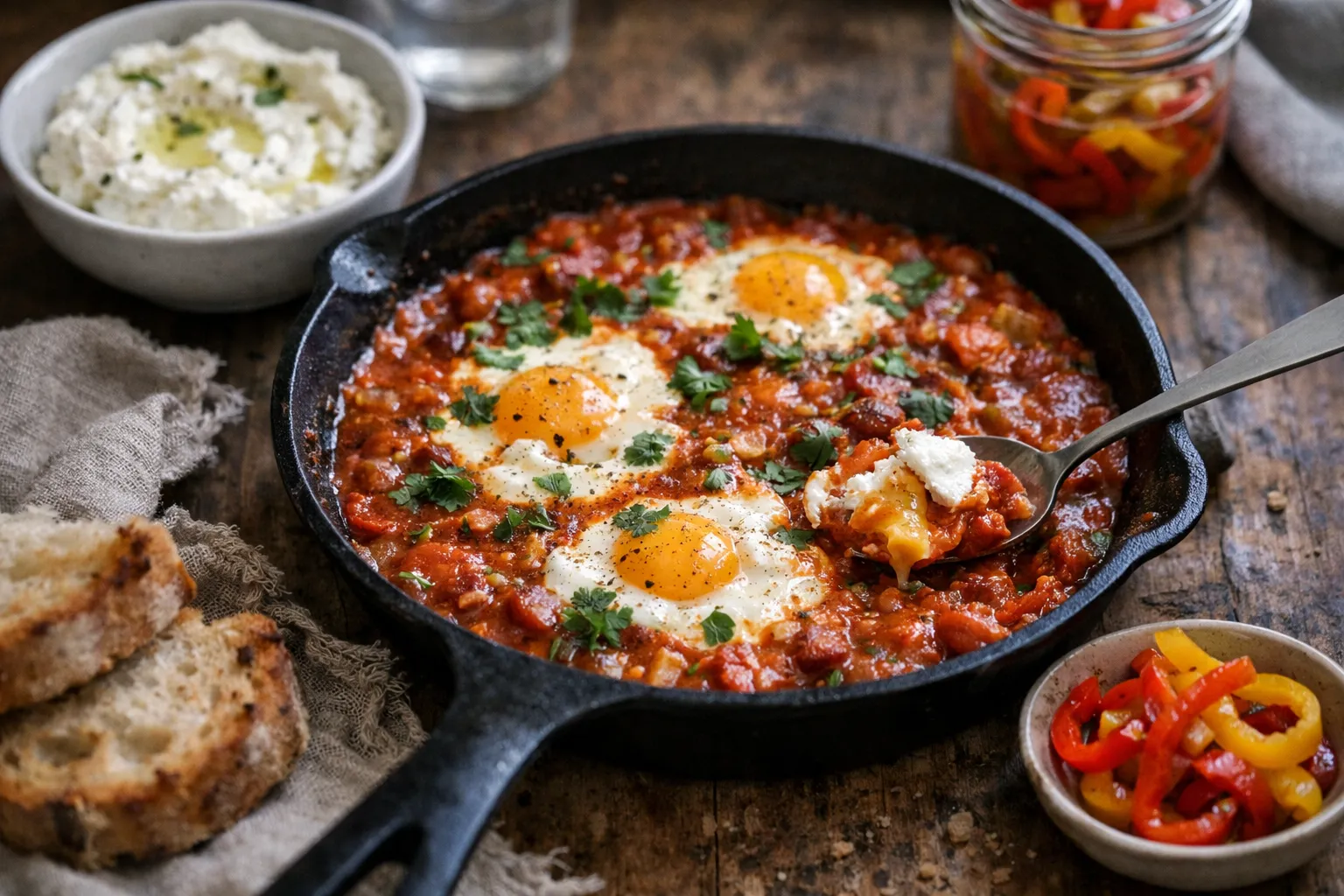
Remove skillet from heat. Dollop whipped feta in 2–3 places and use a spoon to marble it slightly into the sauce. Drain quick-pickled peppers and scatter over the top; garnish with chopped parsley or cilantro and a dusting of za’atar or sumac if desired. Serve with bread for dipping.
Expected result: a visually appealing skillet with creamy white marbling, bright peppers, and glossy tomatoes.
Screenshots / visual cues (what you should see)
- After sauté: translucent onion, pepper softened and glossy, spices coating vegetables.
- After simmer: sauce reduced slightly—no large pools of watery liquid; it should coat a spoon.
- When eggs are done: whites fully opaque and holding shape in wells; yolks still glossy if runny.
- Final plating: visible whipped-feta marbling, scattered pickled-pepper ribbons, and bright green herb garnish.
Updated tips, timing, and troubleshooting (2026)
- Egg safety: Use pasteurized eggs if you want runny yolks for high-risk diners. The USDA advises extra caution for vulnerable groups—use fully cooked yolks or pasteurized products.
- Whipped-feta texture: For ultra-silky whipped feta, bring 1–2 tbsp water to a simmer and add dropwise while blending. If using plant-based cultured feta (now widely available in 2026), follow the same technique.
- Pickle shelf life: Keep quick-pickled peppers refrigerated and consume within 10–14 days for best flavor and safety. Quick pickles will continue to develop acidity and soften over time.
- Make-ahead: Sauce can be made up to 24 hours ahead; rewarm gently. Whipped feta holds 3–5 days refrigerated; plant-based versions often keep 4–7 days depending on the product—check packaging.
- Too watery thick sauce: Simmer uncovered an extra 3–5 minutes; stir occasionally. If too thick, add 1–2 tbsp water.
- Vegan protein: In 2026, many cooks use smoked tofu or a cultured cashew ricotta spooned into wells; both warm through in the same time as eggs.
Variations & seasonal ideas (September 2026)
- Late-summer to early-fall: Swap one bell pepper for 1 cup roasted sweet peppers or charred poblano for deeper flavor. Add a handful of baby spinach in the last 2 minutes for color.
- Spiced-up: Stir in 2 tbsp muhammara or 1 tbsp preserved lemon paste for an umami lift.
- Protein-forward: Brown 4 oz diced chorizo, merguez, or plant-based sausage with the onions for a heartier skillet.
Next steps
- Experiment with different cheeses in the whipped base—labneh, smoked ricotta, or cultured plant-based feta—for subtle flavor shifts.
- Use your leftover quick-pickled peppers on sandwiches and grain bowls over the next week.
- Scale the recipe up for a crowd: use a 14" skillet and increase tomatoes and eggs proportionally; adjust cooking time slightly to ensure even egg cooking.
FAQ
Can I make this entirely vegan without losing texture?
Yes. Use a cultured cashew cream or a high-quality plant-based "feta" for the whipped component and swap eggs for firm tofu cubes or a chickpea-flour batter. Modern cultured plant-based cheeses (widely sold in 2026) mimic feta’s tang and whip smoothly when blended with a little plant yogurt.
How long do the quick-pickled peppers last?
Store them refrigerated in a sealed jar and use within 10–14 days for best flavor and texture. Over time they'll soften and become more tart; they’re still useful after that but change character.
Can I use fresh tomatoes instead of canned?
Yes—late-summer fresh tomatoes make a brighter sauce. Use 2 1/2–3 cups peeled, seeded, and diced tomatoes; you may need to simmer slightly longer to reach the right thickness.
What's the safest way to serve runny yolks to mixed company?
Serve runny yolks only to guests who are comfortable with them. For vulnerable diners (pregnant people, young children, elderly, immunocompromised), use pasteurized eggs or cook yolks until firm. Pasteurized shell eggs are readily available and allow for runny yolks with lower risk.
How far ahead can I prep components?
Whipped feta: 3–5 days refrigerated. Quick-pickled peppers: 10–14 days refrigerated. Sauce: up to 24 hours refrigerated. Assemble and finish eggs at service time for best texture and presentation.
With small timing adjustments and updated ingredient options that reflect what’s common in 2026 grocery aisles, this shakshuka remains a fast, flexible skillet meal—bright from pickles, silky from whipped feta, and practical for weeknights or weekend brunch.