What you'll learn
You will learn how to cook a fast, reliable 30-minute sheet-pan harissa‑lemon chicken thigh dinner that delivers crisp skin, tender new potatoes and bright spring vegetables. The update adds 2026‑current tips: using convection or an air fryer, label checks for storebought harissa, food‑safety and storage guidance that aligns with USDA best practices, and plant-forward swaps that keep flavor without losing speed.
What you'll need
- Time: 10 minutes active prep; 20 minutes roasting; 30 minutes total.
- Ingredients (serves 4 — see quantities below).
- Equipment: large rimmed half-sheet (13 x 18 in), optional wire rack, instant‑read thermometer, mixing bowls, tongs, silicone spatula. For faster, drier results you can use a convection oven setting or an air fryer (see step 4 notes).
- Skill level: easy — you will do simple trimming, rubbing with a paste, and one sheet‑pan roast.
Ingredients (serving size & notes)
Serving size: 4 people (2 thighs each). Prep time: 10 minutes. Active cooking time: 20 minutes. Total time: 30 minutes.
- 8 bone‑in, skin‑on chicken thighs (about 2.5–3 lb / 1.2–1.4 kg)
- 1/4 cup harissa paste (storebought or homemade). Check label for salt and oil content; if very salty, reduce added salt.
- 3 tbsp olive oil, divided
- Zest and juice of 1 large lemon
- 1½ lb (700 g) new potatoes, halved or quartered so pieces are ~1–1½ in
- 1 bunch thin asparagus, woody ends trimmed (about 12–14 spears), or 8 oz sugar snap peas
- 6–8 radishes, halved (optional)
- 4 cloves garlic, smashed
- Salt and black pepper
- 2 tbsp chopped flat‑leaf parsley or cilantro for serving
- Optional: 3 tbsp Greek yogurt, labneh or a vegan yogurt for serving (omit for dairy‑free)
Why this recipe still works in 2026
- One‑pan cooking saves time and energy—by 2026 more home cooks are using convection settings and air fryers to shorten cook times while preserving texture.
- Bone‑in, skin‑on thighs stay reliably juicy; the skin crisps quickly at high heat.
- Harissa continues to be a go‑to bold paste for weeknight dinners; checking the label helps you control salt and heat.
- Spring produce—new potatoes, asparagus, radishes—roast quickly and add seasonal brightness.
Step‑by‑step method
1. Preheat and prep (5 minutes)
- Heat oven to 450°F (230°C). If you have a convection roast option, use it — it shortens bake time slightly and helps crisp skin. Position the oven rack in the center.
- Pat chicken thighs dry with paper towels—dry skin crisps better.
- In a small bowl, whisk together 1/4 cup harissa paste, 2 tbsp olive oil, lemon zest, lemon juice and 1/2 tsp salt (skip or reduce the salt if your harissa is high‑sodium). Reserve.
- Toss potatoes with 1 tbsp olive oil, ½ tsp salt and a few grinds of pepper. Arrange potatoes in a single layer on one side of the sheet. Spread radishes and smashed garlic among them.
- Expected result: potatoes look evenly oiled and spaced; chicken is dry‑patted and ready for the paste.
2. Sear or arrange chicken (optional for extra crisp, 3–4 minutes)
If you want even crisper skin, sear thighs skin‑side down in a hot skillet for 2–3 minutes until golden, then transfer to a wire rack set on the sheet. You can skip searing and place thighs directly skin‑side up on the rack or sheet—both work.
3. Paint the harissa glaze and load the pan (3 minutes)
- Brush or rub the harissa‑lemon mixture over the chicken skin and exposed meat—reserve any leftover glaze for finishing. If your harissa is very thick, you can thin it with a teaspoon of water or oil for easier spreading.
- Place thighs skin‑side up on the rack or sheet, spacing them so air circulates. Scatter garlic and radishes with the potatoes.
- Expected result: thighs are evenly coated and spaced; potatoes are in a single layer so they roast instead of steam.
4. Roast — core cooking method (15–20 minutes)
- Slide the sheet into the hot oven. Roast for 12 minutes.
- After 12 minutes, quickly add asparagus (or snap peas) tossed with a drizzle of oil and a pinch of salt. Return sheet to the oven and roast 6–8 more minutes, or until potatoes are tender and the chicken reaches an internal temperature of 165°F (74°C) measured near the bone with an instant‑read thermometer — this is the USDA recommendation.
- For extra browning, broil 1–2 minutes—watch closely so the harissa doesn’t burn. If you use a convection oven, total time may be on the shorter end (about 18–20 minutes total). If using an air fryer, cook at 400°F (200°C) for about 18–22 minutes, arranging pieces in a single layer and checking temperature early.
- Expected result: skin is blistered and crisped, potatoes are tender, asparagus bright and just cooked.
5. Rest and finish (2–3 minutes)
- Remove the pan and loosely tent chicken with foil for 3 minutes to let juices redistribute; this keeps thigh meat juicy without losing crispy skin.
- Brush reserved glaze over the thighs, squeeze extra lemon over the vegetables, and sprinkle chopped herbs before serving.
- Expected result: thighs register 165°F and look glossy from the glaze; dish smells bright and smoky.
Screenshots / visual cues (what you should see)
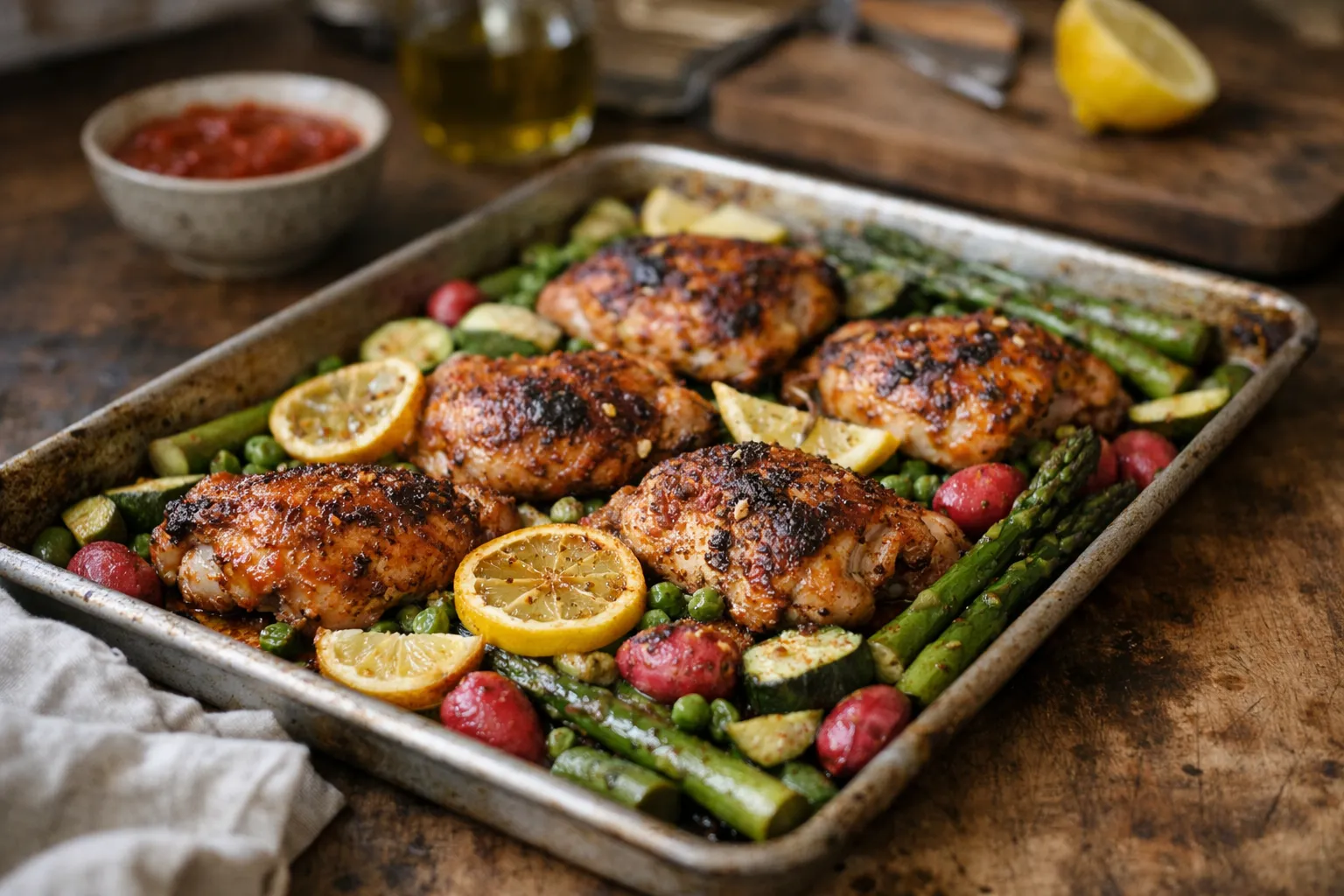
- Chicken skin should be deeply golden with small blistered spots; harissa will darken but not char completely.
- Potatoes should have browned edges and be tender when pierced with a fork.
- Asparagus should be bright green, slightly wrinkled and not limp.
- If broiling, watch for sudden dark spots—stop when skin is browned to your liking.
Troubleshooting
- Chicken not crisp? Make sure skin was thoroughly dried. Use the oven’s top heat for the last 1–2 minutes or a brief broil, watching closely.
- Potatoes underdone? Cut smaller or parboil 5 minutes before roasting; avoid crowding the pan so they roast instead of steam.
- Harissa too salty or spicy? Use less as you mix, or dilute 2 tbsp harissa with 2 tbsp plain tomato paste to tame heat while keeping flavor. Add yogurt on the side to cool individual servings.
- Leftovers dry after reheating? Reheat in a 375°F (190°C) oven on a sheet pan for 8–10 minutes and baste lightly with oil or reserved glaze; reheat to 165°F (74°C) internal.
Make‑ahead, storage & best practices (updated 2026)
- Marinate: You can marinate the thighs in the harissa mix up to 24 hours in the fridge. High‑acid marinades (lots of lemon) can change texture if left much longer.
- Storage: Refrigerate leftovers within two hours. Store cooked chicken and vegetables in an airtight container and use within 3–4 days (USDA guidance).
- Reheat: Reheat in a 375°F (190°C) oven until the internal temp is 165°F (74°C). Avoid microwaving for best skin texture.
- Label check: In 2026 many brands market fermented or lower‑salt harissas—read the label for salt, oil, preservatives and heat level to adjust seasoning before roasting.
Next steps / variations
- Plant-forward: Substitute 4 cauliflower steaks or 2 cans of rinsed chickpeas tossed with harissa and roast until browned; cauliflower needs ~18–22 minutes, chickpeas crisp in ~20–25 minutes.
- Preserved lemon or quick pickled shallots: add as a garnish for extra brightness popular in contemporary restaurant plating.
- Make it a weeknight prep: halve the recipe (4 thighs) and use a smaller sheet or air fryer basket; adjust time if pieces are smaller.
FAQ
Can I make this entirely in an air fryer?
Yes. Use a 400°F (200°C) setting and arrange thighs skin‑side up in a single layer. Cook 18–22 minutes, add asparagus in the last 4–6 minutes. Always verify the thickest part of the thigh reaches 165°F (74°C).
How long can I marinate the thighs safely?
Up to 24 hours in the refrigerator is ideal. If your harissa mix is highly acidic (lots of lemon), avoid extending beyond 24 hours to prevent the meat from becoming mushy.
My harissa burned when I broiled—what did I do wrong?
Harissa contains sugars and oil that char quickly under direct broil. If broiling, do it for 1–2 minutes only and stand at the oven. Alternatively, use convection or increase oven temp at the start and skip broiling.
Are there low‑sodium or vegan harissa options that still taste good?
Yes. Many brands now offer lower‑salt or olive‑oil‑reduced harissas, and vegan harissa (traditionally vegan) is common. Taste and adjust added salt accordingly, and finish with yogurt or a dairy‑free alternative if you need cooling contrast.
This updated sheet‑pan harissa‑lemon chicken keeps the original’s speed and flavor while adding 2026‑relevant tips: use convection or air fryer smartly, check labels for sodium/fermentation trends, follow USDA temp and storage guidance, and use plant‑forward swaps when desired. Follow the steps above and you’ll reliably get crisp skin, tender new potatoes, and bright spring vegetables—fast.