What you'll learn
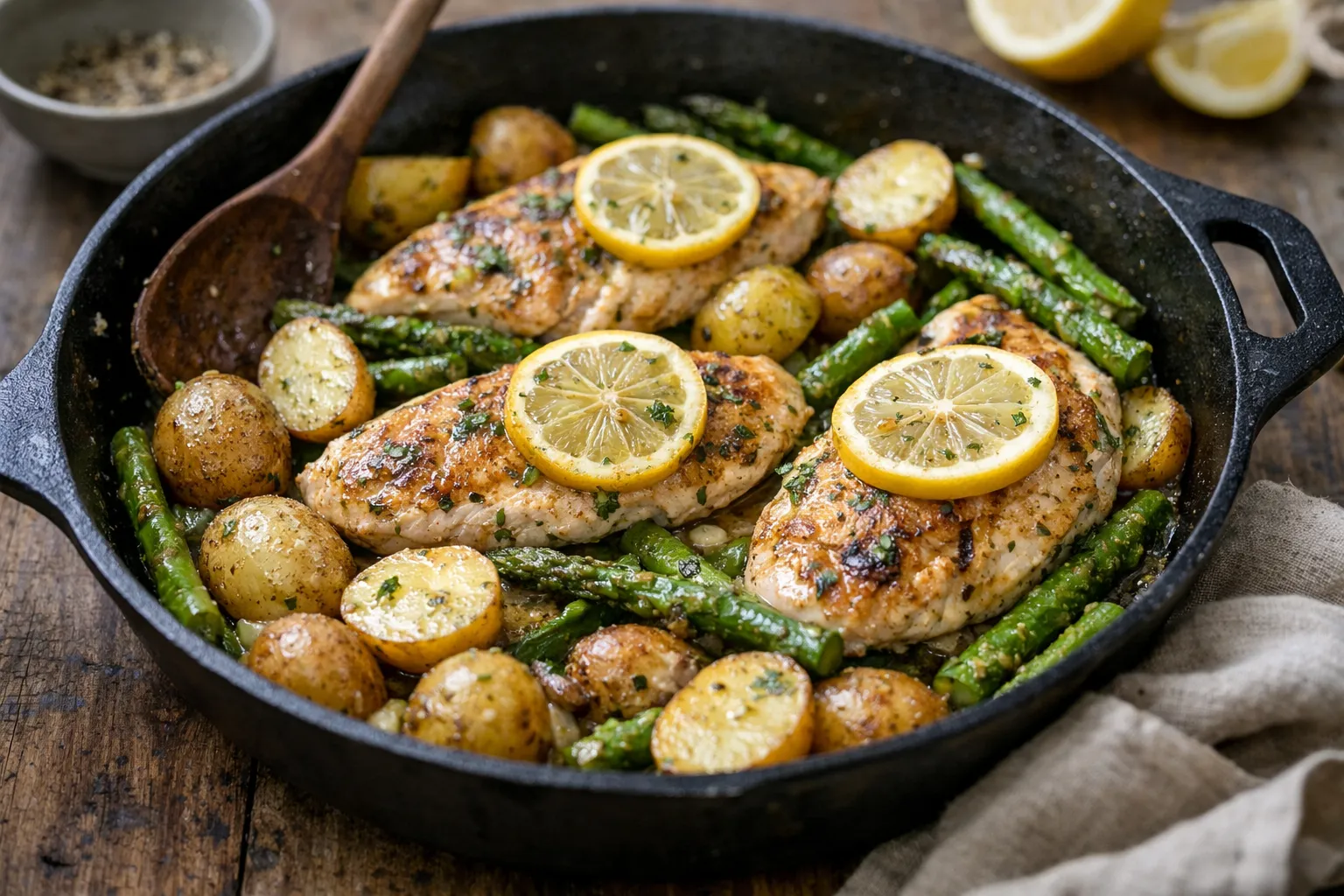
You will make a 30-minute one-skillet lemon chicken dinner—crispy skin, tender new potatoes, and bright asparagus—using a fast sear + roast method. The update adds 2026 best practices: convection oven timing, air-fryer finish option, sustainability buying tips, and up-to-date food-safety reminders.
What you'll need
- Time: 10 minutes active prep, ~20 minutes cook (30 minutes total)
- Tools: 10–12" ovenproof skillet (cast-iron or stainless), tongs, instant-read thermometer (recommended), pot for parboiling (optional), cutting board, chef’s knife
- Optional modern finishes: air fryer (for extra-crisp asparagus), convection oven setting
Why this still works (and what’s new in 2026)
- Bone-in, skin-on thighs give quick cooking with moist meat and reliable crust—same culinary principle that professionals rely on.
- Parboiling or quick-steaming new potatoes shortens oven time so asparagus finishes bright and crisp.
- Two-stage cooking—pan-sear, then roast—builds crust and finishes evenly. In 2026, many home ovens have convection modes: use convection at a slightly lower temp for more even browning (see timing notes).
- Sustainability note: in 2026 more shoppers prefer pasture-raised or regenerative-labeled poultry; if you choose labeled chicken you may notice firmer texture and a slightly different render — adjust sear time to achieve deep golden skin.
Ingredients (serves 4)
- 6 bone-in, skin-on chicken thighs (about 2½–3 lb / 1.2–1.4 kg)
- 1 lb (450 g) new potatoes, halved (or quartered if large)
- 1 bunch asparagus (about 12–14 stalks), woody ends trimmed
- 3 tbsp olive oil, divided
- 2 tbsp unsalted butter (optional; substitute extra oil for dairy-free)
- Zest and juice of 1 large lemon (about 2 tbsp juice)
- 4 garlic cloves, thinly sliced
- 1 tsp smoked paprika
- 1 tsp kosher salt, plus extra to taste
- ½ tsp black pepper
- 2 tbsp chopped fresh parsley or chives, for finishing
Equipment
- Large ovenproof skillet (10–12 inch cast-iron or stainless steel)
- Large pot for parboiling potatoes (optional)
- Instant-read thermometer (recommended; USDA food-safety guidance: 165°F / 74°C)
Step-by-step instructions
- Prep the ingredients (5–7 minutes).
Pat chicken dry with paper towels; season both sides with salt, pepper and smoked paprika. Toss halved potatoes with 1 tbsp olive oil and a pinch of salt. Trim asparagus (snap ends where they naturally break). Zest lemon and slice garlic. Expected result: chicken skin extremely dry to touch—this is key to crisping.
- Parboil the potatoes (optional but recommended, 6–8 minutes).
Place potatoes in salted cold water, bring to a boil and simmer until barely tender when pierced (6–8 minutes depending on size). Drain and pat dry. Expected result: potatoes hold shape but are not fully cooked—this shortens oven time so asparagus stays crisp.
- Preheat the oven (2 minutes prep).
Preheat to 425°F (220°C). If using convection, set 400°F (200°C) and reduce roast times by ~2 minutes (convection circulates hot air and browns faster). While the oven heats, put skillet on medium-high heat.
- Sear the chicken (4–5 minutes).
Add 1 tbsp olive oil to the hot skillet. Place chicken skin-side down and press so the skin contacts the pan; sear 3–4 minutes until deep golden and releases easily. Flip and sear the other side 1 minute. Expected result: golden, crisp skin; interior not fully cooked—about 140–155°F (60–68°C) depending on thigh thickness.
- Add potatoes, garlic and lemon (1 minute).
Arrange parboiled potatoes around the chicken, scatter sliced garlic and lemon zest, and dot with 1–2 tbsp butter or an extra drizzle of oil. Spoon pan oil over potatoes for browning. Transfer skillet to the preheated oven.
- Roast (8–10 minutes).
Roast at 425°F (220°C) for 8–10 minutes (or 6–8 minutes at convection 400°F). At this point the chicken should be near 155–160°F (68–71°C) and potatoes golden at the edges. Expected result: potatoes begin to blister, chicken approaches safe final temp after resting.
- Add asparagus and finish (3–5 minutes).
Toss asparagus with remaining 1 tbsp olive oil and a pinch of salt. Tuck spears between chicken and potatoes; squeeze lemon juice over everything. Return skillet to oven for 3–5 minutes—until asparagus is bright and tender-crisp and an instant-read thermometer in the thickest part of a thigh reads 165°F (74°C) (USDA recommended finished temp). Expected result: asparagus is still slightly firm but cooked, chicken at safe temp.
- Rest and serve (3–4 minutes).
Remove skillet, rest chicken 3–4 minutes (carryover heat raises internal temp and redistributes juices). Sprinkle parsley or chives and a final grind of black pepper. Serve from the skillet and spoon pan juices over meat and veg.
Air-fryer / alternate finishes (2026 practical options)
If you prefer extra-crisp skin or charred asparagus: after searing, finish thighs 3–4 minutes in a 400°F (200°C) air fryer basket (watch closely). For asparagus, a 2–3 minute high-heat air-fryer finish gives great color without overcooking.
Timing notes
- Very small potatoes: reduce parboil to 4–5 minutes.
- Thin asparagus: check at 2 minutes during the final roast; thicker stalks may need the full 5 minutes.
- Convection ovens brown faster—reduce roast times by ~2 minutes (monitor closely).
Dietary modifications
- Gluten-free: Naturally gluten-free—confirm butter brand if using processed products.
- Dairy-free: Replace butter with extra olive oil or a neutral oil; omit butter at the end.
- Low-carb/Keto: Swap potatoes for 12 oz (340 g) cauliflower florets—par-roast florets 6 minutes before adding asparagus.
- Vegetarian: Use 1½ lb (700 g) firm tofu, pressed and cut into ¾" slabs; marinate briefly in lemon, garlic, oil and smoked paprika. Sear 3 minutes per side and roast until golden—internal-temp guidance doesn’t apply; aim for golden edges and firm texture.
Make-ahead & storage
- Prep ahead: parboil potatoes and trim asparagus up to 24 hours ahead; keep components in airtight containers in the fridge.
- Store fully cooked leftovers 3–4 days in the fridge. Reheat in a 375°F (190°C) oven for 10–12 minutes to maintain skin crispness—avoid microwaving if you want crisp skin.
- To freeze: remove meat from bones, store in airtight container with potatoes for up to 2 months. Thaw overnight and reheat gently in oven.
Serving suggestions
- Pair with a simple mixed-green salad or quick polenta. For 2026 trends, add a dollop of yogurt-herb sauce (use plant-based yogurt for dairy-free) for tang and creaminess.
- Garnish ideas: extra lemon wedges, toasted almonds for crunch or a scattering of micro-herbs (microparsley or chive blossoms) for visual lift.
Final tips from the kitchen
- Use an instant-read thermometer—USDA recommends 165°F (74°C) for poultry. Pulling thighs at 160–162°F and resting to 165°F is an acceptable technique to retain juiciness, but confirm final temp before serving.
- Hot skillet = crisp skin. Don’t overcrowd—if your pan is small, roast potatoes on a sheet pan while searing chicken in the skillet and combine when you finish.
- If asparagus is out of season or more expensive in your area, sub broccolini or thin green beans—adjust final cook time down by 1–2 minutes.
Why seasonality and sourcing matter in 2026
Produce seasons have shifted in some U.S. regions; asparagus crops often come earlier or later depending on local weather patterns. Buying from farmers’ markets or checking labels for regenerative/pasture-raised poultry supports sustainable suppliers—expect a slightly different mouthfeel and render from those birds. These choices also influence price and timing, so adapt by substituting similarly textured veg when needed.
Common questions
Can I use boneless skin-on thighs to speed things up?
Yes. Boneless skin-on thighs will reduce overall cook time by 3–5 minutes; sear until golden and roast 6–8 minutes at 425°F, checking internal temp. Because thickness varies, use an instant-read thermometer to confirm 165°F (74°C).
My chicken hit 165°F before the potatoes were done—what now?
Remove chicken to a warm plate and tent loosely with foil to rest. Finish potatoes and asparagus in the oven or under the broiler for a minute or two; return chicken briefly (1–2 minutes) if you want everything hot together, but avoid overcooking the thighs.
How do I keep asparagus bright and not mushy?
Trim woody ends, add asparagus late in the cook (last 3–5 minutes), and use high heat—either the oven or a quick air-fryer finish. Shock in ice water is unnecessary for this dish; timing is the key.
Any tips for getting extra-crispy skin without burning the garlic?
Sear skin-side down first until deep golden, then flip and add garlic and lemon zest. If garlic begins to darken too much during searing, move it to the perimeter of the pan or add it only when you add potatoes.
Can I make this gluten-free for guests with celiac disease?
Yes. Ingredients are naturally gluten-free; confirm any processed ingredient (butter blend, pre-marinated items) is certified gluten-free if serving someone with strict dietary needs.
This updated 2026 version keeps the original’s speed and clarity while adding modern finishes, sustainability context, and oven/air-fryer timing guidance so you can make this dish reliably tonight. Happy cooking from Quick Bites Kitchen.