What you'll learn
You will make a kimchi-style chili crunch that combines 24–48 hours of refrigerator lacto-fermentation with a quick stovetop oil infusion to produce glossy, crunchy, umami-rich condiment. You’ll learn updated 2026 best practices for consistent fermentation, food-safety cues, modern ingredient swaps, and how to scale or preserve the final jar.
What you'll need
Time: active prep 30–40 minutes; refrigerator rest 24–48 hours. Yield: ~2 cups.
- Ingredients (quantities below produce ~2 cups): 1 cup coarsely crushed red chili (gochugaru or coarse chile flakes), 1 cup neutral oil (or half sesame + half neutral), 1 cup thinly sliced white/yellow onion, 6 garlic cloves finely chopped, 2-inch knob ginger finely chopped, 2 Tbsp fine sea salt (for ferment), 2 Tbsp fish sauce or tamari (vegan swap: tamari, coconut aminos or 1 tsp miso dissolved), 1 Tbsp rice vinegar (optional), 1 Tbsp toasted sesame seeds, 1 tsp sugar (optional).
- Tools: large mixing bowl, 1–2 clean 16–24 oz glass jars with lids, small saucepan, heatproof measuring cup, digital probe thermometer (recommended), fine mesh strainer or slotted spoon, kitchen scale or measuring cups, clean spoon for serving.
- Optional modern equipment: vacuum-sealed jar lid or fermentation weight to keep aromatics submerged; silicone pour spout; probe thermometer for oil control.
Why this updated method (2026 context)
Short refrigerator fermentation plus hot-oil infusion remains the fastest way to get authentic fermented depth and crisp texture. Through the mid-2020s home fermentation has continued growing—home cooks and small producers value short ferments for consistent results and lower risk. In 2026, expect cleaner, repeatable results by using precise oil temperature (275–300°F / 135–150°C), high-oleic neutral oils for better shelf stability, and careful sanitation to extend fridge life to 6–8 weeks.
Step-by-step instructions
1. Salt-brine the aromatics (10–15 minutes)
- Put sliced onion, chopped garlic and chopped ginger in a large bowl. Sprinkle 2 tablespoons fine sea salt and 1 teaspoon sugar over them; toss and let sit 10–15 minutes to draw juices. Expected result: the mixture should release visible liquid and look wilted.
- Squeeze lightly to release additional juices and reserve liquid. Transfer the aromatics and their juices into a clean jar; press down so juices cover the solids. If needed, add 1 Tbsp water to ensure coverage. Close the jar loosely (lid set on top or fingertip-tight) and refrigerate for 24–48 hours. Expected result after 24 hours: aromatics taste mildly tangy and softer; after 48 hours the profile is noticeably fermented.
2. Prepare the chili base (5 minutes)
- Measure chili flakes into a heatproof bowl. Add fish sauce/tamari, rice vinegar (if using), sesame seeds and the reserved aromatic liquids; stir to combine. Expected result: a cohesive paste with bright color and pronounced aroma.
3. Infuse the oil (5–7 minutes)
- Warm the oil in a small saucepan over medium-low until it reaches 275–300°F (135–150°C). If you don’t have a thermometer, heat until oil is hot and a small piece of garlic sizzles gently without smoking. Modern tip: high-oleic sunflower or grapeseed oils give better oxidative stability than standard vegetable oil.
- Turn off heat. Slowly pour the hot oil over the chili-aromatic mixture — it will bubble and sizzle. Stir carefully to temper and crisp bits. Expected result: oil deepens to reddish-orange, aromatics golden and partially crisped.
4. Rest, taste and jar (10–30 minutes)
- Let cool to room temperature (10–30 minutes). Taste and adjust: add a pinch of salt, a squeeze of lime, or extra vinegar to brighten. Expected result: balanced heat, umami, and a glossy oil layer.
- Spoon into clean jars, leaving ~¼ inch headspace. Seal and refrigerate. The condiment is usable immediately, but benefits from 24–48 hours more in the fridge to meld flavors.
Screenshots / Visual cues (what you should see)
- After salting: aromatics visibly wilted with a glossy pool of liquid in the bowl.
- After 24–48h fridge rest: aromatics smell tangy (mildly sour), not rotten; color slightly muted.
- After oil pour: vigorous bubbling on first pour, oil turns reddish-orange, some solids float before settling.
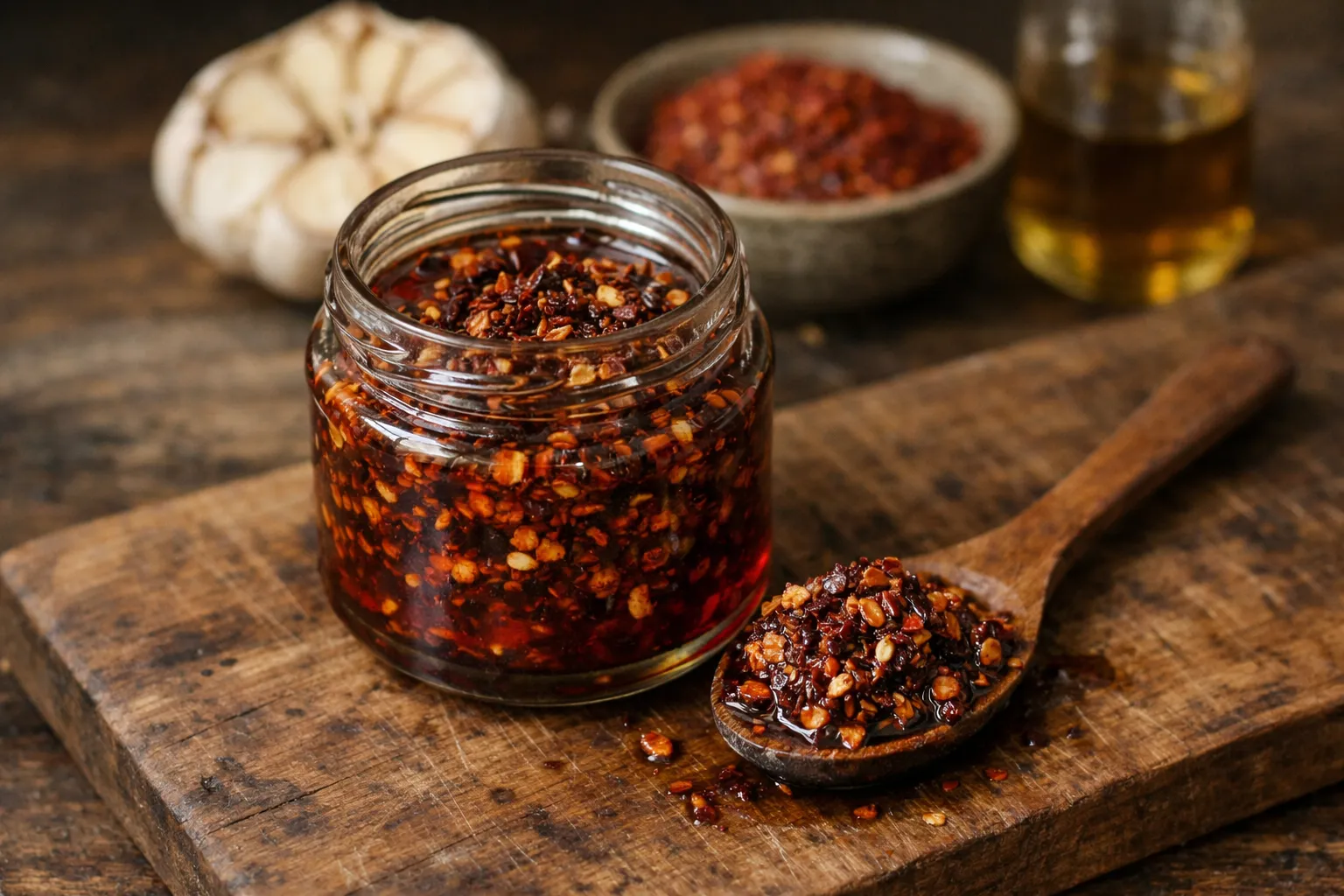
- Finished jar: glossy oil layer with suspended crispy bits; solids mostly sunk beneath oil after settling.
Storage and shelf life (updated)
- Refrigerator: store in clean jars, use a clean spoon; keeps 6–8 weeks for this short-ferment + hot-oil method when kept cold and uncontaminated.
- Freeze: portion into ice cube trays and freeze up to 6 months; thaw in fridge.
- Retail-style shelf stability requires commercial acidification, pasteurization, or added preservatives—home jars should be refrigerated.
Troubleshooting & tips (2026 best practices)
- Too salty? Stir in 1–2 tsp neutral oil or a splash of rice vinegar; or make a second small batch without salt and blend to dilute.
- Bland oil aroma? Reheat oil gently (do not smoke) and pour again to extract residual flavors, or add 1–2 tsp toasted sesame oil for depth.
- Mold vs kahm yeast: white, filmy kahm yeast can form on surface of some ferments; it’s not harmful but can affect flavor—skim gently. Fuzzy, colored mold (green/black) is unsafe; discard the jar and contents.
- Want more consistent fermentation? Add 1–2 tsp whey, rejuvelac, or a single-use lactic starter to jump-start lactobacilli—but refrigeration and cleanliness remain essential.
- For a less oily but crisp finish: drain some oil after settling and reserve for drizzling; store solids and oil separately to control texture.
How to use
- Stir into noodle soups and ramen, top grilled proteins, fold into mayonnaise for spicy aioli, or finish roasted vegetables. One to two teaspoons per serving is typical.
Next steps
- Make a small test batch first to dial heat and salt for your palate. If you like the result, scale linearly: double ingredients and use two jars to keep surface area manageable.
- Experiment with chili blends—50/50 gochugaru and smoked ancho for smoky-sweet—or swap onions for scallions for a greener finish.
Troubleshooting — Common problems & quick fixes
- Off or rotten smell: discard. Proper short ferments should smell bright and tangy, not rotten.
- Oil turns cloudy: normal once solids are suspended; if odor is rancid, discard and start fresh with fresher oil.
- No sizzle when pouring oil: oil too cool; reheat gently and pour when hot to get the crisp finish.
Why safety matters (brief)
Short, refrigerated lacto-ferments rely on salt, cold storage and mild acidity. For any longer shelf-life or ambient storage, follow commercial guidelines (acidification, pasteurization). If in doubt, err on the side of refrigeration and use within recommended timeframes.
FAQ — Common reader questions
Do I need a thermometer for the oil?
No, but a digital probe thermometer makes results more consistent. Aim for 275–300°F (135–150°C). If you don’t have one, heat until the oil is hot enough that a small piece of garlic sizzles gently without smoking.
Is this method safe from botulism?
Short refrigerator lacto-ferments combined with a hot-oil infusion are low risk because refrigeration, salt and acid inhibit C. botulinum. Do not store home-fermented jars at room temperature for extended periods. Discard any jar with foul odors or visible mold.
How can I get more crunch in my chili crunch?
Pat the aromatics drier before oil infusion and pour hotter oil for a shorter time to crisp (watch carefully to avoid burning). Alternatively, add toasted fried shallots or garlic chips after cooling for extra crunch.
Can I make a vegan "fish sauce" substitute?
Yes. Use tamari, coconut aminos, or dissolve 1 tsp miso in 1 Tbsp warm water. For deeper umami, mix tamari with a small splash of aged mushroom seasoning or mushroom powder.
How long will the flavor continue to change in the fridge?
Most flavor development occurs over the first 48–72 hours; after that changes slow but continue. Use within 6–8 weeks for best freshness and texture.
Make a small test jar, take notes on salt and heat, and adjust the next batch. With the 2026 updates—precise oil temps, high-oleic oils, and clean fermentation practice—you’ll get reliable, jarred chili crunch that elevates anything from toast to noodles.