
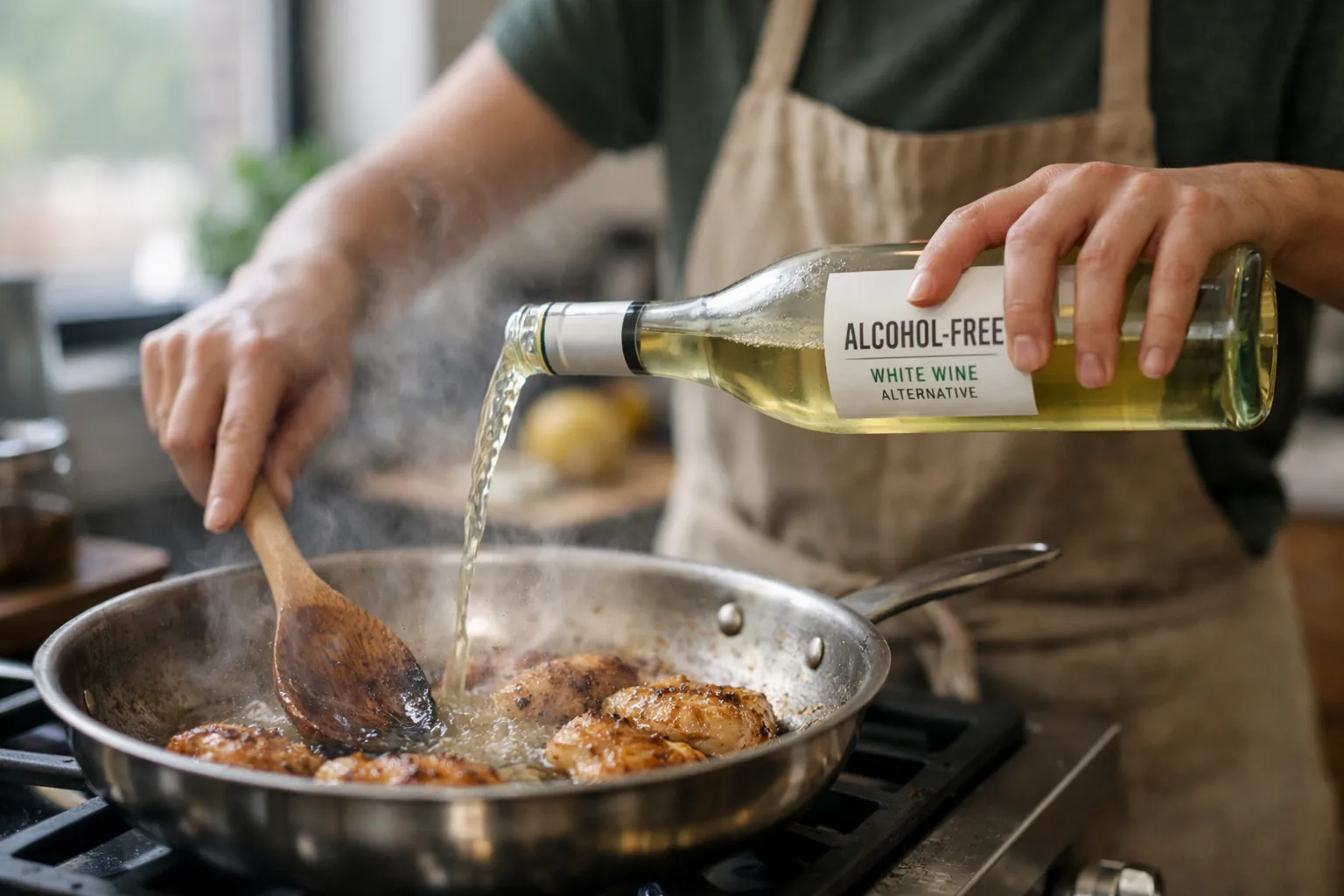
Overview: What we’re updating and why it matters
As of August 2026, alcohol-free and de-alcoholized wines have moved from curiosity to a firmly established pantry option. The market now offers a wider range of beverage-grade de-alcoholized bottles, shelf-stable cooking wines, single-serve culinary concentrates, and purpose-built cartons designed to limit waste. For households that avoid alcohol—whether for health, religious, or lifestyle reasons—or for cooks who want a dependable liquid for deglazes and braises without opening an expensive drinking bottle, these products can be useful. But they are no longer a single thing: label reading, packaging format, and technique determine whether a bottle adds value to a recipe or simply adds sodium and sweetness.
Background: How the category has changed through 2026
Over the past two years manufacturers widened their playbooks. Where 2024–25 saw mostly beverage brands experimenting with dealcoholization, 2026 has brought product diversification targeted at culinary use: smaller aseptic cartons, concentrated verjus-like blends, and "culinary reserve" de-alcoholized lines marketed for both drinking and cooking. Retailers—both big-box and specialty grocers—have begun shelf-tagging no/low-alcohol wine adjacent to vinegars, verjus, and culinary concentrates so shoppers can choose a more precise acid or flavor tool rather than reaching for a generic “cooking wine.”
Beyond product form, consumer behavior is shifting. Home cooks are thinking in terms of usable ounces and pantry ROI: a 375–500 ml bottle that stays fresh across several meals can be cheaper per usable ounce than repeatedly opening 750 ml drinking bottles and wasting half. That matters to household budgets and long-term food waste reduction—two areas that connect to broader wealth-building choices around monthly spending and asset stewardship.
Data & evidence: New product types, label patterns, and kitchen behavior
The functional profile of wine in cooking hasn’t changed: acid, volume, aroma, sugars, and tannic structure remain the five contributors that matter in sauce work. What has changed is how those functions are delivered in products that have had the alcohol removed.
Product forms to know in Aug 2026
- Beverage-style de-alcoholized wines: made by vacuum distillation, reverse osmosis, or spinning cone columns and sold in glass bottles with full nutrition panels; typically intended for multipurpose use.
- Shelf-stable cooking wines: lower-cost, salted and stabilized formulations sold in large bottles; useful as a pantry seasoning but limited in finesse.
- Single-serve cartons and sachets: new in 2025–26, these deliver measured amounts with minimal waste and are appearing in meal-kit and grocery channels.
- Culinary concentrates and hybrid SKUs: small bottles that combine grape acids with concentrated musts or neutral acidity agents (verjus-like) to mimic wine functions without the variability of de-alcoholized wine.
Labeling and the two variables that matter: sodium and sugar
Label reading remains the primary test. Two practical thresholds hold up in kitchen work:
- If a 2-tablespoon serving lists more than ~150–200 mg sodium, treat that product as a seasoned ingredient and reduce added salt elsewhere.
- If a serving shows measurable grams of sugar, expect sweetness to concentrate during reductions; avoid prolonged reduction unless you plan to rebalance.
Manufacturers are increasingly showing full nutrition facts on beverage-style de-alcoholized lines; however, some convenience cooking bottles still omit clear per-serving panels. If sodium or sugar aren’t listed, assume the product is seasoned and use a conservative salt plan.
Shelf life and waste economics—updated guidance
In practice, most beverage-style de-alcoholized bottles will keep 5–10 days refrigerated when resealed; single-serve cartons and aseptic pouches extend practical shelf life unopened. Economically, the comparison is about usable ounces: a smaller multipurpose bottle that is used over multiple nights can beat the cost of repeatedly opening and throwing away a drinking bottle. For budget-focused households, the new single-serve cartons are an important development: they reduce waste and give more precise cost control per recipe.
Multiple perspectives: Chefs, dietitians, manufacturers, and retailers
Chefs: targeted use, more culinary tools
Professional cooks who have tested 2026 SKUs accept de-alcoholized bottles for supportive roles—deglazing, braising with tomato, and poaching—while reserving authentic wine reductions for true drinking bottles or concentrated substitutes. The growth of small culinary concentrates and verjus options has given chefs and serious home cooks better tools for reconstruction: a short pan sauce might pair a de-alcoholized white for acidity with a spoon of mushroom concentrate to restore umami and perfume.
Dietitians and public-health professionals
Health professionals emphasize the unchanged risk: sodium and added sugars, not residual alcohol, are the everyday dietary variables. For people with hypertension or on sodium-restricted diets, a tablespoon of a high-sodium cooking wine can add a meaningful proportion of daily sodium. Dietitians advise scanning nutrition labels and treating some cooking wines as flavoring agents rather than neutral liquids.
Manufacturers and retailers
Brands have split strategies: some position premium de-alcoholized wines as true multipurpose products with transparent nutrition labeling; others sell lower-cost, seasoned cooking wines for shelf stability and consistency. Retailers are responding by placing alternative acids—verjus, champagne vinegar, yuzu vinegar—near the no/low-alcohol section so shoppers can choose based on the culinary function they need rather than defaulting to a cooking wine bottle.
Implications: Practical guidance you can use tonight
Where alcohol-free cooking wines work best
- Deglazing with robust aromatics: when you have a browned fond plus garlic or shallot, de-alcoholized wine supplies acid and liquid weight without needing strong perfume.
- Tomato-based stews and braises: tomatoes provide brightness; a de-alcoholized red adds fruit notes without dominating.
- Poaching and quick pan sauces for fish or fruit: these benefit from gentle grape character without opening a drinking bottle.
Where they often disappoint—and simple fixes
- Long reductions intended to taste like wine: add umami (miso, mushroom powder), a small splash of verjus, or 1–2 teaspoons of cooled strong black tea to introduce tannic grip.
- Delicate cream sauces and risotto: if the bottle smells faint or lists sugar, prefer stock plus diluted vinegar or verjus; finish with citrus zest or fresh herbs to restore perfume.
Actionable substitutions (updated for 2026 products)
Replace 1/2 cup wine in a recipe with one of these tested blends:
- 1/3 cup good stock + 3 tablespoons verjus (or 2–3 tablespoons diluted white wine vinegar at 1:3 with water).
- For red depth: 1/2 cup stock + 1–2 tablespoons unsweetened cranberry or pomegranate juice + 1 teaspoon cooled strong black tea.
- Quick pan sauce with minimal waste: 1/3 cup single-serve de-alcoholized white + 2 tablespoons concentrated vegetable demi or mushroom jus.
Outlook: What to watch through the rest of 2026
Expect continued bifurcation: clear beverage-style de-alcoholized wines for multipurpose use and convenience cooking wines that emphasize shelf life and consistency. Three developments to watch:
- Packaging innovation: single-serve aseptic cartons and measured pouches will expand in grocery and meal-kit channels, reducing waste and improving cost control.
- Clearer on-pack nutrition: consumer pressure and retailer category management are pushing brands to disclose sodium and sugar per serving—look for clearer panels if you want to avoid surprises.
- More precise acid tools in mainstream aisles: verjus, champagne vinegar, and culinary concentrates are becoming easier to find, giving cooks better substitutes than a generic “cooking wine.”
For households thinking long-term about pantry economics and family meals, the takeaway is this: treat these products as tools, not automatic stand-ins. Use packaging size and nutrition information to choose the right format for your needs, and use technique—umami, acid, tannin substitutes—to compensate for what dealcoholization removes. Thoughtful use can reduce waste and keep weeknight meals both affordable and flavorful; careless use can quietly inflate sodium intake and leave sauces cloying.
FAQ
Does "alcohol-free" guarantee zero alcohol?
No. Labels differ by country and producer. In many places "alcohol-free" can mean trace amounts under a legal threshold. If you must avoid every trace of alcohol, check the stated ABV on the bottle or seek products specifically labeled "0.0% ABV."
How long will an opened de-alcoholized bottle last in the fridge?
Most beverage-style de-alcoholized bottles keep 5–10 days refrigerated when tightly resealed; single-serve cartons and aseptic pouches can stay usable longer unopened. For any bottle, use sensory checks—smell and taste a tablespoon—before cooking if it's been open several days.
What’s the best quick test to predict how a bottle will behave in a reduction?
Taste a tablespoon cold, then heat a tablespoon in a pan. If it caramelizes sweetly, expect sweetness to concentrate; if it gives a clean acid bite, it will likely behave well in deglazes. Use the sodium threshold (150–200 mg per 2 tbsp) to plan salt adjustments.
Should people on low-sodium diets avoid these products entirely?
Not necessarily, but vigilance is required. Read the nutrition panel: if a typical 2-tablespoon serving supplies more than ~150–200 mg sodium, either choose a low-sodium product or reduce added salt elsewhere in the recipe.
How should I think about pantry economics when choosing between product types?
Think in usable ounces and probability of use. A small multipurpose de-alcoholized bottle or single-serve carton that you will use across several meals can be more economical than opening and wasting a large drinking bottle. For long-term cost control, consider stockpiling small culinary concentrates and verjus as precision tools that avoid the pitfalls of generic cooking wines.