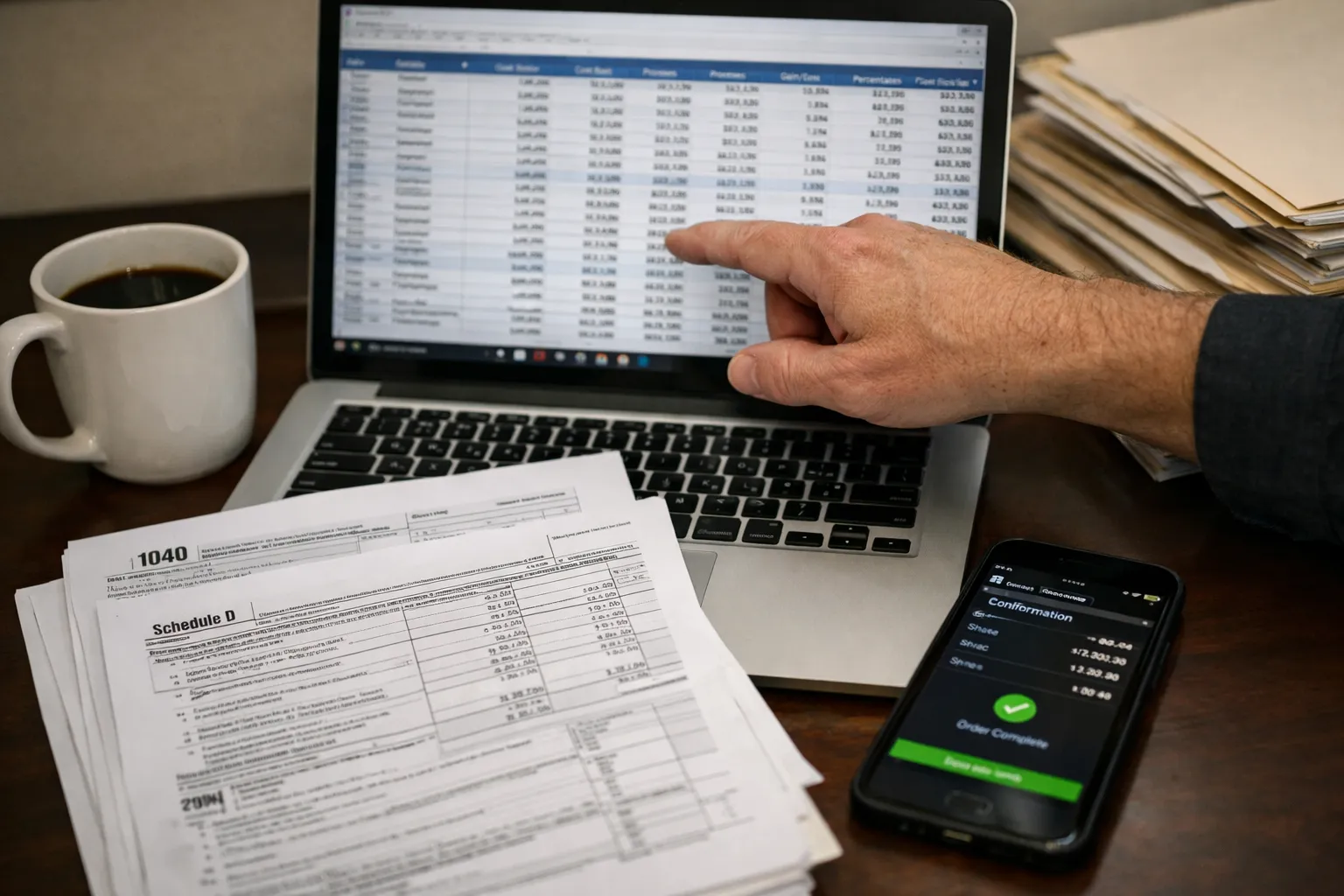
Several large brokerage firms and a major crypto custodian this week announced a voluntary pilot that will permit clients to elect limited federal withholding when they execute large, one-off sales of stocks or digital assets. The program aims to reduce year-end surprises that force taxpayers into higher tax brackets, trigger underpayment penalties on estimated taxes, or complicate the use of deductions and credits.
What the pilot does
Under the pilot, eligible account holders who sell a single position above a specified monetary threshold can opt to have a flat percentage withheld at the time of sale. The withheld amount is remitted to the IRS and credited toward the taxpayer’s federal income-tax liability for the year. Participating firms said the option is voluntary and intended for infrequent, concentrated dispositions such as the sale of a legacy equity holding, an inherited position, or a once-off crypto liquidation.
Why industry players say it matters
- Mitigates estimated-tax headaches: Taxpayers who realize large gains late in the year often must make catch-up estimated-tax payments or face penalties. Immediate withholding provides a partial prepayment that reduces those pressures.
- Smooths tax-bracket shocks: Withholding at the point of sale can prevent a taxpayer from unexpectedly moving into a higher marginal tax bracket for the year, which affects the marginal rate applied to ordinary income and capital gains.
- Preserves planning flexibility for deductions and credits: Early withholding can help taxpayers calibrate itemized deductions and the timing of credits (for example, energy credits or education credits) by providing a clearer picture of net tax owed midyear.
How the mechanics differ from payroll withholding
Unlike employer payroll withholding, which is continuous and designed to align wages with liability across pay periods, this pilot is transactional and limited to single large dispositions. Firms said the withholding rate will be a flat preliminary percentage — lower than the highest statutory capital-gains rate but sufficient to materially lower underpayment risk. The withheld taxes are treated as payments against the taxpayer’s total liability when filing their return.
Example scenario
A married filer (joint filing status) in a mid-range tax bracket who sells an inherited concentrated stock position late in the year for a $400,000 gain could elect withholding at the point of sale. The withheld amount reduces the need to make a substantial fourth-quarter estimated-tax payment and can blunt the impact of passing into a higher marginal tax bracket that would affect the treatment of other income and phaseouts of credits.
Reactions from advisors and planners
Tax practitioners welcomed the pilot as a potentially useful tool, while flagging limitations.
- Pro: Predictability. "Clients who struggle with quarterly estimated payments will appreciate a near-instant credit," said a tax partner at a mid‑sized firm.
- Con: Overwithholding risk. If withholding is not finely tuned to actual liability — especially when capital gains rates and surtaxes (like NIIT) apply — taxpayers may end up with an unnecessary refund, temporarily reducing liquidity.
- Coordination required. Advisors emphasized that the election needs to be coordinated with the taxpayer’s broader plan for deductions and credits; for example, accelerating a charitable deduction or realizing losses can alter net tax owed and optimal withholding needs.
Open questions and limitations
The pilot raises operational and tax-administration questions that will determine whether the model scales:
- Thresholds and rates: Firms have set different dollar thresholds and preliminary withholding percentages for pilot participants; final rates may evolve after initial data.
- State tax treatment: Withholding for federal taxes does not substitute for state estimated-tax obligations. Taxpayers in states with high top rates must still assess state-level estimated taxes separately.
- Filing-status interactions: How withholding interacts with changes in filing status midyear (marriage, divorce) will require careful client counseling to avoid mismatches between prepayments and eventual joint or separate liabilities.
- Capital-gains specifics: The pilot does not alter the underlying capital-gains calculation. Long-term versus short-term gain characterization, basis documentation, and potential application of surtaxes remain governed by existing law.
Practical guidance for planners
Tax planners should add the pilot option to their checklist when advising clients with potential lump gains. Recommended steps include:
- Model after-tax outcomes with and without withholding, including projected impact on marginal tax bracket and phaseouts of credits.
- Coordinate timing of deductible events (charitable gifts, state tax payments, medical expenses) to maximize the benefit of withholding and avoid overpayment.
- Advise clients on estimated-tax safe harbors — paying 90% of current-year tax or 100% (110% for higher-income filers) of prior-year tax — and how transactional withholding may fit into those thresholds.
- Remember state implications and potential need for separate estimated-tax payments to state authorities.
What to watch next
Participating firms said they will monitor pilot outcomes over the next two tax years and share anonymized data with industry groups and, possibly, tax authorities. Tax planners should watch for:
- Changes to withholding percentages and eligibility criteria based on pilot results
- Guidance from the IRS about treatment of transactional withholding and implications for estimated-tax safe harbors
- Expansion to additional asset classes or retail institutions if the pilot proves effective in reducing underpayment penalties and taxpayer distress
For tax planners, the pilot is a practical development to watch. If it scales, it could become another tool to align prepayments with realized gains, preserve credits and deductions, and reduce the friction caused by midyear income spikes that complicate filing status decisions, estimated taxes and capital-gains planning.