
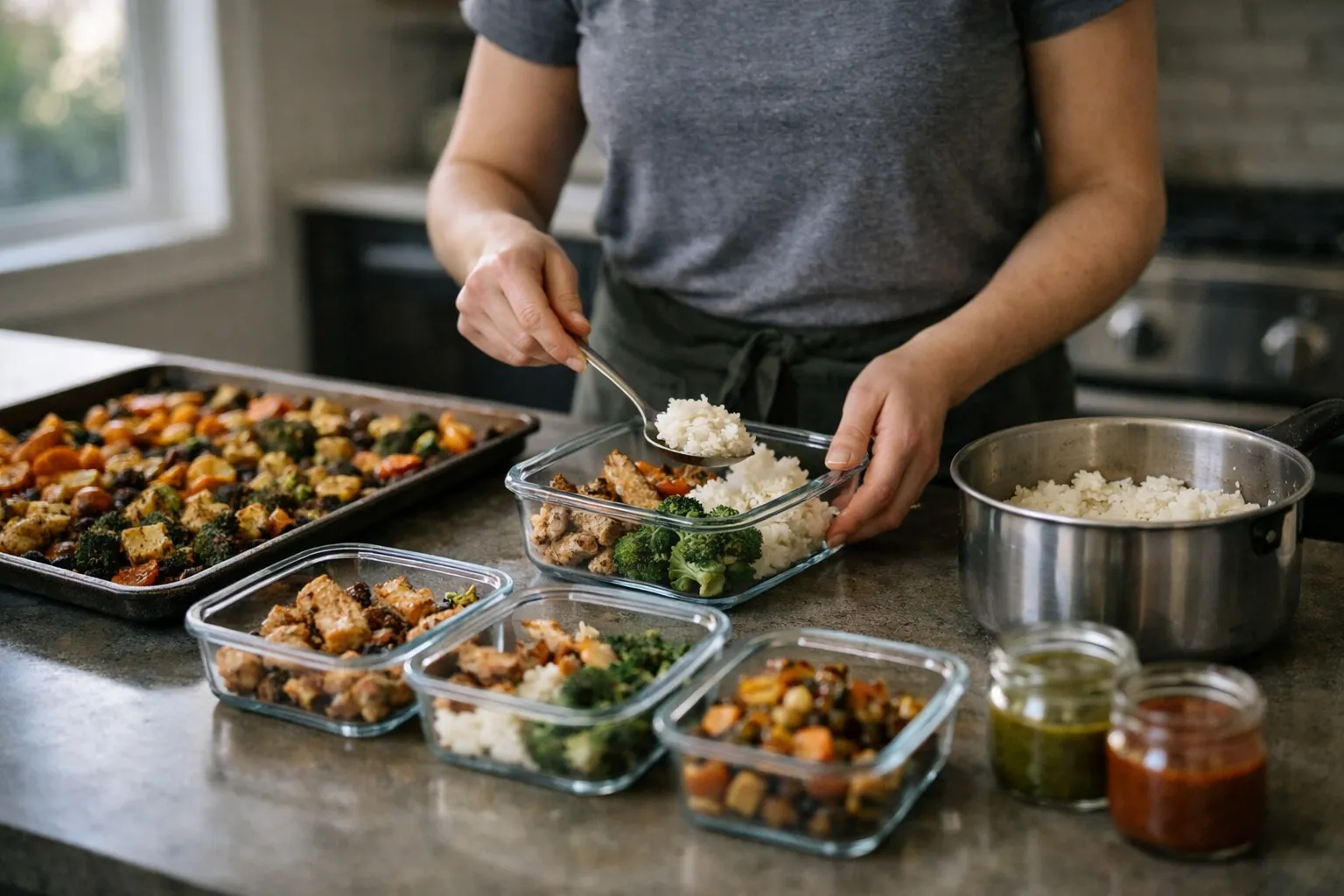
Who this is for: Home cooks who care about good food but are short on time and budget—hybrid workers, small households, people who travel midweek, and anyone who wants variety without daily decisions or excessive spending.
What you’ll learn: An updated flavor-base meal-prep system for August 2026: choose five dependable components, use a modern 60–90 minute workflow (with 75 minutes as a practical target), store components safely and for quality, and remix them into at least four distinct dinners. This edition adds 2026-era tools, cost-benefit math, and specific storage and freezing tweaks that preserve texture and flavor.
Why this matters now: Grocery-price volatility eased after the 2022–23 inflation spike, but shoppers still face uneven pricing and shorter shopping windows. USDA Economic Research Service data through 2025 show grocery inflation moderated from its earlier peak; consumers responded by buying more frozen vegetables and legumes and by adopting shopping tech that reduces overbuying. At the same time, home kitchen tools—air fryers, vacuum sealers, and countertop steam ovens—are now common in many households and materially change prep and storage options. If you’re investing scarce time and money, you need a system that saves both. This article focuses on ROI: how much time you actually spend, how many meals you reliably get, and whether the trade-off is worth it for your situation.
Prerequisites and context: what “flavor base” meal prep means
Traditional batch cooking often leaves you with identical containers. The flavor-base approach builds modular elements—proteins, grains, vegetables, sauces, and crunchy toppers—that you recombine into bowls, salads, tacos, soups and more. The benefit: variety with a single shopping list and one focused prep session per week.
A practical flavor base typically includes:
- 1–2 proteins (e.g., roasted chicken thighs, air-fried tofu, braised lentils)
- 1–2 grains/starches (e.g., jasmine rice, farro, roasted sweet potatoes)
- 2–3 vegetables (one roasted, one sharp/quick-pickled, one raw/leafy)
- 1–2 sauces or dressings (tahini-lemon, miso-sesame, chimichurri)
- 1 crunchy topper (toasted seeds, fried shallots, chili crisp)
Food-safety baseline (non-negotiable)
Follow USDA Food Safety and Inspection Service guidance: refrigerate perishable foods promptly (within 2 hours; within 1 hour above 90°F/32°C), maintain refrigerator temperature at 40°F (4°C) or below, and use cooked leftovers within 3–4 days. If components will not be eaten within that window, portion and freeze early. These rules remain the most reliable way to balance quality and risk.
Practical rule: If you prep on Sunday, plan to finish refrigerated proteins by Wednesday/Thursday—or freeze half immediately with clear labels for thawing.
Step 1: Choose a theme so combinations feel intentional
A loose theme reduces decision fatigue and keeps weekly combinations coherent. In 2026, rotating between regional, sauce-led, or seasonal themes still works; add a pragmatic 2026 angle: a plant-forward theme that starts with legumes or tempeh and reserves animal protein for one or two meals to cut costs.
Three reliable weekly theme formats
- Regional: Korean (gochujang, sesame, scallion), Mexican (lime, cumin, salsa verde), Mediterranean (lemon, oregano, feta).
- Sauce-led: Two transformable sauces—e.g., chimichurri and almond-tahini—that change the whole meal profile.
- Seasonal/low-waste: Prioritize frozen veg, legumes, and use stems in stocks or slaws. Summer: quick-pickles and tomatoes; winter: citrus, roasted roots, hearty greens.
Example theme (January, updated for 2026): “Bright winter”
- Acid: lemon + rice vinegar
- Herb: parsley or cilantro
- Heat: chili crisp (store-bought or small-batch fermented hot sauce)
- Crunch: toasted pepitas or almonds
Step 2: Plan five core components (minimum viable prep)
Limit yourself to five reliably used components. This provides temperature, texture, and flavor contrast without an all-day commitment. Include at least one budget-friendly protein (beans, lentils) and one freezer-friendly item.
- One protein you can eat hot or cold
Examples: roasted chicken thighs; air-fried tofu; braised lentils; canned salmon for salads. For cost control, make beans or bulk-cooked lentils your primary protein and use meat or fish as an accent. - One grain or starch that reheats well
Examples: jasmine rice, quinoa, farro, roasted sweet potatoes, or boiled new potatoes. A rice cooker or instant pot reduces hands-on time and guarantees consistent yields. - One roasted vegetable
Examples: broccoli, cauliflower, carrots, Brussels sprouts—roast on sheet pans or in the air fryer depending on equipment. - One “sharp” vegetable (fresh or quick-pickled)
Examples: quick-pickled red onions, shredded cabbage slaw, cucumber salad, or kimchi (store-bought or homemade). - One sauce (plus a backup shortcut)
Examples: tahini-lemon, miso-sesame, cilantro-lime chimichurri. Backup: jarred salsa verde, pesto, or chili crisp.
Why five? It balances variety and realistic time investment—enough to mix textures and temperatures (warm grain, cold pickle, crunchy topper) without an all-day commitment.
Step 3: Shop strategically and set a clear yield
Decide your yield before you shop. Typical targets in 2026 remain: 6–8 servings for one or two people who will supplement with one or two nights out; 12–16 servings for small families. Label portion sizes on containers when you store them so you can plan midweek top-ups instead of guessing.
Practical shopping list template
- Protein: 2–3 lb chicken thighs OR 2 blocks extra-firm tofu OR 1–2 lb dried lentils/beans (canned for speed)
- Grain/starch: 2 cups dry rice/quinoa OR 3–4 lb potatoes/sweet potatoes
- Roast veg: 2 heads broccoli/cauliflower OR 2 lb carrots
- Sharp veg: 1 head cabbage, 3 cucumbers, or 3 red onions for quick pickles
- Sauce base: tahini/yogurt/miso, citrus, garlic, herbs
- Texture: nuts/seeds, tortillas, pita, or crispy chickpeas
Cost tip: Frozen vegetables and legumes are often the better per‑serving value and reduce spoilage. Use fresh herbs sparingly or replace with citrus zest and a small jar of high‑quality dried herbs when necessary.
Step 4: A 75‑minute workflow—updated for 2026 tools
Overlap tasks so oven, air fryer and stovetop work together. In many kitchens in 2026, countertop ovens, reliable air fryers, and budget vacuum sealers shorten hands-on time and improve storage quality. Use tech where it reduces work: a rice cooker for grains, a digital thermometer for proteins, and vacuum sealing for freezer portions.
75‑minute workflow (adapt to your kitchen)
- Minute 0–10: Preheat + start grain or quick protein
Preheat oven or air fryer. Start rice/quinoa in a rice cooker; start lentils or beans on the stove. If using frozen veg, add to the oven later to avoid overcooking. - Minute 10–25: Season protein + chop vegetables
Season chicken, tofu, or spiced chickpeas. Chop roasting veg and one raw element for pickling. - Minute 25–45: Roast/air-fry protein + veg; make sauce
Roast on a sheet pan; use the air fryer for crispy items. Whisk your sauce/dressing and taste-adjust. Use a probe thermometer for chicken; target 165°F (74°C). - Minute 45–60: Quick pickle + toast topper
Make quick pickles (vinegar + sugar + salt + hot water). Toast seeds/nuts in a skillet or air fryer for 3–5 minutes. - Minute 60–75: Cool, portion, label, and vacuum/seal for freezer
Cool briefly on a rack, portion into shallow containers, label with date and contents. Vacuum-seal or use high-quality freezer bags for portions destined for the freezer to reduce freezer burn.
Concrete example: Quick miso‑tahini drizzle (5 minutes)
- 2 tbsp white miso
- 3 tbsp tahini
- 1 tbsp rice vinegar
- 1 tbsp soy sauce
- 2–4 tbsp warm water to thin
Why it works: Versatile across grains and proteins, holds in the fridge for several days, and adds umami that upgrades cheaper proteins.
Step 5: Store components for quality and safety
Safe and appealing storage is why you’ll eat your prep instead of ordering takeout. Small, shallow containers cool faster and preserve texture. In 2026, many home cooks add low-cost vacuum sealers to the toolbox—these measurably reduce freezer burn and save space. If you use a vacuum sealer, freeze in flat pouches; they're easier to thaw quickly in the fridge or under cold running water.
- Keep sauces separate from greens and grains to avoid sogginess.
- Cool hot foods briefly on a rack before sealing—trapped steam accelerates sogginess.
- Use vacuum sealing or good freezer bags for portions you’ll freeze; these reduce freezer burn and make thawing predictable.
- Label with date and contents and use a simple code (e.g., “P1‑G1”) so you can plan meals without opening containers.
- Refrigerator temp: keep at or below 40°F (4°C). Reheat proteins to 165°F (74°C) when in doubt.
Freezing note: Freeze portions within 48–72 hours for best texture retention; thaw in the refrigerator overnight and use within 24 hours of thawing. Vacuum-sealed cooked grains and proteins often retain texture better for up to 2–3 months.
Step 6: Assemble four different meals from the same bases (formulas that scale)
Rotate the format rather than ingredients: bowl, salad, taco/wrap, and brothy soup. These templates keep meals interesting and minimize decision fatigue.
Meal formula 1: Warm grain bowl (10 minutes)
- Reheat grain + roasted veg
- Add protein (warm or room temp)
- Finish with sauce + crunchy topper + citrus
Example: quinoa + air‑fried tofu + roasted carrots + miso‑tahini + toasted sesame + lemon zest.
Meal formula 2: Big salad that eats like dinner (10 minutes)
- Start with sturdy greens (kale, romaine) or shredded cabbage
- Add cold protein + starchy element (leftover potatoes or rice)
- Dress just before serving; add crunch last
Example: shredded cabbage + rice + sliced chicken + tahini‑lemon + toasted almonds + quick‑pickled onions.
Meal formula 3: Tacos/wraps (12 minutes)
- Warm tortillas or flatbreads
- Fill with protein + sharp veg
- Add one creamy element and one hot element
Example: smoked paprika tempeh + pickled cabbage + avocado yogurt + chili crisp in corn tortillas.
Meal formula 4: Brothy rescue soup (15 minutes)
- Simmer broth with aromatics (garlic, ginger) or a spoon of miso.
- Add leftover grains/potatoes and roasted veg.
- Add protein at the end to avoid overcooking.
- Finish with acid and fresh herbs.
Example: vegetable stock + miso + roasted broccoli + rice + shredded chicken + scallions + lime.
Cost-benefit checkpoint: is the system worth your time?
This is where I’m direct: calculate your actual return. Example math:
- Prep time: 75 minutes = 1.25 hours.
- Your hourly value: if you value your time at $20/hour, the prep costs $25 in time.
- Takeout substitution: if prep prevents two $15 takeout meals, savings = $30.
- Net benefit: $30 saved − $25 time = $5 plus the non-monetary value of healthier meals and less waste.
If your takeout substitution is only one meal or you value your time higher, the equation changes. Consider these adaptations:
- If you value your time at $35–$50/hr, reduce prep to 45–60 minutes or split prep across two evenings.
- If your goal is cost savings, emphasize legumes, frozen veg, and two meals of meat per week and freeze portions aggressively.
- If your priority is convenience, invest in a vacuum sealer and a programmable rice cooker—these cut friction and increase your meal uptake.
Common mistakes (and how to avoid them)
- Prepping too many items. Start with five components—add a sixth only when the first five are reliably used up.
- Making only one sauce. Have one main sauce and one shortcut (jarred salsa, pesto) to prevent flavor fatigue.
- Reheating proteins aggressively. Reheat gently; add a splash of water, or reheat in a covered skillet to restore moisture.
- Storing crunchy items with moist foods. Keep nuts, croutons, and fried toppings separate until serving.
- Ignoring the 3–4 day window. If in doubt, freeze early—quality may decline faster than safety.
Pro tips: squeeze more ROI from your prep
- Buy one neutral and one “loud” item. Pair a neutral grain with a bold protein or sauce so combinations feel fresh.
- Leverage frozen vegetables. They’re cheaper, reduce spoilage risk, and often taste better than tired fresh veg late in the week.
- Use one concentrated “loud” component. Quick pickles, kimchi, salsa verde, or chili crisp can carry a meal and make cheaper proteins sing.
- Batch a freezer base monthly. Double a batch of beans or shredded chicken and freeze 2‑cup portions for instant proteins.
- Adopt tech selectively. Use one grocery app or an AI shopping assistant only if it actually reduces shopping time and waste. The simplest systems—shopping templates + calendar reminders—often win.
FAQ
How long does flavor-base meal prep take?
Once you have a workflow, most weeks take 60–90 minutes. Using an air fryer or countertop oven can shave 10–20 minutes; a rice cooker or instant pot reduces hands-on time further. If you compress tasks and use vacuum sealing for freezer portions, you can drop to 45–60 minutes every other week.
Is this safer than prepping full meals?
It can be—because modular components encourage you to use items within recommended windows instead of forgetting full meals. Still follow USDA‑FSIS guidance: refrigerate promptly, keep the fridge at or below 40°F, and use cooked items within 3–4 days or freeze.
Does meal prep actually save money?
It can, but savings depend on choices and behavior. Meal prep reduces impulse spending and takeout frequency; choosing legumes, frozen veg, and seasonal produce improves the return on time invested. Do the math: if 75 minutes of prep replaces two midweek takeouts, the economic case is usually positive. If prep only avoids one takeout meal, consider smaller batches or partial prep.
What tech helps the most in 2026?
Practical tools: a reliable rice cooker/instant pot, an air fryer, and a vacuum sealer offer measurable benefits. Grocery apps and AI planning tools can help if they integrate with your preferred retailer and reduce duplicate purchases—only adopt technology that genuinely saves time.
Can I do this if I live alone or travel midweek?
Yes. Scale yield to 4–6 servings and prioritize freezer-safe portions. Freeze half the protein immediately and plan at least one “crisis” meal (eggs, frozen dumplings) for nights you’re away or don’t want to cook.
Editorial note: Food-safety guidance references USDA‑FSIS consumer recommendations. Economic context cites USDA Economic Research Service trends through 2025. The workflow and equipment notes reflect common kitchen technology adoption through 2025–2026 and aim to balance time invested against likely cost and waste savings. Consider your situation and run the simple ROI math before committing to any new weekly routine.