Advanced driver‑assistance systems (ADAS) — adaptive cruise, lane‑centering, automatic emergency braking, blind‑spot assist and more — are common on late‑model vehicles. They improve safety when working properly, but they add complexity to buying a used car. Sensors are fragile; software, calibration and subscription entitlements can change a car’s value and ownership cost.
Who this guide is for
This guide walks car‑buying enthusiasts through a practical, 10–step process to evaluate ADAS‑equipped used vehicles in 2026. It’s aimed at buyers who want to understand how to test systems safely, verify history and software status, assess calibration and repair risk, and use that information to negotiate a fair price.
Overview: Why ADAS changes the used‑car equation
Two factors make ADAS different from conventional options:
- Sensors and cameras are physical components that can be damaged by collisions, windshield replacement or improper repairs.
- ADAS function depends on vehicle software and calibration; system behavior can change after software updates or when features require subscription activations.
That combination means a used vehicle can appear fine but need costly recalibration or software fixes that affect safety and resale value.
10 steps to buy a used car with ADAS
1. Decide which ADAS you actually want
Not all ADAS are equal. Level‑2 features like adaptive cruise with lane centering are useful on highways; blind‑spot warnings and AEB are valuable in town. Decide which functions are must‑have, which are nice‑to‑have and which you can live without — that informs model choice and acceptable price adjustments.
2. Research real‑world performance and reliability
Before you visit a seller, consult objective sources: IIHS, Consumer Reports and recent model‑specific forum threads and owner groups. Look for:
- Known quirks (e.g., excessive braking, false positives in AEB, lane‑centering drift).
- Common repair items after collisions or windshield replacements.
- How manufacturers handle software updates and subscription features for that model year.
3. Check vehicle history and recall/repair records
Run the VIN through a vehicle history report (Carfax, AutoCheck) and the U.S. recall database at NHTSA (nhtsa.gov or safercar.gov). Specifically:
- Look for collision damage to bumpers, hood, windshield or roof that could have affected sensors.
- Identify open recalls related to ADAS hardware or software.
- Note repeated repairs in front‑end or electronic control modules — a pattern can signal ongoing ADAS issues.
4. Ask targeted seller questions
Whether dealing with a dealer or private seller, ask:
- Has the vehicle had front‑end collisions, windshield replacements, or ADAS component replacements?
- Were ADAS recalibrations performed after any repairs? Ask for invoices.
- Are any ADAS features tied to a paid subscription or OEM account that the seller will transfer? (Examples in 2026 include some manufacturers’ optional on‑demand lane‑keeping upgrades.)
- What software version is installed, and was the vehicle updated recently? (Sellers may not know; this is why inspections matter.)
5. Bring a safe test‑drive script
Test ADAS on public roads without endangering anyone. Suggested sequence:
- Confirm basic electricals: instrument warnings, camera/radar blocks, and any steering‑wheel ADAS warning lights illuminate and clear when starting the car.
- On a quiet road, enable adaptive cruise control and set a conservative speed (e.g., 55 mph). Observe whether the vehicle maintains set distance and how it responds to a slower lead vehicle. Note abruptness of braking and smoothness of re‑acceleration.
- On an open, marked highway, activate lane‑centering/lane‑keeping and let the system steer briefly while maintaining your hands lightly on the wheel. Look for drift, late corrections, or sudden steering inputs.
- Test AEB at low, controlled speeds by approaching a stopped object at a safe distance to see if the system warns and brakes (do not create unsafe conditions or use other road users as test objects).
- Check blind‑spot warnings by positioning another vehicle (or ask an assistant) in adjacent lanes to see visual/audible alerts and whether steer‑assist intervenes if applicable.
Take notes and videos (with permission at a dealer) of any anomalous behavior.
6. Inspect sensors, cameras and windshield
Do a visual check before the test drive:
- Look at the windshield for cracks, chips or evidence of replacement near the camera mounting area. Aftermarket windshield replacements sometimes require costly recalibration.
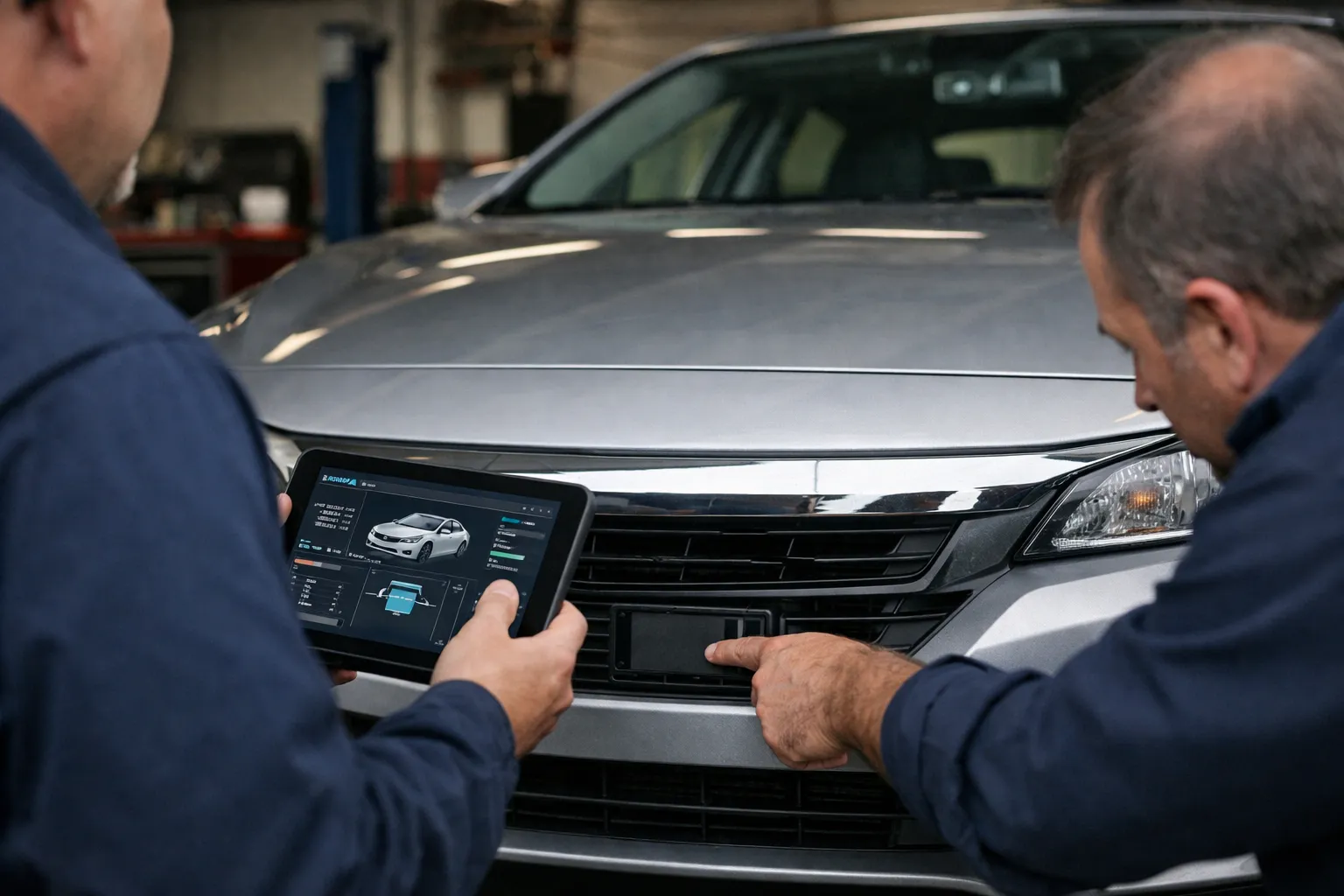
- Inspect bumpers and grille for signs of repair, misaligned panels or gaps where radar modules and ultrasonic sensors live.
- Check for scuffs, fogged lenses or tape/adhesive residue on cameras and sensors.
7. Get an ADAS‑aware pre‑purchase inspection
Standard mechanical inspections miss ADAS specifics. Hire a shop or independent inspector with ADAS diagnostic tools. Ask them to:
- Run scans for stored ADAS fault codes and pending errors.
- Verify calibration status and sensor health using OEM or calibrated aftermarket tools.
- Confirm that cameras and radars report expected data and that driver‑monitoring cameras work (if equipped).
Expect to pay $150–$400 for a thorough ADAS‑aware inspection; the extra cost is worth avoiding surprises.
8. Understand recalibration and repair costs
Costs vary with manufacturer, sensor type and whether parts are required. Typical 2026 ranges:
- Camera recalibration after a windshield replacement: $150–$600 (independent shops lower, dealers higher).
- Radar replacement or dealer recalibration after front damage: $500–$2,000+ including parts.
- LiDAR or complex sensor module replacement (rare in mainstream cars): potentially several thousand dollars.
When price is uncertain, get a written estimate from a dealership or certified collision center. Use those numbers to quantify negotiation leverage.
9. Check software, entitlements and end‑of‑support risk
Modern ADAS depend on software and cloud services. Verify:
- Whether any features require subscriptions or OEM account transfer and whether the seller will transfer accounts.
- Manufacturer statements about software update policies and support windows for that model year (search the maker’s owner portal or contact customer service).
- Community reports about feature regressions after updates — recent years have seen occasional firmware updates that altered system behavior.
If a valuable active feature is subscription‑locked and not transferable, that should reduce the car’s value or require the seller to include a partial subscription transfer.
10. Negotiate with documented ADAS factors
Turn facts into negotiation points. Examples:
- If the inspection found a needed recalibration, request a repair credit equal to the shop estimate or reduce your offer to cover the cost.
- If the windshield was replaced and no invoice for post‑replacement calibration exists, demand proof of calibration or a price reduction to offset likely cost.
- If features are subscription‑locked or inactive, quantify the subscription cost and deduct it or ask for a prorated credit.
Use clear, documented language: “Carfax shows windshield replacement; ADAS inspection found camera misalignment. Dealer estimate for recalibration is $525 — please deduct this from the asking price.”
Red flags that should make you walk away
- Evidence of multiple front‑end repairs with incomplete invoices or no evidence of ADAS recalibration.
- Persistent ADAS fault codes that require sensor replacement rather than calibration.
- Seller won’t allow an ADAS‑aware inspection or has no idea about subscriptions/account transfers for ADAS features.
- Unresponsive OEM support or known end‑of‑service for critical software that the vehicle depends on.
How ADAS affects ownership and insurance
Expect two main ownership impacts:
- Maintenance and repair: ADAS sensors are expensive to replace and may require dealer tooling for calibration.
- Insurance: Some insurers offer discounts for effective ADAS features, but repair bills after an accident can be higher, which may increase premiums or deductibles. Ask insurers for quotes using the specific VIN before final purchase.
Sample checklist to print and bring
- VIN, model year, and trim
- History report (Carfax/AutoCheck) and NHTSA recall printout
- Seller answers about collisions, windshield replacement, and ADAS subscriptions
- Visual sensor/camera check (windshield location, bumper, grille)
- Test‑drive script notes (adaptive cruise, lane‑centering, AEB, blind‑spot)
- Appointment with ADAS‑capable inspector and estimate for any needed recalibration
Final thoughts
Buying a used car with ADAS in 2026 can deliver significant safety and convenience benefits — but it requires extra diligence. Treat ADAS as a functional system, not a static option: test it, document its history, confirm calibration, and quantify repair or subscription costs before you agree to a price. With the right inspection and negotiation strategy, you can buy confidently and avoid surprise expenses.
Quick resource list
- NHTSA recall lookup: https://www.nhtsa.gov/recalls
- IIHS evaluations: https://www.iihs.org
- Vehicle history reports: Carfax, AutoCheck
- Local ADAS‑capable inspection shops — ask collision centers if they perform OEM‑level recalibration