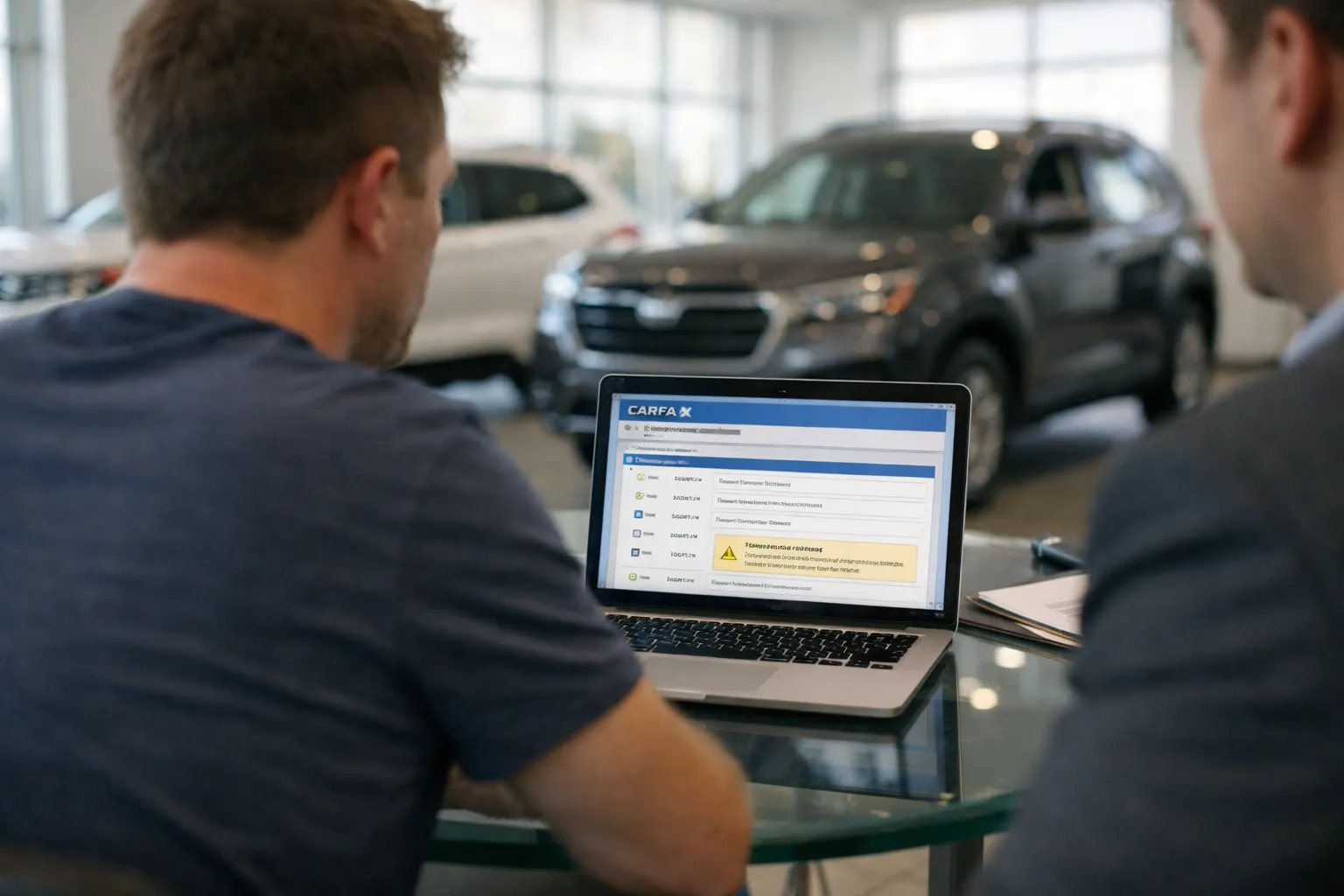
For many used-car shoppers, a Carfax vehicle history report is the first document pulled when evaluating a listing. Carfax has built brand recognition over two decades by aggregating title records, auction entries, service reports and recall notices into a single VIN-based file. In 2026 the company remains the market leader for visibility into a vehicle’s past, but its reports and its Buyback Guarantee have both strengths and important limitations. This review examines what Carfax does well, where it comes up short, and how practical buyers should use it when making a purchase.
What Carfax provides — the core features
- Consolidated VIN report: Carfax compiles state title brands, DMV records, odometer checks, reported accidents, service records submitted by dealers and service chains, auction entries and recall campaigns into a single report tied to a VIN.
- Searchable history timeline: Events are presented chronologically with dates, locations and (when available) reporting sources such as repair shops or insurers.
- Vehicle value & ownership flags: The report highlights title brands (salvage, flood, lemon-law buybacks where reported), number of prior owners, and sometimes mileage inconsistencies.
- Buyback Guarantee: Carfax offers a conditional guarantee that it will repurchase vehicles if the report failed to disclose certain state-recorded title brands. The guarantee carries terms and exclusions; Carfax’s site lists qualifying conditions.
Strengths — why Carfax is still useful
- Broad data reach: Carfax maintains one of the largest commercial vehicle-record databases, combining multiple public and private sources that a typical buyer cannot access on their own.
- Easy consumer interface: Reports are readable and widely integrated into dealer and listing sites, so buyers often see them alongside photos and price history.
- Red flags are valuable: When Carfax shows a salvage title, flood history, severe frame damage or an odometer rollback, it generally indicates material issues that merit walking away or a deep inspection.
- Buyback reassurance: The guarantee can deter sellers from omitting title branding or encourage more transparent listings from dealers that use Carfax automatically.
Limits and common misconceptions
Carfax is powerful but not omniscient. Buyers must understand three practical limits:
- Data is only as complete as reporting: Not every accident, repair or private-shop service is reported into the public or commercial feeds Carfax ingests. Low-dollar repairs and damage fixed in private without insurance involvement often do not show up.
- Timing and geography gaps: Some states have less timely or less-detailed title reporting. Vehicles that circulated in markets with fragmented recordkeeping can have thinner histories.
- Not a substitute for inspection: Carfax cannot detect mechanical wear, hidden collision repair quality, or frame damage missed by previous owners; it complements but does not replace an independent pre-purchase inspection.
How useful is the Buyback Guarantee?
The Buyback Guarantee is a meaningful consumer protection, but it has narrow contours. It applies when a state-recorded title brand — for example, a salvage or rebuilt title — exists in official records and was not included in the Carfax report. That means the guarantee does not cover unreported accidents, poor repairs, or structural problems that never became a branded-title event in the DMV. Buyers should read the guarantee’s eligibility rules carefully: there are requirements on timing, vehicle types, and proof of purchase. In short, it is a backstop against certain reporting failures, not a comprehensive warranty.
Pricing and value proposition
Carfax offers single-VIN reports and multi-report subscriptions; pricing structures evolve, so check Carfax.com for current rates as of September 2026. For buyers, the cost-per-report is modest compared with the price of a used car and the risk of an undisclosed title brand. However, for in-depth vetting on higher-value purchases it is prudent to combine Carfax with other checks rather than relying solely on it.
Practical checklist — when and how to use Carfax when buying
- Run a Carfax report early in your search to screen listings for title brands, odometer discrepancies and inconsistent ownership histories.
- Compare Carfax to at least one other dataset (for example, an AutoCheck report) — differences can reveal gaps and prompt questions.
- When Carfax shows an accident or flood entry, ask the seller for repair documentation, photos of the repair area, and an independent inspection focused on structural integrity.
- Use the Buyback Guarantee as a safety net, but do not treat it as insurance for mechanical or undisclosed non-title issues.
- Always complement a clean report with a pre-purchase inspection from a trusted mechanic and a test drive; consider a compression/leak-down check on older engines.
Alternatives and when to use them
AutoCheck is the main competitor; it tends to emphasize auction histories and uses a score that summarises auction-based risk. Local state title searches via DMV offices can be definitive for title branding. For luxury or older vehicles, a more forensic inspection (frame-measurement shops, paint-depth readings) and service-record audits are often worth the expense.
Verdict — who should rely on Carfax?
Carfax remains an essential tool for most used-car buyers in 2026: it flags documented title problems, aggregates service and recall data, and provides an accessible timeline that helps spot inconsistencies. For casual buyers and those buying lower-cost vehicles, a single Carfax report plus an independent inspection will cover most bases. For buyers of high-mileage, high-value, or older specialty cars, Carfax should be one element in a layered due-diligence approach that includes competing reports, state title checks and specialised inspections.
Bottom line: Carfax is valuable and often indispensable, but it is not a panacea. Use it early to screen listings, read the Buyback Guarantee terms so you understand the protection it actually offers, and always pair data with an in-person inspection before committing to purchase.