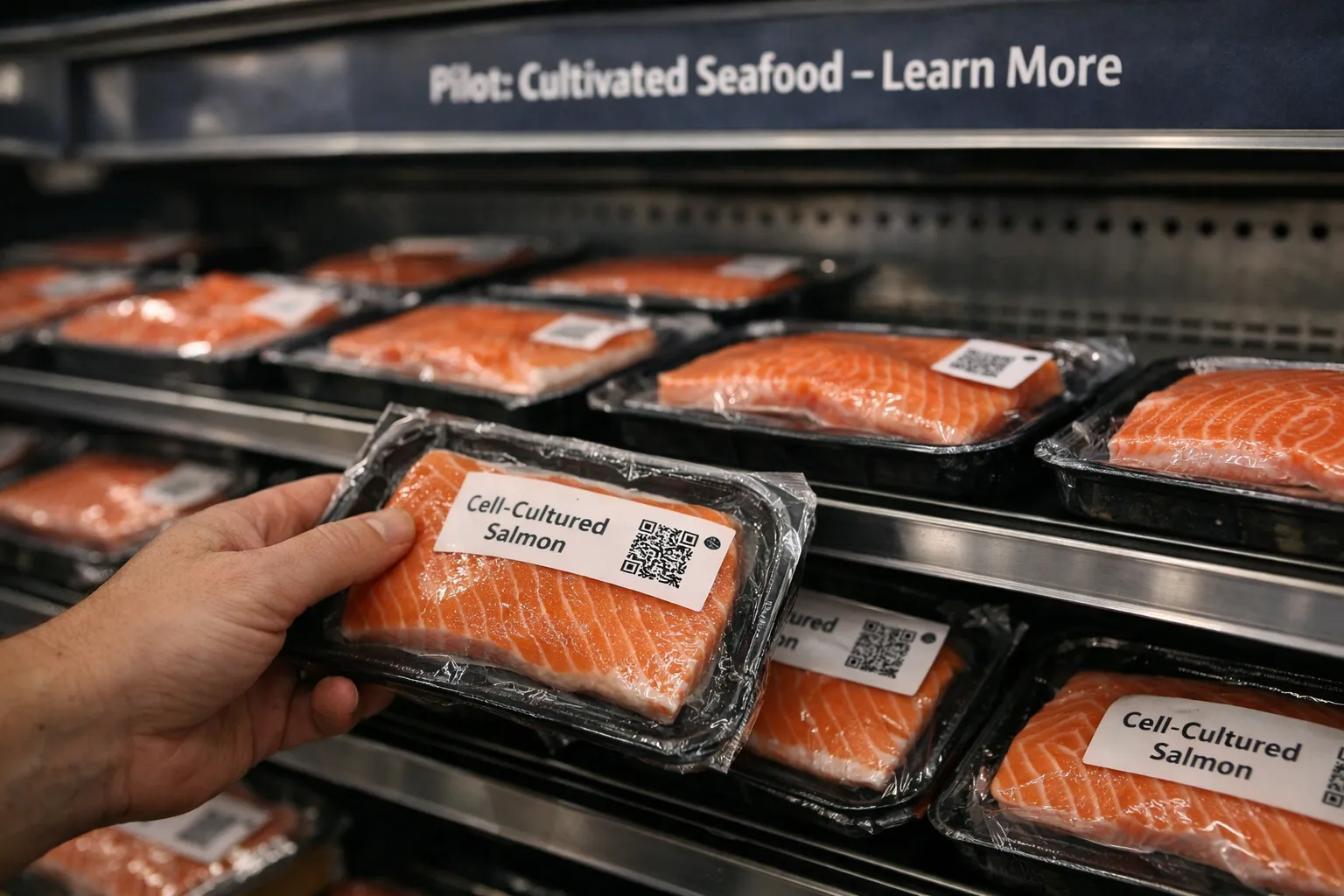
Who, what, when, where, why: As of August 2026, a growing number of U.S. grocery chains and online retailers are carrying limited runs of cell‑cultured seafood — fish and shellfish grown from animal cells in bioreactors rather than caught or conventionally farmed. The category, still in early commercial scale‑up, has expanded from coastal pilot markets in 2024–2025 into additional metropolitan areas and more retailers' refrigerated cases. Home cooks need clear, practical guidance now: how these products are labeled, how to store and prepare them, what they cost today, and how to weigh sustainability and nutrition claims.
Context: where this has come from and why it matters
Cell‑cultured seafood moved from lab to market in staged pilots beginning in the early 2020s. Producers used small retail tests to refine texture, flavor and packaging while regulators reviewed safety data. Between 2024 and 2026 the category has shifted from single‑store trials to multi‑site retail pilots and expanded direct‑to‑consumer shipping in refrigerated packaging. The move matters because cultured seafood promises a way to produce familiar seafood species without adding to overfishing or some aquaculture impacts — but the technology’s environmental tradeoffs and cost structure remain key questions for consumers.
What’s in stores now: formats and how products are labeled (Aug 2026)
Formats on shelves in 2026 still prioritize familiarity. The most common items you’ll encounter in pilot programs are:
- Boneless fillets sized for single‑serving portions.
- Preformed portions and burgers for pan‑frying or baking.
- Convenience items such as seasoned fillets and oven‑ready tray meals.
- Newer introductions: pre‑crumbed and smoked analogs, and shellfish formats such as shrimp and mussel medallions in select tests.
Labeling practices have converged on a few consistent elements. Look for:
- Production descriptor: words such as “cell‑cultured,” “cultivated,” or “grown from fish cells” appear prominently.
- Descriptive name: the species or conventional analog (for example, “cultivated Atlantic salmon”).
- Process summary: a short sentence about how the product was produced and handled.
- Handling instructions: refrigeration temperature, “use by” date and cooking recommendations.
- Traceability and QR codes: most pilot packages and shelf tags link to producer food‑safety data, nutrition facts and sustainability summaries.
How to read labels
- Confirm the production descriptor — “cell‑cultured,” “cultivated” or similar — to distinguish from plant‑based or fermented products.
- Check allergen statements. Some formulations now include binders, stabilizers or flavorings that can change allergen or soy/dairy content.
- Follow the “use by” date and refrigeration guidance; many products are sold chilled (not frozen) and are packaged under modified‑atmosphere or vacuum seals.
Storage and food‑safety practices for home cooks
Practically speaking, culturing cells into tissue yields a product that handles much like fresh farmed or wild fish. Retail pilots and DTC shipments in 2026 typically use one of three packaging and cold‑chain methods:
- Vacuum‑sealed pouches with refrigerated shelf life similar to fresh fillets (often 7–14 days depending on producer testing).
- Modified‑atmosphere packaging (MAP) to extend chilled shelf life by a few days.
- Frozen products for longer distribution windows.
Home‑kitchen guidance:
- Keep chilled at or below 40°F (4°C); if shipped, unpack immediately and refrigerate or freeze according to the label.
- Store seafood on the bottom shelf or in a dedicated drawer to avoid cross‑contamination.
- Cook fillets to an internal temperature of 145°F (63°C) for fully cooked preparations. If a producer intends a product for raw consumption (sashimi‑style), that should be explicitly labeled and accompanied by an approved safety protocol.
How it cooks and what to expect on the plate
By 2026 producers have refined cell‑culture formulations to achieve familiar textures and moisture content for common home cooking methods. Practical tips:
- Use the same times and techniques as for a comparable thickness of conventional fillet: quick sear on a hot pan, roast at 400°F (204°C), or grill with similar heat management.
- Preformed portions and crumbed items are designed for predictable results — good choices for cooks who want an easy test run.
- Because binding agents and fat composition can vary, expect subtle differences in browning and flakiness; follow the producer’s recommended oil or butter levels for a classic crust.
Price, availability and pantry planning — what’s changed in 2026
Price points have begun to move downward from the very high premiums of early pilots, but cultured seafood remains a specialty buy for most households. Across 2025–2026 pilots and DTC offers, retail prices have typically ranged from single‑serve items priced comparably to premium specialty seafood up to higher price points for newly launched lines. For planning:
- Expect to pay more than mainstream frozen fillets; use cultured seafood for meals where its texture, sustainability claim or novelty delivers value.
- Availability is expanding but uneven: more metropolitan grocery chains are running rotating pilots and limited SKUs rather than full national distribution.
- If you want to try, sign up for retailer or producer alerts — many launches are limited in quantity and region.
Sustainability, nutrition and ethics: the latest findings (2024–2026)
Between 2024 and mid‑2026 several third‑party lifecycle analyses (LCAs) and independent reports have examined cultured‑seafood environmental performance. The consistent theme: outcomes vary by species, production scale, and energy source.
- Where producers source renewable energy and optimize bioreactor efficiency, greenhouse‑gas footprints can be substantially lower than some wild‑capture or intensive aquaculture supply chains for the same species.
- Conversely, facilities relying on grid electricity with a high fossil‑fuel mix can show higher energy intensity than conventional production, especially at small scale.
- Water use, feedstock inputs and waste management have improved in newer facility designs, but remain important variables for net environmental impact.
Nutrition: most producers aim to match conventional fatty‑acid and protein profiles; nutrition labels and producer fact sheets now routinely include EPA/DHA levels where omega‑3s are a selling claim. Home cooks with strict dietary needs should consult labels and producer data linked by QR codes.
Reactions: what industry, retailers and NGOs are saying
Retailers describe cultured seafood as a way to diversify product assortments and offer premium, traceable alternatives; producers emphasize quality control benefits of controlled production environments. Environmental NGOs and fisheries scientists generally welcome the potential to reduce pressure on overfished stocks but urge independent, transparent LCAs and supply‑chain audits before scaling.
What this means for home cooks right now
- Try a small purchase. Buy a single fillet or preformed portion to evaluate texture and flavor in a simple preparation.
- Read labels carefully. Confirm production descriptor, allergen information and the “use by” date before you buy.
- Cook it like its conventional counterpart. Follow recommended internal temperatures and handling practices.
- Factor price and availability into meal planning. Use cultured seafood for special dinners or to test sustainability claims rather than as a weekly staple for now.
- Watch for LCA updates. Producers are increasingly publishing third‑party analyses — those can help you weigh sustainability claims.
What’s next — what to watch for in late 2026–2027
Expect incremental changes over the next 6–18 months rather than a sudden takeover of seafood aisles: more SKU variety (smoked and ready‑to‑cook formats), broader geographic rollout of pilots, additional third‑party LCAs, and continued downward pressure on price as producers scale and optimize energy use. Watch retailer newsletters and producer websites for short, regional drops of new products.
FAQ: common questions home cooks ask
Is it safe to eat cell‑cultured seafood?
Yes — products on U.S. shelves in 2026 come from companies that completed required safety testing and operate under regulatory oversight. Treat them like fresh fish: keep chilled, follow “use by” dates, and cook to recommended internal temperatures unless the label specifically states raw‑consumption safety protocols.
How can I tell the difference between cell‑cultured and plant‑based seafood?
Check the label. Cell‑cultured products will use terms such as “cell‑cultured,” “cultivated” or “grown from [species] cells” and will list the species name (for example, “cultivated Atlantic salmon”). Plant‑based analogs typically list ingredients such as pea protein, soy, or wheat and will not use “cell‑cultured” descriptors.
Will the flavor and texture match wild‑caught fish?
Producers aim to replicate familiar textures and flavor profiles, and many shoppers report close matches for common preparations. Differences can remain in fat distribution and browning behavior depending on formulation. The simplest test: season lightly and cook using a method you already trust for the comparable conventional fillet.
Are cultured seafood products more sustainable?
Potentially — but it depends. Independent lifecycle analyses show mixed results: cultured seafood can reduce pressure on wild stocks and avoid some aquaculture impacts, but energy source and production efficiency determine the overall greenhouse‑gas and resource footprint. Look for producer LCAs and energy‑use disclosures when judging sustainability claims.
Where can I find these products near me?
Availability varies by region and retailer. Sign up for retailer email lists, follow producers on social media, and scan in‑store shelf tags or QR codes. Many producers also offer limited direct‑to‑consumer refrigerated shipping for trial purchases.