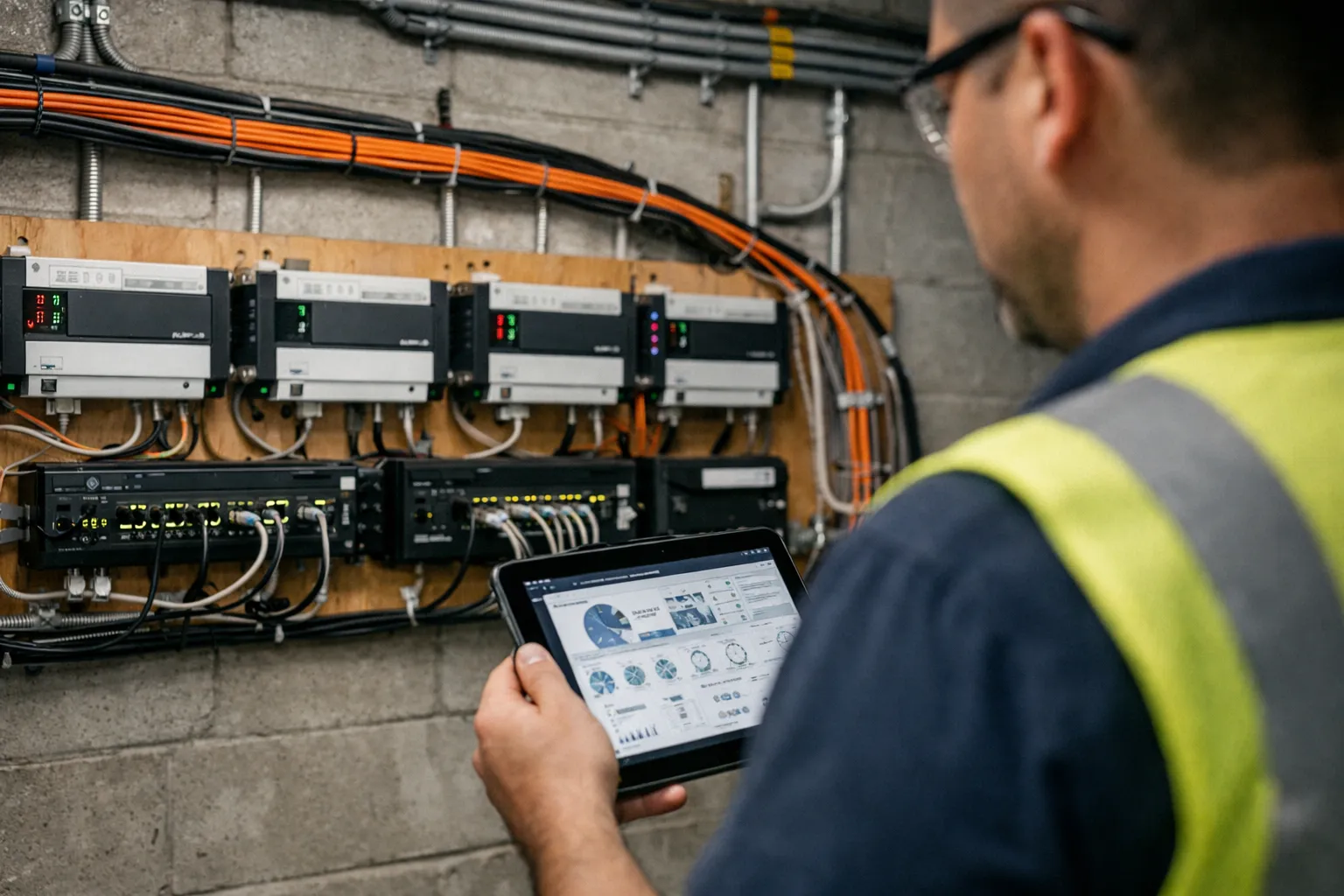
On Oct. 8, 2026, the U.S. Cybersecurity and Infrastructure Security Agency (CISA) published a landmark guidance document aimed squarely at building automation systems (BAS) and commercial HVAC controls. The new guidance — framed as a practical playbook for owners, operators and equipment vendors — lays out baseline requirements that will reshape procurement, service contracts and retrofit priorities across commercial HVAC systems.
What the guidance requires
CISA’s Building Automation Security Guidance (BASG, the agency’s working title) enumerates a set of specific controls CISA recommends as the federal baseline for protecting HVAC and building-control networks. Key elements that will affect HVAC contractors and facility managers include:
- Software Bill of Materials (SBOM): Vendors should provide an SBOM for controllers, gateways and firmware images to help identify vulnerable components and accelerate mitigation when new CVEs are disclosed.
- Authenticated remote access and multi-factor authentication (MFA): All remote administrative sessions must require MFA and be restricted to named operator accounts. Shared, generic credentials are explicitly discouraged.
- Network segmentation: BAS traffic should be isolated from corporate and guest networks using VLANs, firewalls and access control lists; explicit rules for telemetry to cloud services are required.
- Patch and vulnerability timelines: Manufacturers are urged to publish patching timelines for critical vulnerabilities (e.g., malware-ready CVEs) and provide emergency fixes or mitigations within clearly defined windows.
- Logging and retention: Event logging must be enabled on controllers and gateways, with a recommended 90-day minimum retention for operational logs and 365 days for security-relevant events when possible.
- Secure communications: TLS 1.2+ for all control-plane traffic, avoidance of legacy plaintext protocols, and guidance on secure certificate management for devices.
- Vulnerability disclosure and incident reporting: Vendors should publish coordinated vulnerability disclosure (CVD) policies and offer a mechanism for facilities to report incidents and receive coordinated mitigations.
Why this matters to HVAC pros
For HVAC contractors and service technicians, the practical implications are immediate. Many commercial controls installations still rely on legacy protocols, shared credentials and flat network architectures — all of which CISA lists as high-risk patterns. The guidance does not impose civil penalties, but it sets expectations that federal agencies and many large owners will use when awarding contracts or underwriting risk.
That creates three near-term impacts:
- Procurement changes: Building owners — especially federal, state and large commercial portfolios — are likely to require SBOMs, MFA and documented patch policies in RFPs. Equipment that cannot provide those artifacts may be excluded from bids.
- Retrofit demand: Systems that lack secure remote access or logging will need gateways, segmentation appliances or controller upgrades. That drives aftermarket sales and creates new scope for service agreements that include cybersecurity hardening.
- Service model evolution: Managed-service contracts that include ongoing patch management, SBOM updates and incident response coordination will become more attractive and often necessary for compliance with owner risk frameworks.
Vendor and industry reaction
Manufacturers and controls integrators the industry spoke with said CISA’s guidance formalizes requirements they had already been moving toward. Several OEMs are accelerating SBOM workflows, packaging revision histories with firmware releases, and expanding remote-access products that enforce MFA and certificate-based auth.
Trade associations are preparing practitioner-focused checklists and training modules. Expect certification bodies and continuing-education programs to add BAS cybersecurity modules covering network segmentation, secure tunneling, and operational logging best practices within months.
Practical steps for contractors and facilities
HVAC system professionals can take immediate actions to align with the guidance and reduce friction on upcoming projects:
- Inventory controllers and gateways: Create an asset list identifying firmware versions, manufacturer, and network connectivity for every BAS device.
- Request SBOMs: When bidding or servicing, ask OEMs for SBOMs and firmware change logs. If unavailable, document the request and escalate in procurement reviews.
- Harden remote access: Replace VPNs that rely on shared credentials with MFA-protected admin accounts and per-operator certificates; where feasible, adopt brokered remote access solutions that provide session logging.
- Segment networks: Work with IT to isolate BAS traffic and implement least-privilege firewall rules; ensure telemetry flows to cloud services are restricted to necessary endpoints.
- Establish patch routines: Define timelines for evaluating and deploying security patches; develop rollback procedures and test windows to avoid operational disruption.
- Log and monitor: Enable controller logging, centralize logs where possible, and retain security-relevant events for the recommended period.
Cost and contract considerations
Delivering these changes will raise up-front labor and integration costs — from installing segmentation hardware to managing SBOM handoffs — but many owners view cybersecurity as an insurance cost. Contractors should update proposals to include cybersecurity scoping line items and offer managed options that amortize the cost over multi-year service agreements.
Looking ahead
CISA’s guidance is likely to be a turning point: it codifies practical controls that large owners and federal agencies will demand, and it provides a playbook vendors must follow to stay competitive. For HVAC professionals, the change means new technical skills — network basics, certificate management, and SBOM literacy — will become as important as refrigerant handling and airflow balancing.
Implementation will play out over the next 18–36 months as owners refresh procurement documents, manufacturers streamline SBOM generation, and integrators build cybersecurity into commissioning and service workflows. For HVAC systems enthusiasts and practitioners, the period ahead offers a clear opportunity: firms that move quickly to incorporate the guidance into standard offerings will gain a market advantage as cybersecurity becomes a routine line item in commercial HVAC projects.