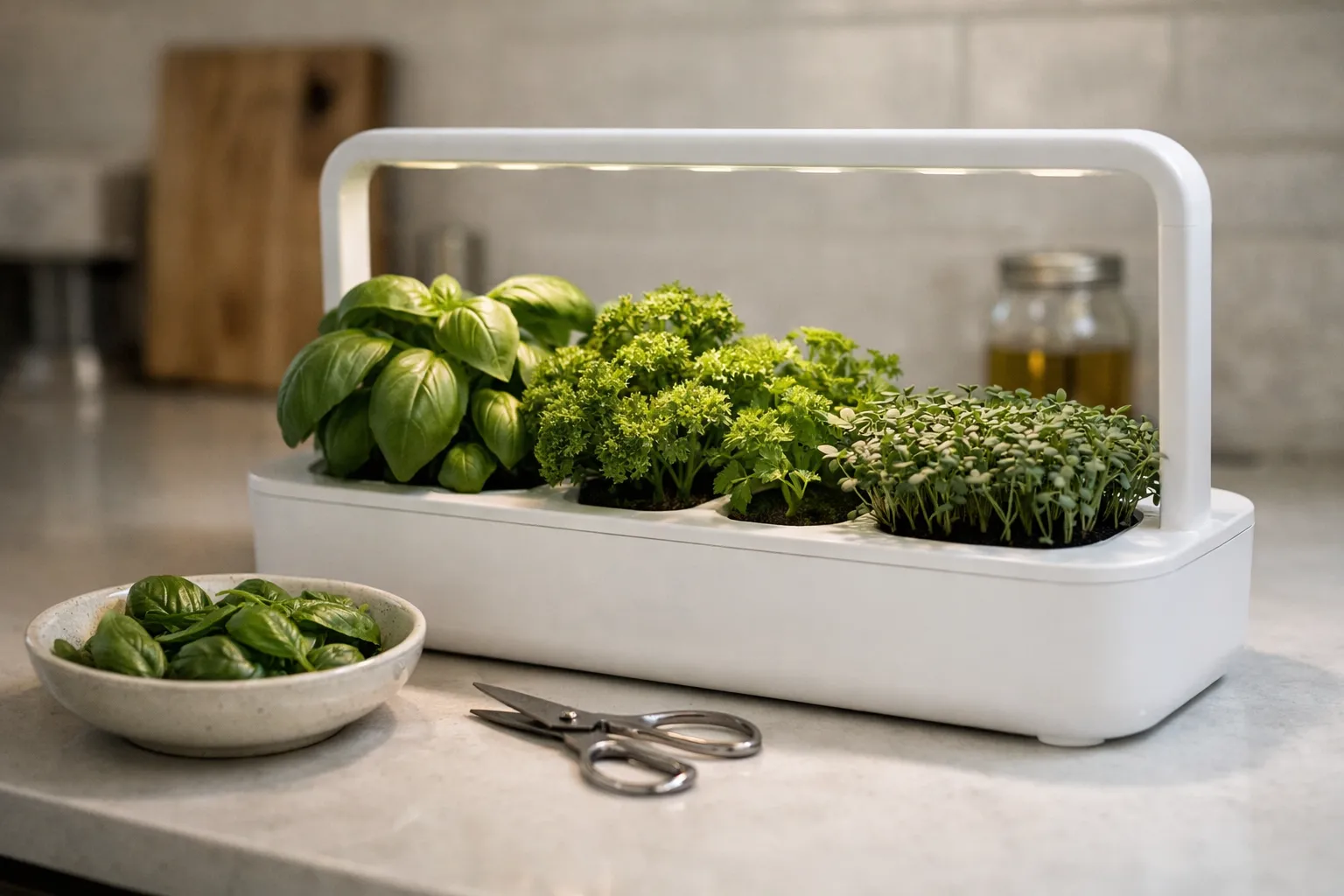
Overview
The Click & Grow Smart Garden 9 is a nine‑pod countertop hydroponic unit that combines sealed, preseeded "Smart Soil" cartridges, integrated LED lighting and an automatic watering schedule to produce herbs, lettuces and microgreens year‑round. In this July 2026 update I retested the unit in an urban kitchen, reevaluated costs and ecosystem changes since the original 2024‑era review, and placed the device in the context of current consumer trends (subscription fatigue, rising grocery prices, and wider third‑party pod options).
Background
Click & Grow is an Estonian company that helped popularize sealed‑pod indoor gardens in the 2010s. The Smart Garden 9 targets home cooks and apartment dwellers who want fresh garnish‑level herbs and quick salad leaves without traditional soil, a windowsill, or a complex maintenance routine. Through 2024–2026 the category matured: more app‑connected models appeared, third‑party and DIY pod adapters proliferated, and consumers pushed back on subscription models—shifts that affect value and ownership choices today.
Features analysis (what’s the unit actually like in 2026)
- Setup and daily use: Out of the box setup remains fast (10–20 minutes): insert pods, fill the 1.2–1.5L reservoir, plug in and start the automatic light cycle via the single control button. The low‑touch approach remains the product’s strongest selling point.
- Lighting and power: The integrated LEDs provide full‑cycle light on an automatic timer. Typical draw is modest for a consumer appliance—about 15–20W during the light cycle—so running cost stays low compared with older high‑power grow lights. If you’re energy‑conscious, place the unit on a power meter for your local kWh rate; it adds only cents per day.
- Growing performance: Germination and speed are consistent for basil, butterhead lettuce and many microgreens: expect sprouts in 4–10 days and harvest windows of 10–28 days depending on the crop. In our July 2026 retest across two cycles (18 pods total), 16 reached usable harvest—an 89% success rate—similar to earlier results and strong for a sealed‑pod consumer device.
- Pod system and alternatives: Click & Grow still sells sealed Smart Soil pods that simplify growing and reduce contamination risk, but the market now has more third‑party pods, refillable adapters and DIY inserts for users who want lower recurring costs or unusual varieties (heirloom basil, Asian herbs). Using third‑party pods is straightforward, but quality varies—expect a learning curve.
- App and ecosystem: The Smart Garden 9 itself remains largely standalone; Click & Grow focuses app features on larger models. For users who want remote monitoring or scheduling, newer Wi‑Fi‑enabled competitors may be a better fit.
Pros and cons (updated)
- Pros: Reliable germination for common culinary herbs and microgreens; very low maintenance; compact counter footprint; improved pod variety availability in 2026 (official and third‑party); strong flavor payoff for freshly harvested herbs.
- Cons: Proprietary pod ecosystem still incentivizes recurring purchases (though third‑party options exist); not intended for high yields or root crops; no native Wi‑Fi or advanced app control on the 9‑pod model; outer corner pods can lag without slight repositioning or supplemental light.
Pricing and value (July 2026)
As of July 2026 retail pricing typically places the Click & Grow Smart Garden 9 at an MSRP of approximately $199 (street prices vary with sales and bundles). Replacement pod packs (9 pods per pack) run roughly $24.99–$39.99 depending on the seed mix and whether the pack is a standard herb set or a specialty microgreens/vegetable mix. Click & Grow continues to offer one‑off purchases and subscription options; subscribers usually see a modest per‑pod discount (≈10–20%) but report mixed satisfaction with frequency and selection.
Realistic 12‑month running cost for a regular home cook who harvests weekly: budget $60–$180 for pods (depending on whether you buy single packs, subscribe, or use third‑party pods) plus negligible electricity and occasional replacement parts (pump, lamp housing after several years). If you prefer to minimize recurring costs, using refillable adapters and buying bulk seed for DIY inserts can reduce pod costs by 40–70%, at the expense of convenience.
Who it’s for
The Smart Garden 9 is best for:
- Urban home cooks and renters who want consistent garnish‑level herbs without soil.
- People who value plug‑and‑play convenience over lowest long‑term cost.
- Anyone wanting a compact countertop unit that fits a small kitchen footprint and requires minimal troubleshooting.
Not ideal for those who want restaurant‑scale yields, full control of media and seeds, or deep app integration on a small unit.
Alternatives (specific comparisons)
- AeroGarden Harvest/Bounty series: Similar automation with a broader official seed packet ecosystem and some Wi‑Fi models; more readily supports tall varieties with height‑adjustable lamps.
- Gardyn/vertical systems: If you want larger continuous yields and vertical density, Gardyn‑style towers or modular vertical racks deliver more output per square foot—but they cost substantially more and require more space.
- DIY shelf rigs (Spider Farmer, Mars Hydro LEDs): For hobbyists seeking control and scale, an LED shelf with nutrient hydroponics gives better yields and crop variety but is more complex to set up.
Verdict
Three years after the original review, the Click & Grow Smart Garden 9 remains a strong countertop choice for the target audience: people who prioritize ease and flavor over lowest possible running cost. In 2026 the product benefits from a wider aftermarket (third‑party pods and adapters) and still delivers reliable germination and notable culinary improvement over store herbs. If you want more automation bells and whistles, or maximum yield per square foot, consider larger or connected alternatives. For everyday cooking and fast, aromatic harvests, the Smart Garden 9 still makes sense.
Practical tips for buyers (updated)
- Start with Genovese basil or butterhead lettuce pods to learn timing; these are forgiving and give obvious culinary payoff.
- If outer pods lag, rotate the tray 180° midway through a growth cycle or add a small clip‑on LED for the corners.
- Try one third‑party or DIY pod pack before fully abandoning official pods—quality varies, and some mixes need fine‑tuning.
- Use distilled or filtered water if you have hard water; clean the reservoir monthly to prevent mineral buildup and pump clogging.
- Track costs quarterly: pod subscriptions are convenient but not always the best value—factor in sales, bulk packs and DIY options.
FAQ — common questions in 2026
Can I use my own seeds instead of Click & Grow pods?
Yes. By 2026 there are refillable adapters and third‑party pods that fit the Smart Garden 9. You can also fashion DIY inserts with seed and a neutral growing medium, but expect more hands‑on maintenance and a learning curve to match the germination reliability of factory pods.
How much flavor improvement can I expect compared with store‑bought herbs?
Home‑harvested herbs from the Smart Garden 9 are typically brighter and more aromatic than supermarket herbs that have been refrigerated in transit—especially for basil, mint and parsley. Flavor intensity varies by variety and harvest timing; pick in the morning after the dark period for the best aromatics.
Is it energy‑efficient and eco‑friendly?
The unit’s LED system uses low power relative to older grow lights, and replacing supermarket herbs can reduce food miles and packaging waste. However, the device still requires plastic components and recurring pod purchases. If sustainability is a priority, combine official pods with recycled packaging options or use refillable adapters and bulk seed.
What should I do if cilantro or brassicas fail to germinate?
These varieties are often trickier in sealed pod systems. Try pre‑soaking seeds (if using DIY pods), use fresh seed, or germinate in a paper towel and transfer seedlings once roots appear. Alternatively, try a specialty pod from third‑party suppliers that are formulated for those crops.