
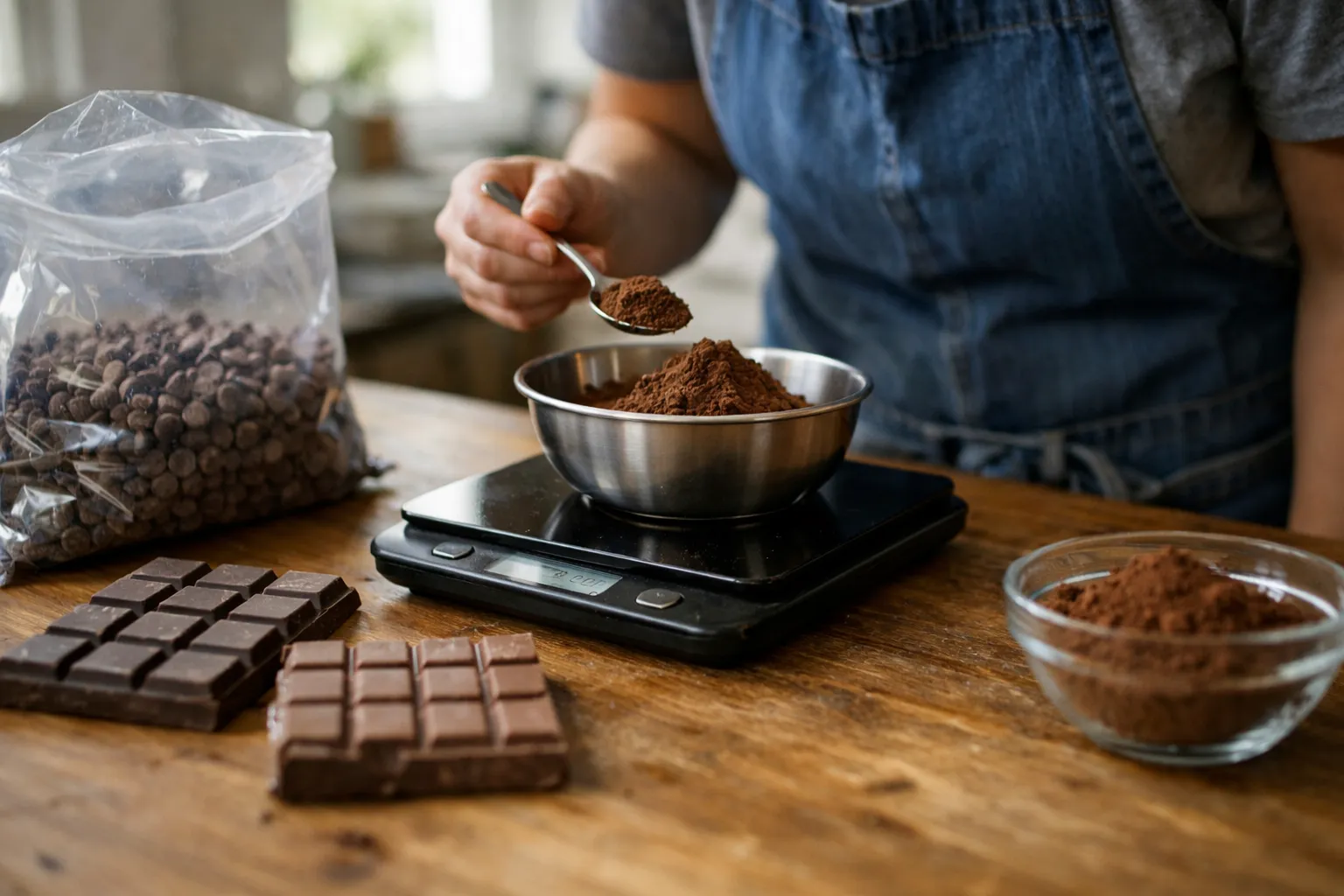
Overview: Why this August 2026 update matters to home bakers
We love chocolate the way fans love a rivalry—emotional and unforgiving when it’s off. By August 2026, the broad signal is unchanged from early 2026: cocoa markets have moved into a structurally higher price band compared with the pre‑2023 era. That doesn’t mean every brownie will bankrupt you, but it does mean the choices you make at the store—and at the mixer—matter more. This update takes the market cues I’m seeing now, explains how manufacturers and supply chains are behaving mid‑2026, and gives you kitchen‑grade plays to protect flavor and stretch your pantry dollars.
Background: Where we are and how we got here
The basic geography of risk hasn’t changed: West Africa (especially Côte d’Ivoire and Ghana) still dominates global production, and the 2023–2024 crop shortfalls set a new baseline for supply scarcity. Planting programs, donor financing, and growing numbers of farmer services moved further into implementation in 2025–2026, but cocoa trees take years to mature. In plain terms: the supply side is healing, but slowly—and that slow healing is what’s keeping prices elevated rather than letting them collapse back to old norms.
Meanwhile, the industry response has evolved. Early emergency tactics—broad hedging and across‑the‑board price hikes—gave way to more targeted measures in 2026: selective product preservation, SKU rationalization, and clearer labeling experiments. For bakers, that looks like some premium bars unchanged while cheaper mass SKUs get gentler formulations or smaller pack sizes. Think of it like roster management: star players are kept intact for marquee games; role players get shifted around to shore up the lineup.
Data and evidence: What markets and industry signals are showing in Aug 2026
1) Price baseline: elevated, but less headline volatility
Through mid‑2026, futures and spot markets have remained above the long‑run averages from before 2023. The extreme spikes of early disruption are quieter—the market has traded some headline volatility for a higher normal. Traders still respond quickly to West African harvest reports and weather chatter, so short‑term moves remain possible, but the dominant pattern is a higher floor rather than repeated, dramatic peaks.
2) Supply improvements are real but incremental
Planting and rehabilitation efforts that ramped up in 2024–2025 are beginning to show incremental yield improvements in some regions. Processing facilities in parts of Latin America and Southeast Asia have expanded modestly, absorbing some excess demand. Those changes reduce tail‑risk but do not create immediate surplus: mature, productive trees are the bottleneck and they take several seasons to arrive at full yield.
3) Corporate tactics: preservation, segmentation, and disclosure experiments
Major confectioners and ingredient suppliers continue to emphasize sustainability programs in public statements, but their short‑term playbook is twofold: (1) preserve flagship product formulations for brand equity and (2) segment the portfolio so mainstream SKUs can be adjusted in size, sweetness, or blend. In addition, several companies in 2026 have piloted clearer unit‑price labeling and traceability tags for selected bean‑to‑bar lines—useful signals for consumers who want to see where premiums land.
Multiple perspectives: Who’s saying what and why it matters
Manufacturers
From the big multinationals to mid‑tier bakers’ suppliers, the message is: protect brand identity where it counts, and get tactical elsewhere. That means limited‑edition or premium lines remain stable, while mainstream SKUs may be reduced in net weight, reblended, or subtly reformulated to preserve margins.
Traders and analysts
Commodity analysts still flag weather and disease (notably cocoa swollen shoot and black pod in hotspots) as the primary wildcards. Their consensus: significant price relief will hinge on several seasons of healthy harvests in the Ivory Coast and Ghana and on sustained investment in farm rehabilitation.
NGOs and researchers
Field groups continue to emphasize that higher world prices do not automatically translate to stable farmer incomes. Transparency and supply‑chain premiums remain uneven. If you care about the ethics of your chocolate spend, look for traceability or certification that documents actual premiums reaching farmers rather than relying on label claims alone.
Home bakers and retailers
On the front line, shoppers are noticing more SKU shifts—smaller bags, sweeter formulations, and more visible "artisan" or bean‑to‑bar options. Retailers are responding with larger multi‑pack promotions and targeted in‑store premium assortments. For home bakers, the practical consequence is both more choice and more to evaluate at the shelf.
Implications for home cooks: Updated, practical guidance (Aug 2026)
Okay—what do we actually do? Below are tactics that reflect the market reality right now. These are the plays that protect flavor without wasting money.
1) Shop by unit price and ingredient order—don’t trust package art
- Always check price per 100 g (or per ounce). In 2026 more brands are changing net weights, so sticker price alone is misleading.
- Read ingredient order: if sugar or lower‑cost fats jump ahead of cocoa mass or cocoa butter, flavor and melt will change.
2) Choose formats with purpose
- For melting: buy bars or couverture when possible. They contain more cocoa butter and perform better in ganache and glazing. A chopped bar often outperforms drop‑in chips for melty texture.
- For batters and hot drinks: high‑quality cocoa powder gives more immediate flavor impact per gram than chips. Dutch‑process powders are denser in flavor but require leavening tweaks—see below.
- For portability and convenience: keep a small stash of reliable chips, but stretch flavor with a tiny amount of a higher‑cocoa bar blended in.
3) Use culinary hacks that amplify perceived chocolate
- Add a teaspoon of instant espresso powder (per batch) to deepen chocolate notes without making it taste like coffee.
- Browned butter, a scant pinch of flaky sea salt, or a scrape of vanilla bean boosts perceived richness.
- For cookies, use fewer, larger chunks instead of many small chips—bigger pieces taste more like real chocolate.
4) Recipe swaps and chemistry checks
Switching between natural and Dutch‑process cocoa matters for leavening. Natural cocoa pairs with baking soda; Dutch‑process—neutralized—works better with baking powder or additional acid. If you swap mid‑recipe, cut or add the leavening accordingly to avoid texture surprise.
5) Smarter storage and small‑batch stockpiling
- Store chocolate in a cool (16–20°C), dry, odor‑free spot. In hot summers, short‑term refrigeration can be used if you vacuum or airtight‑wrap the chocolate to avoid condensation and odor pickup.
- Portion bars into 50–100 g packets and freeze for long‑term storage; thaw slowly to avoid bloom.
- Buy on promotion, but only what you will use within 6–12 months for bars, 12–24 months for sealed cocoa powder.
Outlook: What to watch through the rest of 2026
Keep an eye on three things:
- Harvest updates from Côte d’Ivoire and Ghana: seasonal anomalies or disease flare‑ups will still move the market.
- Corporate portfolio moves: whether product changes are temporary price defenses or permanent reformulations—ingredient labels and company sustainability reports will tell you which.
- Traceability wins: look for credible on‑package traceability or direct trade claims that detail farmer premiums—those give more assurance that your premium dollars have real impact.
For home bakers: be intentional. Allocate your pantry budget where it moves the needle—save the splurge for chocolate that actually changes your result (ganache, iced cake, showpiece cookies) and use culinary techniques elsewhere to sell the illusion of abundance.
Bottom line: As of August 2026, cocoa’s new baseline is real. That means smarter buying and small recipe adjustments—not sacrifice—will keep our chocolate baked goods tasting like winners.
Frequently asked questions
Will cocoa prices return to pre‑2023 levels this year?
Unlikely in 2026. While plantings and rehabilitation programs are delivering incremental yield gains, mature trees and large‑scale processing expansion take multiple seasons. Expect prices to remain range‑bound above the pre‑2023 norm unless there’s an unexpected supply surge or a major demand shock.
Is it better to buy cocoa powder or chocolate bars if I'm on a budget?
It depends on your use. For batters, hot chocolate, and flavoring, a good cocoa powder gives the most flavor per dollar. For melting, ganache, and glossy finishes, bars or couverture are more cost‑effective and perform better. A common win: buy bars on promotion and chop them for baking.
How can I tell if a brand has reformulated its chocolate?
Compare ingredient lists and net weight over time. Look for shifts toward higher sugar, different fats, or new emulsifiers. Watch unit price (per 100 g) rather than the sticker price. Brands piloting changes sometimes flag “new recipe” on pack—don’t ignore that label copy.
Do certified or fair‑trade chocolates protect me from price swings?
Certification can create better farmer premiums and transparency, but certified products are still subject to global commodity dynamics. Certifications help with traceability and may stabilize incomes in specific supply chains, but they don’t immunize brands from higher cocoa costs.
Any quick chef tricks to get richer chocolate flavor without more cocoa?
Yes: add instant espresso powder, brown your butter, use a tiny amount of high‑quality bar mixed into cheaper chips, finish with flaky salt, or fold in a little melted dark chocolate at the end of baking to improve aroma and mouthfeel without doubling the cocoa spend.