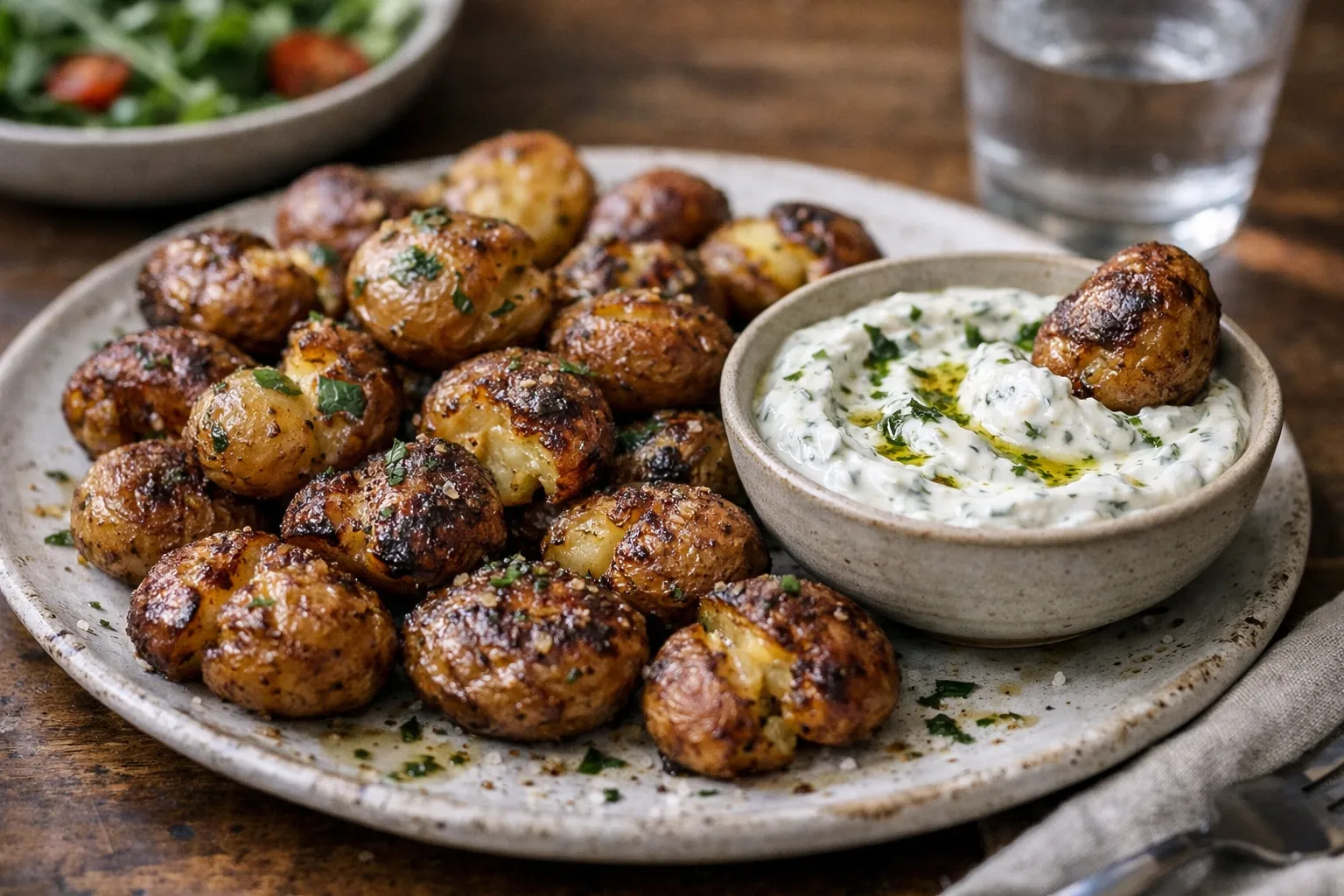
What you'll learn: You will roast and twice‑crisp baby potatoes so they have a pillowy interior and glassy, golden crust, and you will make a bright herbed yogurt dip. The tutorial includes weeknight timing, air‑fryer and convection alternatives, plant‑based swaps popular in 2026, and reheating and storage best practices.
What you'll need
Prep time and yields (expectations):
- Active prep: 20 minutes
- Total time: 45–55 minutes (including two roasts; shorter in air‑fryer)
- Makes: 4 servings as a side or 6 as an appetizer
Ingredients
- 1.5 lb (700 g) baby potatoes (mixed fingerlings, baby Yukon Gold or red baby potatoes)
- 2 tbsp neutral high‑smoke‑point oil (grapeseed, avocado or light olive oil)
- 1 tsp fine sea salt, plus flaky salt to finish
- 1/2 tsp freshly ground black pepper
- 1 tsp smoked or sweet paprika (optional)
- 2 tbsp unsalted butter or vegan butter, melted (optional)
- 2 garlic cloves, smashed (for the initial roast)
- Fresh herbs: 2 tbsp chopped parsley and 1 tbsp chopped chives (or dill)
Herbed Yogurt Dip
- 1 cup (240 g) plain yogurt — whole‑milk or plant‑based (oat or pea protein yogurts have improved texture in 2026)
- 1 tbsp lemon juice
- 1 small garlic clove, grated
- 1 tbsp chopped dill or 1 tbsp mixed chopped herbs (parsley + chives)
- Salt and pepper to taste
- 1 tsp olive oil to finish (optional)
Why this method still matters in 2026
The two‑stage roast is a low‑effort, high‑reward technique that remains a staple in home kitchens. In recent years home cooks have leaned on smash‑style potatoes and air‑fryer finishes for fast, crispy results; this recipe keeps the forgiving first roast for a tender interior while giving you multiple finishing options based on new kitchen gear and dietary preferences.
Step‑by‑step method
- Preheat and prep: Preheat oven to 425°F (220°C). Line a rimmed baking sheet with foil or parchment; if you have a metal cooling rack rated for oven use, set it on the sheet to lift potatoes and improve airflow. Expected result: oven at target temp and a prepared sheet for even browning.
- Parboil (optional but recommended for uniform results): Cover whole baby potatoes with cold water, add 1 tsp salt, bring to a simmer and cook 8–12 minutes depending on size. Test: a fork should enter with slight resistance. Drain and let steam‑dry 1–2 minutes. Expected result: potatoes tender but not falling apart.
- First roast — build the tender interior: Toss potatoes with 1 tbsp oil, smashed garlic, 1 tsp salt, pepper and paprika. Spread in a single layer on the sheet (or on the rack). Roast on middle rack 18–22 minutes until edges begin to brown and potatoes yield to a fork. Expected result: lightly browned surfaces and soft centers.
- Smash or cut: Remove tray. If parboiled, press each potato with the flat bottom of a cup or small plate until it flattens to about 1/2" thickness and the skin cracks. If raw‑roasted, halve or quarter to expose more surface area. Expected result: pieces with increased surface for crisping and a ragged, craggy texture that will brown.
- Second roast — crisp: Brush or drizzle with remaining 1 tbsp oil and melted butter (or vegan butter). If you have a convection setting, decrease oven temp to 400–410°F (205–210°C) and roast 12–16 minutes until deeply golden and crisp. If not using convection, raise oven to 450°F (230°C) and roast 12–18 minutes. Optional: 1–2 minutes under the broiler for darker char — watch closely to avoid burning. Expected result: glossy, deeply browned edges and a crunchy exterior.
- Make the herbed yogurt dip: While potatoes finish, whisk yogurt, lemon juice, grated garlic, dill/parsley/chives, and a pinch of salt and pepper. Taste and adjust acidity or salt. Finish with a drizzle of olive oil. If using plant‑based yogurts, stir vigorously—oat‑based yogurts in 2026 often benefit from an extra squeeze of lemon to lift flavor. Expected result: bright, tangy dip that complements the potatoes.
- Finish and serve: Transfer potatoes to a platter, sprinkle with chopped herbs and flaky salt, and serve hot with the herbed yogurt dip. A final squeeze of lemon over the potatoes brightens the dish. Expected result: contrast between pillowy interior and crisp crust; dip adds freshness.
Screenshots / visual cues (what you should see)
- After parboil: a pot of intact potatoes with skins slightly taut and a fork slipping in with light resistance.
- After first roast: shiny, slightly browned exteriors and garlic cloves that are softened and lightly caramelized.
- After smashing: flattened discs with cracked skin and exposed flesh for maximum browning.
- After second roast: deeply golden, glossy edges with bubbles in the flesh and browned nooks where the skin has crisped.
- Dip: creamy, slightly loose yogurt speckled with green herbs and a small pool of olive oil on top.
Air‑fryer and equipment alternatives (2026 updates)
- Air‑fryer oven: Parboil, smash, then air‑fry at 400°F (200°C) for 8–12 minutes, flipping halfway. Newer multi‑drawer air‑fryers may need lower temps—check for even color.
- Convection ovens: Use the convection roast setting to improve browning; reduce temp by ~10–15°C (20–30°F) and shorten time by ~10%—monitor color.
- Sheet pans: Heavy‑gauge steel gives deeper browning than rimmed aluminum; avoid silicone for final crisping because it can trap moisture.
Dietary modifications & 2026 pantry swaps
- Vegan: Use plant‑based yogurt (oat or pea protein for creaminess) and vegan butter or extra oil.
- Lower fat: Skip butter and use 1 tbsp oil; roast on a rack or use convection for added airflow.
- Garlic‑free: Omit roasted garlic and add 1 tbsp minced shallot or 1 tsp preserved lemon zest to the dip.
- Umami boost: Stir 1 tsp white miso or 1 tbsp grated aged cheese into the dip for savory depth—use vegan miso for a dairy‑free option.
Make‑ahead & storage
- Store roasted potatoes in a sealed container up to 3 days. To re‑crisp, spread on a sheet and bake at 425°F (220°C) for 8–10 minutes.
- Dip keeps 2–3 days refrigerated; if plant‑based yogurts thin over time, whisk in a little extra yogurt or 1 tsp lemon to refresh texture.
Troubleshooting & pro tips
- Potatoes soggy after second roast? Likely overcrowding or retained moisture. Spread in a single layer and pat dry after boiling; use a hot sheet straight from the oven for the second roast.
- Too dark outside, raw inside? Pieces were probably too large or oven temp too high early. Parboil until fork‑tender and cut to consistent sizes.
- Excess smoke? Use an oil with a higher smoke point (avocado or refined grapeseed) and avoid broiling for long; crispy color can be achieved with convection at slightly lower temps.
- Dip tastes flat? Add an acid (lemon or a splash of vinegar) and salt to brighten. For plant‑based yogurt, add 1 tsp maple syrup or apple cider vinegar to emulate tang if it tastes muted.
Next steps — serving and variations
- Pair with grilled chicken, roasted salmon, or a big leafy salad for a weeknight meal.
- Turn into a party platter: add smoked paprika, lemon zest and chopped cornichons to the dip for extra zing.
- Make it a warm bowl: toss potatoes with greens (kale or spinach) and a splash of sherry vinegar, then top with the herbed yogurt.
Why this still works in 2026
Home cooks now have more gear and plant‑based options than ever, but the basic science—tender interior from a gentle first cook, increased surface area for Maillard reactions on the second—remains the fastest route to reliably crisp, flavorful potatoes. These updated tips reflect common 2026 tools (air‑fryer ovens, denser sheet pans) and pantry shifts (improved oat/pea yogurts and umami condiments) so you get great results tonight.
How long can I parboil without falling apart?
Parboil until a fork meets slight resistance — typically 8–12 minutes for baby potatoes depending on size. If the fork slides through easily, you’ve overcooked them and they’ll be mushy when smashed.
Can I skip the parboil entirely?
Yes. If you skip parboiling, halve or quarter the potatoes before the first roast and extend the initial roast time so centers become tender. The tradeoff is slightly less uniform interior texture but still good crisping.
Which plant‑based yogurt works best?
In 2026, oat and pea‑protein yogurts most closely mimic whole‑milk yogurt’s creaminess and tang. Taste and texture vary by brand—choose a plain, unsweetened one and add lemon to boost tang if needed.
Is charring unsafe (acrylamide concerns)?
Light browning is desirable for flavor. To reduce potential acrylamide formation, avoid excessive black charring; finish at moderate high heat and use a quick broil only if needed. A golden‑brown finish is the sweet spot.