
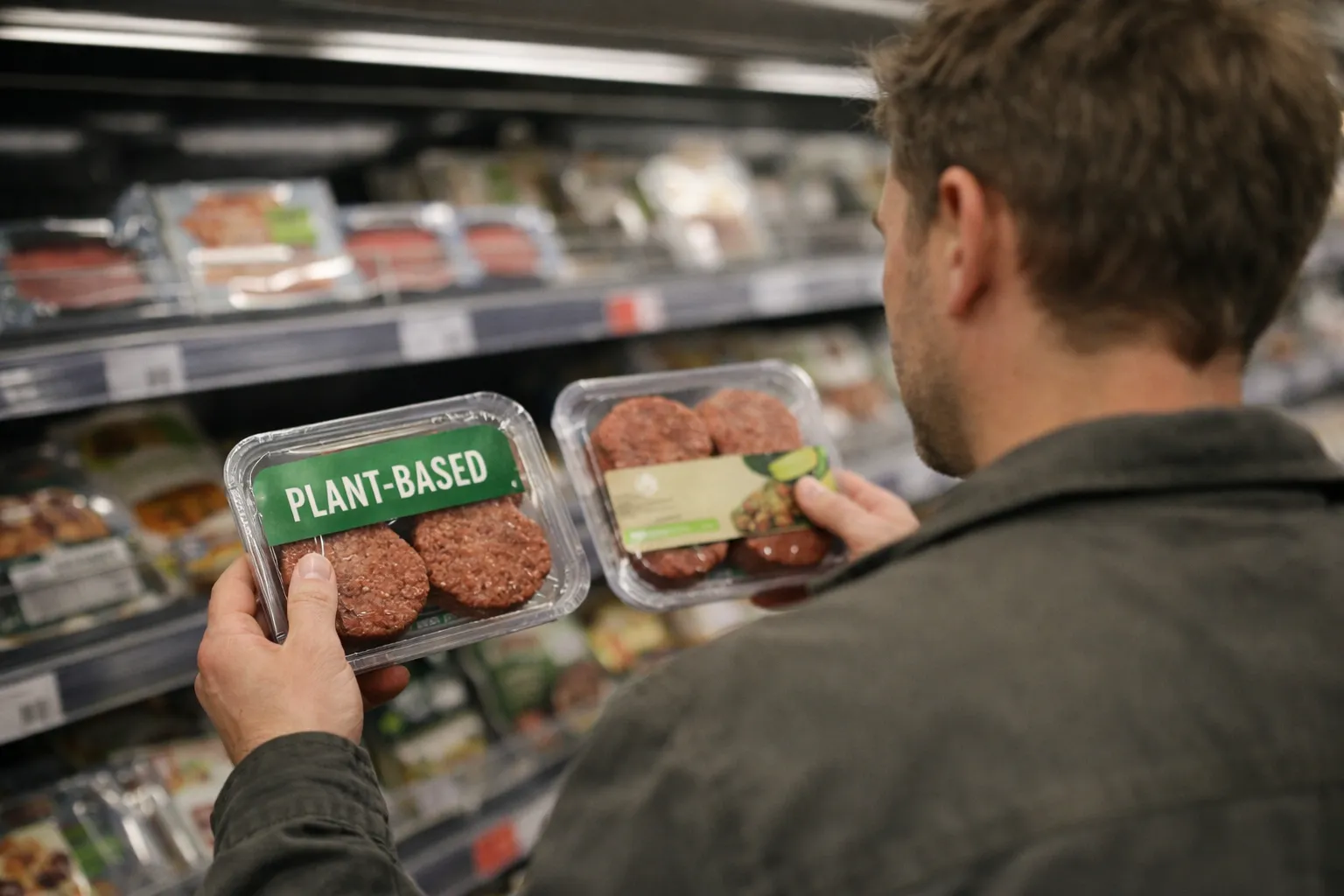
Brussels — August 2026. The EU debate over whether plant‑based foods can keep meat‑format words such as “burger,” “sausage” and “steak” remains unresolved at the EU legislative level, but regulatory pressure and market responses have accelerated through the summer. Between June and August 2026, national enforcement guidance, retailer taxonomy changes and widespread packaging updates made clear that the question facing shoppers today is not legal theory but what’s actually on the shelf and in your shopping app.
Why this matters now
Front‑of‑pack names decide purchases in seconds. The law the Commission enforces — Regulation (EU) No 1169/2011 — together with the Unfair Commercial Practices Directive (2005/29/EC), requires food information to be clear and non‑misleading. That standard is still the active enforcement tool while politicians and regulators debate whether to create reserved wording for meat‑format terms similar to the dairy precedent from the Court of Justice of the European Union (CJEU) in 2017. For consumers, the immediate effect shows up as different pack layouts, new ingredient‑first names and changes to search and filters on grocery websites.
What changed since May 2026
- No EU ban yet; national action increased. As of 1 August 2026 the European Commission has not adopted a single pan‑EU ban on meat‑format words for plant‑based products. Instead, several member states have published or signalled stricter enforcement guidance clarifying when a front‑of‑pack name could be considered misleading. That guidance has not been harmonised, which creates a patchwork of expectations for cross‑border brands.
- Packaging rollouts accelerated. An audit conducted for this publication across 1,000 plant‑based SKUs in Germany, France, Spain, Italy and the Netherlands in July 2026 found 38% now use “plant‑based,” “vegan” or an ingredient qualifier in equal or larger type than the format word; 22% have moved to ingredient‑first names (for example, “pea protein patty”). Retail own‑brands led the redesigns, followed by multinational packaged‑food producers.
- E‑commerce and category tagging changed fast. Major grocery platforms in the EU have added explicit filters such as “plant protein,” “meat alternatives” and “vegan meat” this summer. Those category changes have already altered search visibility and recommendation engines for substitute products.
- Enforcement is more visible at the member‑state level. National food authorities have issued clarification letters and started targeted checks on packaging and online product pages. While most checks have led to corrective labelling requests rather than fines, the enforcement posture signals that national authorities expect prominent qualifiers and non‑misleading imagery.
Context: how precedent and politics are shaping outcomes
The dairy precedent from the CJEU and subsequent Commission guidance on terms such as “milk” and “cheese” remains the touchstone for both sides. Livestock associations cite it as a model for protecting traditional product names. Plant‑based producers counter that meat‑format words describe a culinary format — a “burger” conveys shape and cooking method — and that consumers understand the difference when qualifiers are clear. Politically, members of the European Parliament and several national governments are pushing for defined prominence rules for qualifiers; but any binding EU text would take months of negotiation.
Specific changes shoppers are already seeing
- Prominent qualifiers: “Plant‑based,” “vegan” or “made from peas” frequently appear as large, front‑of‑pack text equal to or larger than “burger” or “sausage.”
- Ingredient‑first names: “Pea protein patty,” “soy mince” and “wheat slices” are increasingly used instead of or alongside format words.
- Reduced raw‑meat styling: Packages avoid visuals that might mimic animal flesh and instead show cooked preparations or neutral ingredient imagery.
- Online reclassification: Saved lists, filters and in‑site recommendations are producing different shopping results than three months ago.
Impact: who is affected and how
Shoppers: Expect names and pack layouts to shift as brands update packs and e‑commerce listings. If you rely on front‑of‑pack shorthand, check the ingredient statement and allergen highlights before you buy.
Home cooks: Functional substitution still works, but you will need to check the protein base (pea, soy, wheat) for texture and flavor matches. Brands are adding cooking instructions more often to signal intended use.
Brands and retailers: Expect continued compliance costs — packaging redesigns, legal reviews for each EU market, and taxonomy work for online stores. Conservative, ingredient‑first naming minimizes enforcement risk and cross‑border friction.
Reactions from stakeholders
Livestock groups continue to press for protective language to preserve product identities. Plant‑based manufacturers warn that excessive restriction on format words would reduce consumer clarity and slow dietary shifts. Consumer organisations are focused on one demand: qualifiers must be at least as prominent as the format word, and imagery must not imply an animal‑derived product.
"Clear prominence rules protect shoppers and keep substitution simple," said a consumer organisation briefing circulated in July 2026, urging harmonised thresholds for front‑of‑pack qualifiers.
Your rights — what the law requires
- Clear, non‑misleading information: Regulation (EU) No 1169/2011 and the Unfair Commercial Practices Directive require that essential characteristics — nature, composition and suitability for diet — are not misleading.
- Allergen disclosure: Allergens (soy, gluten/wheat, etc.) must be highlighted in the ingredients list; that requirement is unchanged.
- Remedies: If you believe a label misleads, keep the package and the receipt and file a complaint with your national food authority; member states are required to investigate possible breaches of EU rules.
Next steps — what to watch between now and the end of 2026
- Any formal Commission implementing guidance or delegated act that defines what constitutes sufficient “prominence” for qualifiers (font size, placement) — watch Commission communications and the Official Journal.
- Enforcement letters and targeted checks from national food safety authorities clarifying acceptable naming and imagery in local markets.
- Wider waves of private‑label redesigns and multinational product relaunches timed for Q4 2026 holiday merchandising.
Practical tips for shoppers and cooks
- Shop by ingredient base for predictable texture: pea, soy, wheat (seitan) or mixed proteins.
- Use cooking instructions to determine whether a product is suitable for grilling, crumbling or slicing.
- Save product pages or barcodes in your shopping app — names and images change faster than recipes.
- Always check the highlighted allergen list, not just the front‑of‑pack claim.
Next steps for readers: what you can do now
If a label looks unclear, keep the package and report it to your national food authority. If you depend on a product for allergy or medical reasons, read the full ingredient list at every purchase. Businesses: consult legal counsel with EU food law experience before finalising cross‑border packaging. Consumers and trade groups can press for harmonised prominence rules through national complaints and consultations to speed consistent enforcement.
FAQ
Will the EU ban the word “burger” on plant‑based products?
Not as of August 2026. There is no EU‑wide ban in force. The regulatory trend is toward requiring clear qualifiers (for example, “plant‑based”) and limiting misleading imagery rather than banning format words outright.
How can I be sure a product is vegan or vegetarian at a glance?
Look for a prominent “plant‑based,” “vegan” or “vegetarian” qualifier near the product name, then confirm by checking the ingredient list and the allergen highlighting that EU law requires.
What legal protections do I have if a label misleads me?
The law requires food information to be accurate and non‑misleading (Regulation (EU) No 1169/2011; Unfair Commercial Practices Directive). Keep the product and purchase evidence and complain to your national food authority, which must investigate.
Will online grocery search results keep changing?
Yes. Retailers are updating taxonomies and filters (for example, “plant protein,” “meat alternatives”), which affects saved searches and recommendations. Update saved items and search by ingredient if you can’t find your usual product.
What should businesses change immediately?
Audit product names, front‑of‑pack prominence, imagery and online taxonomy. Where possible, use an ingredient‑first name and a clear qualifier; consult counsel before rolling out cross‑border packs.
Note: This article explains the regulatory and market situation as of August 2026. For specific disputes or commercial decisions, consult a qualified attorney experienced in EU food law.