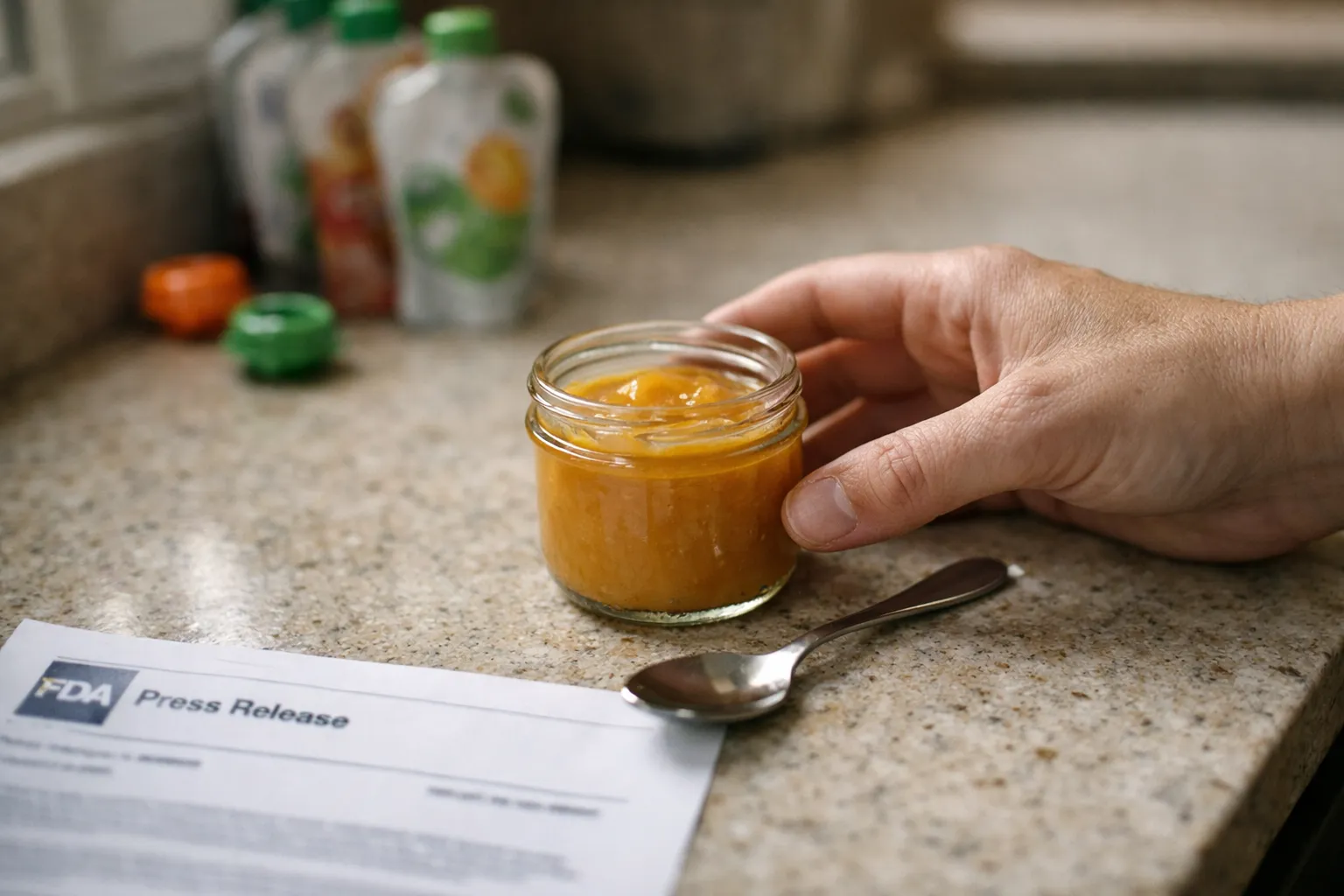
Who: U.S. Food and Drug Administration (FDA), infant-food manufacturers, packaging suppliers, parents and home cooks.
What: Since the FDA released a draft proposal in March 2026 to restrict certain phthalates and plasticizers in materials intended to contact foods for infants and young children, manufacturers and retailers have begun adjusting packaging choices and testing strategies. The agency's initiative aims to lower early-life exposure to endocrine-disrupting chemicals while setting migration-testing and labeling expectations.
When: The draft guidance opened the formal comment process in March 2026; action and industry responses have accelerated through June 2026 as companies and trade groups evaluate compliance timelines.
Where: The policy affects packaging and food-contact materials sold in the United States—especially products marketed for infants and toddlers, including formula, purees, squeezable pouches and snack packaging.
Why this matters: Phthalates are plasticizers used to soften flexible plastics. Scientific and regulatory concern centers on early-life exposure because developmental windows in utero and infancy are more sensitive to hormones. Changes in packaging can reduce a pathway of exposure; for consumers, this affects everyday decisions about reheating, storing and buying baby and toddler foods.
Context: where the policy sits and why regulators acted
The FDA’s March 2026 draft flagged specific phthalates used in flexible food-contact materials and proposed requirements that replacements demonstrate minimal migration under realistic use conditions (heating, acidic or fatty foods, long-term storage). The move follows years of state-level restrictions, European Union limits under REACH and accumulating epidemiology and toxicology data linking some phthalates to developmental, metabolic and reproductive outcomes.
Importantly for industry and consumers, the draft does not instantly ban products already on shelves; it starts a rulemaking and comment period that typically includes technical input from manufacturers, scientists and consumer groups before a final rule is issued.
What’s changed since March 2026
- Manufacturers: Several large baby-food and packaging suppliers publicly announced they are accelerating voluntary switches away from the fastest‑moving phthalates named in the draft, citing supply‑chain planning and consumer demand. Smaller producers report assessing costs and timelines for third‑party migration testing.
- Retail response: Major retailers are updating supplier questionnaires and asking for documentation about plasticizers and migration testing as part of their vendor compliance programs.
- Testing standards: Trade associations and independent labs are developing standardized migration test protocols that mimic real-world use—reheating, contact with fatty foods and extended storage—so replacement plasticizers can be validated on a common basis.
- Research: New cohort analyses and laboratory studies published in 2024–2025 continued to reinforce concerns about prenatal and early-childhood exposures; those findings informed the FDA’s precautionary approach in 2026 and are motivating consumer groups to push for faster action.
Practical implications for home cooks and parents — updated June 2026
The immediate public-health steps are practical and unchanged in principle, but with new clarity from the marketplace and labs, here are more specific actions you can take today:
- Do not microwave food in plastic containers or single‑use pouches. Heat increases migration of plasticizers. Reheat in glass or ceramic and transfer from pouches to bowls before heating.
- Prefer glass or stainless‑steel for storage. Use wide‑mouth glass jars for purees and portions. Metal canisters (food‑grade stainless steel) are safe for short‑term storage and transport.
- Check labels and vendor information. Look for explicit “phthalate‑free” statements, and when in doubt, consult retailer or brand transparency pages. Retailer supplier questionnaires increasingly request migration test reports—ask for them if you need reassurance.
- Choose food‑grade silicone cautiously. High‑quality, food‑grade silicone is widely used for squeezable lids and utensils; confirm suppliers state “phthalate‑free” and that the item is intended for the temperatures you will use.
- Discard degraded plastic. Cracked, warped or very scratched plastics can release more additives; replace them sooner rather than later.
- For pouches: Transfer contents to a bowl for reheating and feeding. If using pouches cold, avoid placing them near heat sources or in direct sunlight for extended periods.
Industry challenges and costs — what companies face
Replacing phthalates is not just a drop‑in swap. Alternatives such as certain adipates and citrates are commercially available, but each requires validated migration testing, compatibility testing with different foods (high-fat vs. acidic) and supply-chain documentation. That testing can cost tens of thousands of dollars per material/package format for smaller brands, while larger firms can spread those costs across greater volume.
Packaging consultants and trade groups have pointed to three operational bottlenecks: (1) validated test methods that reflect realistic consumer use, (2) certified supply of alternative materials, and (3) label clarity so end users understand product-safety improvements.
Impact: who is affected and how
Families with infants and toddlers are the primary focus; however, reformulation and labeling changes will ripple across the broader packaged-food sector. Smaller brands and startups that rely heavily on flexible packaging will face higher per-unit compliance costs. Conversely, brands that move early may see a marketing advantage as consumers increasingly prioritize transparency and "phthalate-free" claims.
Reactions
Consumer-advocacy groups have praised the FDA’s precautionary stance, calling for clear deadlines and harmonization with international standards. Packaging industry representatives have urged phased implementation timelines and harmonized testing protocols to avoid supply disruptions. The American Academy of Pediatrics has previously recommended minimizing infant exposures to endocrine-disrupting chemicals; pediatricians advising families emphasize practical exposure-reduction steps rather than alarm.
What to watch next
- Final scope of the rule: Will limitations apply only to infant formula and baby food or to all food-contact materials marketed for young children?
- Testing standards and acceptable migration thresholds: Watch for consensus protocols from labs and standards bodies; those will determine how quickly alternatives can be certified.
- FDA timelines: Monitor the agency docket at regulations.gov for filing numbers, comment deadlines and proposed effective dates.
- Brand rollouts: Expect phased labeling updates and inventory transitions through late 2026 and into 2027 as manufacturers align with testing and supply availability.
Bottom line
The FDA’s March 2026 draft represents a pivotal nudge toward safer infant‑food packaging. For home cooks and parents the change is actionable now: avoid heating food in plastic, prefer glass or stainless storage, and check labels for phthalate‑free claims. For industry, the coming months will be about testing, substitutions and supply-chain transparency—items to watch if you buy, make or sell food for young children.
FAQ
Are current baby foods unsafe right now?
No. The FDA’s draft guidance initiates a precautionary process—it is not an immediate recall. Existing products remain regulated under current rules. If you are concerned, follow exposure‑reduction steps (use glass for reheating and storage, avoid microwaving plastics, transfer pouch contents before heating).
How can I verify a product is phthalate‑free?
Look for explicit “phthalate‑free” claims on packaging and check the brand’s website for migration‑test documentation or supplier transparency pages. Retailer compliance pages or customer service can also provide information about materials and third‑party testing.
Is silicone safer than plastic for baby food?
High‑quality, food‑grade silicone that is labeled phthalate‑free and rated for the intended temperatures is a common alternative for utensils and lids. Always confirm the product is food‑grade and follows manufacturer instructions for heat limits and cleaning.
Will switching to glass solve the problem?
Glass eliminates migration concerns from plasticizers and is an effective, widely available option for storage and reheating. It is heavier and breakable, so choose appropriate containers (wide‑mouth jars, silicone sleeves if needed) for portability and safety.
Where can I follow regulatory updates?
Monitor the FDA’s public docket (search regulations.gov for the FDA food-contact materials phthalates docket) and reputable consumer-health organizations for summaries and timelines. Retailers and major brands will post transition timelines on their supplier-commitment pages.