
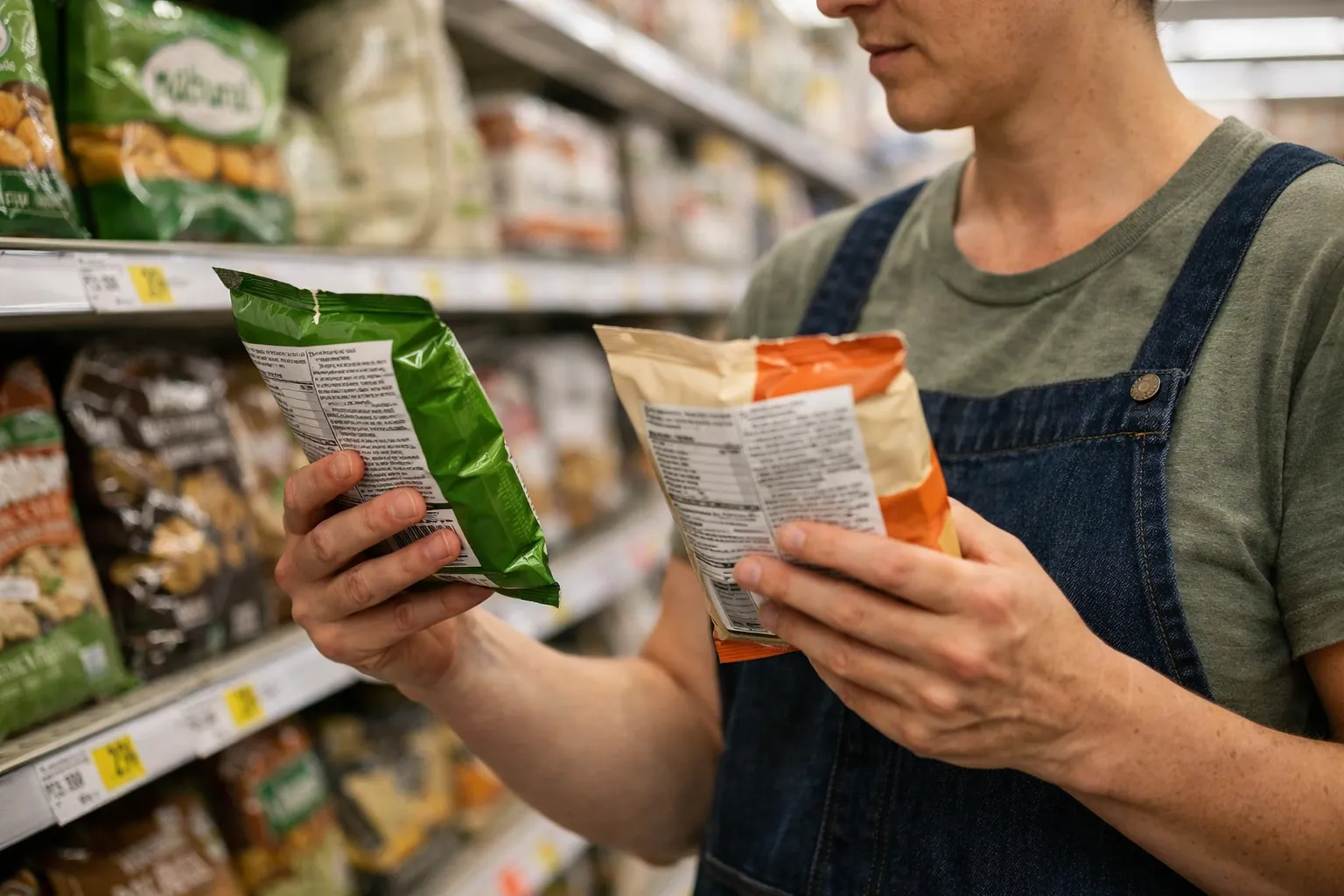
WASHINGTON, D.C. — August 12, 2026 — The U.S. Food and Drug Administration’s effort to define the front‑of‑package term “natural” is no longer just a proposal on paper: since the agency announced rulemaking in January 2026, the debate has broadened to include thousands of public comments, formal position papers from trade groups, and visible packaging changes from several manufacturers. For home cooks, that means label language, ingredient lists and product behavior in recipes may change through 2026 and into 2027.
Why this matters now (Who, What, When, Where, Why)
The FDA first signaled on January 28, 2026 that it would pursue clearer guidance or a formal rule to define “natural” on packaged‑food labels. As of August 12, 2026, the agency’s public docket on Regulations.gov is active and attracting sustained participation from consumer groups, manufacturers and retailers. Why it matters: unlike “USDA Organic,” “natural” has long lacked a consistent federal standard, producing litigation, consumer confusion and uneven marketplace practices. A federal definition would directly affect what can appear on front panels, how ingredient lists are interpreted, and how manufacturers design formulations.
Context: what’s changed since the January announcement
- Regulatory process: The FDA opened a public docket and confirmed it will follow the Administrative Procedure Act’s notice‑and‑comment rulemaking. That formal pathway requires a proposed rule, a public comment period, and then a final rule—typically a multi‑month to multi‑year timeline.
- Volume of input: Between March and July 2026, trade associations (including the Consumer Brands Association and the Specialty Food Association), consumer advocates (such as the Center for Science in the Public Interest), and dozens of food manufacturers submitted detailed position papers. Many filings stressed the need for category‑specific criteria (e.g., differences between fresh produce, minimally processed goods and highly formulated foods).
- Market signaling: Several large retailers announced label reviews in Q2 2026 and have started phased packaging updates. Private‑label brands frequently discussed "ingredient rationalization" in their investor calls—language companies use when they intend to reformulate to meet new label standards.
Specific developments home cooks will notice
Three tangible changes are already appearing on store shelves and in product disclosures:
- Fewer front badges on borderline products. Some companies have quietly removed “natural” badges on deli meats, flavored sauces, and snack foods where colorants or certain preservatives are present.
- Ingredient swaps and “new recipe” claims. Expect to see “new look” or “updated recipe” flags on packaging. Substitutions—like switching from a synthetic stabilizer to a plant‑derived gum—can change texture, browning, and how a product behaves when heated or emulsified.
- More detailed labeling alerts. Some brands are starting to add short explanatory language on back panels (e.g., “No synthetic dyes; see ingredient list for ‘natural flavors’ details”) to reduce consumer confusion while they await a federal standard.
Evidence and expert perspective
Consumer perception research conducted over the past decade consistently finds that shoppers interpret “natural” to mean “no artificial ingredients” and “minimally processed.” For example, industry surveys such as the International Food Information Council’s annual Food & Health Survey (2024–25 editions) showed that roughly two‑thirds of consumers expect “natural” to signal limited processing. Food‑policy researchers argue a workable federal definition must balance consumer expectations with technical realities of food chemistry and shelf stability.
Regulatory attorneys and trade groups emphasize enforceability: a definition that is too sweeping could be unworkable across categories, while a definition that is too narrow risks leaving consumers confused. The Center for Science in the Public Interest (CSPI) has urged the FDA to adopt strict limits on synthetic additives for use of the claim, while the Consumer Brands Association has pressed for clear category exceptions to avoid unintentionally banning common food technologies.
Practical impacts for your kitchen (what to watch and test)
- Price and availability: Reformulations and SKU consolidations can increase retail prices. Expect some premium lines to raise prices in late 2026 as reformulation costs appear in supply‑chain accounting.
- Cooking performance: If a product you rely on (for example, a store‑brand condensed soup used as a sauce base) switches stabilizers or emulsifiers, test a single unit before using it in a large batch; you may notice differences in thickening, separation or browning.
- Allergen/diet flags: Reformulations can add or remove allergens (e.g., switching from soy lecithin to sunflower lecithin). During the transition, read full ingredient lists, not just front claims.
How to shop and cook now — an updated checklist (August 2026)
- Use “natural” as a starting point, not a guarantee: Scan ingredient lists for items you avoid—added sugars, specific oils, artificial colors.
- Trust panels over badges: For calories, sodium, fiber and saturated fat, look at the Nutrition Facts panel; for processing and additive questions, read the ingredient list.
- Track “natural flavors” carefully: The term is a defined label entry and may remain even after a new “natural” rule. If you have allergies or strong ingredient preferences, contact the manufacturer’s consumer‑relations line for specifics.
- Test before you commit: For staples you use in recipes, buy one package after a labeled “new recipe” update and run a small trial to check texture, emulsification and browning.
Reactions and who to watch
Consumer advocates say clearer federal rules will reduce misleading marketing; industry groups warn that overly prescriptive language could hamper innovation. Watch the FDA docket on Regulations.gov (search the agency’s food labeling rulemaking entries) for the formal proposed rule and public comment dates. Also monitor filings and investor calls from major consumer‑packaged goods companies in Q3–Q4 2026; many companies will use those reports to communicate expected timelines for reformulation and packaging updates.
What’s next (timelines and signals to monitor)
Key milestones to watch in the coming months:
- FDA publication of proposed rule text (watch Regulations.gov and the Federal Register for an official notice).
- Formal public comment period dates attached to any proposed rule—these will tell you how long stakeholders have to respond.
- Company supply‑chain and investor communications in Q3–Q4 2026 explaining when reformulations will hit retail shelves (expect staged rollouts through 2027).
FAQ: Common questions for home cooks
Will "natural" disappear from labels?
Not immediately. Some products will stop using the claim; others will reformulate to retain it. Expect a multi‑phased transition through 2026–2027 as companies update packaging and ingredients.
Does "natural" guarantee healthier food?
No. “Natural” speaks to ingredients and processing (depending on the eventual rule), not nutrient content. For calories, sodium, fat and fiber, use the Nutrition Facts panel, not a front‑of‑package claim.
How can I tell if a reformulation will affect my recipes?
Compare ingredient order and look for functional substitutes (different emulsifiers, stabilizers, thickening agents). Buy a single unit to test in your recipe before switching to a larger purchase.
Where can I follow official progress?
Monitor the FDA’s regulations page and the specific docket on Regulations.gov for official notices, proposed rule text and comment deadlines. Also track position papers from the Consumer Brands Association, CSPI and major manufacturers for practical timelines.
Dr. Emily Torres is Health & Wellness Correspondent for Home Chef Delights, with a background in public health and nutrition communication. This article explains regulatory developments and practical cooking impacts; it does not constitute legal or medical advice. For formal regulatory information, consult the FDA docket and the Federal Register.