
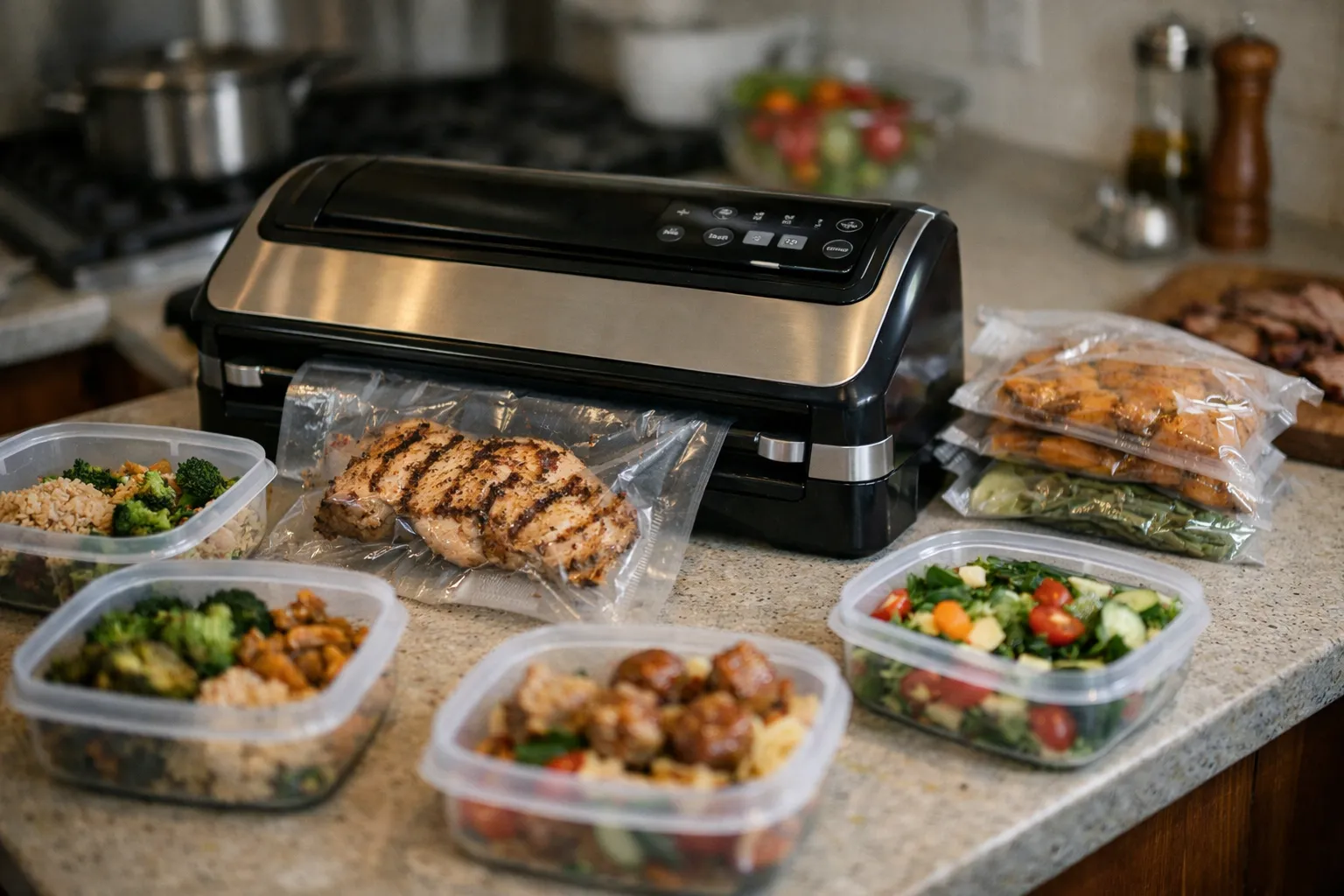
Overview — What we're reviewing
The FoodSaver V4840 is a mid‑range countertop vacuum sealer aimed at home cooks who freeze large batches, preserve bulk proteins, or sous‑vide at home. Key specs at a glance: automatic vacuum & seal, built‑in bag roll storage and cutter, accessory hose for canisters, removable drip tray and simple button controls. Retail prices in June 2026 hover around $150–$199, depending on promotions.
Background — Who makes it and who it's for
FoodSaver (Sunbeam Brands) is the dominant name in consumer vacuum sealing in the U.S., with decades of product iterations. The V4840 sits above entry models (basic clamp sealers) and below commercial units. Its target: home meal preppers who want reliable vacuum sealing without paying pro‑grade prices. Think weekly batch cookers who freeze proteins, make large stews, or pre‑bag sous‑vide portions.
Features analysis — How it performs in the kitchen
The V4840 packages the features most home batch‑cooking households need.
- Automatic vacuum & seal: You place the open bag in the channel, press the automatic button and the machine handles vacuum and seal. For most dry and refrigerated items this works consistently.
- Built‑in roll storage & cutter: The internal roll compartment and cutter make custom bag lengths easy, which reduces plastic waste vs pre‑cut bags when you portion irregularly sized cuts.
- Accessory hose: Connects to jar lids and FoodSaver canisters for delicate items (nuts, marinated veg) or for sealing non‑bag containers.
- Removable drip tray: Collects juices from raw proteins and makes cleanup straightforward — a must for frequent batch cooking.
In practical use across three weeknight batch‑cooking sessions, the V4840 handled boneless chicken breasts, stews, and raw steaks without failed seals. For very wet or saucy foods we recommend pre‑freezing portions flat for 1–2 hours or using the "moist" setting if available to reduce seal failures. The built‑in cutter is convenient; measured against higher‑end models, the vacuum motor is adequate for household use but not as fast as pro units when sealing long rolls back‑to‑back.
Food safety and storage considerations
Vacuum sealing reduces oxidation and freezer burn but does not make unsafe food safe. USDA Food Safety and Inspection Service guidance applies: cool cooked foods quickly (within two hours) and refrigerate at 40°F (4°C) or below. Vacuum sealing can extend quality in the freezer, but proper blanching, cooling and labeling remain critical. Also note: vacuum sealing preserves an anaerobic environment — do not vacuum‑seal room‑temperature cooked low‑acid foods and leave them at room temp; follow USDA/FDA guidance on refrigeration and freezing to limit botulism risk.
Pros and cons — A balanced assessment
- Pros
- Reliable automatic seals for everyday batch cooking.
- Built‑in roll storage and cutter reduce ongoing bag waste.
- Accessory hose adds versatility for canisters and jars.
- Removable drip tray simplifies cleanup after raw proteins.
- Mid‑range price point offers solid value for regular users.
- Cons
- Motor and cycle speed lag behind pro models — not ideal for sealing dozens of bags in one session.
- Replacement bag and roll costs add up: expect $15–$30 per roll or $20–$40 for 50 pre‑cut bags depending on retailer.
- For very liquid or heavily sauced items, pre‑freeze or use canister accessory to avoid wet‑seal failures.
- Not dishwasher‑safe — the drawer and cutter are easy to clean but still require attention.
Pricing and value
As of June 2026 typical online pricing for the FoodSaver V4840 ranges $150–$199. Starter bundles often include a 10–20ft roll and a handful of pre‑cut bags; expect to spend an additional $15–$30 per replacement roll, or $20–$40 per pack of 50 pre‑cut bags. If you freeze a lot, amortize the machine over 2–3 years: the utility is evident when you avoid freezer burn, reduce food waste and economize on bulk meat purchases.
Compare that to entry vacuum sealers (Nesco, Chefman) in the $60–$100 band — those save money up front but skimp on features like integrated roll storage, cutter and durable motors. Commercial machines run $300+ and offer faster cycles and stronger vacuums, but they’re overkill for most home cooks.
Who it's for — Use cases and ideal buyers
- Weekly batch cookers who freeze 6–20 meals per week and need consistent seals.
- Home sous‑vide cooks who bag proteins prior to immersion (the V4840's seal quality is fine for domestic sous‑vide).
- Anyone buying meat in bulk and wanting to portion and freeze without freezer burn.
- Not for: people who only seal occasional snacks — cheaper handheld or clamp sealers suffice — or small commercial operators who need faster throughput.
Alternatives to consider
- Nesco VS‑02 (~$70–$90): Budget sealer that will get the job done for light, occasional use but lacks built‑in roll storage and is less durable for weekly batch cooks.
- Anova Precision Vacuum Sealer (~$179–$219): Similar price band with strong brand recognition among sous‑vide users; compact and user‑friendly, but compare accessory ecosystem and ongoing bag costs.
- VacMaster VP112 (>$300): Entry pro unit—faster, stronger vacuum and longer duty cycle for semi‑commercial needs, but higher upfront cost.
Verdict
We care about two things in a meal‑prep shop: reliability and time saved. The FoodSaver V4840 earns a solid recommendation for home batch cooks. It hits the sweet spot — enough features for disciplined weekly batch cooking without buying pro equipment. The motor isn’t the fastest, and replacement bag costs mean you should be deliberate about bag usage, but the convenience of automatic sealing, built‑in roll storage and the accessory hose make it a practical workhorse for most home kitchens.
If you batch‑cook frequently, buy in bulk and freeze portions, this unit will pay for itself by reducing waste and keeping meals tasting fresher. If you only seal once in a while, look at budget alternatives.
FAQ: Common questions
Will vacuum sealing make my food safe for longer?
Vacuum sealing extends quality by reducing oxidation and freezer burn, but it doesn’t eliminate food‑safety steps. Cool foods quickly, refrigerate or freeze promptly and follow USDA/FDA storage guidance. Vacuum sealing can create anaerobic conditions—handle low‑acid foods and refrigeration appropriately.
Can I seal soups and sauces with the V4840?
Liquids are the trickiest items. Pre‑freeze portions flat for 1–2 hours before sealing, or use the canister accessory. Many users also freeze sauces in tray‑frozen pucks and then final‑bag to minimize liquid during sealing.
How much do replacement bags cost?
Expect to pay roughly $15–$30 for a 20–25 ft roll and $20–$40 for a 50‑count pack of bags, depending on size and seller. Buying rolls and cutting to size reduces per‑portion plastic compared with pre‑cut bags.
Is vacuum sealing worth it if I sous‑vide?
Yes. For home sous‑vide, a consistent vacuum seal prevents water ingress and stabilizes marinades. The V4840 delivers seals robust enough for typical home sous‑vide temperatures and durations.