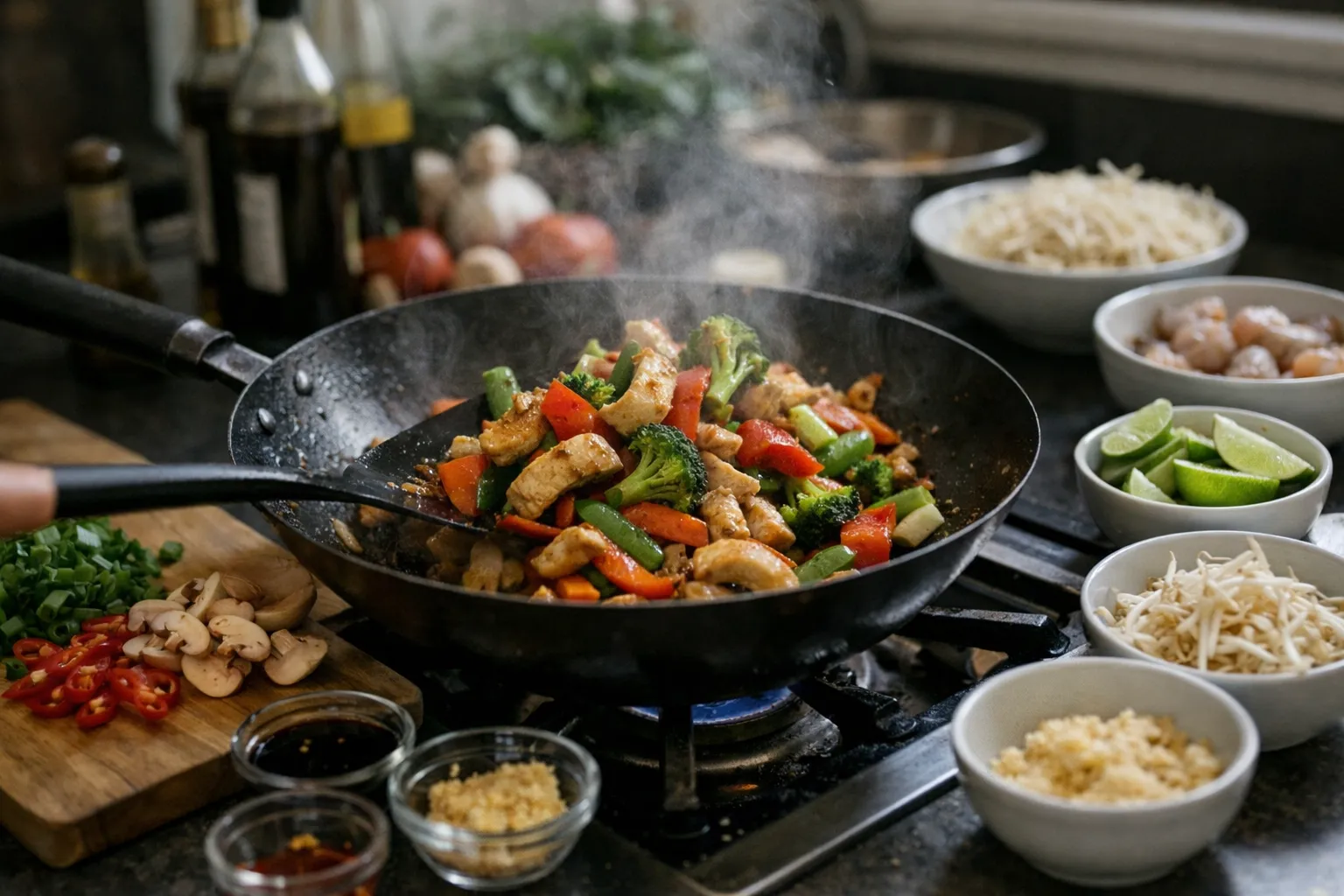
Stir‑fries are the original weeknight hero: fast, flexible and forgiving. This guide walks recipe enthusiasts through a reliable 15‑minute stir‑fry system you can use again and again. You’ll get concrete ingredient lists, exact prep time planning, a fail‑safe cooking method, serving size rules and practical dietary modifications so every version works for your table.
Why a system beats a single recipe
Rather than memorizing dozens of recipes, learn a repeatable framework: choose a protein, pick two contrasting vegetables, mix a simple sauce template, and follow a set cooking order. That system turns pantry staples into polished dinners in about 15 minutes total—typically 8–12 minutes prep time and 4–7 minutes active cooking time.
What you need: equipment, pantry staples and mise en place
- Equipment: 12‑inch nonstick skillet or a well‑seasoned wok, chef’s knife, cutting board, small bowl for sauce, silicone spatula, tongs, measuring spoons.
- Pantry essentials (keep stocked): neutral high‑smoke oil (grapeseed, peanut or refined avocado), soy sauce or tamari, rice vinegar, toasted sesame oil, cornstarch, honey or maple syrup, chili paste or Sriracha, garlic and ginger (fresh or paste).
- Prep tools: small bowl for mixed sauce (mix cornstarch with water last), paper towels for patting proteins dry, a plate to stage cooked items.
Basic stir‑fry sauce template (for 2 servings)
Use this template as a starting point and tweak to taste. Mix in a small bowl:
- 2 tbsp soy sauce or tamari (use low‑sodium if preferred)
- 1 tbsp rice vinegar or dry sherry
- 1 tbsp sweetener (honey, maple or brown sugar) or 1 tbsp mirin
- 1 tsp toasted sesame oil (for finish)
- 1 tsp cornstarch + 2 tbsp cold water (for glossy, clingy sauce)
- Optional aromatics: 1 tsp chili paste, 1 tbsp grated ginger, 1 minced garlic clove
Adjust salt by lowering soy/tamari for low‑sodium diets or replacing with coconut aminos for gluten‑free, lower‑sodium swaps.
Timing and cooking method: the 4‑step fast technique
- Prep (8–12 minutes): Slice ingredients so they cook evenly. Protein: 1/4‑inch slices or small cubes. Vegetables: cut into similar sizes—crisp ones thin, dense ones small. Measure sauce and whisk cornstarch slurry last.
- High heat, right oil: Preheat skillet or wok on medium‑high until very hot (a droplet of water should sizzle). Add 1–2 tbsp neutral oil.
- Cook in order: Aromatics (30s) → Protein (2–3 min until nearly done) → Dense vegetables (2 min) → Quick vegetables (1 min) → Add sauce and toss until glossy (30–60s).
- Finish and rest: Remove from heat, taste and finish with sesame oil, scallions, or a squeeze of citrus. Serve immediately to preserve texture.
Three concrete 15‑minute stir‑fries (ingredients, prep time, cooking method, serving size)
1. Garlic‑Ginger Chicken & Broccoli (2 servings)
- Ingredients: 10 oz boneless skinless chicken thighs (thinly sliced), 3 cups broccoli florets (small), 1 small carrot (julienned), 2 cloves garlic (minced), 1 tsp grated ginger, 2 tbsp oil.
- Sauce: 2 tbsp soy sauce, 1 tbsp rice vinegar, 1 tbsp honey, 1 tsp cornstarch + 2 tbsp water, 1 tsp sesame oil (finish).
- Prep time: 8–10 minutes (slice chicken thin, cut broccoli small for quick cooking).
- Cooking method: High heat skillet; cook garlic/ginger 30s, chicken 2–3 min until edges brown, remove. Stir‑fry broccoli and carrot 2 min with splash of water, return chicken, add sauce, toss 45s.
- Serving size: Makes 2 main‑course servings; serve over 1–1½ cups cooked rice or 1½ cups cauliflower rice per person.
2. Sesame‑Maple Tofu & Snow Peas (Vegan; 2 servings)
- Ingredients: 10 oz extra‑firm tofu (pressed, cubed), 2 cups snow peas, 1 red bell pepper (thinly sliced), 2 green onions (sliced), 1 tbsp toasted sesame seeds.
- Sauce: 2 tbsp tamari, 1 tbsp maple syrup, 1 tbsp rice vinegar, 1 tsp cornstarch + 2 tbsp water, 1 tsp sesame oil.
- Prep time: 10–12 minutes (press tofu ahead if possible—see make‑ahead section).
- Cooking method: High heat; sear tofu 3–4 min until golden, remove. Stir‑fry pepper 1½ min, add snow peas 30–45s, return tofu, add sauce and toss until glossy.
- Serving size: Two servings; pairs well with 1 cup cooked soba noodles or 1½ cups steamed brown rice per person.
- Dietary modifications: Gluten‑free: ensure tamari labeled GF; lower sugar: reduce maple syrup by half and add a splash more vinegar or a pinch of chili for balance.
3. Shrimp, Zucchini & Charred Corn with Thai Basil (2 servings)
- Ingredients: 10–12 large shrimp (peeled, deveined), 1 medium zucchini (half‑moon slices), 3/4 cup fresh or frozen corn kernels, 1 small shallot (thin), handful Thai basil or cilantro.
- Sauce: 2 tbsp fish sauce + 1 tbsp soy or coconut aminos, 1 tbsp lime juice, 1 tsp brown sugar, 1 tsp cornstarch + 2 tbsp water.
- Prep time: 8 minutes (shrimp should be pat‑dry; cut zucchini thin so it cooks in 1–2 minutes).
- Cooking method: High heat; sear shrimp 1–1½ min per side until pink, remove. Sear corn 1 min to char, add shallot 30s, zucchini 1–1½ min, return shrimp, add sauce and basil, toss 30s.
- Serving size: Two lighter main servings; serve with 1 cup jasmine rice per person or over mixed greens for a low‑carb option.
Precise timing tips that keep 15 minutes realistic
- Prep first, cook second: Do every chop and sauce mix before heating the pan—stir‑fries are unforgiving if you stop mid‑sizzle.
- Uniform cuts: Cut everything the same thickness so dense vegetables and tender ones finish together. Think matchsticks for carrots, thin rounds for zucchini.
- Dry proteins: Pat chicken, shrimp or tofu dry to get contact browning—moisture equals steaming, not searing.
- Don’t crowd the pan: If you’re cooking for more than two, cook in two batches to maintain high heat and color. Toss finished batch back in when sauce goes on.
Dietary modifications—practical substitutions
- Gluten‑free: Replace soy sauce with tamari labeled gluten‑free or coconut aminos. Check pre‑made sauces for hidden gluten.
- Vegan: Swap chicken/shrimp for cubed tofu, tempeh, or quick‑seared king oyster mushroom slices. Use maple or brown sugar for sweetness, and tamari for umami.
- Lower sodium: Use low‑sodium soy/tamari; increase acid (rice vinegar or lime) and aromatics to compensate for flavor.
- Lower carb / Paleo: Skip rice or noodles; serve over spiralized zucchini or a bed of baby greens. Use coconut aminos instead of soy.
- Allergen swaps: Peanut oil → grapeseed; fish sauce → extra soy/tamari + a pinch of anchovy paste only if tolerated; sesame oil can be omitted and replaced with finishing olive oil.
Make‑ahead, batch and scaling advice
- Advance prep: Press tofu, slice proteins and veg, and store in airtight containers up to 24 hours. Mix dry spice blends in advance.
- Sauces: Sauce mixes (without cornstarch slurry) keep 5–7 days refrigerated. Add slurry at the last minute so it thickens quickly in the pan.
- Scaling: For 4 servings, double ingredients but cook in two batches or use a very large wok on two burners to avoid steam and crowding.
- Leftovers: Store stir‑fries in the fridge up to 3 days. Reheat briefly in a hot skillet—add a splash of water or broth to loosen sauce and revive texture.
Common problems and quick fixes
- Soggy veggies: Likely overcrowding or low heat. Cook in batches; use a hot pan and small cuts.
- Watery sauce: Cornstarch slurry was too thin/too much liquid released from food. Mix slurry stronger (1 tsp cornstarch + 1 tbsp water) or cook longer to reduce.
- Bland flavor: Finish with acid (rice vinegar or lime) and a drizzle of sesame oil. Add a pinch of salt only at the end if needed.
- Burnt garlic: Add aromatics later or add them with protein instead of first thing; watch heat and stir constantly.
Weekly menu ideas using the 15‑minute system
Mix and match proteins and veg across the week—roast a tray of sweet potatoes for 2 meals, or use leftover grilled chicken for a quick stir‑fry night. Here’s a quick three‑night plan:
- Monday: Garlic‑Ginger Chicken & Broccoli over rice (classic, crowd‑pleasing)
- Wednesday: Sesame‑Maple Tofu & Snow Peas with soba (meatless, protein‑rich)
- Friday: Shrimp & Zucchini with charred corn and Thai basil, served over greens (light, fresh end of week)
Final encouragement
Once you internalize the prep sequence, sauce template and cooking order, you’ll be able to whip up dinner from whatever’s in the fridge in about 15 minutes. Start with the example stir‑fries, then experiment: swap the protein, change one vegetable and switch a flavor element in the sauce. The result will be fast, satisfying and tailored to your dietary needs.
Happy stir‑frying—see how quickly a little planning, the right ingredients and a confident cooking method can transform weeknight meals.