
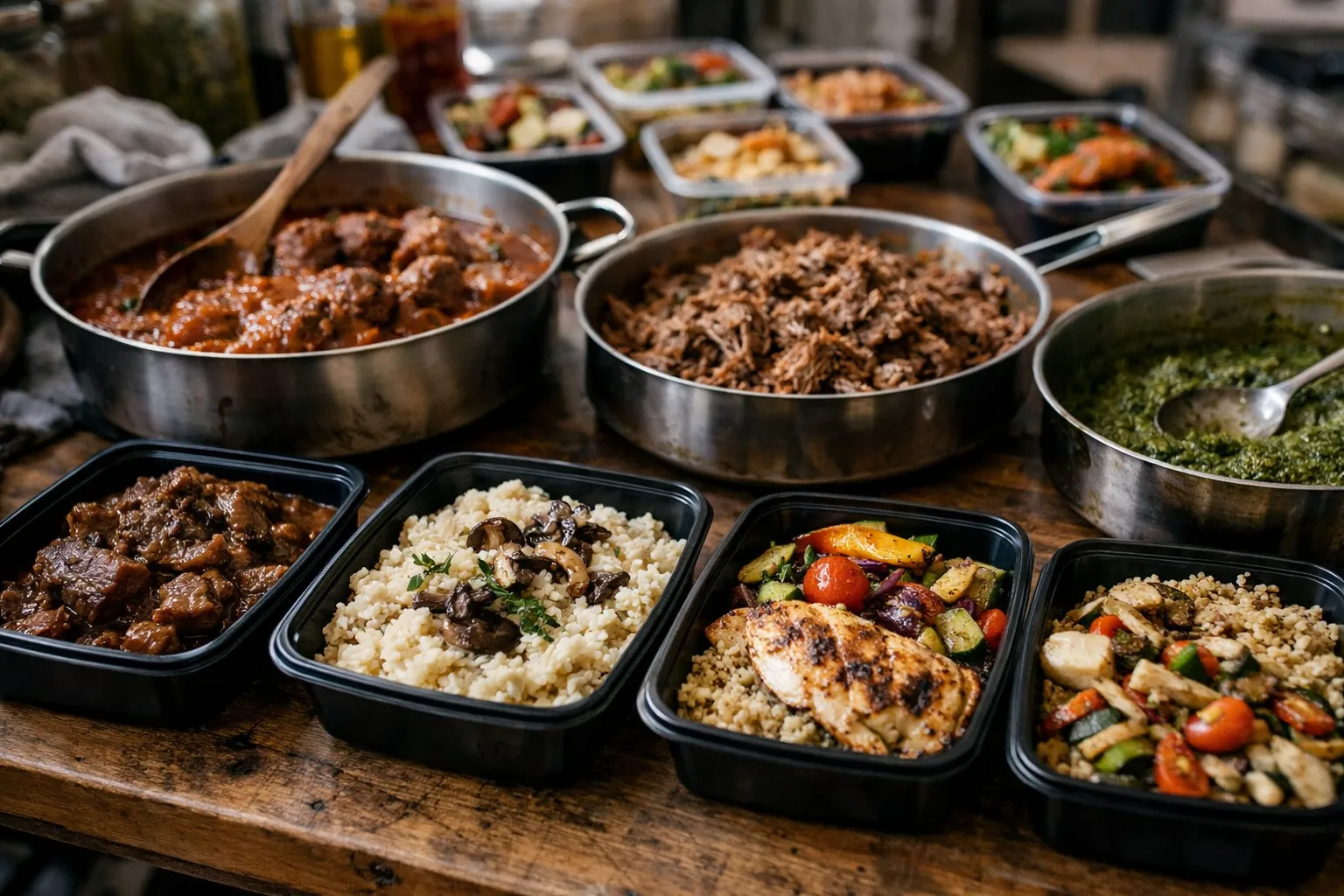
For busy home cooks who want more than "heat-and-eat" convenience, this guide shows how to produce six restaurant-quality batch-cooked bases in a single session and compose 18 distinct meals for two to four people across two weeks. You’ll learn why each base was chosen, precise batch-cook timing, storage and food‑safety rules, three plated meal permutations per base, and reheating/finish techniques that restore texture and flavor so every meal feels intentional.
Who this is for and why it matters
This guide is for home cooks and meal planners who value flavor, texture and variety — not just convenience. If you want to cut weekday cooking time by turning one dedicated prep session into a trove of restaurant-grade components, this method balances culinary technique with practical food-safety and storage rules used by professional kitchens.
Prerequisites & equipment
Before you begin, confirm you have:
- Time: 3–4.5 hours for an organized session for the six bases below (timing shown in each section).
- Equipment: 1 large Dutch oven, 1 large ovenproof roasting pan, sheet pans, heavy skillet, blender/food processor, vacuum sealer (optional), instant-read thermometer, cutting board, 12–16 food‑storage containers (glass preferred) and freezer bags.
- Storage plan: available refrigerator space and 2–3 freezer-safe containers or vacuum-seal bags for long-term storage.
- Food-safety basics: refrigerate cooked foods within 2 hours (1 hour if ambient >90°F); reheat leftovers to 165°F (74°C) before serving (USDA FSIS guidance).
Why these six bases?
Each base was chosen for three reasons: 1) an elevated flavor profile that reads “restaurant,” 2) durability for refrigeration or freezing without losing texture, and 3) versatility—each yields at least three different plated meals. The six bases: beef short‑rib ragu, confit chicken thighs, pork shoulder carnitas, harissa eggplant & chickpeas, lemon-herb farro, and turmeric‑lentil dal. Together they create 18 distinct meals (3 per base) with minimal finish work.
Step-by-step: Batch-cook the six bases
1. Beef short‑rib ragu (braise)
Why: Deep, gelatinous mouthfeel; freezes and reheats well; luxury feel for pasta, polenta, or bowls.
- Cook time: 3 hours active/oven time (2.5–3 hrs braise). Sear short ribs (3–4 lbs) in batches, deglaze with 1 cup red wine, add mirepoix, canned tomatoes (28 oz), beef stock, herbs and braise 2.5 hours at 325°F until fork-tender.
- Finish: Skim fat, reduce sauce 10–15 minutes to glossy consistency; adjust salt. Cool quickly and portion into 3 equal servings (about 1–1.25 lb per portion) — each portion will make 3 plated meals across 3 nights.
- Storage: Refrigerate up to 3–4 days; freeze for up to 3 months for best quality (USDA: refrigerate within 2 hours; freezing preserves safety and quality).
2. Duck‑style confit chicken thighs (olive oil confit)
Why: Confit preserves succulence; reheats crisply in the oven; works for salads, sandwiches, or rice bowls.
- Cook time: 2.5 hours (hands-on 30–45 min). Season 8 bone-in thighs with salt, garlic, thyme; submerge in olive oil in ovenproof pan at 275°F for 1.75–2 hours until tender.
- Finish: Cool in oil, reserve oil (use for dressing or roasting vegetables). For storing, remove thighs from oil, pat dry, and refrigerate in a shallow container up to 4 days; confit can be refrigerated submerged for up to 1 week (oil solidifies).
- Storage: For longer storage, remove excess oil and freeze vacuum-sealed or in freezer bags for up to 3 months.
3. Pork shoulder carnitas
Why: Exceptionally versatile—tacos, grain bowls, sandwiches. Pairs with acidic pickles and fresh herbs for contrast.
- Cook time: 3 hours (2.5–3 hrs oven). Braise 4 lbs pork shoulder with orange juice, garlic, cumin and bay leaves at 300°F until shreddable, then broil 6–8 minutes to crisp edges.
- Finish: Shred, ladle back juices, reserve crisped portion separately for immediate meals to preserve texture.
- Storage: Refrigerate 3–4 days; portion and freeze for up to 3 months.
4. Harissa‑roasted eggplant & chickpea stew
Why: A plant-based base that keeps and improves after a day (flavors meld), excellent for pasta, toast toppers, grains.
- Cook time: 1 hour. Roast diced eggplant and red onion with harissa paste, olive oil, salt at 425°F for 30–35 minutes; stir in canned chickpeas and finish with lemon and cilantro.
- Finish: Cool and portion; this base tolerates refrigeration well and develops flavor overnight.
- Storage: Refrigerate 4–5 days; freeze in 1–2 cup portions for 2 months.
5. Lemon‑herb farro (grain base)
Why: A toothsome grain that resists becoming mushy. Use as a bed for proteins, stir into salads, or warm with butter for sides.
- Cook time: 30–40 minutes. Cook 4 cups farro in 8 cups seasoned stock until al dente (check package times). Shock in cold water briefly, drain, toss with lemon zest, olive oil and chopped parsley.
- Finish: Portion into 6 servings (1 cup cooked per serving). Chilled farro firms and is ideal for salads; warm gently for bowls.
- Storage: Refrigerate 4–5 days; freeze for up to 2 months.
6. Turmeric‑lentil dal (protein-forward vegetarian base)
Why: High-protein, fast to reheat, carries spice and acidity well, pairs with grains, flatbreads or roasted veggies.
- Cook time: 30–40 minutes. Simmer 2 cups red lentils with turmeric, ginger, tomato, coconut milk and vegetable stock until soft; temper mustard seeds and curry leaves in oil to finish.
- Finish: Portion into 4–6 servings; dal thickens on standing—add water when reheating to adjust consistency.
- Storage: Refrigerate 4–5 days; freeze up to 2 months.
Composing 18 meals: three permutations per base
For each base, choose three distinct plating strategies that require minimal finishing: quick reheat, fresh bright elements, and a different starch or vegetable to change profile.
- Short‑rib ragu: 1) Pappardelle with shaved Parmesan and gremolata; 2) Creamy polenta with sautéed broccolini; 3) Open-faced brioche ragu toast with arugula.
- Confit chicken: 1) Salad Niçoise‑style with warm potato and olives; 2) Crisped thigh on charred sourdough with lemon‑yogurt; 3) Rice bowl with quick pickled cucumber and chili oil.
- Carnitas: 1) Street‑tacos with pineapple salsa; 2) Carnitas grain bowl with farro and smoked paprika aioli; 3) Pulled‑pork style sandwich with slaw.
- Harissa eggplant & chickpeas: 1) Tossed with pasta and ricotta salata; 2) Over farro with preserved lemon and toasted almonds; 3) Warmed on flatbread with labneh and herbs.
- Lemon‑herb farro: 1) Farro tabbouleh with tuna and capers; 2) Warm farro with confit chicken and green beans; 3) Cold farro salad with roasted beets and goat cheese.
- Turmeric lentil dal: 1) Dal over steamed basmati with quick-cucumber raita; 2) Dal + roasted eggplant + herb salad; 3) Lentil-stuffed pita with pickled red onion and cilantro.
Practical storage, portioning and labeling
- Portion by meal: For proteins, plan about 4–6 oz cooked per person per meal (short ribs and carnitas slightly more). Use scale for consistency.
- Containers: Use glass for reheating in the oven and for longevity. Vacuum sealing extends freezer quality and reduces freezer burn (optional).
- Labeling: Mark date cooked, base name, and “use by” date. For refrigerated meals, “use by” should be 3–4 days; frozen items add an estimated “best by” at 2–3 months.
- Rapid cooling: Divide large batches into shallow containers to bring temperature down quickly (USDA FSIS guidance).
Reheating and finishing to restore restaurant texture
Reheating is where many home meal-prep plans fail. Follow these principles:
- Always bring internal temperature to 165°F (74°C) before serving (USDA/FDA standard).
- Use the oven or skillet where possible to restore crispness: 375°F for 10–12 minutes to revive confit skin or broiled for 3–5 minutes to crisp carnitas edges.
- For sauces and stews (ragu, dal), warm gently on the stovetop, adding 1–2 tbsp water or stock to recover texture if thickened.
- For grains and salads, reheat farro in a microwave with a splash of water or warm on the stovetop to prevent dryness. Fluff with a fork and finish with acid and oil to brighten.
Common mistakes to avoid
- Saving everything in one large pot — cool and divide. Large volumes retain heat and sit in the bacterial “danger zone.”
- Freezing full containers without headspace — liquids expand and can rupture glass; use freezer-safe bags or leave 1/2 inch headspace.
- Over-salting before freezing — salt concentrates as liquids reduce; hold back on final seasoning if planning to freeze.
- Reheating only in microwave for crispy elements — use a skillet or oven finish for texture contrast.
Pro tips for elevated results
- Finish with a small amount of acid (lemon, vinegar) and a quality fat (olive oil, browned butter) at plating — it brightens and rounds flavors learned from restaurant kitchens.
- Reserve fresh aromatics: chop herbs and keep in sealed containers; add them at serving to recreate that “just-made” impression.
- Maintain a “crispy reserve”: set aside a portion of carnitas or ragu meat to crisp at the last minute; texture differences make repeat meals feel new.
- Label sous-vide or vacuum-sealed items with both cook and pasteurization time/temperature if you use those techniques — safe practice matters (research_studies and industry_reports on sous-vide safety provide specific charts).
Why this system saves time and money
Instead of six entirely different dinners requiring separate ingredient lists and hands-on time, this approach concentrates active work into one session. Conservatively, a single 3–4 hour session (plus oven time) produces 18 high-quality meals that would otherwise take 12–18 hours to cook separately during the week. Bulk purchases (beef shoulder instead of single steaks, whole grain in 5‑lb bags) typically reduce cost per serving by 10–30% depending on local prices.
FAQ
How long can I safely keep cooked meat in the refrigerator?
Cooked meat and poultry should be refrigerated within 2 hours of cooking and consumed within 3–4 days (USDA FSIS guidance). For longer storage, freeze in airtight containers; quality is best within 2–3 months for most cooked dishes.
Is it better to freeze or refrigerate the bases?
Use refrigeration for meals you plan to eat within 3–4 days; freeze when you won’t use a base within that window. Freezing preserves safety but slightly alters texture—rich braises and stews generally freeze better than crisp elements.
How can I retain crispness when reheating confit or carnitas?
Reheat gently to 165°F, then finish under a high broiler for 3–6 minutes or in a hot skillet with a splash of oil to re-crisp surfaces. Avoid microwave-only reheating for items where texture matters.
Do I need a vacuum sealer?
No — vacuum sealing extends freezer quality and reduces space, but well-wrapped freezer bags or airtight containers are sufficient for most home cooks. If you freeze regularly, a mid-range vacuum sealer is a useful investment.
Can I adapt this system for special diets (low-sodium, gluten-free)?
Yes. Reduce added salt during batch cooking and finish with salt at plating. Substitute gluten-free grains (sorghum, brown rice) for farro and verify pre-made products (stock, harissa) are gluten-free.
Final note
Batch cooking need not mean sacrificing nuance. By selecting bases that hold quality, planning three finishing strategies per base, and using a few professional techniques (confit, low-temperature braise, reserve crisping), you create a small repertoire of luxury meals that simplify weekdays without repeating the same plate. Start with one or two bases this weekend, refine your timing and storage, and scale up to the full six once you’ve dialed your preferred flavors and finishes.