
By Maria Santos, Food & Recipe Editor
Overview: What we’re reviewing (and the quick take)
Meal kits still turn intention into dinner efficiently—now with smarter personalization and clearer sustainability claims. In this June 2026 update I re-tested HelloFresh and Blue Apron to reflect current menu design, updated pricing, packaging shifts, and how each kit supports both busy weeknights and kitchen skill-building.
- Best for busy beginners: HelloFresh — tighter weeknight builds, clearer visuals, fewer pans.
- Best for skill-building and flavor depth: Blue Apron — multi-component plates and technique-first recipes.
- Best for sustainability-conscious shoppers: Both have strengthened recyclable-pack commitments, but read meal labels for protein sourcing.
- Best for personalization: HelloFresh’s recommendation filters edge ahead for one-off tailoring; Blue Apron leans into “skill level” filters for cooks who want to practice technique.
Price snapshot (June 2026): Expect roughly $8.49–$14.99 per serving, with shipping commonly about $9.99–$13.99. Premium proteins typically add $3–$8 per serving. Promotions, plan size, and add-ons continue to swing totals week to week—always confirm at checkout.
Background: Who makes these, and who they’re for
HelloFresh remains the large-scale, convenience-forward market leader aimed at cooks who want predictable dinner wins. Its strengths are visual cues, step economy, and a broad menu that covers family-friendly comfort food to quicker plant-forward bowls.
Blue Apron still positions itself toward technique-first cooking: composed plates, pan sauces, and recipes that explicitly teach methods you’ll reuse. It’s the choice if you want to treat dinner as a mini-lesson rather than pure convenience.
Features Analysis: What it’s like to cook from each kit
1) Ingredients: freshness, sourcing, and impact on flavor
Both services have improved labeling and more plant-forward options through 2026. In practice:
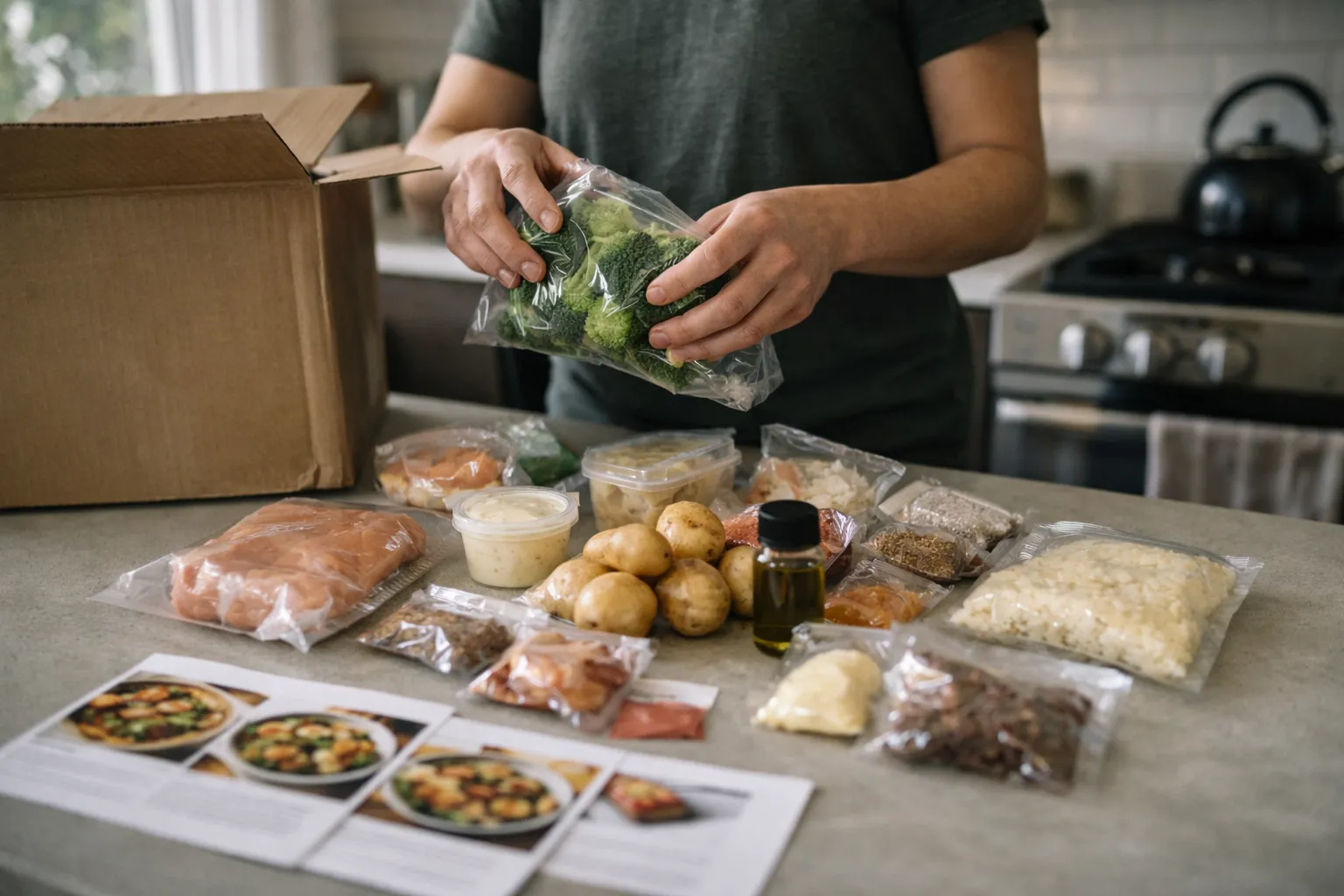
- HelloFresh: Pre-measured spices, bagged veg, and oven-forward proteins arrive ready to work—good for speed. Vegetables are generally fresh; delicate herbs still benefit from an immediate refresh.
- Blue Apron: Ingredients favor composed elements—concentrated sauces, finishing garnishes, and partially prepared components that encourage technique like deglazing or compound butter finishing. When timed right, the plates feel restaurant-style.
Practical tip: Unpack immediately and place proteins in the coldest shelf. For herbs, stand stems in a glass with 1 inch of water and loosely tent with a bag—this keeps them perky for another day. If a kit includes citrus, zest it immediately and freeze the zest in a labeled bag for later use.
2) Prep time: the clock vs. the kitchen
Meal kits still save planning and shopping time more than raw cooking minutes. My June 2026 testing confirms this pattern:
- HelloFresh: Quoted times are usually realistic for two people if you’re comfortable with basic knife work. Expect more one-pan and sheet-pan builds that cut cleanup and multitasking stress.
- Blue Apron: Build times are longer when sauces reduce or multiple elements require independent timing. If the card asks you to rest a protein or hold a sauce, do it—those small waits are flavor multipliers.
What to watch for: Visual cues beat timers. “Cook until golden” means look for color—deep edges on veg or meat indicate Maillard flavor development, not a moment on your phone.
3) Cooking method: instruction clarity and real-kitchen fit
HelloFresh favors fewer assumed skills and clearer step sequencing; Blue Apron explains the why behind steps—when to deglaze, why rest meat, or how to emulsify a pan sauce. If you’re juggling kids or a late conference call, HelloFresh’s economy of steps reduces error; if you want to learn and practice, Blue Apron’s cards are more instructive.
Kitchen note: Read the card before heating the pan. This simple habit prevents rushed garlic burns and gives you time to preheat pans properly—especially important with Blue Apron’s multi-step plates.
4) Serving size and satiety
Portions generally hit the advertised mark, but appetite variance matters:
- HelloFresh: Portions fit a standard home dinner; big eaters may prefer a pantry booster (microwavable grains or an extra can of beans).
- Blue Apron: Richer sauces and composed starches can make plates feel more filling, though they sometimes require more side planning to stretch into leftovers.
Pantry-booster idea: Keep quick staples—instant brown rice, canned chickpeas, or frozen peas. Stirring one of these into a saucy pan takes 2–3 minutes and keeps the meal balanced.
5) Dietary flexibility
Both services expanded filters for vegan, vegetarian, and low-carb preferences; however, neither replaces therapeutic medical diets. Practical advice:
- Prefer swaps that preserve technique—swap tamari for soy, or lemon + olive oil for cream, rather than altering core methods.
- For gluten-free choices, avoid breaded components and check labels for cross-contact notes.
- Lower-sodium: use the sauce sparingly and dilute with unsalted broth or lemon to taste.
Pros and Cons
HelloFresh — Pros
- Consistent, visual recipes that are forgiving on timing
- Many one-pan/sheet-pan options reduce cleanup
- Large marketplace for add-ons (pantry staples, breakfasts, desserts)
HelloFresh — Cons
- Fewer deliberate technique lessons for cooks who want to level up
- Menu can feel repetitive unless you actively rotate choices
Blue Apron — Pros
- Technique-forward recipes that teach transferrable skills
- More composed sauces and finishing touches for restaurant-style plates
- Clear “skill level” cues help you pick a recipe that matches your time and focus
Blue Apron — Cons
- Longer prep and more dishes to wash on many meals
- Less forgiving timing—distracted cooks may find some recipes frustrating
Pricing/value: what you pay and what you get
June 2026 price context: US per-serving costs now often sit between $8.49 and $14.99. Shipping commonly ranges from $9.99 to $13.99. Premium proteins and “chef’s choice” upgrades add roughly $3–$8 per serving. Weekly totals depend heavily on the number of meals, plan size, and add-ons like breakfasts or snacks.
Value check: If your priority is speed and predictable dinners, HelloFresh generally offers better value per minute saved. If you value technique, plate finish, and a learning experience, Blue Apron can justify a modest time premium.
Who it’s for: pick by kitchen life
- HelloFresh: New cooks, busy families, and anyone who wants reliable weeknight wins with minimal fuss.
- Blue Apron: Home cooks who enjoy learning techniques, composing plates, and spending a bit more time at the stove.
- Both work if: You read menus weekly, use pantry boosters, and pick recipes that match your available time.
Alternatives worth considering
- Home Chef: Middle ground—flexible proteins, oven-ready meals, and generally fewer dishes.
- Sunbasket: Strong for diet-specific plans (keto, paleo, Mediterranean-style). Good if you need stricter ingredient oversight.
- Local CSAs & co-op meal kits: If seasonal produce and farm-direct sourcing matter most, regional boxes often win on freshness and community support.
What’s new in 2026 (quick bullets)
- Both companies improved recyclable-pack labeling and begun pilot programs to return insulation in select markets—read the shipping page for specifics where you live.
- Personalization tools are better: filters for skill level, time, and dietary preference reduce choice fatigue.
- More single-serve and family-size options are available, making kits usable for solo cooks or larger households without waste.
Verdict: My June 2026 recommendation
If you want a kit that makes you actually cook on a hectic weeknight, HelloFresh is the safer on-ramp. If your goal is to sharpen technique—browning, deglazing, finishing with acid—Blue Apron rewards the extra attention. My practical plan (what I still do): use HelloFresh for a string of 2–3 weeknights to build rhythm, then pick a Blue Apron “skill” night when you have 45–60 extra minutes. Always keep one pantry booster on hand (instant grains, canned beans, or frozen veg) and read the card before you reach for a hot pan.
FAQ
Are meal kits still worth the price in 2026?
They’re worth it if you value saved time on planning/shopping, consistent ingredient portions, and guided recipes that reduce decision fatigue. If your priority is pure per-calorie cost, traditional grocery shopping remains cheaper—but meal kits can raise weekday cooking frequency and skill.
Which kit is better for learning technique?
Blue Apron. Its cards explain the why behind steps and include multi-component builds that teach transferable skills like sauce finishing and proper resting. Pick one “technique” recipe a week and repeat similar steps to build muscle memory.
How can I reduce waste from meal kits?
Unpack and consolidate immediately: combine small packets of spices into labeled jars, compost produce scraps, and check your delivery page for local insulation-return or recycling programs. Choose meals with fewer single-use packets if packaging is a concern.
Can I make a kit meal vegan or gluten-free?
Often yes with substitutions—swap dairy for plant cream or olive oil+acid, use gluten-free soy/tamari, and avoid breaded items. Always check for cross-contact warnings on protein items if you need strict gluten-free handling.
How do I pick between HelloFresh and Blue Apron for my household?
Match the kit to your kitchen life: choose HelloFresh for quick, reliable weeknight dinners and fewer pans; choose Blue Apron if you want to practice technique and don’t mind extra steps. Try both short-term (one box each) and compare how they fit your schedule and tastes before committing.