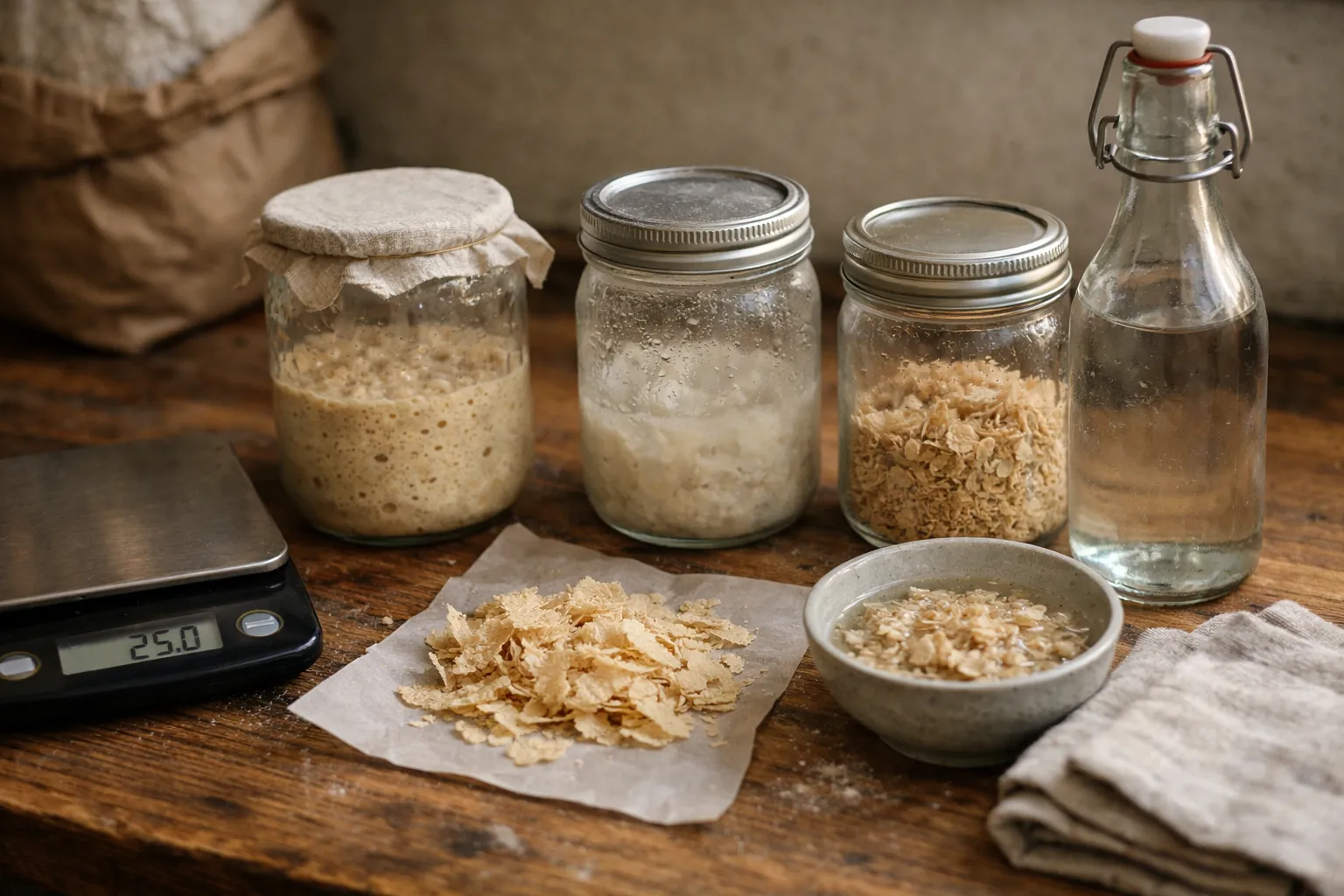
Introduction — What you'll learn and who this is for
This July 2026 update shows home bakers how to build a resilient sourdough starter bank: reliable, verifiable backups you can revive after travel, appliance failure, contamination, or long gaps between bakes. If you care about preserving an heirloom culture, comparing multiple starters, or sending a strain to a friend, this guide gives contemporary, practical steps—weight-based feeds, timelines, updated preservation tools (including consumer freeze-dryers and cryoprotectants), safety checks, and troubleshooting.
Prerequisites and context
Before you start: work with a healthy starter that reliably doubles within 4–8 hours at your normal warm fermentation temperature (75–82°F / 24–28°C). If your starter is sluggish, perform 2–3 refreshes at short intervals until it shows consistent rise, a bubbly texture, and a pleasant tang.
Why update in 2026? Two practical shifts matter: (1) consumer freeze-dryers and more affordable home preservation tools have made lyophilization accessible to serious hobbyists; (2) better community metadata and sharing practices mean many bakers now include explicit revival instructions and provenance when they share strains. These changes make multi-method backup plans both easier and more effective.
Overview of preservation methods — choose two or more
Each method balances convenience, longevity, shipping-friendliness and recovery speed. For robust protection, use at least two different approaches and keep an off-site copy.
- Refrigeration — Low-maintenance, ideal for weekly to monthly bakers.
- Freezing — Multi-month security; fastest revival among cold methods.
- Freeze-drying (lyophilization) or air-drying — Best for long-term, stable, and ship-friendly backups; consumer freeze-dryers now improve viability over simple air-drying.
Updated essentials: equipment and materials (2026)
- Digital kitchen scale (0.1 g resolution recommended)
- Glass jars with tight lids for fridge storage; wide-mouth freezer-safe containers for frozen aliquots
- Parchment paper or silicone mat for air-drying; or a small consumer freeze-dryer for lyophilization
- Vacuum sealer with oxygen-absorber sachets or vacuum bags; vacuum-sealed jars for long-term dry storage
- Food-grade glycerol (optional) as a cryoprotectant for frozen aliquots — use conservatively and label clearly
- Silica desiccant packets for dried samples
- Labels, permanent marker or printed stickers (strain name, date, flour, hydration)
- Filtered or dechlorinated water for feeding/revival (chlorine can suppress yeast)
- Thermometer for ambient room control — 75–82°F (24–28°C) ideal for revival
Step-by-step: building a modern starter bank
Before banking, confirm starter health: vigorous rise and pleasant aroma. Use weight-based measures for repeatability.
1. Refrigeration (short-to-medium term)
- Feed to peak activity using your normal ratio (common is 1:1:1 by weight: starter:flour:water). Let it peak (4–8 hours at ~75–80°F / 24–27°C).
- After peak, stir and transfer 60–200 g (2–7 oz) into a clean jar. Seal and label with date, flour type and hydration.
- Store in the coldest part of your fridge (~37–40°F / 3–4°C). For active rotation, feed at least every 7–14 days; for minimal maintenance, remove and refresh a small portion rather than feeding the whole jar.
- Replace refrigerated stocks every 6–12 months with a fresh banked sample—this is now standard practice among experienced home bakers in 2026.
2. Freezing (multi-month to year)
- Use a healthy starter slightly past peak. Portion into single-use aliquots (2–3 tablespoons ≈ 30–60 g) so each thaw is one revival session.
- Optional: add a small amount of food-grade glycerol (5–10% of the aliquot by weight) as a cryoprotectant. This mirrors lab practice and can improve viability; label any aliquot containing glycerol. If you prefer not to use additives, plain starter frozen properly is usually recoverable.
- Vacuum-seal or use freezer-safe containers with minimal headspace. Label with strain and date. Store at -18°C (0°F) or colder.
- Plan to test one aliquot every 12 months—frozen viability remains good for many months but varies by strain and storage conditions.
3. Freeze-drying (best long-term, and increasingly accessible)
- Lyophilization (freeze-drying) preserves starter structure and often yields faster revival than air-dried flakes. Consumer freeze-dryers became affordable at scale by 2024–2025; serious bakers now use them for high-value strains.
- Freeze-dry following manufacturer instructions from a healthy, peak starter. Store the dry product in vacuum-sealed bags with silica desiccant and an oxygen absorber. Keep in a cool, dark place.
- If you don’t have a freeze-dryer: air-dry thinly at room temperature on parchment or a silicone mat in low humidity, or use a dehydrator at ≤95°F (35°C). Air-dried material is still viable but generally takes longer to revive than freeze-dried material.
- Pack dried samples into labeled vacuum bags or jars with desiccant. Store duplicates off-site (friend, relative, or safe deposit-style location) for redundancy.
Reviving backups — updated timelines and methods
Recovery speed varies by method. Expect fastest revival from frozen (1–3 feedings), longer for freeze-dried (3–7 days), and longest for air-dried or old samples (up to 2 weeks or more).
Revive from refrigeration
- Remove jar; pour off any thin alcoholic hooch if present. If you see mold (fuzzy, colored growth) discard the jar and utensils.
- Bring to room temperature. Keep a small portion (25–30 g), discard the rest, and feed 1:2:2 (starter:flour:water). Example: 25 g starter + 50 g flour + 50 g water.
- Keep warm (24–28°C / 75–82°F). Repeat every 8–12 hours until you get reliable doubling in 4–8 hours — typically 2–4 feedings.
Revive from frozen
- Thaw in the refrigerator overnight, then bring to room temperature.
- Use 20–25 g thawed starter and feed conservatively at 1:5:5 (example: 25 g starter + 125 g flour + 125 g water) to dilute inhibitory acids and give yeast a growth advantage.
- Maintain 75–82°F (24–28°C). Expect visible activity within 24–48 hours and baking strength after 2–3 feedings.
Revive from freeze-dried or air-dried material
- Measure a small amount of flakes (2–5 g). Rehydrate with equal weight of filtered water (e.g., 5 g flakes + 5 g water) and let sit 30–60 minutes.
- First feed: conservative ratio such as 1:4:4 (rehydrated:flour:water) to temper acidity. Example: after rehydration, add 20 g flour + 20 g water.
- Keep warm and feed every 12–24 hours, gradually shifting to 1:2:2 or your usual routine as activity stabilizes. Freeze-dried samples often recover faster than air-dried because structural damage is lower.
- Full recovery often takes 3–10 days depending on storage time and method.
How to tell if revival succeeded
- Doubling time: a strong starter doubles within 4–8 hours at 75–82°F (24–28°C) after a standard feed.
- Texture and aroma: consistent bubbles, a creamy texture and a bright tang—not putrid or rotten.
- Performance in dough: a levain at 20% preferment should produce visible aeration within expected recipe times (recipe- and temperature-dependent).
Labeling, records and metadata (new 2026 practice)
Maintain a starter card for each culture. Modern best practice includes:
- Name/strain, date banked, and method (fridge/frozen/freeze-dried)
- Flour composition and hydration (e.g., "Whole-rye, 100% hydration")
- Typical doubling time, flavor notes, preferred fermentation temps
- Any additives used (e.g., glycerol) and revival instructions
Store a digital copy (cloud or photo) and keep one physical copy with your on-site supplies. When sharing starters, include the revival card to improve success rates for recipients.
Common problems and fixes
- No activity after revival: move to a warmer spot (78–82°F / 26–28°C), increase feeding ratio to 1:5:5 for two feedings, and use a whole-grain flour (rye/whole wheat) for 1–2 cycles to boost microbial activity.
- Alcoholic hooch: clear-to-dark liquid is normal with neglected starters—pour off, refresh with a feed. If the smell is rotten or putrid, discard.
- Mold: any fuzzy, colored growth requires discarding the starter and thoroughly cleaning containers and utensils.
- Persistent off-odors: perform two large refreshes (high dilution) at warm temps; if unpleasant smells persist, start anew.
Best practices and safety
- Use clean utensils and containers to prevent cross-contamination. Sanitation reduces false negatives during revival.
- Work with small test portions when reviving old material; don’t introduce questionable starter into your main baking workflow until it proves healthy.
- Label any aliquot containing additives (e.g., glycerol). If you add a cryoprotectant, keep some plain frozen aliquots as well.
- Store duplicate dried samples off-site. Consider a close friend’s kitchen or another secure location.
- When shipping internationally, check recipient country food customs—dried starters are food items and regulations vary.
Practical bank plan (recommended)
- One active jar in your kitchen for day-to-day baking.
- One refrigerated backup (refresh weekly-to-monthly; rotate every 6–12 months).
- One frozen aliquot (single-use portions) stored long-term; consider a small glycerol aliquot plus plain aliquot.
- One dried sample stored in two locations (home plus off-site). Prefer freeze-dried if you have access to a consumer freeze-dryer.
Common mistakes to avoid
- Banking a weak or unstable starter—always refresh until healthy before preserving.
- Skipping labels—strain provenance and revival steps are essential for future success.
- Assuming dried equals immortal—moisture exposure, oxygen, and heat shorten shelf life; use vacuum sealing and desiccants.
- Feeding large quantities from questionable revivals—test small before scaling up to avoid contaminating your kitchen.
Pro tips (advanced)
- Keep a “proof” log: when you revive a backup, record the exact feed ratios, temperatures and times that restored performance—this becomes valuable troubleshooting history.
- Use whole-grain flour in the first two revivals—it often accelerates yeast re-establishment because of richer nutrients.
- Freeze-dried stocks often revive more consistently than air-dried; if you plan to store a very valuable strain long-term, consider professional lyophilization services or a consumer freeze-dryer.
- For frozen storage, test one aliquot within 6–12 months to verify viability rather than assuming long-term survival.
Closing notes
A deliberate starter bank combines convenience and insurance: refrigeration for everyday convenience, freezing (with thoughtful aliquots) for medium-term security, and freeze-drying or careful air-drying for long-term and off-site redundancy. In 2026, more home bakers have access to tools (consumer freeze-dryers, better vacuum sealing) and better community practices (clear metadata) that make preservation more reliable. Use weight-based feeds, warm recovery temps, and conservative timelines—expect days for frozen revivals and up to one to two weeks for dried samples—and keep clear records. With a small amount of organization you can preserve your favorite culture through moves, travels and years of baking.
FAQ
How long will a frozen starter remain viable?
Frozen starters preserved at -18°C (0°F) often remain viable for many months to a year or more, but recovery quality varies by strain and handling. Test a frozen aliquot within 6–12 months; using small single-use portions reduces thaw cycles and preserves viability.
Is freeze-drying worth the cost for home bakers?
Freeze-drying yields better long-term viability and faster revival than air-drying; if you’re preserving a rare or particularly beloved strain, or plan to store copies off-site, freeze-drying is worth the investment. Consumer freeze-dryers are more available in 2026, but for a single sample, consider professional lyophilization services if you don’t want to buy equipment.
Can I add glycerol or other protectants before freezing?
Food-grade glycerol (5–10%) can act as a cryoprotectant and is used in microbial labs; some home bakers adopt it to improve frozen viability. If you choose this route, label aliquots explicitly and keep parallel plain samples. Use only food-grade products and consult reliable sources before using additives.
What should I do if I find mold on a banked jar?
Mold (fuzzy, colored growth) means discard the starter and any utensils it contacted. Clean and sanitize jars and tools thoroughly before rebanking, and review your drying, sealing and storage conditions to reduce humidity and contamination risk.
Can I send dried starter internationally?
Dried starter is typically easier to ship than wet starter, but customs and agricultural rules differ by country. Always check the recipient country’s rules before sending, and include revival instructions to maximize the chance of successful recovery.