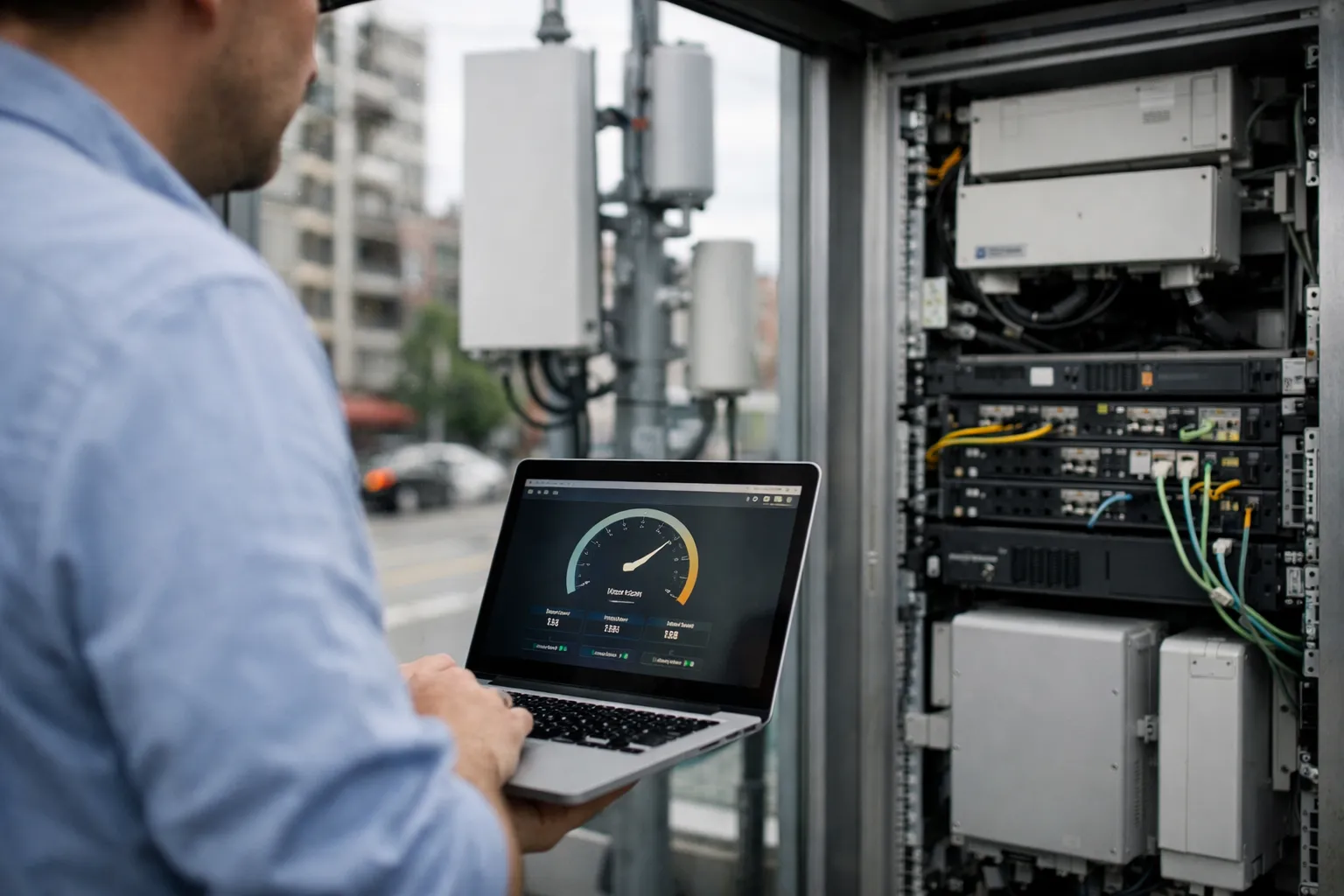
In 2026 the combination of 5G mobile networks and multi‑access edge computing (MEC) is forcing a rethink of how VPN services are architected and marketed. For VPN enthusiasts who care about latency, privacy and the economics behind server placement, the shift from large regional Points‑of‑Presence (PoPs) toward distributed edge nodes—hosted by public cloud edge services or telco MEC platforms—creates new performance opportunities, new cost pressures for providers, and new privacy tradeoffs for customers.
What “edge” means for VPNs today
Edge compute refers to processing and networking resources placed close to end users—typically in telco central offices, on‑premise racks co‑located with cellular base stations, or small cloud PoPs operated by CDN and cloud providers. Major vendors now offer edge services that explicitly target mobile operators: AWS Wavelength, Azure Edge Zones, Google Distributed Cloud for Edge, and telco MEC platforms from Ericsson, Nokia and vendor ecosystems. At the same time, Cloudflare, Fastly and Akamai continue to expand globally distributed PoPs that are functionally “edge” for many consumer use cases.
For VPNs, the edge can be used in two distinct ways:
- As a user‑facing VPN server located near the mobile access network to reduce round‑trip time (RTT) and improve throughput for latency‑sensitive apps such as cloud gaming, VoIP and AR/VR.
- As a routing/inspection or policy enforcement point for enterprise SASE and managed VPN services, placing security and routing decisions close to users instead of in backhaul data centers.
Measured latency and UX improvements—and where they matter
Multiple vendor white papers and independent tests in 2024–2026 show that moving services from regional data centers to MEC or edge PoPs frequently cuts RTT by 10–40 ms on 5G networks, depending on geography and operator topology. Those saved milliseconds matter: for interactive applications (round‑trip sensitive gaming, remote desktop, real‑time collaboration), shaving 20–40 ms often translates into perceivable smoother experiences.
Key performance patterns to know:
- Mobile uplink/downlink advantages: In many urban 5G deployments, traffic that previously had to be backhauled to distant regional PoPs can terminate at local MEC nodes, bypassing long haul. VPNs that place servers on those MEC nodes reduce first‑mile latency and jitter.
- Edge diminishing returns: For desktop users on fiber broadband, geographic proximity already gives low RTT to regional PoPs; edge placement yields smaller marginal gains compared to mobile users.
- Transport matters: VPNs using QUIC/HTTP3 transports (now supported by a growing number of providers) see better performance over variable mobile links than classic UDP/TCP because QUIC handles packet loss and path changes more smoothly.
For enthusiasts: if you frequently use a VPN on 5G tethering for cloud gaming or live streaming, choose services that advertise MEC or cloud‑edge PoPs and QUIC‑capable transports; those combinations deliver the largest, most tangible improvements.
Cost dynamics for providers—and pricing implications
Edge capacity is not cheap. Colocating servers in many small edge sites increases operational complexity and per‑unit costs: higher rent for small racks, more variants of instance types, and fragmented telemetry. Providers have taken several approaches to manage cost:
- Leasing space on public cloud edge platforms (Wavelength, Edge Zones) to avoid running their own racks—simpler operationally but introduces cloud vendor economics and potential metadata exposure.
- Partnering with telcos for hosted MEC instances—can yield excellent proximity but often requires revenue‑share contracts or minimum commitments.
- Using CDN/edge providers’ shared PoPs to get wide geographic coverage; this reduces capital expense but sacrifices exclusive control over the host environment.
Market consequence: some providers now differentiate on a premium plan that guarantees low‑latency edge endpoints, while others keep cheaper regional PoPs for mass market plans. Expect more tiered pricing linked to edge access and application‑specific SLAs in 2027.
Privacy and legal tradeoffs at the edge
Edge placement changes the threat and legal models in subtle ways. Three privacy vectors to watch:
- Hosting jurisdiction and data residency: MEC nodes are often located in infrastructure owned or operated by telcos or cloud providers with local legal obligations. A session terminated at a carrier MEC node may be more exposed to lawful intercept requests from that jurisdiction compared with a regional PoP placed in a privacy‑friendly country.
- Multi‑tenant infrastructure: When VPN servers share edge racks or run as tenant VMs on carrier/cloud platforms, control plane metadata—instance IDs, telemetry, orchestration logs—resides with third parties. Even if VPN providers enforce strong encryption for user traffic, operational metadata leakage remains a concern for privacy‑sensitive users.
- Attack surface and hardening: Edge sites are often smaller, remotely managed facilities. Ensuring consistent OS and hypervisor patching, hardware attestation and secure key management at hundreds of micro‑PoPs is operationally harder than for a dozen regional data centers.
Practical implication: edge gives better latency but increases reliance on third‑party infrastructure. VPN providers that emphasize privacy need to disclose where endpoints are hosted, what telemetry is collected, and whether they use dedicated or multi‑tenant edge instances.
Market dynamics: who wins, who pivots
Several converging forces are shaping vendor strategies:
- CDN and cloud vendors see VPN functionality as a logical value add—Cloudflare and other edge vendors already offer client VPN and zero‑trust products that tightly integrate with their global PoP footprint.
- Large consumer VPN brands are experimenting with selective edge: offering “edge‑optimized” routes for mobile plans while keeping mainstream tunnels on traditional PoPs.
- Enterprise SASE and managed VPNs are double‑downing on edge because placing security policy enforcement near users reduces backhaul costs and improves compliance for distributed workforces.
For enthusiasts, this results in a fragmented landscape: some providers will prioritize raw privacy and run fewer, better‑hardened PoPs in privacy‑friendly jurisdictions; others will emphasize low latency and partner with MEC or cloud edge providers, trading some operational control for performance.
How to evaluate edge‑enabled VPNs: a short testing checklist
If you care about the practical impact of edge on your VPN experience, run these tests with your mobile device and desktop across providers and networks:
- Measure RTT to the VPN server with and without VPN on 5G and Wi‑Fi (ping/HTTP3 trace). Note differences in 10–40 ms ranges.
- Run large and small payload throughput tests (e.g., iperf or multi‑connection HTTP downloads) to see whether edge reduces perceived throughput variability on lossy mobile links.
- Check transport options: does the provider support QUIC/HTTP3 transports or Tor/WireGuard/other modern stacks—document how the client negotiates transport on unstable networks?
- Ask for hosting disclosures: where are edge endpoints physically located and are they dedicated instances or multi‑tenant? Confirm whether the provider publishes an independent audit of operational controls.
Recommendations for different users
Short guidance based on common priorities:
- Latency‑sensitive mobile users: Favor providers advertising MEC/edge PoPs and QUIC transport; verify with real tests on your carrier.
- Privacy‑first users: Prefer providers that explicitly run dedicated, audited edge instances in jurisdictions you trust, or avoid edge altogether and use regional PoPs with strong legal protections.
- Enterprise IT: Consider SASE providers with proven edge orchestration, SLAs and clear contractual controls over data residency when integrating with carrier MEC.
Conclusion
Edge compute and 5G are not a panacea nor a privacy apocalypse for VPNs—they are a powerful set of tools that amplify both benefits and risks. For consumers and enterprises alike, the practical outcome in 2026 is a new set of tradeoffs: lower latency and better UX for mobile apps at the cost of more complex hosting and potential metadata exposure. The smartest VPN strategies will be explicit about those tradeoffs: offering transparent hosting disclosures, tiered products that match user priorities, and continued investment in secure, verifiable operations at scale.
For VPN enthusiasts the immediate, actionable steps are simple: test on your own networks, ask providers where edge endpoints live, and choose products whose technical architecture aligns with your priorities—speed, privacy, or a pragmatic middle ground.