
WASHINGTON, D.C., Aug. 12, 2026 — The U.S. Food and Drug Administration’s voluntary, category-specific sodium-reduction framework aimed at 2028 continues to influence how packaged-food manufacturers and several national restaurant programs season and reformulate products. For U.S. home cooks, the result this summer is a clearer mix of lower-sodium SKUs on shelves, more prominent calls-out for potassium-based substitutes on ingredient lists, and a growing need to taste — not assume — when seasoning familiar pantry staples.
Why this matters now
The Dietary Guidelines for Americans (2020–2025) recommend adults limit sodium to 2,300 mg per day. Yet the most recent national estimates from the Centers for Disease Control and Prevention (CDC) and NHANES show average intake for many adults remains about 3,400 mg per day, driven primarily by processed and restaurant foods. Because most sodium comes from the food supply rather than the saltshaker, the FDA’s voluntary, category-by-category approach — measured in mg per 100 g — aims to lower population-level intake without sudden flavor changes that consumers reject.
Context: what the targets are and how they work
- Voluntary, not regulatory: The FDA set short- and longer-term benchmarks through 2028; participation is industry-led rather than mandated.
- Category-specific: Targets vary for breads, cheeses, soups, processed meats, sauces, snacks and more so reformulations can be tailored to each product’s function.
- Measured per 100 g: That standard helps compare products even when serving sizes differ on Nutrition Facts labels.
What’s new as of August 2026
Since the May 2026 update, three practical trends are clear on grocery shelves and in kitchens:
- Broader rollouts of lower-sodium private labels and SKUs. Through mid-2026, more national grocery chains expanded “reduced-sodium” and “no-salt-added” lines for broths, canned tomatoes, tomato sauces and ready-to-heat meals. These items tend to appear first in private-label and value lines where retailers can rework formulations across multiple SKUs.
- More transparent labeling for potassium-based substitutes. Manufacturers are increasingly listing “potassium chloride” or “potassium-based salt” in ingredient lists and front-panel callouts. That helps consumers—and clinicians—spot potential issues for people with kidney disease or those taking potassium-elevating medications.
- Flavor workarounds are mainstreaming. Food makers and chefs are using acids (lemon, vinegars), roasted vegetable concentrates, fermented umami (miso, fish sauce), smoke, and yeast extracts to preserve perceived saltiness while reducing sodium content. Home cooks are seeing those same tools turn up in pantry items like low-sodium broths and jarred sauces.
Where home cooks are likely to notice changes first
Broths, soups and prepared meals
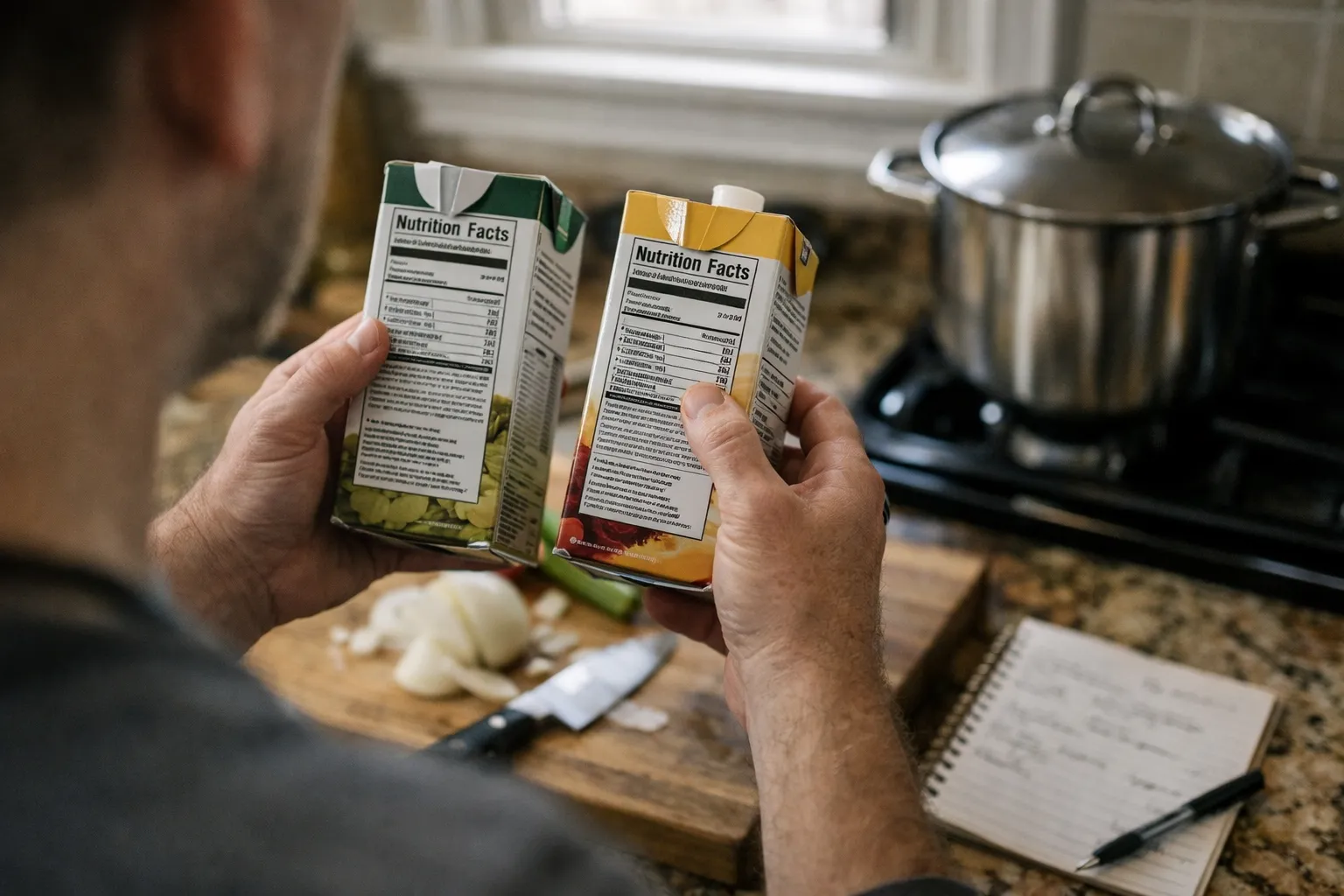
Boxed broths, canned soups and ready-to-heat bowls are natural targets for sodium trimming because seasoning blends are straightforward to adjust. When you open a familiar broth this season, take a small taste first. If it feels “flat,” boost complexity with a spoonful of tomato paste, a dash of soy or a squeeze of lemon rather than immediately salting.
Breads and baked goods
Bread contributes disproportionately through frequency of consumption. Lower-sodium commercial breads are appearing, but be careful if you bake: salt controls yeast activity and dough structure. If you reduce salt at home, drop the reduction to no more than 10–15% for yeasted doughs or compensate with shorter proof times and cooler fermentation; the dough will feel tackier and may rise faster.
Sauces, condiments and mixes
Condiments often “stack” sodium across a meal. Expect reformulated soy sauces, bottled dressings and seasoning mixes to be lower in sodium and sometimes higher in acid or sugar to balance flavor. Taste before you add; finish with acid (vinegar, citrus) or umami (anchovy, mushroom powder) for lift.
New evidence and expert views (mid‑2026)
Public-health groups including the American Heart Association continue to publicly endorse population-level sodium reduction as an effective lever to lower blood pressure. The CDC and FDA maintain that voluntary, phased reductions can reduce average intake without sudden consumer rejection. Independent nutrition analysts and consumer advocates tracked reformulation announcements through mid-2026 and report modest but measurable shifts in sodium density in key categories — especially broths, canned tomatoes and some ready meals — though progress is uneven across manufacturers and regions.
Practical shopping and kitchen tactics — updated
- Compare mg per 100 g and per serving. When both are shown, use mg/100 g for apples-to-apples comparisons; serving sizes vary widely and can obscure true sodium content.
- Taste in stages. Smell, then taste. Build flavor with aromatics (onion, garlic), browning, acid and umami before finishing with salt.
- Use acid and umami as salt multipliers. A teaspoon of tomato paste, a splash of vinegar, a small anchovy fillet or a Parmesan rind adds perceived saltiness with less sodium overall.
- Watch labels for potassium chloride. If ingredient lists include potassium-based salts, people with chronic kidney disease or those on potassium-elevating medications should consult their clinician.
- Tools that help: Measuring spoons for consistent salting, a digital scale to follow recipes precisely, and smartphone apps that scan Nutrition Facts (e.g., FoodData Central, MyFitnessPal) can help you compare products quickly.
Impact: who benefits and who should be cautious
Lower-sodium packaged foods can help people managing hypertension, institutional procurers (schools, hospitals), and anyone trying to reduce overall sodium intake. But people with certain medical conditions—especially chronic kidney disease or those on potassium-sparing medications—should pay attention to potassium-based salt substitutes and consult a clinician before switching to products that list potassium chloride.
Reactions from public-health and industry perspectives
Public-health organizations applaud the direction but say voluntary approaches can be uneven; implementation depends on manufacturer commitment and consumer acceptance. Industry trade groups emphasize phased, consumer-acceptable reformulations to avoid abrupt flavor changes. At the dinner table, that means changes are incremental: many products will taste familiar, but cooks should still taste before salting and learn to layer flavor in other ways.
What to watch next (Aug. 2026–2028)
- Product tracking: Expect continued growth in reduced-sodium SKUs among private labels and value lines, and incremental changes from national brands through 2028.
- Label clarity: Watch for clearer front-of-package callouts when potassium salts are used; this is important for people with medical restrictions.
- Restaurant menu changes: Several national chains are piloting lower-sodium menu items; regional differences will persist based on consumer feedback and supply-chain decisions.
How I’m adapting in my kitchen
My grandmother used to say, “Smell first, then salt.” That rule is more useful now than ever. When a familiar broth or sauce tastes different, I add a spoonful of tomato paste and a shallow splash of soy or fish sauce to build backbone, then finish with lemon to brighten. Small adjustments—roasting vegetables longer for caramelized depth or making a quick umami blend with mushrooms and miso—keep dishes satisfying even as sodium steps down.
FAQs
Will my favorite packaged foods suddenly taste very different?
No. Most manufacturers are pursuing gradual reductions designed to be imperceptible. Over 2026–2028 you may notice slightly less salty versions of broths, sauces and some prepared meals; the best practice is to taste before salting and compare Nutrition Facts if you track sodium.
Are potassium-based salt substitutes safe for everyone?
Potassium chloride can lower sodium counts but may be risky for people with chronic kidney disease or those on potassium-raising medications (ACE inhibitors, potassium-sparing diuretics). If a product lists potassium chloride or “potassium-based salt,” consult your clinician before making it a regular choice.
How much salt can I reduce in home recipes without compromising texture or leavening?
For most savory recipes, reduce table salt by 25–30% and use acids, aromatics and umami to compensate. For yeasted breads, limit reductions to 10–15% unless you adjust fermentation time and temperature; salt strengthens gluten and controls yeast activity.
Should I stop buying convenience foods because of sodium?
No—read labels and choose lower-sodium lines when possible. Use convenience items as flavor-building elements and finish dishes with fresh herbs, citrus, and toasted spices to reduce the need for extra salt.
Editor’s note: This August 2026 update reflects marketplace and kitchen trends since the FDA’s voluntary 2028 sodium targets were issued. As product formulations continue to evolve through 2028, taste-first cooking and label literacy will help home cooks preserve flavor while lowering sodium intake.