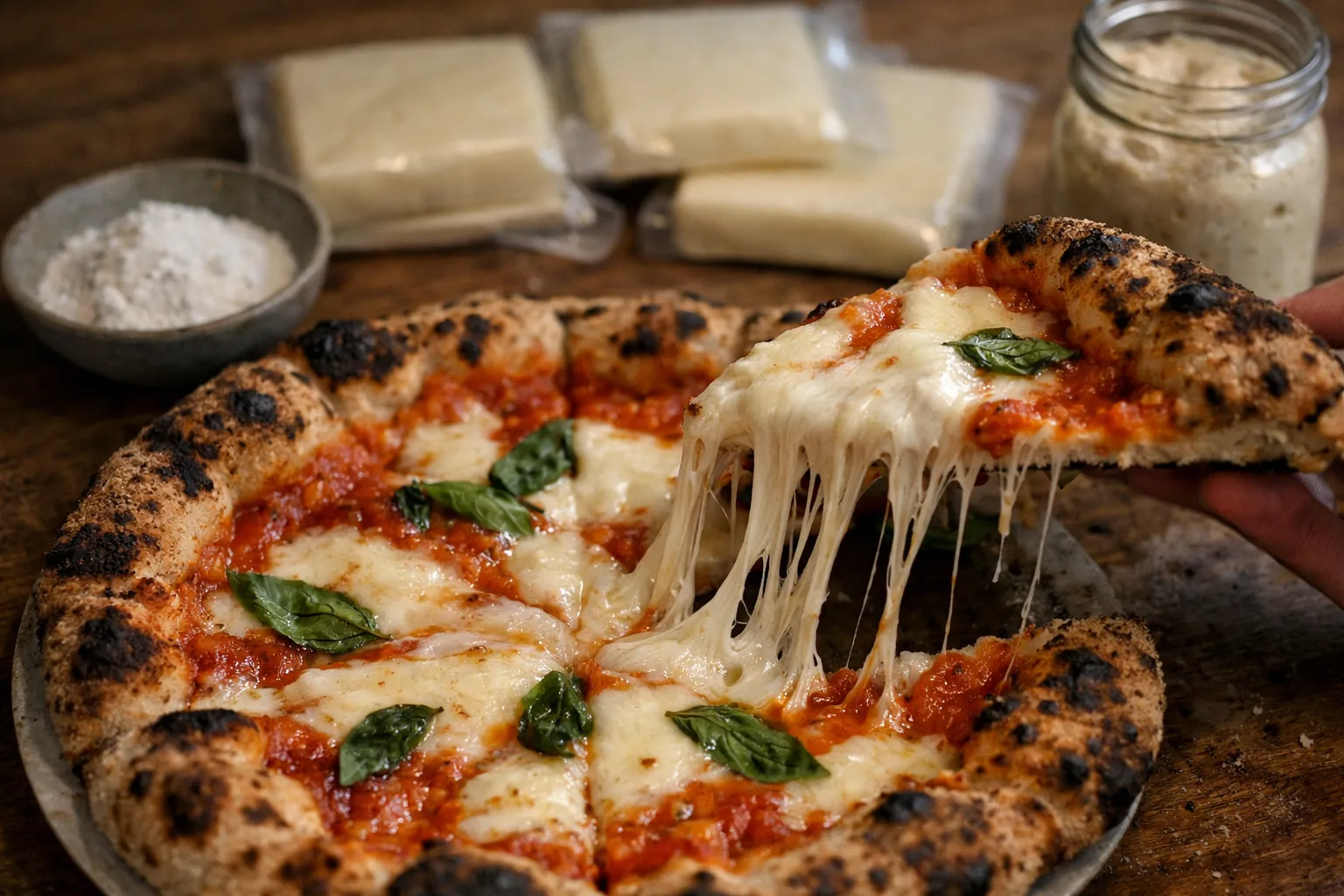
For much of the last decade the complaint about plant‑based cheese was persistent: it looked right but rarely behaved like dairy when heated. That has shifted markedly by August 2026. Improved ingredient science, scaled-up fermentation proteins, and new hybrid formulations have produced plant‑based cheeses that consistently soften, stretch and brown in everyday cooking. This update explains what changed in the past 18 months, examines the evidence and market signals, and gives specific buying and cooking guidance for home cooks who want dependable melt and flavor.
Why this matters now
Melting behavior is not just a consumer nicety; it determines whether a vegan cheese works for pizza, grilled sandwiches, casseroles and restaurants. Reliable functional performance has pushed retailers and foodservice operators to broaden shelf space and menu offerings, which makes it easier for home cooks to find products that behave like dairy. For readers: this means fewer experiments and more go‑to products that do what you expect in the oven or on the griddle.
Background: what changed since early 2024
Three parallel developments accelerated in late 2024–mid‑2026 and explain today’s improvements:
- Ingredient refinement: Starch systems, emulsifiers and oil blends were reformulated to reduce oiling off and improve heat stability while shortening ingredient lists.
- Fermentation scale‑up: Precision‑fermented and microbial proteins that mimic casein moved from pilot production toward larger commercial supply, enabling wider use in formulations.
- Market pull: Restaurants and retail buyers prioritized functional performance — especially for pizza and melt applications — which justified higher ingredient costs and faster R&D cycles.
Data and evidence: what the market shows
Industry tracking firms and retail scans show continued growth in plant‑based dairy alternatives through 2025 and into 2026, with plant‑based cheese expanding faster than several other categories as suppliers brought higher‑performing SKUs to market. Retail assortment reports from trade analytics firms indicate more mainstream grocery chains now stock multiple “melting” or “pizza” SKUs across both refrigerated blocks and high‑heat shreds. Chefs’ menus and consumer reviews reinforce a functional shift: independent tests and food writers are increasingly reporting pizza pulls and sandwich melts comparable to low‑moisture mozzarella and processed cheddar.
On the technical side, peer‑reviewed and industry‑funded formulation notes published through 2025‑26 document improved emulsion stability when starch gels (tapioca/potato) are combined with modern emulsifiers and plant proteins, and when production controls limit moisture migration. Independent lab tests commissioned by retailers show reduced oil separation and higher meltability scores for newer formulas compared with 2019–2021 iterations.
How modern formulations achieve melt: three updated strategies
The basic three routes — oil+starch emulsions, cultured nut/legume cheeses, and protein‑driven fermentation — remain, but each has evolved.
1. Refined oil + starch emulsions (mainstream, now cleaner‑label)
Manufacturers have reduced reliance on high levels of coconut or palm fractions by improving starch selection and emulsifier blends. Modified tapioca and potato starches engineered for clearer gelatinization windows—and newer food‑grade emulsifiers—help form a cohesive gel that traps oil at high heat. The result: affordable, shelf‑stable shreds and slices that melt more reliably and brown without obvious oiling off.
- Strengths: Cost‑effective, broadly available, reliable in pizza and sandwiches.
- Weaknesses: Can still be higher in saturated fat than some dairy options if formulations use coconut fractions; flavor depth remains a challenge compared with cultured options.
2. Cultured nut and legume cheeses (artisan and hybrid)
Cultured bases—cashew, almond, pea and increasingly fermented soy—have seen process improvements for consistency. Producers now commonly blend cultured bases with small amounts of functional starch or a precision protein to gain stretch while preserving fermented flavor complexity. These hybrid artisan products appear more frequently in specialty refrigerated cases and on high‑end pizza menus.
- Strengths: Superior flavor complexity, cleaner ingredient perception, more unsaturated fats (when nut‑based).
- Weaknesses: Higher cost per pound, variable melt unless formulated as a hybrid product.
3. Protein‑driven melt: scaled fermentation proteins (closest functional match)
Precision‑fermented proteins that recreate dairy casein have achieved greater commercial availability by mid‑2026. Where used, they recreate the protein matrix that gives dairy its cohesive melt and fibrous stretch. Brands using these proteins tend to deliver the most dairy‑like pull and browning with less reliance on saturated oils or thickening starches.
- Strengths: Best match for stretch, mouthfeel and browning; allows lower saturated fat formulations.
- Weaknesses: Still a price premium in many markets; labeling and consumer education remain important.
How these approaches perform in everyday cooking
Here’s a realistic look at performance in common home scenarios as of August 2026.
- High‑heat pizza (450–500°F/230–260°C): Protein‑driven and well‑formulated oil+starch shreds both give strong melt and stretch. Hybrid cultured shreds perform well when designed for pizza.
- Grilled cheese and toasting: Blocks and slices made with protein drivers or optimized starches brown evenly and create pleasing pull; avoid thin pre‑shreds that include anti‑caking agents for best results.
- Mac and cheese, béchamel or cheese sauces: Starch‑forward formulations create volume and thickness but can feel starchy; protein‑enhanced products make silkier, less gummy sauces and reduce the need for additional thickener.
- Baking and gratins: Select cheeses with lower moisture and proven oven stability (products marketed for “baking” or “melting”) to avoid excess pooling and sogginess.
Updated buying and cooking recommendations (August 2026)
- Read packaging claims precisely: Look for “melting,” “pizza,” “baking” or “shreddable” on labels. Claims like “cultured” or “fermented” usually indicate flavor depth; “protein‑enriched” or “contains casein‑analog” suggests stronger melt.
- Prefer blocks over pre‑shredded: Shredding a chilled block just before use reduces anti‑caking coatings and improves flow.
- Use correct heat and surface: For pizza, use a preheated stone or steel and the oven’s top heat/broiler for finishing. For grilled cheese, a hot pan with a weighted press browns surface quickly and melts interior without overcooking fillings.
- Hybrid blending: For best results on a budget, mix a small amount (10–20%) of a protein‑driven slice with a starch‑based shred to boost stretch and flavor while controlling cost.
- Sauces and emulsions: If a sauce is loose, finish with a short blitz in a blender to emulsify fat and liquid, or add a small tapioca slurry (1 tsp tapioca per cup liquid) and finish over gentle heat.
- Storage: Refrigerate cultured and protein‑containing products and use within the manufacturer’s recommended window—these formulations can be more sensitive to temperature abuse than highly processed shelf‑stable blocks.
Nutrition, labeling and environmental notes — what’s new
Improved performance doesn’t automatically mean “healthier.” Many mainstream melts still rely on oil blends that include coconut fractions for firmness, which raises saturated fat. However, the wider adoption of precision‑fermented proteins has enabled formulations with lower saturated fat and higher total protein. Environmental impact varies: precision fermentation can be lower in land and water use but depends on energy sources for bioprocessing. For shoppers, transparency remains uneven; more brands now list the origin of fermentation‑derived proteins, but ingredient‑label literacy is essential.
Multiple perspectives
Manufacturers point to ingredient innovation and scale as the reason for functional gains; food scientists emphasize emulsion control and protein networks; chefs say hybrid approaches let them balance cost and flavor. Consumer advocates urge clearer labeling on fermentation‑derived ingredients and better allergen disclosure for nut‑based cultured products. Taken together, these viewpoints reflect a maturing category that is solving functional problems while wrestling with price, transparency and nutrition tradeoffs.
Outlook: what to watch next
- Broader availability of protein‑driven cheeses: Expect more SKUs to drop from national brands through late 2026 and into 2027 as fermentation supply expands and costs moderate.
- Clean‑label starch/emulsifier blends: Ingredient makers will keep pushing for simpler labels that preserve performance, which should yield better‑tasting, lower‑saturated‑fat options.
- Restaurant influence: Continued adoption by pizzerias and chains will drive consumer expectations and speed reformulation cycles.
- Regulatory and labeling clarity: Watch for clearer guidance on naming and disclosure of precision‑fermented constituents in key markets, which will affect consumer trust and marketing language.
Conclusion
As of August 2026, plant‑based cheese performs well enough for most home and casual restaurant uses, thanks to better starch and emulsifier systems, hybridization with cultured bases, and scaled precision fermentation. Choice still matters: match the formulation to the application, favor blocks or slices for the best melt, and consider hybrid blending if you want both flavor and stretch without excessive cost. Over the next 12–24 months, expect continued improvement and broader availability as supply chains and labeling catch up to the technical progress already on shelves.
Is precision‑fermented cheese still vegan?
It depends on your definition. Precision‑fermented proteins created without animal inputs are technically animal‑free, but some vegans object to molecular mimicry of dairy proteins. Check brand statements—some market their products as vegan, others label them as dairy‑analogues.
How can I get the best pizza pull at home?
Use a high‑heat oven (450–500°F / 230–260°C) and a preheated stone or steel, choose a product labeled for “pizza” or “melting,” and place the pie under the broiler for 30–60 seconds at the end to encourage browning. Shred from a block and avoid excess toppings that cool the surface.
Are plant‑based melts healthier than dairy?
Not always. Some melts are higher in saturated fat or added starches; others (particularly protein‑enriched formulations) have more protein and less saturated fat. Compare nutrition panels rather than assuming one class is uniformly healthier.
How should I store and reheat plant‑based cheeses?
Refrigerate according to label directions. For reheating, moderate heat prevents separation—use a covered pan or short oven time rather than prolonged microwaving. For sauces, blend briefly to re‑emulsify.