
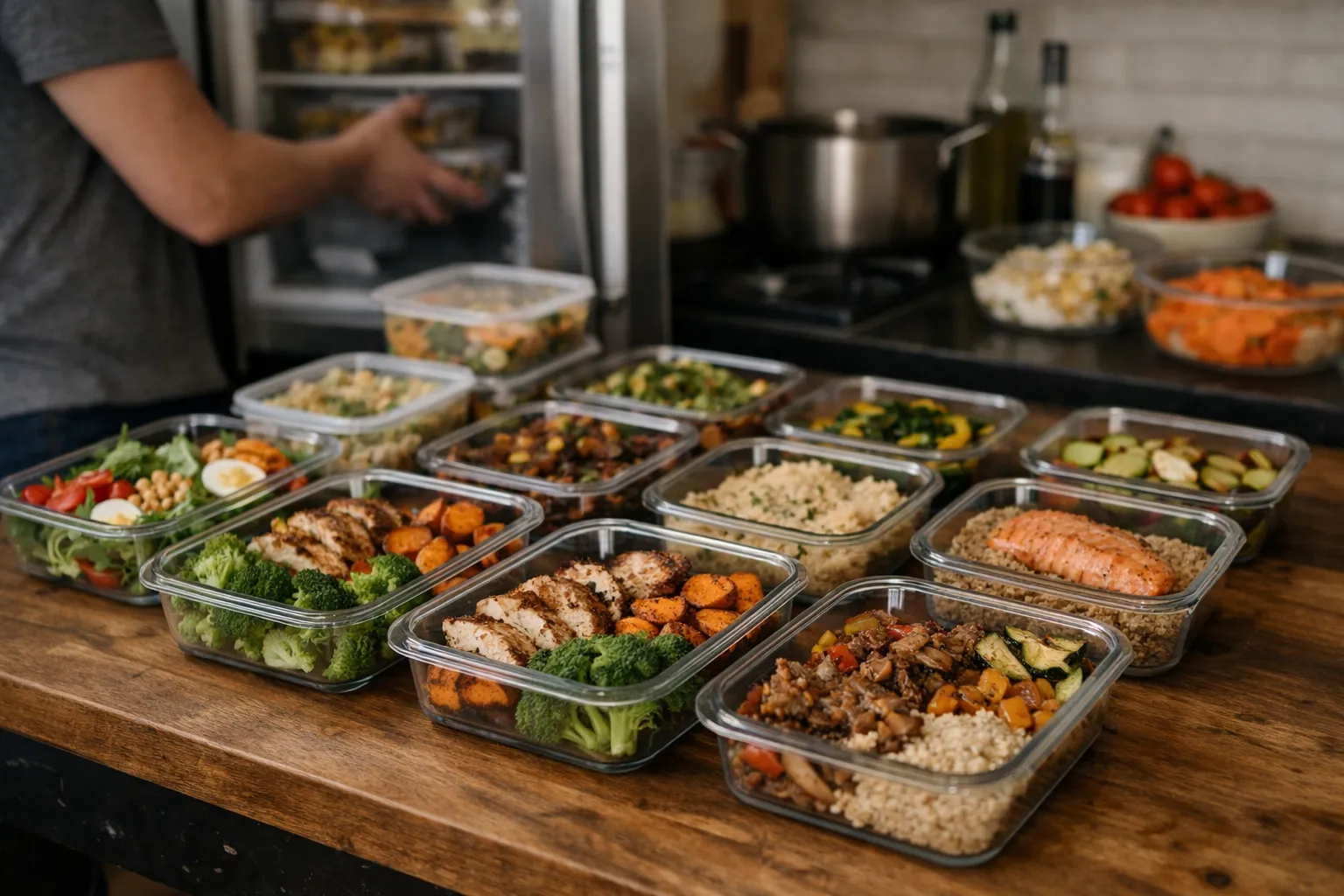
Who this is for: home cooks and meal planners who want a reliable, time‑efficient way to eat home‑cooked lunches and dinners five days a week without relying on a freezer. What you’ll learn: a complete, safety‑first system—menu planning, shopping, a single 90–150 minute batch‑cook workflow, storage and reheating rules, cost and time savings math, and a reusable 5‑day sample plan.
Why a refrigerator‑only system matters now
Freezer space is scarce in many urban apartments and some appliances (e.g., smart fridges) don’t freeze reliably. Plus, aiming for a 5‑day refrigerated cycle forces menu choices that preserve quality, reduce freezer‑burn waste and cut midweek decision fatigue. The numbers tell a different story than marketing: by designing meals around ingredients that hold 3–5 days refrigerated, you can shave 30–90 minutes daily of cooking time and save roughly $5–10 per meal versus takeout—real cash if you do it consistently.
Prerequisites / Context
- Fridge temperature: Set to ≤40°F (≤4°C). This is the USDA/CDC threshold for safe refrigerated storage.
- Containers: 4–8 airtight containers (650–900 ml) and 2–3 larger 2–3 L containers. Prefer glass for reheating stability and durability.
- Kitchen gear: One sheet pan, one heavy pot (for rice/grains), one sauté pan, an oven, a digital probe thermometer, and optional vacuum sealer or high‑barrier lids.
- Time budget: 90–150 minutes on your batch day (commonly Sunday).
- Food‑safety tools: Instant‑read thermometer, sanitized cutting boards, and a reliable timer.
Step 1 — Design a 5‑day menu that holds
Principle: combine long‑holding elements (grains, roasted root veg, pickled or dressed salads) with proteins that are safe 3–4 days refrigerated, and rotate one midweek “fresh” item if you want five full days.
- Pick 2 protein types: one poultry (chicken thighs), one plant/egg (chickpea salad or hard‑boiled eggs). Cooked poultry keeps safely 3–4 days; chickpea salads hold 4–5 days if dressed with oil and acid.
- Choose 2 carbs: long‑holding rice/quinoa (3–4 days) and a quick‑cook grain (couscous) for variety.
- Pick 3 veg types: oven‑roasted root veg (sweet potatoes, carrots), quick blanched greens (hold 2–3 days), and raw crunchy veg (cabbage, bell pepper) that won’t get soggy.
- Add preserves/dressings: vinaigrettes, tahini sauces, and quick pickles—acid extends shelf life and refreshes meals midweek.
Example 5‑day combo (lunches):
- Day 1–3: Roasted chicken thigh + brown rice + roasted broccoli
- Day 4–5: Chickpea & herb salad + couscous + quick pickled carrots
Step 2 — Smart shopping and yield math
Buy to yield, not to recipes. Cooked yields matter: 1 lb raw boneless chicken → ≈12–14 oz cooked (three 4‑oz servings). Use the following quick math rules:
- Target portion sizes: protein 4–6 oz cooked (115–170 g), carbs 3/4–1 cup cooked, veg 1–2 cups.
- Multiply by 5 meals. Example: 5 × 5 oz protein = 25 oz cooked → ~1.9 lb cooked → buy about 2.5–3 lb raw bone‑in or 2–2.2 lb boneless to account for shrinkage.
- Buy slightly extra of shelf‑stable items (grains, canned beans) so you don’t run short midweek.
Cost example (conservative): if store chicken breast $3.50/lb, rice $0.70/lb, vegetables $1.50–3 per bag, per‑serving cost for a chicken rice bowl ≈ $2.50–4.00. Compare to a $12–18 takeout meal: $10 average saving × 5 meals/week × 52 weeks = $2,600/year. Adjust to local prices; the point: consistent batching compounds savings.
Step 3 — The 90–150 minute batch session (sequence)
Do tasks in parallel to maximize oven and stove time. Below is a tested sequence for a 120‑minute Sunday session that yields five lunches:
- 00:00–00:10 — Preheat & prep: Preheat oven to 425°F (218°C). Rinse grains; preheat water for rice/pasta. Line a sheet pan; chop root veg and toss with oil and salt.
- 00:10–00:20 — Start grains & protein: Put rice/quinoa on simmer. Season chicken thighs and place on sheet pan (space evenly).
- 00:20–00:50 — Roast chicken & veg: Roast 35–40 minutes (internal temp target 165°F / 74°C for poultry). Stir veg at 20 minutes if needed.
- 00:30–00:50 — Make chickpea salad or dressings: While roasting, mash half the chickpeas with lemon, olive oil, herbs; chop raw veg for salads; make vinaigrette.
- 00:50–01:00 — Rest & check temps: Rest cooked proteins 5–10 minutes; use probe thermometer to confirm temps. Begin portioning grains.
- 01:00–01:20 — Portioning & cooling: Divide into containers—protein first, then carbs, then veg. Leave lids slightly ajar until items cool to ambient (or use shallow pans to speed cooling). Don’t stack hot containers in fridge.
- 01:20–01:30 — Label & refrigerate: Label date and use‑by (3 or 4 days depending on protein). Place containers in the coldest part of the fridge, not the door.
Why this sequence works: it minimizes hands‑on time and uses oven/stove in parallel. Cooling quickly prevents bacterial growth—CDC guidance: refrigerate perishable foods within 2 hours (1 hour above 90°F).
Step 4 — Storage, safety, and shelf‑life rules
Food safety is non‑negotiable. Follow these concrete guidelines:
- Fridge temp: Maintain ≤40°F (≤4°C). Use a fridge thermometer to confirm.
- Leftover window: Cooked proteins and mixed meals: 3–4 days refrigerated per USDA. Acidic or oil‑dressed salads (no mayonnaise) can stretch to 4–5 days.
- Labeling: Mark cooked date and “use by” date (e.g., Cooked 6/1 — Use by 6/4 if protein). FIFO (first in, first out) prevents waste.
- Vacuum sealing: Optional. Vacuum sealing reduces oxidation and can extend quality by ~1–2 days for cooked proteins in the fridge but it’s not a substitute for proper refrigeration.
- Reheat safely: Reheat to 165°F / 74°C throughout before eating. For soups/stews, bring to a boil.
Step 5 — Reheating, plating, and midweek refreshes
- Microwave method: Add a tablespoon of water or sauce and cover loosely; reheat 2–3 minutes, stirring halfway. Check temperature with probe.
- Stovetop method: Reheat rice/grains with a splash of broth in a pan; add protein and sauce and heat until 165°F.
- Refresh strategies: Add a fresh element midweek—chopped herbs, a soft cheese dollop, or a quick salad—to keep meals tasting vibrant. Quick pickles made Sunday still taste bright on Day 5.
Common mistakes to avoid
- Packing hot food into sealed containers: Traps heat and raises fridge temp. Cool 20–30 minutes on the counter first or use shallow pans to expedite cooling.
- Relying on the freezer as a safety net: Freezer is useful for long‑term storage but masks poor planning. In this system, design to avoid needing the freezer midweek.
- Overloading the fridge: Blocking airflow raises internal temp; leave space for circulation.
- Ignoring date labeling: Without clear dates, you’re likely to keep items past safe windows—discard rather than risk it.
Pro tips (advanced)
- Use sous‑vide for consistency: Sous‑vide chicken or salmon at 145–150°F yields even doneness and tight portion control; finish with a quick sear. Vacuum‑sealed pouches speed chilling in an ice bath.
- Make concentrated sauces: Concentrated sauces (1:1 reduction of stock + acid + fat) store well and halve reheating time; dilute when plating.
- Double batches of stable components: Make 8–10 cups of roasted vegetables—use half in lunches and half to create a different dinner midweek (frittata, grain bowls).
- Track cost and time: Keep a simple spreadsheet for two months. If per‑meal time is >25 minutes on average or cost saving 50% vs takeout, iterate your menu.
Sample 5‑day menu and shopping list (single Sunday session)
Yields five lunches for one person.
Menu
- Roasted lemon‑garlic chicken thighs (3 days)
- Chickpea herb salad with lemon‑tahini (2 days)
- Brown rice
- Roasted broccoli & sweet potatoes
- Quick pickled carrots
Shopping (approximate)
- 3 lb bone‑in chicken thighs (or 2 lb boneless)
- 1.5 cups dry brown rice (≈3.5 cups cooked)
- 2 large sweet potatoes
- 2 heads of broccoli
- 2 × 15 oz cans chickpeas
- Lemons, garlic, olive oil, tahini, jarred vinegar, salt, pepper, herbs
Estimated session timing
- Total hands‑on: ~120 minutes
- Approx. per‑meal cooking cost: $2.50–$4.00 (local prices will vary)
How to iterate and scale
Run a two‑week experiment: batch‑cook one week and record time, fridge spoilage, and per‑meal cost. Adjust protein types and introduce a midweek quick cook (10–15 minutes) if you notice flavor fatigue by Day 4. To scale for two people, increase ingredient multipliers and stagger portions so you don’t open every container at once—this reduces exposure and keeps the earliest meals freshest.
Why this method beats ad‑hoc prep
Ad‑hoc cooking creates decision fatigue and more food waste. A structured 5‑day refrigerated system converts a weekly 2‑hour investment into predictable, safe meals. Financially, using conservative numbers—$3.50 per homemade meal vs $13 takeout—you save ~$9.50 per meal; five meals per week equals $2,470 annually. The exact figure depends on local prices, but the compounding effect is real: small per‑meal savings become meaningful when repeated weekly.
Common mistakes — recap
- Packing hot: cool first.
- Ignoring fridge temp: verify ≤40°F.
- Overestimating shelf life: plan 3–4 day safe windows for proteins.
- Skipping labels: always date and note use‑by.
FAQ
Can I safely keep cooked chicken in the fridge for five days?
USDA guidance is conservative: cooked poultry is generally safe 3–4 days refrigerated at ≤40°F (≤4°C). If you need to stretch to Day 5, either make a non‑perishable dish (chickpea salad), use vacuum sealing plus strict temp control, or plan a midweek fresh cook. Don’t rely on visual cues—use dates.
How do I prevent soggy vegetables after two days?
Choose veg that hold up (root vegetables, crucifers) and separate wet dressings until serving. Quick‑pickling raw veg (vinegar + salt + sugar) preserves crunch and flavor for multiple days.
What’s the fastest way to cool cooked food before refrigerating?
Use shallow pans (no more than 2 inches deep) or an ice bath for sealed meats. Stirring grains and spreading them thin helps. The goal is to get foods below 70°F within two hours—faster if ambient temps are high.
Is vacuum sealing necessary?
No. It helps with oxidation and quality but does not replace refrigeration. Vacuum sealing can extend quality modestly (often 1–2 days for cooked proteins) and is useful if you’re pushing to Day 4–5, but it’s not a safety panacea.
How much time do I realistically save each day?
On batch weeks you’ll typically save 30–90 minutes daily compared with cooking from scratch each meal. That depends on your normal routine—if you previously spent 45 minutes per dinner, a batch system reduces that to 10–15 minutes of reheating and assembly.
Bottom line: a focused 5‑day refrigerated system is practical, safe and economically compelling when you design menus around items that hold 3–5 days, follow cooling and labeling rules, and commit one 90–150 minute session a week. The numbers back it: modest per‑meal savings and weekly time consolidation compound into real benefits over a year.