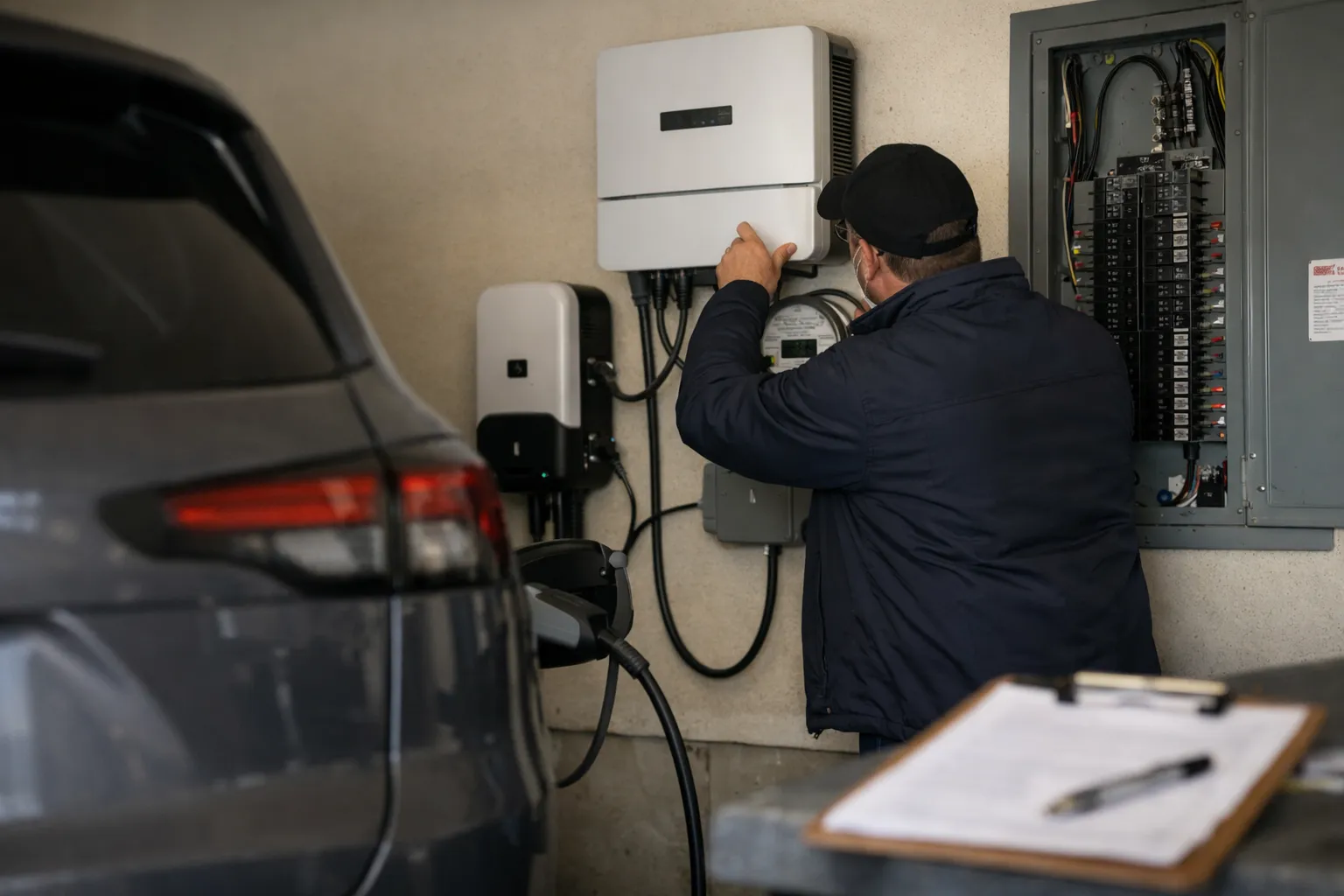
Vehicle-to-grid (V2G) capability — the ability for an electric vehicle to export energy back to the grid or a home — moved from pilots into selective commercial programs by 2026. For car buyers who want to turn their EV into a distributed energy asset, the purchase decision now includes hardware, software and market access considerations that used to belong to the energy sector.
Who this guide is for
This step-by-step guide is aimed at car-buying enthusiasts who want to buy (or lease) an EV in 2026 with the intention of using it for V2G services: demand-response payments, time-of-use arbitrage, emergency backup for the home, or participation in utility/wholesale markets through an aggregator.
Overview — what you need to know up front
- V2G is not the same everywhere: technology stacks differ (CHAdeMO vs ISO 15118-20), and utility interconnection, compensation and safety rules vary by jurisdiction.
- V2G economics are program- and location-dependent. Some programs pay strong incentives (hundreds to low thousands annually), others are pilot-scale or offer small credits.
- Hardware and installation costs include a bidirectional charger (EV-to-grid capable), possible home electrical upgrades, and aggregator enrollment fees.
- Always confirm battery-warranty terms for bidirectional use; battery degradation from V2G can be mitigated by smart dispatch but must be contractually covered.
Step 1 — Decide whether V2G fits your use case
Ask yourself:
- Do you need regular vehicle backup power for your home, or are you primarily interested in grid payments?
- How many miles do you drive daily? If you need the full battery regularly, V2G participation will be constrained.
- Are you willing to commit to an aggregator contract (which often controls dispatch windows) and to install a home charger with bidirectional capability?
If your daily driving is light (typical US household under 30–40 miles/day) and you have flexible charging windows, V2G can be practical. If you need predictable full range daily, the benefits shrink.
Step 2 — Choose a compatible vehicle (what to look for)
Not all EVs support bidirectional charging or V2G protocols. When evaluating models in 2026, confirm these specifics with the manufacturer and in writing:
- Bidirectional charging capability: Does the vehicle and its onboard charger support AC or DC export? Many early systems use AC bidirectional chargers at home; some DC solutions exist for commercial settings.
- Supported protocol: CHAdeMO historically enabled V2G (for vehicles like the Nissan LEAF), while ISO 15118-20 is the emerging standard for bidirectional CCS-based V2G in Europe and North America. Confirm which standard the vehicle implements.
- Software & firmware: Can the OEM enable V2G with an over-the-air update, or is it hardware-locked? Request the OEM’s V2G roadmap and whether activation is included or an extra-cost option.
- Battery warranty language: Get exact warranty text about bidirectional operation or aggregated-grid services. Some manufacturers explicitly exclude V2G without an approved aggregator; others offer coverage under specific programs.
- Vehicle-to-home (V2H) vs true V2G: Models like the Ford F-150 Lightning and several others provide robust V2H for backup power; verify whether the vehicle is certified for export to the utility grid (V2G) or only to home loads.
Practical tips when comparing models
- Ask dealers for a “V2G spec sheet” that lists supported protocols, charger compatibility, and any OEM-approved aggregator partners.
- Search for real-world reporting and user forums (owners of the same model running V2G pilots) but verify claims against official OEM documentation.
- Consider used vs new: some older EVs with CHAdeMO ports can do V2G via retrofit chargers; newer CCS vehicles are catching up with ISO 15118-20 implementations.
Step 3 — Choose a bidirectional home charger and installer
Bidirectional EV chargers convert AC↔DC and manage grid communications. By 2026 the market includes multiple residential bidirectional chargers, from companies like Wallbox, KEBA, Enel X, and others offering V2G-capable hardware.
- Expect charger costs (hardware + installation) to vary widely: as a ballpark, plan $2,000–$6,000 for hardware and $1,000–$4,000 for typical home electrical upgrades and installation depending on meter location, panel capacity and local labor rates.
- Installation considerations: your electrician must sign off on grid interconnection requirements and, in many jurisdictions, your utility will require an inspection and possibly a dedicated meter or tariff enrollment.
- Ask installers about NEC compliance and whether they have experience with V2G interconnection paperwork for your utility.
Step 4 — Identify aggregator and compensation pathways
Aggregators are the intermediaries that enroll EVs in programs, control dispatch windows and pass payments to owners. By 2026 established players include both private firms (e.g., Nuvve, Fermata Energy) and utility-run pilots.
- Types of programs:
- Utility demand-response or capacity programs: pay for availability during peak hours.
- Wholesale market participation: aggregated EVs bid into markets for frequency regulation or fast-response services (enabled by FERC Order 2222 provisioning of DER aggregation).
- Retail tariffs: time-of-use (TOU) arbitrage where the aggregator shifts charging and discharging to exploit price spreads.
- Compensation models: enrollment bonuses, periodic credits, or revenue share on wholesale market receipts. Annual payouts vary significantly — small pilots may pay under $200/year; mature programs in high-value markets can exceed $1,000/year for eligible participants.
- Contract terms to review: required availability windows, minimum enrollment duration, control over your battery state-of-charge (SoC), buyback rates and early termination penalties.
Step 5 — Evaluate battery-warranty and degradation risk
Battery degradation is the main technical risk of V2G. Two practical points:
- OEM protections: some manufacturers now include V2G-specific warranty provisions when vehicles are enrolled with approved aggregators, capping owners’ out-of-pocket risk for degradation caused by program dispatch.
- Dispatch strategy: smart aggregation minimizes high-depth-of-discharge cycles, preferring shallow cycling and frequency-regulation operations that produce lower effective wear but still earn revenue.
Before purchase, insist on written clarification of whether V2G participation voids any part of the battery warranty, and what evidence the OEM will accept for warranty claims tied to aggregation operations.
Step 6 — Installation, permitting and timeline
- Confirm utility interconnection rules and whether a separate meter or export permission is needed. Some utilities require dedicated export metering for wholesale participation.
- Hire a licensed electrician experienced in EV and energy-storage installations; get written quotes including any panel upgrades, transfer switches for backup, and conduit work.
- Apply for any local incentives: certain states and municipalities offer rebates for bidirectional chargers or for grid services enrollment.
- Typical timeline: 2–8 weeks from installer contract to energized V2G, longer if permitting, panel upgrades or utility approvals are required.
Step 7 — Buying or leasing: contract nuances
When negotiating purchase or lease:
- Add a clause that the vehicle is represented as V2G-capable or that the dealer will provide the OEM V2G spec sheet.
- For leases: ensure the lease permits third-party aggregator software and that mileage caps align with your expected use. Confirm who bears responsibility for battery degradation related to V2G dispatch.
- Seek written confirmation of any OEM incentives for V2G enrollment (e.g., installation rebates, credits) and the process for transferring V2G agreements if you sell the car.
Step 8 — Estimating your economics (example calculation)
Concrete example (illustrative, 2026 possible scenario):
- Upfront costs: vehicle premium for V2G-capable model $0–$2,000; bidirectional charger + installation $4,000; total ~$4,000–6,000 incremental outlay.
- Annual revenues/savings: aggregator payments or bill credits $300–$1,200 (range based on region and program); home energy savings from backup/TOU optimization $100–$400.
- Battery impact: intelligently managed V2G in many programs contributes little additional degradation; assume 0–1% extra capacity loss per year if OEM-approved. Warranty protections can offset replacement risk.
- Simple payback: at $700/year net benefit, a $5,000 investment pays back in ~7 years — longer if revenues are lower. Buyers should treat V2G earnings as variable, not guaranteed.
Step 9 — Resale and transferability
Key resale considerations:
- Document participation and battery-health reports. Buyers will want access to aggregated usage logs that show how often the battery was cycled and whether V2G operations were within OEM-approved limits.
- Confirm whether aggregator contracts are transferable. Non-transferable contracts can complicate resale value.
- Models with OEM-backed V2G warranty protections will typically hold higher resale value in markets where V2G programs are established.
Checklist — Questions to ask before you sign
- Is this vehicle hardware-capable of bidirectional charging today, and which protocol does it use?
- Can the OEM enable V2G via OTA update later if not currently active?
- What exactly does the battery warranty say about V2G or aggregator-driven cycling?
- Which certified bidirectional chargers are recommended for this model, and what are typical installed costs?
- Which aggregators have live programs in my utility territory, and what are the typical payment structures?
- Will my insurer, lender, or lessor require different terms for V2G use?
- Is the aggregator contract transferable to a future owner?
Regional notes and policy context (2026)
By 2026 several US states (notably California, Hawaii, New York) and EU member states have active or mature V2G pilots and commercial programs. FERC’s earlier rulings enabling DER aggregation continue to underpin wholesale-market participation opportunities. Still, program availability and compensation rates are highly local — check your utility and state energy office for current V2G programs and enrollment windows.
Final recommendations
If you are a buyer in 2026 considering V2G:
- Buy a vehicle only after confirming OEM V2G capability and written warranty language for bidirectional use.
- Budget for a qualified bidirectional charger and potential panel upgrades; get multiple installer quotes.
- Vet aggregator contracts carefully; look for OEM-endorsed partners and warranty protections.
- Treat V2G revenue as a secondary benefit — valuable when programs pay well, but variable. Factor resilience (backup power) and environmental value into your decision, not only direct ROI.
V2G is a promising option for car buyers who want to combine mobility with grid services and home resilience. With prudent selection of vehicle, charger, aggregator and a clear read on local rules and warranty terms, you can buy an EV in 2026 that does more than move you — it can become an active energy asset.