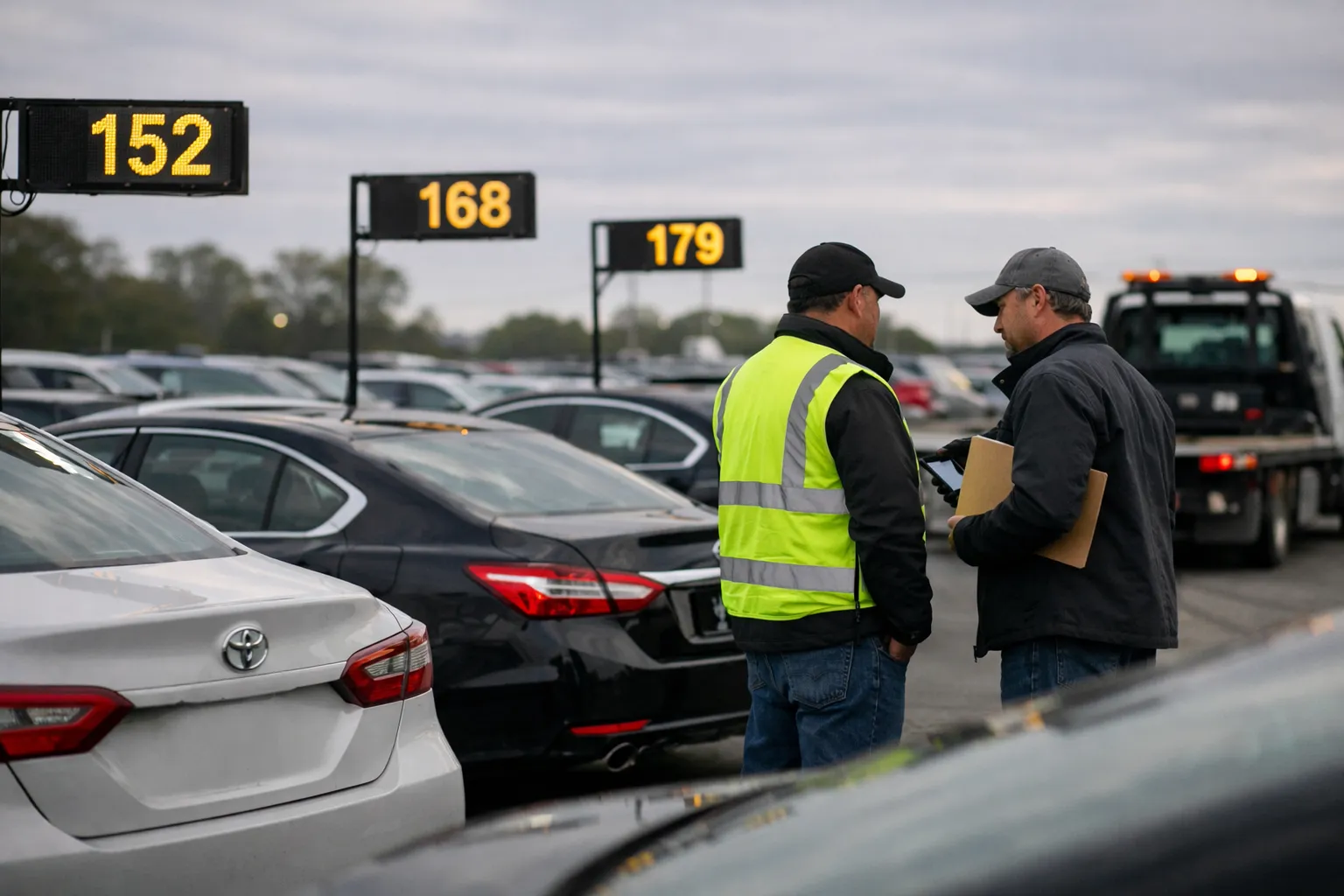
The wholesale auction market — Manheim, ADESA, Copart, IAA and their online platforms — can deliver prices well below retail. But dealer and wholesale auctions also expose buyers to fees, title quirks and vehicles sold “as-is.” This guide walks a car‑buying enthusiast through the practical steps to buy a vehicle at a dealer or wholesale auction in 2026: how to gain access, read condition reports, estimate total cost, arrange payment and transport, and avoid the mistakes that turn bargains into headaches.
Why consider auctions in 2026?
Auctions remain attractive for enthusiasts because they offer inventory variety and — sometimes — lower prices than retail channels. Since 2020 the market has seen two relevant forces: increased institutional buying (fleets and rental companies) and faster digital adoption. Those trends compress margins on common models but open chances to find well-priced, rare or lightly used vehicles that dealers quickly market at above-wholesale prices. If you’re prepared and disciplined, auctions can still be the best place to find a deal.
Types of auctions and access routes
Not all auctions are the same. You’ll need to choose the right route for your goals.
- Dealer-only wholesale auctions (Manheim, ADESA, Openlane) — Generally restricted to licensed dealers. Inventory often includes trade-ins, lease returns and fleet cars. Prices are wholesale; access is via a dealer license or a broker.
- Salvage and insurance auctions (Copart, IAA) — Open to public buyers in many cases, but some lots remain dealer-only. Vehicles may be salvage, flood, or repairable; pricing reflects condition. Expect titles branded “salvage,” “salvage-rebuilt,” or “insurance loss.”
- Public online auctions and specialty sites (Bring a Trailer, Cars & Bids) — Curated listings for enthusiasts. Not wholesale, but worth monitoring for unique finds.
- Broker/dealer middlemen — For retail buyers who want wholesale access without a license. Brokers bid on your behalf for a fee and handle pickup and paperwork.
How to get access:
- Check whether the auction has a public buying program or “public registration” (Copart’s “Public” lots, some IAA locations).
- Use a licensed auction broker or dealer representative. Expect broker fees from roughly $200 to $1,000 depending on service level and lot complexity.
- Partner with a dealer you trust (some will buy on your behalf for a set fee or markup).
- Consider specialized platforms that bridge retail buyers to dealer-only pools; read terms carefully about fees and responsibility.
What to research before you bid
Due diligence separates a smart bid from a costly mistake. Do the homework below for every lot you consider.
1. Confirm title status and history
Check whether the vehicle has a clean, salvage, rebuilt, salvage-rebuilt, or branded title (flood, lemon, odometer). Branded titles reduce resale value and complicate registration in many states. Run a VIN search (CARFAX, AutoCheck) and cross-check the auction’s title note. If a vehicle is listed “salvage,” treat it as a parts-or-repair project unless you have a clear plan and budget.
2. Read the condition report
Auctions post condition reports and photos. Learn the local condition-coding system (Manheim, ADESA and Copart use different shorthand). Pay attention to:
- Front/rear structural damage indications
- Engine/transmission notes (does it start/drive?)
- Airbag deployment
- Flood damage markers
- Interior odor or mold notes
- Odometer exceptions
3. Arrange an inspection
If the vehicle is local, inspect it in person, with flashlight and a basic tool kit. For remote lots, use a third‑party inspection service (US-based inspection firms typically charge $75–$250 for a documented report). A trusted mechanic can confirm mechanical damage vs cosmetic defects.
4. Estimate repairs and certify your walk‑away price
Estimate realistic repair costs and include them in your “all-in” maximum price. Take buyer’s premiums, broker fees, transport, storage and registration taxes into account (sample math below).
How bidding works — in-person and online
Auctions run live and online in hybrid models. Online bidding platforms now handle a large proportion of wholesale volume. Key rules:
- Buyer’s premium: A commission added to the hammer price. It’s usually a flat fee or percentage (often 2–10% or a $100–$1,000 flat range). Confirm the exact premium before you bid.
- Deposit and payment terms: Auctions commonly require an immediate deposit (online) and full payment within 24–72 hours. Payment methods often include bank wire or cashier’s check; credit cards are rarely accepted for full settlement.
- As‑is sales: Most wholesale lots are sold as‑is with no recourse. If the condition report misses something significant, you assume the risk.
After you win: payment, pickup and title
Winning is only the beginning of the process — handle the logistics carefully.
- Read and meet payment deadlines. Late payments can trigger penalties and rescinded purchases.
- Expect storage and per‑diem fees. Pickup windows are usually narrow (often 3–10 business days) before daily storage fees apply. Those fees can climb to $25–$150 per day on some lots.
- Arrange transport. Line up a carrier in advance. Typical enclosed transport is unnecessary for undamaged cars; open carriers are cheaper (est. $300–$1,000 depending on distance).
- Collect title and paperwork. Auctions process titles differently; some issue the title at sale, others mail it within days. For salvage vehicles, expect additional administrative steps for salvage‑rebuilt titles.
- Register and insure only after you have a clear title or properly branded title per your state’s rules.
Cost example: all-in math (sample)
Scenario: You win a clean 2018 Toyota Camry for $8,000 at a dealer auction. Estimate final cost:
- Hammer price: $8,000
- Buyer’s premium (5%): $400
- Broker fee (if used): $400
- Transport (500 miles): $600
- State sales tax & registration (estimate 6%): $480
- Minor repairs/inspection: $800
Estimated all-in = $8,000 + $400 + $400 + $600 + $480 + $800 = $10,680.
Compare that to local retail listings to confirm the auction purchase still represents savings.
Common red flags and how to avoid them
- Vague condition reports or few photos: Walk away unless you can inspect or get an independent report.
- Branded titles without disclosure: If the auction posts conflicting title notes, verify with the auction and your state DMV.
- Unclear payment terms: Don’t bid if you can’t meet immediate deposit/wire deadlines.
- High daily storage fees: Factor potential storage into the max bid — quick pickup prevents surprise expense.
- Multiple bidders unusually aggressive: Institutional bidders can push prices past retail. Set your limit and walk away if exceeded.
A step‑by‑step checklist for your first retail bid
- Target model(s) — decide acceptable trims, mileage and year range.
- Scan multiple auctions for similar lots to establish a market price.
- Confirm title type and run a VIN report.
- Order or perform an inspection.
- Calculate all-in maximum price (hammer price + buyer’s premium + broker + transport + taxes + repairs).
- Arrange payment (wire/certified funds) and line up transport before the sale.
- Register with the auction or contract a broker; confirm all auction fees in writing.
- Bid strictly to your all-in number; don’t chase after adrenaline.
- If you win, pay within the auction time window, schedule pickup, and confirm title processing.
Where auctions make most sense
Auctions are best when you:
- Seek specific year/model combinations that dealers mark up online
- Want a project car where you’re prepared for repairs
- Are comfortable with logistics (transport, paperwork)
Avoid auctions if you need a car immediately, cannot handle out-of-pocket payment within tight windows, or cannot personally manage inspection and transport. In those cases retail marketplaces or local dealers may be a safer route.
Practical tips specific to 2026
- Expect more online-only photos and short video walkarounds: Demand clear imagery before bidding; mobile uploads can hide damage unless you request high-resolution photos.
- Institutional competition is persistent: Fleet and remarketing companies increasingly use automated buying tools. Resist overbidding based on emotional factors.
- Be extra cautious with EVs and hybrid vehicles: Battery condition and software locks are important; if a full battery-health report isn’t provided, budget for diagnostic checks and potential battery-related expenses.
- Use escrow or bank-recommended wire processes: Scams persist. Confirm wire instructions through a verified channel and avoid last-minute changes to payment details.
Final verdict: is auction buying right for you?
Wholesale auctions can be a consistent source of deals for enthusiasts who are organized, disciplined and realistic about risk and total cost. Your success depends less on finding a “deal” and more on subtracting predictable fees, verifying title and condition, and arranging timely pickup and payment. Use the checklist above, and start with a conservative target lot to gain auction experience before scaling up.
If you’re new to auctions, consider hiring a reputable broker for your first purchase. The fee buys experience, access and reduced risk — a small price for the confidence to win smartly.