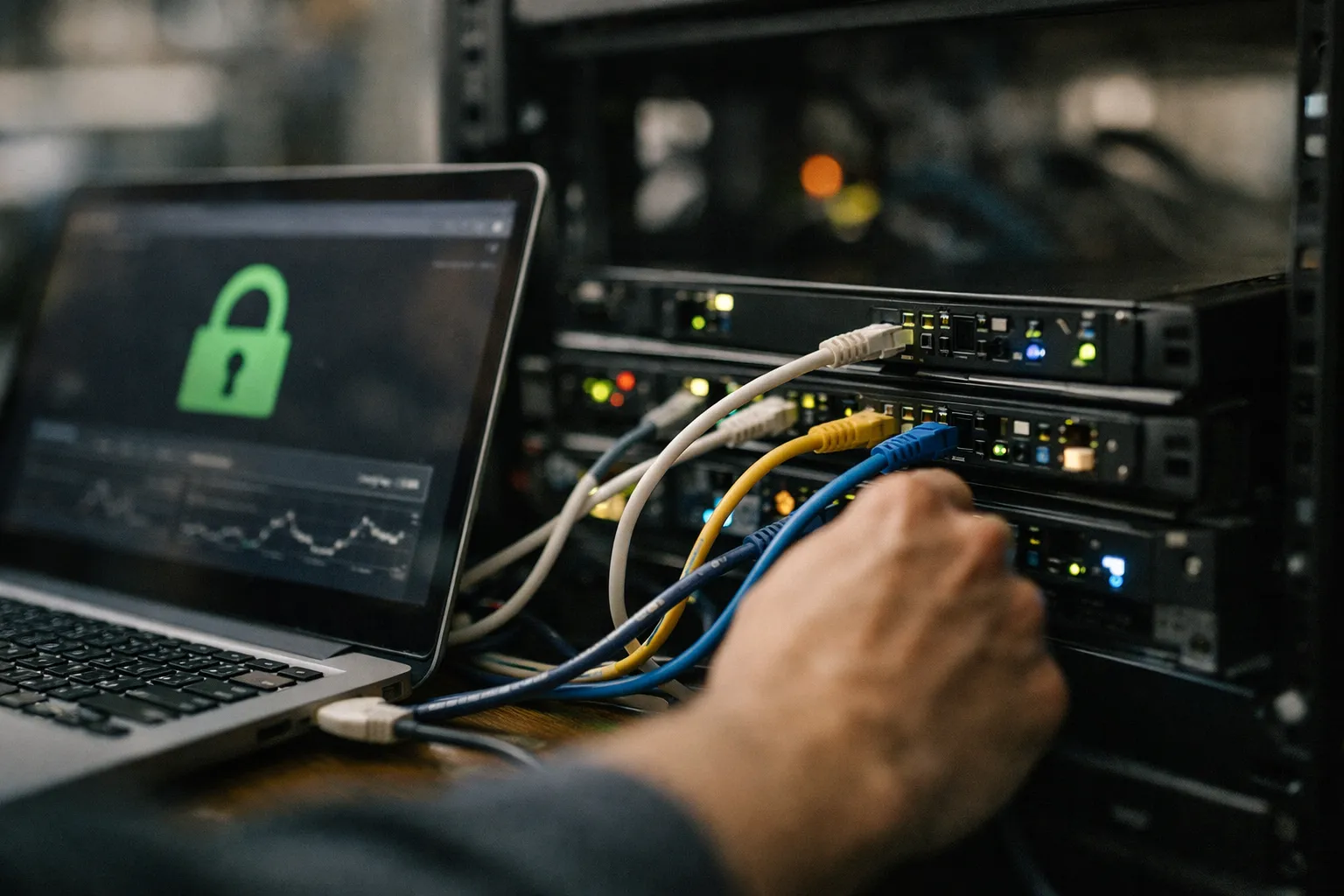
Introduction — what you'll learn and who this is for
This updated September 2026 guide shows VPN enthusiasts how to run a private, ephemeral VPN exit node: a short‑lived cloud VM you control and rotate to minimize persistent metadata, reduce correlation windows, and keep predictable egress locations. It keeps the original focus — WireGuard for the tunnel, automated provisioning for rotation, secure artifact distribution, and client-side leak protections — but adds 2026‑relevant operational advice: current threat and provider trends, eBPF-based firewall options, modern key distribution tools (age/GPG), metadata‑service hardening, and practical cost/abuse handling guidance.
This is for technically competent users who run their own VPNs, are comfortable with cloud automation (Terraform/CLI), and want strong operational hygiene rather than a consumer VPN service.
Prerequisites and context — what to know before you start
- Technical prerequisites: familiarity with Linux system administration, WireGuard, cloud CLI/automation (Terraform, provider SDKs), and basic cryptographic signing tools (gpg or age).
- Operational assumptions: you will operate the exit IP yourself and therefore handle abuse complaints, billing, and provider policy compliance.
- 2026 context: cloud providers and abuse-detection vendors increasingly use automated reputation systems and AI for traffic classification. IPs tied to short-lived churn can trigger additional scrutiny at scale. Ephemeral exit nodes remain viable for personal use, but expect reputation and provider‑policy friction if you rotate very frequently or run high‑volume traffic.
- Primary tools in this guide: WireGuard (kernel or userspace), age/GPG for artifact encryption, cloud‑init for instance bootstrap, and an automated client updater that verifies a signed artifact before switching peers.
High‑level architecture (updated for 2026)
Core components and modern alternatives:
- Cloud provider: pick one that issues a dedicated public IPv4 (avoid CGNAT) and whose acceptable‑use policy aligns with private exit operation. Popular community choices remain Hetzner and Scaleway for hobbyists; major clouds (AWS/GCP/Azure) offer spot/preemptible instances but also retain richer metadata and stronger legal visibility.
- WireGuard: still the preferred tunnel. Use the kernel implementation where available for performance; userspace implementations (boringtun, wireguard-go) are practical on constrained devices.
- Provisioning automation: Terraform, the provider CLI, or a small pipeline (GitHub Actions/GitLab CI) to create instances and publish a signed server artifact.
- Artifact distribution: encrypted object (S3/MinIO) or small API endpoint; sign the artifact with an offline signing key (age or GPG). Clients must verify signatures before switching.
- Networking: use nftables or eBPF/XDP for packet manipulation. In 2026, eBPF tools are more mature and can provide robust filtering and kill‑switch logic with lower latency than iptables for high churn scenarios.
- Optional: a floating IP or short‑lived NAT gateway if you want a stable endpoint while rotating backends — this increases cost and removes some privacy advantages.
Step 1 — Choose provider and instance type (2026 considerations)
- Evaluate provider egress and metadata policies. Confirm the provider assigns a public IPv4 (not CGNAT) and check acceptable‑use and abuse reporting processes. If you need a consistent region, verify availability zones and spot/preemptible behaviour.
- Instance sizing: for a single user, 1 vCPU + 1–2 GB RAM is still sufficient for light browsing. If you plan streaming or multiple concurrent users, target 2 vCPU + 4 GB. Prioritize network bandwidth and NIC performance over raw CPU.
- Cost planning: expect a wide range — from very low hobby VPS rates (single-digit USD/month) to cloud spot costs (fractional hourly rates). Also budget for egress charges; egress often dominates monthly expense if you stream or backup large files.
- Spot/preemptible pros & cons: cheaper but requires fast reprovisioning. Providers increasingly offer termination notices (e.g., 30–120 second preemption signals) — design your runbook to respond to those signals to rotate gracefully.
Step 2 — Provisioning and secure artifact publishing (update: age, metadata hardening)
- Provision via Terraform or cloud CLI. The instance should boot with a cloud‑init script that performs the setup steps below atomically.
- On the server, generate WireGuard server keypair locally (do not store the private key off‑host). Publish the public key and endpoint information as a signed, encrypted artifact. Recommended stack: create a plaintext JSON with public_key, endpoint, population tag and timestamp; sign with an offline signing key (age or GPG), then encrypt with a symmetric key or recipient encryption to an S3/MinIO object.
- Instance metadata hardening: disable unnecessary metadata exposure (IMDSv2 enforcement on AWS, or equivalent). If the provider allows, block access to the metadata service from non‑root network namespaces. This reduces risk from compromised processes leaking cloud credentials.
- Publish atomically: write the new encrypted artifact to an object store with versioning and a TTL label. Clients must only accept artifacts with a valid signature and timestamp within an acceptable window.
Step 3 — Secure server setup: WireGuard, network, and ephemeral storage
Server bootstrap actions (cloud‑init script):
- Install WireGuard (prefer kernel module on Linux), enable IP forwarding (sysctl net.ipv4.ip_forward=1) and persist it.
- Apply NAT and filter rules. In 2026, consider eBPF-based filtering (libbpf‑based tools) to implement the kill‑switch and rate limits; otherwise use nftables with explicit masquerade and stateful rules. Example: masquerade 10.99.0.0/24 -> eth0; allow UDP on the WireGuard port only from expected source ranges.
- DNS: route DNS requests to an encrypted resolver (DoT/DoH) running locally (dnscrypt‑proxy, stubby or systemd-resolved with DoH). Avoid provider DNS to reduce leaks and logging at the provider level.
- RAM-only sensitive files: mount /etc/wireguard as tmpfs, set systemd‑journald Storage=volatile, and place any logs or keys in RAM so they vanish on shutdown. Also restrict cloud‑init persistence: ensure no private key is copied to persistent block storage or backups.
- Port hygiene: run WireGuard on a high, random UDP port to reduce casual scans. Block common abuse ports at the host firewall (SMTP 25, SMB 445, etc.).
- Termination handling: where supported, handle preemption hooks to zero key material on shutdown. However, assume graceful shutdown may not always be possible — ephemeral tmpfs is your primary protection.
Step 4 — Client configuration and secure updater (2026 best practice)
- Design a client updater service that:
- Authenticates to the object store (use short‑lived credentials or an app role) or simply fetches publicly if the artifact is end‑to‑end encrypted.
- Verifies the artifact signature (age/GPG) and checks timestamp and version.
- Applies the new WireGuard peer safely: create the new peer, bring it up, wait for connectivity tests (IP/DNS leaks), then remove the old peer (graceful handover).
- Keep the client private key persistent and protected by the OS keyring or encrypted disk. Rotating client keys is optional; if you rotate often, integrate client public keys into the provisioning flow so new servers accept them.
- Fail safe: if the updater detects an invalid or absent artifact, do not revert to a default non‑VPN route. Instead, enforce the kill‑switch (see next section) until a valid artifact appears.
Step 5 — Automating rotation and controlled failover (best practices 2026)
- Rotation approaches:
- Time‑based: provision new instance every N hours/days and commit an atomic publish step. Keep a short overlap window (a few minutes) during which both old and new nodes accept clients.
- Event‑based: respond to preemption or performance signals. If the provider sends termination notices, immediately provision a replacement and publish its artifact.
- Atomic publish pattern: provision → run cloud‑init → server writes signed public artifact → automation verifies health → automation retires old server. Clients only switch after verifying signature and health checks (connectivity + leak tests).
- IP reputation and scale: if rotation frequency is high or you have multiple simultaneous egress IPs, expect reputation systems to flag churn. For single‑user hobby use, modest rotation (daily or multi‑day) balances privacy and reputational stability.
Leak protections, client kill‑switch and verification
- Client kill‑switch: implement OS firewall rules that drop all non‑WireGuard egress when the tunnel is down. On Linux, nftables or eBPF-based policies are preferable for reliability under rapid interface changes.
- DNS and WebRTC: enforce DoH/DoT at the client, disable or configure WebRTC in browsers, and set browser DNS over HTTPS to your chosen resolver to avoid split DNS leaks.
- Automated verification: after every rotation, have the client updater run an automated leak test (IP/DNS/IPv6 check) against trusted endpoints before completing the handover.
- IPv6: in 2026 many providers default to IPv6. If you don't explicitly route IPv6 via the VPN, disable it on both client and server to prevent leaks, or explicitly configure IPv6 routing and firewalling for the WireGuard interface.
Abuse management, provider relations and legal considerations (practical)
- Maintain a reachable abuse contact in the provider console and respond quickly to reports. Speedy responses often reduce escalations and provider sanctions.
- Block high‑risk services and rate‑limit outbound connections to reduce automated abuse triggers. Consider application‑level transparent proxies or HTTP filtering if you operate higher volumes.
- Providers retain logs and can respond to lawful process. Ephemeral instances reduce your retention but do not remove provider records. If you need additional legal protection, consult counsel and consider jurisdiction and provider choice carefully.
- At scale, IP churn may increase the chance of being placed on blocklists used by email providers and other services. For personal use, this is manageable; for anything larger, design a reputation and complaint‑handling playbook.
Monitoring, testing and cost control
- Monitoring: lightweight health checks (ICMP/TCP probe or HTTPS health endpoint) and client-side leak tests after every rotation.
- Logging: keep only ephemeral, in‑RAM logs on the server. For troubleshooting, consider encrypted log forwarding to a short‑lived storage with strict retention and access controls.
- Cost control: set monthly budget alerts with your provider. Spot instances can lower compute cost, but egress and IP allocation fees may dominate. Track per‑GB egress to estimate monthly spend accurately.
Practical checklist before launch
- Confirm provider gives a public IPv4 (or explicit IPv6 routing) and review acceptable‑use policy.
- Write cloud‑init that: installs WireGuard, generates keys on‑host, configures nftables or eBPF policies, sets journald Storage=volatile, mounts sensitive dirs as tmpfs, and publishes a signed encrypted artifact (age/GPG) to object storage.
- Implement atomic create→publish→destroy automation with a small overlap window for handover.
- Build a client updater that authenticates/fetches, verifies signatures, performs automated leak tests, and enforces a kill‑switch if validation fails.
- Test scenarios: graceful rotation, sudden preemption, artifact compromise, IPv6 leak, and network partition.
- Prepare abuse-contact and rate‑limit rules; run test abuse responses to ensure you can reply quickly.
Example timeline (practical hobby deployment)
- Rotation cadence: new instance created every 48 hours at 02:00 UTC. Provisioning cloud‑init writes a signed artifact to encrypted S3.
- Clients poll every 2–5 minutes. On new artifact detection, the updater brings up the new peer, runs leak tests for 30–60 seconds, and then removes the old peer.
- Old instance destroyed 10 minutes after health confirmation. If preemption notice arrives, automation creates a replacement immediately and publishes the artifact.
Common mistakes to avoid
- Publishing unsigned artifacts or using weak encryption: clients must verify signatures and timestamps to avoid man‑in‑the‑middle replacements.
- Relying on provider DNS: this often undermines privacy goals. Always use encrypted DNS and verify DNS routes.
- Not enforcing a client kill‑switch: during rotation or failure, leaks commonly occur if firewalls are not strict.
- Over‑rotating at scale: too‑frequent IP churn increases the chance of reputation blocks and provider interventions.
- Storing private keys off‑host or on persistent disks: do key generation and storage in RAM and tmpfs to preserve ephemeral properties.
Pro tips
- Use age (https://age-encryption.org) for simple, modern encrypt+sign workflows. It’s lightweight and scriptable for publishing artifacts.
- Consider eBPF-based filters for the server and client kill‑switch — they handle rapid interface flapping more cleanly than legacy netfilter chains.
- Keep the private signing key offline; use a small signing machine to sign published artifacts and rotate that signing key only when necessary.
- Use short‑lived object store credentials (token exchange) for the client updater rather than embedding long‑lived secrets on devices.
- If you need a stable endpoint occasionally, use a controlled floating IP with strict ACLs; accept the trade‑off that this reduces some ephemeral privacy benefits.
FAQ
Will ephemeral nodes stop providers from handing over logs under legal request?
No. Ephemeral instances reduce the data you retain, but cloud providers may still have operational logs, DHCP records, and billing metadata. Ephemeral design minimizes your exposure but does not prevent provider record retention or lawful access.
How often should I rotate the exit IP?
For single‑user privacy, a rotation cadence of 24–72 hours is a reasonable trade‑off between reduced correlation and stable IP reputation. More frequent rotation (hourly) increases operational complexity and the chance of reputation issues; less frequent rotation reduces privacy gains.
Is WireGuard still the right choice in 2026?
Yes. WireGuard remains the recommended tunnel for personal ephemeral exits because of simplicity, performance, and wide client support. Use the kernel implementation where available; userspace implementations are fine on constrained devices.
What tool should I use to encrypt and sign server artifacts?
Use a modern, scriptable tool like age for encryption and an offline signing key (age/GPG). Signatures and timestamps are essential so clients can verify authenticity and freshness before switching peers.
What should I do if my exit IP is blocked or blacklisted?
Respond to abuse reports quickly and investigate the flagged traffic. For persistent blacklisting, decommission the IP, adjust filtering/rate limits, and consider moving to another provider/region. Maintain an abuse contact and log your remediation steps to reduce repeat blocks.
Conclusion
Ephemeral VPN exit nodes continue to be a practical, privacy‑minded alternative to commercial VPN providers in 2026 — provided you adopt modern automation, artifact signing, metadata hardening, and robust client kill‑switch logic. Start with a conservative rotation cadence, automate thorough verification steps, and prepare an abuse‑handling process. With careful design, you can gain predictable egress control and reduced long‑term metadata exposure while managing the operational trade‑offs.