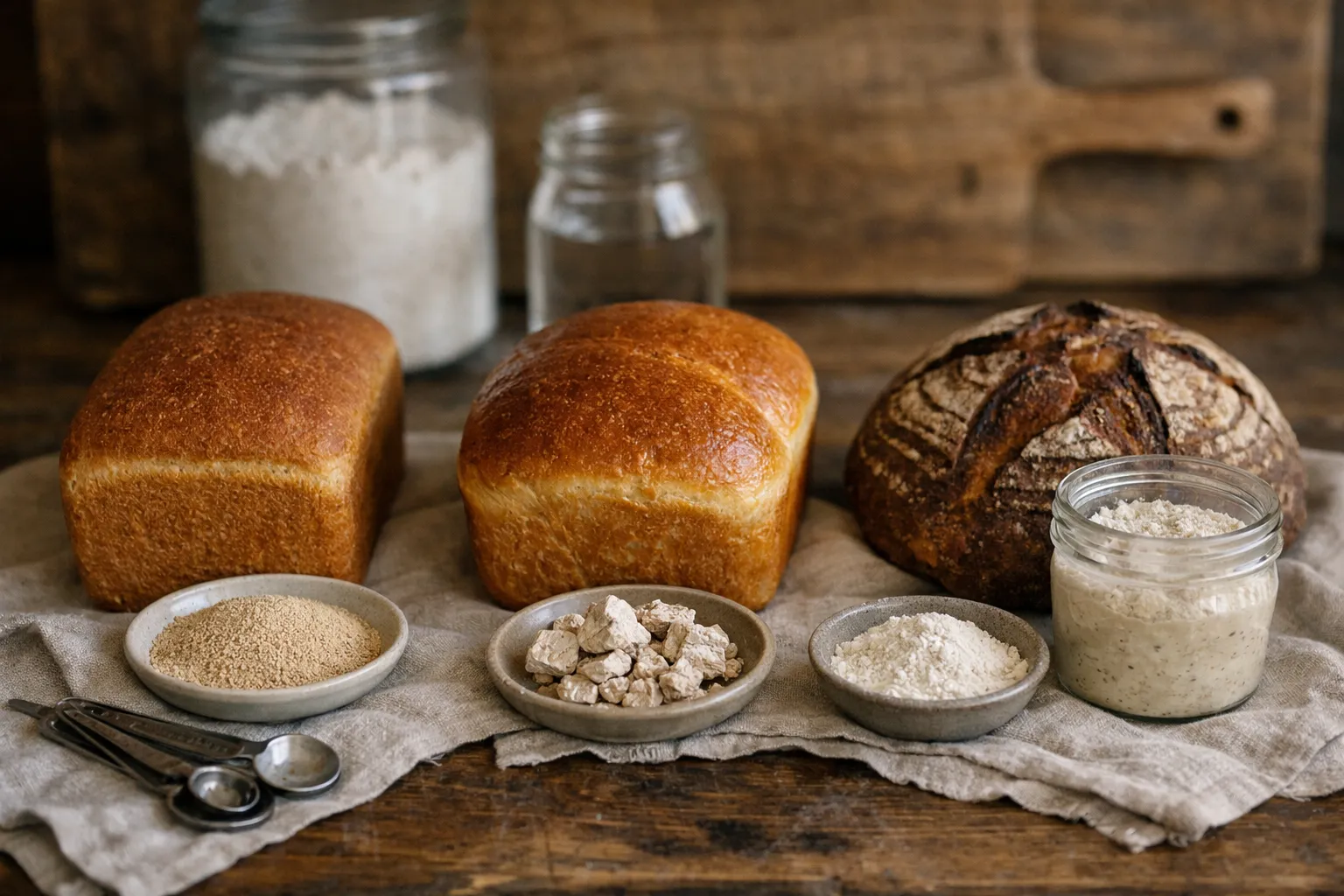
Overview: Home bakers still choose between instant dry yeast, fresh (cake) yeast and living sourdough starters. Since the pandemic surge, retail supply and product innovation have shifted: 2026 brings more commercial “flavor-forward” yeast blends, wider availability of dried starter products, and clearer ways to combine methods. This update breaks down costs, predictability, flavor differences, and what’s changed for home cooks in mid‑2026—so you can pick the right approach for time, taste and resilience.
Background: why this comparison still matters
Home baking rose sharply in 2020 and has remained a substantial hobby and small-business foundation for bakers. The original tradeoffs—speed and predictability (instant), bakery tradition (fresh cake), or depth and household resilience (sourdough)—remain. But three developments since 2023 changed the landscape:
- Manufacturers expanded product lines (instant blends optimized for flavor, and more dried starter-style products aimed at convenience).
- Supply chains stabilized for most regions, but fresh cake yeast availability remains uneven outside urban centers and specialty grocers.
- Hybrid workflows (preferments, starter supplementation with small commercial yeast doses) have become mainstream among home bakers seeking both flavor and consistency.
Key data and evidence (costs, conversions, availability)
Conversions remain unchanged and are central when swapping: use weight, not “packets.” Practical conversion rules:
- Fresh (cake) yeast : instant dry yeast ≈ 3 : 1 — e.g., 9 g fresh ≈ 3 g instant for a typical 900–1,200 g dough.
- Active dry yeast behaves like instant once hydrated; instant can be mixed directly into flour.
Retail cost per loaf (U.S. consumer context, June 2026):
- Instant dry yeast: packet (7 g) retail ranges now commonly sit between $0.35–$0.75 depending on brand and retailer. Using 2–4 g per 800–1,000 g dough places per‑loaf yeast cost roughly $0.10–$0.40.
- Fresh cake yeast: regional and seasonal. Where available, per‑loaf cost typically ranges $0.25–$0.90 if using the fresh equivalent; perishability increases waste risk and effective cost.
- Sourdough starter: direct ingredient cost per loaf is low—few cents of flour and water—but time and opportunity costs matter. Reasonable amortization across feeding schedules gives a per‑loaf maintenance cost near $0.05–$0.30 depending on discard practices and frequency of feedings.
Availability and supply notes:
- Instant dry yeast is broadly available in supermarkets, big-box stores and online; subscription and bulk options grew after 2022.
- Fresh cake yeast remains common in Europe and specialty U.S. markets, but less reliable in many grocery chains—buy fresh when you see it or order from local bakery suppliers.
- Commercial dried “starter” and dehydrated starter kits now appear in mainstream retail and ecommerce—useful for convenience but variable in microbial complexity compared with a live, house-maintained starter.
Flavor, texture and performance—what to expect
The three approaches produce distinct sensory and structural outcomes:
- Instant yeast yields clean, neutral crumb and predictable oven spring—excellent for consistent sandwich loaves, rolls and weekday brioche when time is limited. Flavor depth can be increased using preferments (poolish, biga) or by extending cool fermentation.
- Fresh cake yeast often contributes a softer crumb and subtle yeast aroma; many bakers prefer it for enriched doughs. Because it’s living and moist, handling and freshness materially affect results.
- Sourdough builds acidity (lactic and acetic), esters and more complex crust caramelization; it also typically extends shelf life through acidity and moisture retention. Expect wider variability in rise times and flavor depending on starter health, feeding schedule and fermentation temperature.
Multiple perspectives: artisan bakers, manufacturers and food scientists
Artisan bakers emphasize that microbial diversity—wild yeasts and lactic acid bacteria—drives sourdough’s signature flavors and keeping qualities; many also point to starter care as an artistic practice rather than a mere utility. Manufacturers (Lesaffre, Lallemand and others) have broadened strain portfolios and launched instant blends marketed for “flavor balance,” aiming to reduce the gap between convenience and complexity. Food scientists note that controlled preferments and cold, long fermentation reliably increase flavor without requiring a living starter; enzyme activity and enzymatic breakdown of starches during extended rests are the mechanistic drivers.
Implications for home bakers
Choose based on priorities and practical constraints:
- If you bake daily or need fast, repeatable results: instant dry yeast remains the most convenient and cost‑effective option. Buy bulk or subscribe to lower cost per unit.
- If you want traditional bakery character: seek fresh cake yeast from local suppliers or bakery wholesalers—use within its short shelf window and account for potential waste.
- If you value flavor complexity and household resilience: maintain a sourdough starter. It requires time and consistency but reduces reliance on commercial packets and extends loaf shelf life.
Up-to-date, practical tactics (June 2026)
- Hybrid workflows: Use a small preferment (overnight poolish) with instant yeast or 10–20% (baker’s percentage) starter + a pinch (0.05–0.2% of flour weight) of instant yeast to speed fermentation without losing sourdough character.
- Starter backups: Dehydrate a duplicate of your starter or maintain a frozen disc (small jar in freezer) as a backup. Dried starter kits from reputable suppliers can serve as emergency restarts.
- Storage: Keep unopened instant yeast in a cool, dry pantry; refrigerate or freeze opened containers in airtight packaging to preserve activity. Fresh yeast should travel in insulated packaging and be used quickly.
- Retarding and flavor: Cold bulk or final proofing (8–72 hours depending on recipe) is an efficient way to build flavor with any leavening method—instant, fresh or sourdough.
- Cost management: For low waste and best cost-per-loaf, buy instant yeast in small jars if you bake weekly; for monthly bakers, frozen or dehydrated backups reduce spoilage losses.
Outlook: what to watch in late 2026 and beyond
Expect continued product diversification: more instant blends designed for specific flavor profiles, wider retail availability of dried starter kits, and growing interest in strain-level labeling that tells bakers whether a yeast was selected for aroma, temperature tolerance, or fermentation speed. Home bakers who combine a living starter with occasional commercial yeast use are likely to continue leading recipe innovation and resilience strategies.
FAQs
Can I mix instant yeast with my sourdough starter?
Yes. Adding a small amount of instant yeast (commonly 0.05–0.2% of total flour weight) to a dough containing 10–20% starter can significantly shorten bulk fermentation while preserving some sourdough flavor. Use this when you need speed but want partial starter complexity.
Is fresh cake yeast worth hunting down?
It is worth it if you prize the subtle aroma and handling characteristics for enriched doughs (brioche, sweet rolls) and can use it quickly. For most home bakers, instant yeast plus a preferment delivers many of the same benefits with better shelf stability.
How do I estimate the real cost of maintaining a sourdough starter?
Direct ingredient cost is low—typically a few cents of flour and water per loaf—but include your time and discard in the calculation. If you bake frequently and reuse discard creatively (pancakes, crackers), amortized cost per loaf can be under $0.10; infrequent bakers who refresh weekly may see higher per‑loaf maintenance cost.
Are commercial dried sourdough starters as good as a lived starter?
Dried starter kits provide convenience and a faster route to sourdough-like flavors, but they usually lack the long-term ecological complexity of a house-maintained starter. They’re a good fallback or teaching tool; an established starter will continue to evolve unique flavors.
What's the best all-purpose advice right now?
Decide by routine and patience: use instant yeast for dependable, time‑efficient baking; keep a small starter if you value flavor and resilience; and embrace hybrids—preferments and starter supplementation—when you want the best of both worlds.