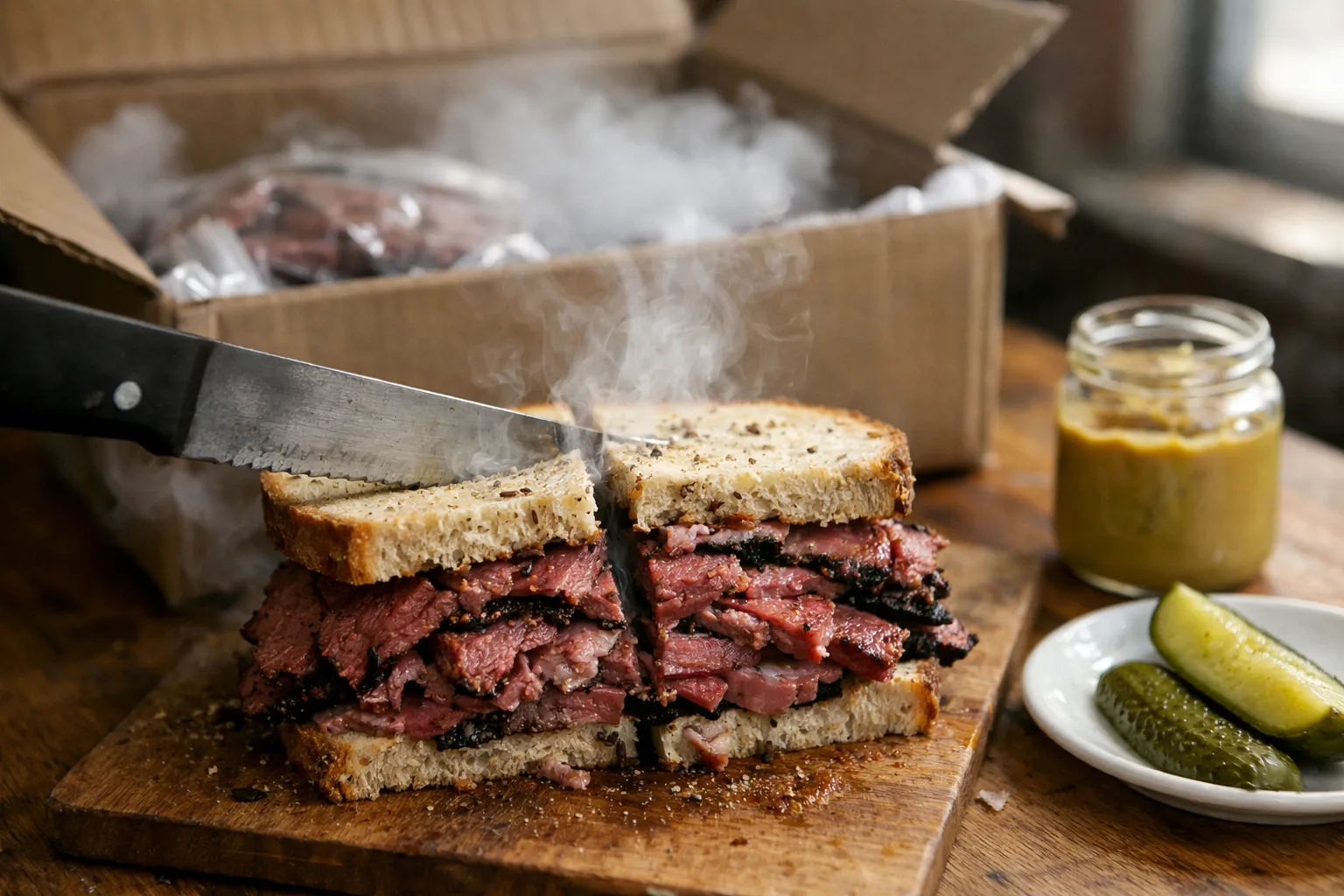
Verdict in brief: The Katz’s pastrami kit on Goldbelly remains one of the best mail‑order ways to get classic New York deli flavor at home. Since March 2026 packaging and product descriptions have improved, and home‑cook tools such as immersion circulators make reproducing the deli texture easier. Trade‑offs remain: it’s a premium purchase, requires careful reheating (or sous‑vide), and kit contents and shipping fees vary—check the product page before ordering.
Overview: What we’re reviewing — key specs at a glance
- Product: Katz’s pastrami kit sold through Goldbelly (options: pastrami‑only by weight; sandwich kits with rye, mustard, pickles when listed).
- Portions: Typically sold in 1–3 lb packages; sandwich kits usually portion for 4–6 sandwiches.
- Shipping: Overnight or 2‑day with dry ice and insulated liner; estimated additional shipping charge $15–$40 depending on distance and service.
- Price range (July 2026): Pastrami‑only roughly $65–$130; full sandwich kits roughly $89–$180 (prices vary by portion and promotions).
- Best reheating: Water‑bath (vacuum sealed) or sous‑vide for consistent texture; finish on a hot griddle for service.
Background: Who makes this and who it’s for
Katz’s Delicatessen (Lower East Side, NYC) is the originator; Goldbelly is the national DTC marketplace that ships Katz’s products across the U.S. The kit targets food enthusiasts and New York deli fans living outside the metro area who want an authentic at‑home pastrami sandwich without travel. Since early 2026 demand for regional mail‑order foods has remained strong among enthusiasts and gift buyers, and more home cooks now own sous‑vide gear that helps rehitting deli meats gently and reliably.
Features analysis: packaging, shipping and reheating — what's new in July 2026
Packaging and logistics: In the months after our March test, Goldbelly and several vendor partners have clarified kit pages to list inclusions (e.g., whether rye bread and mustard are bundled) and offer optional upgrades. Many sellers have also piloted lower‑waste insulated liners and clearer dry‑ice handling labels; availability varies by route and kit.
Condition on arrival: As before, vacuum‑sealed pastrami arrives fully cooked and cryo/frozen. Inspect seals and note any dry‑ice residue. If meat arrives partially thawed, contact Goldbelly within the platform’s claims window—overnight shipping is still strongly recommended for reliability.
Reheating methods — updated best practices:
- Water‑bath (vacuum sealed): Still the most forgiving method. Submerge sealed pack in gently simmering water until center reaches 140–150°F (60–65°C) for optimal mouthfeel; typically 20–40 minutes for a thawed 1–2 lb piece. For frozen packs allow 60–90 minutes.
- Sous‑vide (recommended if you have the equipment): For consistent results set 130–135°F (54–57°C) for a tender, slightly pink center and 140°F (60°C) for a more fully cooked texture. Thawed 1–2 lb pieces need roughly 45–90 minutes; frozen packs 2–3 hours—then briefly sear or press slices on a hot griddle for flavor and mouthfeel.
- Oven and skillet: Low oven (275°F / 135°C) wrapped in foil with a splash of juices works for larger pieces but can dry edges if overcooked; thin slices benefit from quick skillet steam under a lid to avoid drying.
Food‑safety context: The USDA recommends reheating ready‑to‑eat meat to 165°F (74°C) when reheating leftovers intended for storage or for vulnerable populations. For immediate service, lower finishing temps (140–150°F) produce better texture; if you choose lower temps, serve promptly and refrigerate leftovers within two hours.
Taste, texture and plating — how the kit performs now
Flavor profile remains true to Katz’s style: a peppery, coriander‑forward crust with brine and restrained smoke. When reheated correctly the fat renders and delivers a moist, pull‑apart texture that stands up to a thick rye and mustard. Sous‑vide users will find improved evenness and less risk of gummy protein that comes from overheating.
Service tip: finish slices on a hot griddle or cast‑iron for 20–30 seconds per side to revive the edges, then pile on sturdy New York‑style rye, brown deli mustard and a good dill pickle.
Pros and cons — updated summary
- Pros: Authentic Katz’s flavor; clearer kit descriptions on Goldbelly; more home cooks have tools (sous‑vide) that improve reheating; secure vacuum packing preserves quality in transit.
- Cons: Premium price once shipping is added; dry‑ice logistics and variably available recyclable packaging; some listings still omit condiments—confirm inclusions before checkout.
Pricing and value
Mail‑order deli remains a splurge. As of July 2026 expect pastrami‑only options to start around mid‑$60s for a single pound, with larger or sandwich kit bundles rising into the low hundreds. Shipping often adds $15–$40. For comparison: a round‑trip flight to NYC plus an in‑person sandwich will usually exceed these costs for most readers, so the kit makes sense for local enthusiasts or as a special‑occasion purchase. Watch Goldbelly seasonal promotions and vendor discounts for better value; also compare kit inclusions rather than assuming bread/mustard are included.
Who should buy this?
- New York deli devotees outside the metro area who want an authentic Katz’s sandwich at home.
- Home cooks who own or are willing to use an immersion circulator or to rehearse precise water‑bath techniques.
- Entertainers wanting a distinctive platter for small gatherings (finish on a griddle for showmanship).
- Not ideal for budget weeknight meals; this is an occasional treat.
Alternatives
- Mile End Deli (Goldbelly): Montreal‑style smoked meat with a different spice profile if you prefer a fattier, more peppery smoked approach.
- Pat LaFrieda or local high‑end butchers: Some ship cured roasts regionally and offer custom slicing—good if you prefer to buy from a butcher you can communicate with directly.
- Other Goldbelly deli kits: Check Katz’s competitors on the platform for variation in smoke level and included sides before choosing.
Verdict
Updated for July 2026: Katz’s pastrami kit on Goldbelly is still the best mail‑order stand‑in for a Katz’s sandwich. The texture and seasoning reward careful reheating; sous‑vide or the water‑bath method deliver the most consistent results in home kitchens. The primary barriers are cost and the need to manage frozen delivery. For fans who prioritize authenticity and who will follow the reheating steps, it’s worth the splurge. For casual, budget‑minded dinners, seek local delis or smaller portion options.
Can I use sous‑vide to reheat Katz’s pastrami?
Yes. Sous‑vide gives the most even result: for thawed packs aim for 130–135°F (54–57°C) for 45–90 minutes for a tender texture; or 140°F (60°C) for a firmer, fully heated finish. After sous‑vide, briefly sear slices on a hot griddle to restore surface texture. If you’ll store leftovers or serve to vulnerable eaters, reheat to 165°F (74°C) for safety.
Should I freeze the kit if I won’t eat it right away?
Yes. If you can’t serve the pastrami within 48 hours, keep it frozen in its vacuum packaging or transfer to a freezer‑safe bag. Properly vacuum‑sealed pastrami will maintain quality for several months in a domestic freezer; label with date. Thaw in the refrigerator overnight before using the water‑bath or sous‑vide methods.
Is dry ice safe to handle and how should I dispose of it?
Dry ice is very cold and can cause burns—use gloves or handle with thick cloth. Do not store it in an airtight container. To dispose, allow it to sublimate in a well‑ventilated area away from children and pets. If you have concerns about dry‑ice use, choose a shipping option that lists cooled gel packs or contact the vendor beforehand.
What’s the best sandwich build for this pastrami?
Sturdy New York‑style rye, a smear of brown deli mustard (or spicy brown), several thick folded slices of warm pastrami and a classic dill pickle on the side. Add sauerkraut and Swiss if you prefer a Reuben‑style twist, but the Katz’s profile shines with a simpler, peppery sandwich.