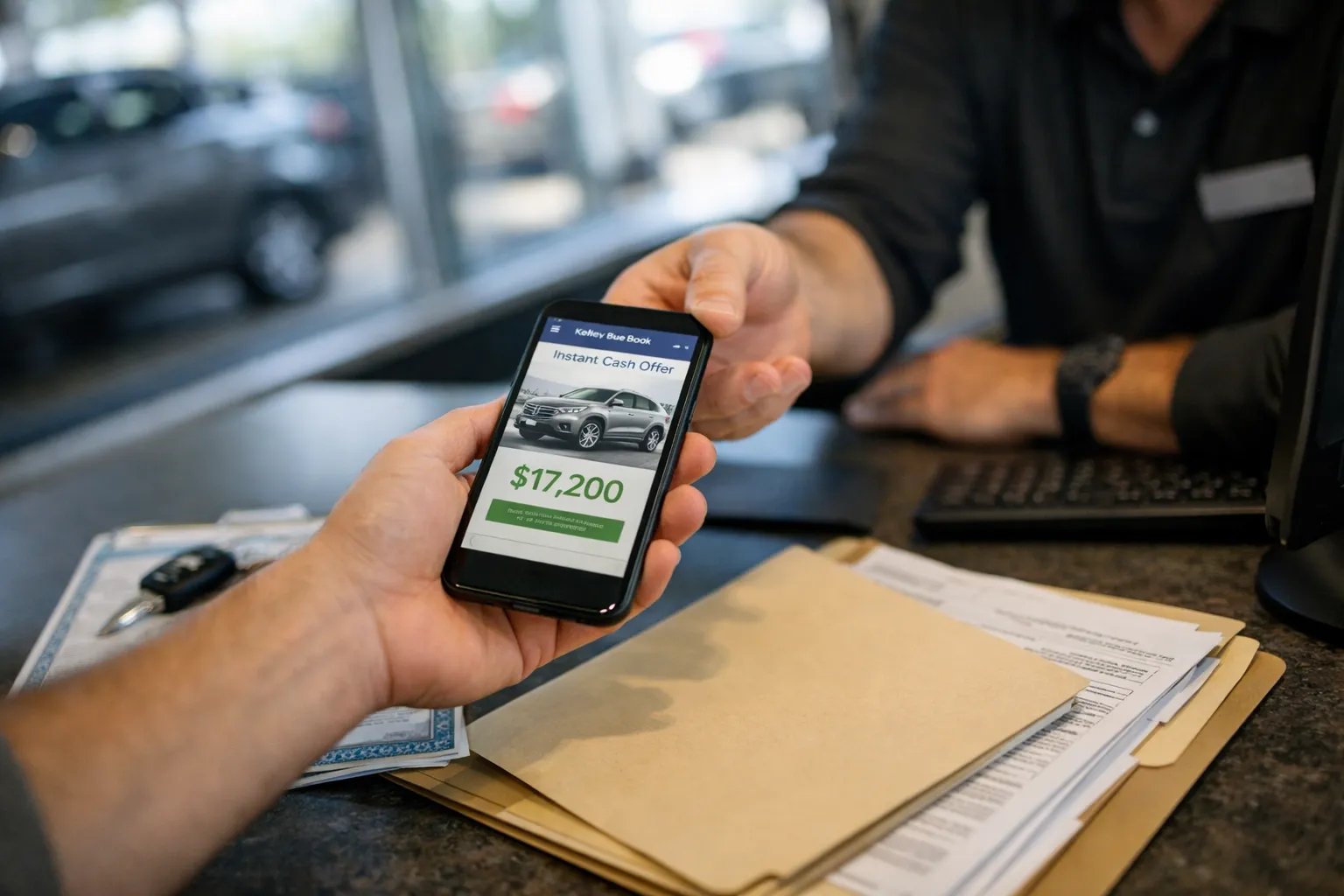
Kelley Blue Book's Instant Cash Offer (ICO) is a familiar tool for used-car sellers and buyers who want a quick, data-backed trade-in or sale option. In 2026 the service remains a mainstream choice for people seeking a straightforward way to monetize a car without the legwork of listing privately. This review evaluates what the ICO delivers in practice, where it falls short, and which types of sellers should consider it.
What the Instant Cash Offer is — and how it works
KBB’s ICO generates an online, printable offer for a specific vehicle after a user supplies the VIN, mileage, basic condition, and optional photos. The offer is produced using Kelley Blue Book valuation data plus market signals from dealer networks and third-party partners. It’s designed to be redeemed at participating dealerships or KBB partner locations; dealers typically conduct a brief inspection before finalizing payment.
Key steps for a typical ICO transaction:
- Enter vehicle details on KBB’s ICO page and answer condition questions.
- Receive an instant offer that cites a redemption location (participating dealer) and the offer’s terms.
- Bring the vehicle and necessary documents (title, ID, keys, service records) to the listed dealer for inspection.
- Dealer verifies condition and mileage, then either honors the offer or adjusts it based on findings.
What the ICO does well
- Speed and convenience: You can produce an offer in minutes and get a dealer appointment—useful for sellers who prioritize time over maximizing sale price.
- Data-driven baseline: KBB’s valuations are widely respected and provide a transparent starting point for trade-in discussions.
- Reduces negotiation friction: The printable offer and dealer participation often shorten the time spent haggling and clarifies expectations for both sides.
- Good for dealers who participate: Dealers can quickly source inventory via ICO redemptions, which helps them move turnover without lengthy procurement.
Main limitations and where buyers report friction
- Dealer participation varies: ICO is only usable at participating dealers. In some rural or smaller markets, participation is limited, which can reduce the offer’s utility.
- Inspection adjustments: The online offer is provisional; dealers often perform a quick inspection and may lower the offer if they find damage, missing maintenance items, or differing condition from the online answers.
- Typically below private-sale pricing: As with most trade-in channels, ICO offers are aimed at dealer resale and commonly sit below the top private-sale price. Expect a trade-off: convenience vs. maximum proceeds.
- Not a guaranteed cash payout on the spot: Offers are subject to paperwork (title status, lien release) and dealer policies; timing can vary, especially if pay-off of an existing loan is required.
- Local market dynamics matter: KBB’s national data may not fully capture hyper-local demand spikes (e.g., SUVs in regions with poor public transit), so offers can lag true local value.
Costs, transparency and fine print
KBB’s Instant Cash Offer itself is free to generate for consumers. The amount you receive is the net payout from the dealer after they process paperwork and any loan payoff; KBB does not charge the consumer a fee for generating the offer. Important caveats:
- Offer validity and redemption windows are set by the issuing dealer or KBB partner—check the printed offer for expiration.
- Some dealers may subtract reconditioning estimates or administrative fees before issuing a final check; ask the dealer in advance how they handle inspection-based adjustments.
- If a vehicle has liens, salvage branding, or title issues, those can void or materially reduce the redeemable amount.
When to use the Instant Cash Offer — suitability checklist
ICO is best suited for sellers who:
- Want a quick, low-stress sale or trade-in and value convenience over squeezing out the last dollar.
- Prefer to avoid meeting strangers from online classifieds and handling private-sale logistics.
- Are trading down to a dealer-purchased vehicle where the convenience of one-stop service matters.
Consider other routes if you:
- Need to maximize proceeds—private sale often yields higher net price, though it requires time and negotiation.
- Have a highly sought-after or low-mileage vehicle where auction or dealer consignment could draw premium bids.
Tips to get the most from an ICO
- Be honest and detailed in the online condition questionnaire; overstating condition invites reductions at inspection.
- Upload recent photos and maintenance records—dealers credit documented service history for value preservation.
- Compare the ICO with at least two other channels (dealer trade-in quote, private sale pricing, or online instant-buy platforms) before accepting.
- Call the listed dealer ahead of your appointment to confirm they will honor the offer and to ask how they handle inspection adjustments and lien payoffs.
- If you have time, test marketability: list at a modest premium privately and be willing to walk away if ICO remains the best immediate option.
The verdict
Kelley Blue Book’s Instant Cash Offer remains a practical, low-friction option for 2026 sellers who prioritize convenience, speed, and a transparent valuation baseline. It is not a silver bullet for sellers seeking top-dollar resale value: dealer economics and inspection contingencies typically result in offers that are lower than private-sale potential. For most enthusiasts and mainstream owners, ICO is a good middle path—especially for those trading in at a dealership or who need a reliable, documented baseline offer.
Bottom line: use ICO as a fast benchmark and a convenience option, but shop the market when you expect your car to command a premium.