
By James Crawford, Legal Affairs Reporter (Quick Bites Kitchen)
Introduction: What you'll learn and who this is for
If you want five varied, high-protein lunches ready for a busy workweek—and you only have an hour—this is the workflow that delivers. This August 2026 update keeps the original sheet-pan method but adds practical changes: what’s new in consumer kitchens (more air-fryers, protein pouches, affordable vacuum sealers and immersion circulators), updated cooling and reheating best practices drawn from current food-safety guidance, and stronger labeling and recall-response steps you should take if something goes wrong. Read this if you meal-prep for work, want predictable protein targets, or need clear food-safety next steps.
Prerequisites / Context: what “high-protein” and safety mean
Dietitians commonly target about 25–35 grams of protein per meal for many adults to support satiety and muscle maintenance. Older adults and highly active people often aim higher—many clinical guidelines recommend total daily protein of ≈1.0–1.2 g/kg body weight, which shifts per-meal targets upward.
The law and public-health guidance still use the “Danger Zone” principle: per the USDA/FDA food-safety framework, keep hot food out of the 40°F–140°F (4°C–60°C) range for as short a time as possible. The practical cooling rule used in commercial kitchens and reiterated in food-safety guidance is two-stage cooling: below 135°F (57°C) to 70°F (21°C) within 2 hours, then to 41°F (5°C) or below within an additional 4 hours. For meal-prep at home: refrigerate promptly, use refrigerated meals within 3–4 days, and prioritize seafood-based lunches earlier (2–3 days for best quality).
Equipment you should have
- 1 full sheet pan (or two smaller pans)
- 1 medium pot for grains or eggs
- 1 skillet (optional)
- Instant-read kitchen thermometer
- Kitchen scale (recommended)
- 5 lunch containers (3–4 cup capacity), plus small sauce cups
- Optional but useful in 2026: air-fryer or convection oven, pouch opener, vacuum sealer or heavy-duty freezer bags, microwave- and oven-safe containers
Step 1: Pick a fridge-proof menu (2026-friendly swaps)
One question decides everything: will this taste good and stay safe four days later? Choose proteins and grains that keep texture and flavor, and plan sauces separately. This update adds pouch proteins and certified sustainable seafood as practical modern choices.
- Proteins: chicken thighs, extra-firm tofu, canned/pouched tuna or salmon (pouches are common and shelf-stable), canned beans, hard-boiled eggs
- Carbs that hold: quinoa, brown rice, farro, roasted sweet potato
- Veg that keep: roasted broccoli, carrots, bell pepper, cabbage-based slaw (dress sparingly)
- Sauces: tahini-lemon, yogurt-herb, salsa—keep them separate to avoid sogginess
This week’s 5-lunch plan (updated):
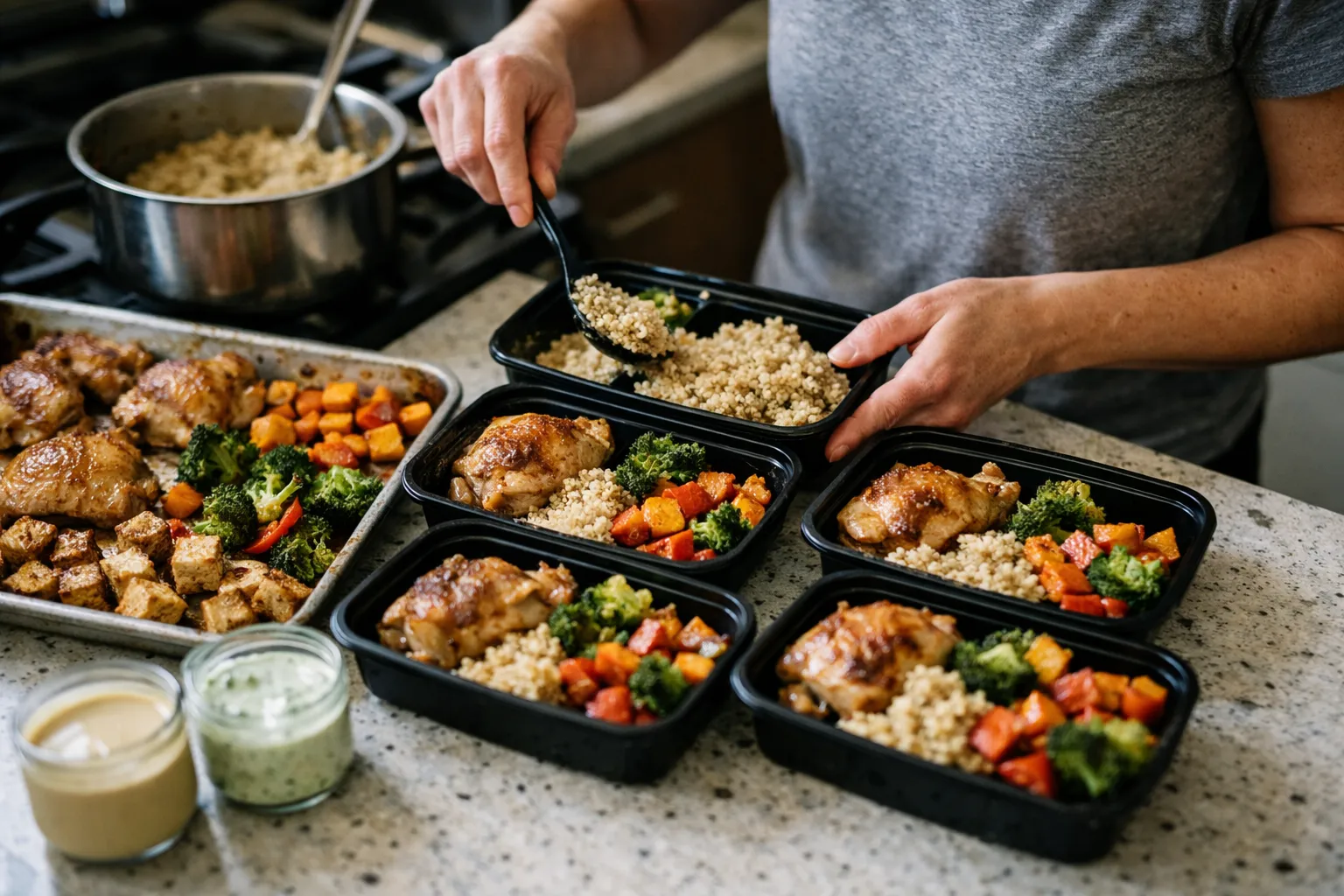
- 2 lunches: Lemony Chicken Quinoa Bowls
- 2 lunches: Chili-Lime Roasted Tofu & Sweet Potato Bowls
- 1 lunch: Tuna-Bean Mediterranean Jar (no-cook; use an MSC- or equivalent-certified pouch if sustainability matters)
Step 2: Gather ingredients (practical 2026 swaps)
Serving goal: 5 lunches
Estimated total time: ~60 minutes (20 prep, 40 cooking/overlap)
Shopping list (exact amounts)
- 1.25 lb (565 g) boneless chicken thighs
- 1 block extra-firm tofu (14–16 oz / 400–450 g)
- 1 pouch or can tuna (5–6 oz / 142–170 g)
- 1 cup dry quinoa (≈170 g)
- 1 can chickpeas (15 oz / 425 g), rinsed
- 1 large head broccoli, 2 bell peppers, 1 red onion, 1 large sweet potato, 1 cucumber, 1 pint cherry tomatoes
- 5 oz (140 g) greens (optional)
- 1 cup plain Greek yogurt (or dairy-free yogurt)
- Lemons (2), limes (2), garlic, olive oil, tahini, soy/tamari, smoked paprika, chili powder
Dietary swaps
- Gluten-free: use tamari and quinoa or brown rice
- Dairy-free: sub tahini for yogurt-based dressings
- Vegetarian: double tofu or add cooked lentils
- Lower-sodium: rinse canned beans and use citrus/spices instead of extra salt
- Faster prep: use pouches of pre-cooked quinoa or rice (heat then cool) and protein pouches to reduce active cook time
Step 3: Set up the 60-minute workflow (sequence is everything)
Let the oven do heavy lifting while quinoa cooks. This workflow is optimized for a single sheet pan and one pot.
- Minute 0: Preheat oven to 425°F (220°C). Line a sheet pan.
- Minute 2: Start quinoa: rinse 1 cup quinoa and cook with 2 cups water—simmer 15 minutes and rest 5 minutes.
- Minute 5: Chop vegetables and press or pat-dry tofu.
- Minute 12: Season chicken and tofu per formulas below.
- Minute 18: Roast on one sheet pan in zones (sweet potato, chicken, tofu+veg).
- Minute 25: Make sauces while things roast.
- Minute 40: Pull pan, check doneness with thermometer, transfer to shallow trays to cool (see cooling note).
- Minute 50: Portion into containers; sauces separate.
- Minute 60: Refrigerate (or freeze one portion if not eating within 4 days).
Cooling note: Don’t seal steaming-hot food. Spread roasted items on a clean metal tray or shallow container to cool faster. The two-stage cooling goal (≤70°F in 2 hours, ≤41°F in 6 total hours) is the commercial standard; at home, aim to put food into the fridge within two hours and use shallow pans to accelerate cooling. If you must cool hot soup, divide into shallow containers or use an ice-water bath in the sink before refrigerating.
Step 4: Cook the base components (sheet-pan + quinoa)
Seasoning formulas
Chicken — lemon-oregano: 1 tbsp olive oil, zest of 1 lemon, 1 tbsp lemon juice, 1 tsp dried oregano, 1 tsp Dijon, 1 garlic clove (minced), 1/2 tsp salt, pepper.
Tofu — chili-lime: 1 tbsp olive oil, zest+juice of 1 lime, 1 tbsp soy/tamari, 1 tsp chili powder, 1/2 tsp cumin.
Veg: Toss sweet potato cubes, broccoli, peppers, onion with 2 tbsp olive oil, 1 tsp smoked paprika, 1/2 tsp salt and pepper.
Roast — zoned method
- Sweet potato cubes on one third (longest cook).
- Chicken thighs on another third.
- Tofu and quicker veg on final third.
- Roast 20–25 minutes at 425°F; flip tofu and stir veg halfway through.
Use an instant-read thermometer: the USDA requires poultry to reach 165°F (74°C). For reheated leftovers, reheat to an internal temperature of 165°F before serving. Accuracy matters—don’t guess.
Step 5: Two sauces that keep lunches exciting
Make two sauces and portion them separately to prevent sog and add flavor late in the week.
Tahini-Lemon Sauce
- 1/3 cup tahini
- Juice of 1 lemon
- 1 small garlic clove, grated
- 2–5 tbsp warm water to thin
- Salt and pepper
Yogurt-Herb Sauce
- 3/4 cup plain Greek yogurt (or dairy-free yogurt)
- Juice 1/2 lemon
- 1 tbsp olive oil
- 1 tbsp chopped dill or parsley
- Salt, pepper
Step 6: Assemble 5 lunches (portioning for protein)
Portion protein first, then grains, then veg. Use a scale for consistency; absent a scale, a cooked-protein palm-sized portion is roughly 3–4 oz (85–115 g).
Lunches 1–2: Lemony Chicken Quinoa Bowls
- 3/4 cup cooked quinoa per container.
- 4–5 oz cooked chicken per bowl (115–140 g).
- Roasted broccoli/peppers/onion.
- 2 tbsp yogurt-herb sauce in small cup.
Lunches 3–4: Chili-Lime Tofu & Sweet Potato Bowls
- 3/4 cup cooked quinoa per container.
- Divide half the tofu between the two bowls (≈7–8 oz / 200–225 g total).
- Roasted sweet potato and veg.
- 2 tbsp tahini-lemon sauce separate.
- Optional: add 1/4 cup chickpeas for a protein boost.
Lunch 5: Tuna-Bean Mediterranean Jar (no-cook)
- Bottom: 1 tbsp olive oil + 1 tbsp lemon juice + pinch oregano + pepper.
- 1/2 cup chickpeas, halved cherry tomatoes, diced cucumber.
- Top with drained tuna (or keep tuna in a small container).
- Greens packed last or separate to avoid wilting.
Storage, labeling, and 2026 food-safety refinements
- Label containers: write contents, prep date, and a “use-by” or “freeze-by” date. If you share food at work, include allergens.
- Fridge temperature: keep fridge ≤40°F (4°C). Put a fridge thermometer on the middle shelf if you’re unsure.
- Freeze to extend life: freeze any portion you won’t eat within four days. Vacuum sealing or heavy-duty freezer bags reduce freezer burn; freeze grains and plain proteins for best texture recovery.
- Reheating: reheat to 165°F (74°C). Microwave and stir halfway; for texture, finish in an air-fryer or convection toaster oven (375°F for 6–8 minutes).
- Hot-holding and cooling: spread hot food into shallow pans; do not pack steaming-hot food into airtight containers and expect safe rapid cooling.
- Safe container materials: use microwave-safe containers for reheating. Don’t microwave single-use plastic takeout containers.
Common mistakes (and how to fix them)
- Overcooking poultry: Use an instant-read thermometer to 165°F; rest briefly to retain juices.
- Packing hot food: Cool 10–15 minutes and use shallow pans so food reaches safe temps quickly.
- Forgetting to label: Label date and main allergens—this prevents accidental consumption and helps with recall tracking.
- Skipping tofu prep: Press or vigorously blot tofu to get browning instead of steaming.
- Leaving sauces on bowls: Keep sauces separate until eating to maintain texture.
Pro tips
- Use thighs for resilience: chicken thighs hold up better than breasts when reheated.
- Air-fryer finish: a 3–4 minute blast in an air fryer brings back crispness to roasted veg and tofu.
- Crunch at lunch: pack nuts, seeds, or crushed crisp chickpeas separately to add just before eating.
- Freeze one meal: if you won’t eat all five within four days, freeze one—plain protein and grains freeze best (add sauces after thawing).
- Use pouches smartly: ready-to-eat pouch proteins cut active time and reduce waste; choose certified sustainable seafood when possible.
- Scale is your friend: a $15 kitchen scale keeps you reliably in your 25–35 g target range.
Your rights
You have the right to safe food and accurate information. If a store-sold product is recalled or mislabeled, federal agencies (FDA, USDA/FSIS) publish recall notices—keep receipts and packaging so you can request a refund or exchange and so public-health authorities can trace batches. If you become ill after eating a commercial product: seek medical attention, document what you ate (dates, photos, packaging), and report to your local health department. For significant harm from a commercial product, you may be entitled to compensation—consult a qualified attorney to review your options. When in doubt, contact your state or local health department for guidance on suspected foodborne illness.
Next steps (actionable checklist)
- Create your shopping list using the exact amounts above and select any pouch proteins or vacuum-seal options you prefer.
- Charge your thermometer and gather containers; pre-label them with dates and any allergen info.
- Start quinoa, roast in zones, cool on shallow pans, and portion proteins by weight.
- Separate sauces and label. Refrigerate promptly; freeze any meals you won’t eat by day 4.
- If you detect spoiled food or a recalled ingredient, stop eating it, keep packaging and receipts, and check FDA/USDA recall lists immediately. Contact your local health department and consider legal counsel if you become ill.
FAQ
How long will these lunches last in the fridge?
Eat refrigerated cooked lunches within 3–4 days. Seafood-based meals are best within 2–3 days for quality. If you won’t eat them in that window, freeze the portions and thaw in the fridge before reheating.
Can I swap quinoa for rice or other grains?
Yes. Brown rice, farro, or barley work well. Cook and cool grains promptly and spread them in a shallow container to speed cooling for safety. Pre-cooked pouches of rice/quinoa can also save time—heat then cool before packing.
How can I increase protein without cooking more?
Add shelf-stable or no-cook options: canned/pouched tuna, hard-boiled eggs (cook while quinoa simmers), canned beans, Greek yogurt in sauces, or pre-toasted nuts/seeds. These add protein with little extra work and keep textures varied.
What should I do if a store-bought ingredient is recalled?
Stop using the ingredient, keep packaging and receipt, and check the USDA or FDA recall notice for instructions (refunds, returns, or disposal). If you ate the recalled item and feel ill, seek medical attention and report to your local health department. Preserve samples (if safe) and consider photographic documentation for any providers or attorneys.
Can I make this fully vegetarian?
Yes. Replace chicken and tuna with extra tofu, cooked lentils, tempeh, or additional canned beans. A combination of tofu + chickpeas + tahini sauce is filling and holds well across the week.
Final note: This workflow is built to be practical for one sheet pan and one pot. If your oven or pan differs, adjust for space—crowding leads to steaming, not roasting. When in doubt about food safety, throw it out. For personalized nutrition advice, consult a registered dietitian; for suspected foodborne illness with significant harm, consult a qualified attorney.
Sources referenced: Standard USDA/FDA food-safety cooling and temperature guidance (danger zone and hot-holding), registered dietitian meal-protein practice recommendations, and standard culinary techniques for sheet-pan roasting and sauce emulsification. Check current FDA/USDA recall pages and your local public-health guidance for the latest notices.