
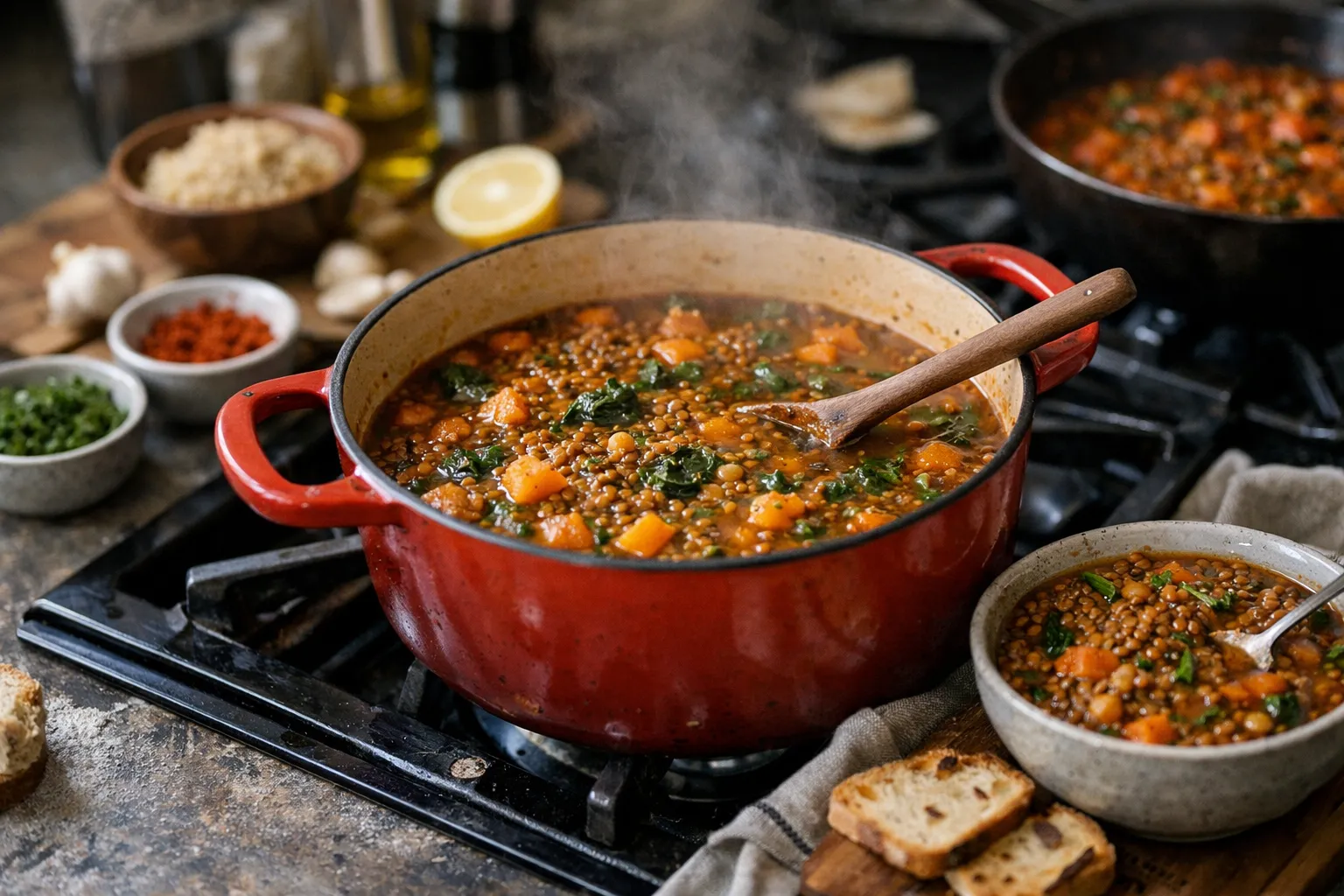
Hello—I'm Maria Santos. I learned to cook at my grandmother's side, where a single pot could feed a family and stretch a week’s worth of love. Lentils have always been our weeknight secret: fast, forgiving, and endlessly adaptable. This updated guide (August 2026) keeps that same one-pot system but adds timely kitchen-tech notes, clearer timing for today's pre-cooked pouches and smart multicookers, and practical, evidence-backed tweaks so these stews come out great on busy nights.
What you'll learn — who this is for — and why it matters now
This guide teaches a single master method that becomes four distinct one-pot lentil stews: Moroccan, Italian, Indian, and Smoky Mexican. It’s written for recipe enthusiasts who want reliable, nutrient-dense weeknight dinners that work across stovetop, modern multicookers, and quick pre-cooked pouches. Lentils remain a strong choice for home cooks: according to USDA FoodData Central, 1 cup cooked lentils contains roughly 18 g protein and about 15 g fiber, making them filling and blood-sugar friendly. Pulses are also climate-smart—legumes biologically fix nitrogen into soil, reducing fertilizer needs—and retailers continue expanding pre-cooked pulse options and new varietals, which saves time without losing flavor when used correctly.
Prerequisites & pantry context (what to know first)
- You should have one heavy pot (Dutch oven preferred) or a reliable multicooker/pressure cooker. If you own a newer model with "legumes/lentils" presets, use those presets but follow the timing notes below and still taste for texture.
- Basic pantry: dried lentils (brown/green/Puy or red/orange), canned diced tomatoes or tomato paste, an onion, carrots, garlic (or garlic-infused oil), neutral oil, and broth or water.
- Prep time: 10–15 minutes. Stovetop cook: 20–35 minutes for brown/green; 12–18 minutes for red/orange. Pressure-cooker active time is often 4–10 minutes depending on model and lentil type—check early.
- Updated convenience options: shelf-stable or refrigerated pre-cooked lentil pouches are widely available by 2026. They cut active cook time dramatically but require reduced liquid and gentler finishing to avoid mush.
The master method (works for all four builds)
Follow these steps once; then swap spice blends and finishing touches for different cuisines. Don’t skip the sauté step—this is where flavor begins. I’ll explain the why behind each step so you can adapt on the fly.
- Sauté aromatics (builds depth): Heat 2 tbsp neutral oil over medium. Add 1 medium diced onion, 2 diced carrots, 2 stalks diced celery (optional) and a pinch of salt. Cook 6–8 minutes until softened and edges start to brown. Why: browning creates Maillard flavors that give the stew richness beyond the lentils themselves. Don’t rush—look for glossy vegetables and a few browned bits on the pan.
- Bloom spices and add garlic (unlock aroma): Add 3 minced garlic cloves and the spice mix for your chosen build. Cook 30–60 seconds until fragrant. For whole spices (cumin seeds, mustard seeds), toast first for 30–45 seconds. Why: oil carries volatile spice oils into the stew—this step multiplies flavor.
- Add lentils, tomatoes, liquid (control texture): Stir in 1 cup dried lentils (or use 2–2.5 cups pre-cooked lentils/pouch equivalent) and 4 cups broth (see ratio notes below). Add 1 14-oz can diced tomatoes or 2 tbsp tomato paste if using an Italian build. Bring to a simmer, reduce heat, and cook: 20–30 minutes for brown/green; 12–18 minutes for red/orange. Why: steady simmer lets lentils absorb flavor without disintegrating. For stovetop, keep a low simmer and stir occasionally.
- Finish (brighten & balance): Remove bay leaf. Finish with a squeeze of citrus or a splash of vinegar, a spoon of fat (olive oil, ghee, coconut milk), and fresh herbs. Taste and adjust salt. Why: acid and fat awaken dull flavors after refrigeration and give the pot its final lift—this is my grandmother’s secret, and it works every time.
Why this method works
The three-phase arc—sauté, simmer, finish—builds depth, tender cooking, and a final lift. Blooming spices in oil transforms aroma; simmering lets lentils absorb flavors while keeping texture; acid and fat at the end bring brightness and mouthfeel. Small finishing touches are disproportionately important; a teaspoon of preserved lemon or a few cilantro leaves can make people say “wow.”
Build 1: Moroccan Harissa Tomato Lentils
Flavor: aromatic, warm, slightly spicy.
- 1 tbsp harissa paste (or 1–2 tsp smoked paprika + 1 tsp cayenne)
- 1 tsp ground cumin, 1 tsp ground coriander, 1/2 tsp ground cinnamon
- 2 tbsp chopped preserved lemon or finish with 1 tbsp lemon juice
- Garnish: chopped cilantro and a drizzle of olive oil
Technique tip: Stir harissa into the tomatoes and broth. Use brown or green lentils for texture; cook 22–30 minutes. Pair with couscous, cracked wheat, or cauliflower rice for a low-carb option. Low-FODMAP: Omit onion and use garlic-infused oil; add preserved lemon rind and a thumb of grated ginger for aroma.
Build 2: Italian Herb & Olive Lentils
Flavor: bright, savory, Mediterranean.
- 1 tsp dried oregano + 1 tsp dried basil (or 1 tbsp each fresh)
- 1/2 cup pitted Kalamata olives, halved
- 1/4 cup grated Parmesan or 2 tbsp nutritional yeast for vegan finish
- Garnish: 2 tbsp chopped parsley and a drizzle of extra-virgin olive oil
Technique tip: Add oregano and basil with the garlic. Stir olives in the last 5–8 minutes so they keep texture. For less tomato, use 2 tbsp tomato paste diluted into broth. Rinse olives briefly to lower sodium if needed.
Build 3: Indian-Style Daal (Comforting & Nourishing)
Flavor: earthy, warming, gently spiced.
- 1 tsp turmeric, 1 tsp ground cumin, 1 tsp ground coriander (or 1 tbsp curry powder)
- 1 tsp garam masala (add at finish); 1/2 tsp mustard seeds (temper at start if using)
- Finish: 2 tbsp coconut milk or a knob of ghee and a handful of cilantro
Technique tip: Red or yellow lentils break down fastest and make a silky daal—cook 12–18 minutes. If tempering mustard seeds, wait until the oil is hot and let them pop briefly before adding onions. Finish with garam masala and a squeeze of lemon to lift the bowl.
Build 4: Smoky Chipotle-Lime Mexican Lentils
Flavor: smoky, bright, tangy.
- 1–2 minced chipotle peppers in adobo (or 1 tsp smoked paprika + 1/2 tsp cayenne)
- 1 tsp ground cumin, 1/2 cup corn kernels (fresh or frozen)
- Finish: 1/4 cup chopped cilantro and the juice of 1 lime
- Optional: avocado slices and crumbled queso fresco
Technique tip: Add corn in the last 8–10 minutes to keep it bright and slightly sweet. Finish with lime—acid cuts through smokiness and refreshes the pot.
Updated Aug 2026 kitchen-tech notes
Smart kitchen gear has continued to evolve. Here are practical, model-agnostic tips that reflect what I’m seeing in home kitchens this year:
- Smart multicookers: Many units now use improved temperature sensors and cloud-based firmware. Presets are helpful but can run hot—start at the low end of any recommended time and open to check texture early. If the cooker has a "lean" or "high-altitude" mode, use it per manufacturer guidance.
- Pre-cooked lentil pouches: These save time but contain moisture and sometimes salt. Use 1 pouch (~9–10 oz) in place of 1–1.5 cups cooked lentils, reduce liquid by 1/2 to 1 cup, and add the pouch contents in the final 5–8 minutes to warm through. Drain partially if the pouch is very wet.
- Pressure-cooker safety: Newer models seal tightly—use a 5–8 minute natural release for brown/green lentils to avoid violent sputtering, but reduce manual times if your model runs hot. When in doubt, consult your manual and check at the low end of recommended times.
- Air-fryer or broiler finish: For a textural contrast, spoon finished stew into oven-safe bowls, top with shredded cheese or crushed tortilla chips, and broil for 2–3 minutes or place under a hot air-fryer top for a gratin-like finish.
Cookware, timing & method variations
- Stovetop (preferred for control): Maintain a gentle simmer as lentils cook; if liquid evaporates too quickly, add hot broth 1/4 cup at a time.
- Pressure cooker/Instant Pot: Sauté aromatics, add spices and lentils, then cook on high pressure 4–10 minutes (4–6 for red; 6–10 for brown/green). Use a 5–8 minute natural release for brown/green; quick-release is OK for red lentils to stop cooking quickly.
- Slow cooker: Sauté aromatics, then cook on low 4–6 hours. Add delicate herbs, dairy and bright acid at the end.
- Quick shortcut: Use pre-cooked lentil pouches—add late and reduce liquid. They’re excellent for weeknight bowls when you don’t want to babysit a pot.
Scaling, serving & storage — best practices
- Ratio: For stew texture, keep roughly 1 cup dry lentils : 4 cups liquid. For a thicker topping (over grains), use 1:3.
- Yield: One cup dry yields about 2.5–3 cups cooked. Base recipe serves 4 as a main with grain, about 6 as a side.
- Storage: Cool quickly and refrigerate in shallow containers within two hours; use within 4 days. Freeze portions up to 3 months. Reheat to 165°F (74°C) and finish with fresh acid/herbs after reheating.
- Food-safety tip: Divide large pots into shallow containers to speed cooling and reduce bacterial growth—this also preserves flavor texture.
Dietary modifications & pantry swaps
- Vegan: Use vegetable broth and finish with olive oil, coconut milk, or nutritional yeast instead of dairy.
- Gluten-free: Lentils are naturally gluten-free—watch broths, spice blends, and pre-made sauces for hidden gluten.
- Low-sodium: Use low-sodium broth, hold salt until the end, and rinse canned items.
- Low-FODMAP: Omit onion and garlic; use garlic-infused oil, scallion greens, and reduce portion sizes if sensitive to legumes.
- Protein boost: Stir in shredded rotisserie chicken, pan-fried tempeh, or browned sausage at the end to keep textures distinct.
Common mistakes and how to avoid them
- Too thin? Simmer uncovered to reduce, or mash a cup of lentils against the pot wall to thicken and add body.
- Too thick? Stir in hot broth 1/4 cup at a time until you reach the desired stewiness.
- Mushy lentils? You’ve overcooked them—next time shorten simmering by 5–8 minutes or use firmer green/Puy lentils.
- Bland flavor? Finish with acid (lemon/lime/vinegar), a fat (olive oil, yogurt), and fresh herbs. Don’t skip finishers—they’re transformative.
- Spices clumping? Bloom in hot oil and stir quickly to disperse—powdered spices toast in oil better than in cold liquid.
Pro tips — small changes, big payoff
- Toast whole spices before adding aromatics for an immediate perfume-like lift—your kitchen should smell warm and nutty.
- Reserve a few herb leaves for serving so they look vibrant instead of wilted in the pot.
- Keep a small jar of preserved lemon, chili oil, miso paste, or chipotle in adobo in the fridge—finishing elements change a base pot into distinct dinners instantly.
- For extra umami, stir in 1 tsp mushroom powder or 1 tbsp white or red miso at the end (do not boil miso). It deepens flavor without salt.
- If using pre-cooked pouches, drain partially—these products often carry extra liquid—and add them late so they don’t over-breakdown.
Two-week meal plan idea (batch-cook on Sunday)
Double the base recipe, freeze half in single-serving containers: Moroccan lentils over couscous; Italian lentils over creamy polenta with sautéed mushrooms; Indian daal with basmati and a quick-pickled cucumber; Mexican lentils as taco filling with avocado. Each night, reheat, add a fresh finish, and dinner is done in 5–10 minutes.
Troubleshooting quick reference
- Pressure cooker sputtering: Reduce heat after reaching pressure and prefer a short natural release to avoid starchy boil-over.
- Watery leftovers: Cool and refrigerate, then reheat uncovered to reduce liquid; mash a portion to thicken or use as a patty binder.
- Too-spicy pot: Stir in plain yogurt, coconut milk, or a spoonful of sugar and more acid to balance heat.
Why lentils remain a smart kitchen staple in 2026
Pulses continue to be a practical, climate-savvy choice in home kitchens. They provide substantial protein and fiber per serving and help diversify pantry proteins affordably. Retail and product innovation have made them even more accessible—pre-cooked pouches, more lentil varietals (black beluga, French Puy, split yellow), and cooks’ apps that help scale timings. But technique still matters: use the sauté-simmer-finish arc and you’ll get consistent, restaurant-quality flavor from whatever gadget you own.
FAQ
Can I use canned or pre-cooked lentils instead of dried?
Yes. Canned or pre-cooked lentils are convenient and cut active cooking time. Add them toward the end (5–8 minutes) to warm through and let flavors meld. Reduce added liquid because canned/pouched lentils already contain moisture, and check salt because processed products can be higher in sodium.
Which lentil should I pick for firmer texture versus creamy?
Green, brown or French Puy lentils hold their shape and give a toothsome bite—use these when you want definition. Red and yellow lentils break down faster and create creamy, silky textures—choose them for daal-style stews.
My leftovers taste flat after refrigeration—how do I fix them?
Reheat gently and always finish with fresh acid (lemon/lime/vinegar) and a final drizzle of fat or fresh herbs. Cold storage dulls brightness; a squeeze of citrus and a spoon of olive oil restore vibrancy and mouthfeel.
How should I adjust times for a modern multicooker or pressure cooker?
Use the manufacturer's "lentils/beans" preset as a starting point, but check at the low end of the time range. Many models run slightly hotter than older units; if your cooker tends to overcook, reduce the recommended time by 1–2 minutes and use a short natural release for brown/green lentils.
Any final pantry hacks for more flavor without extra time?
Keep small jars of preserved lemon, miso, chili oil, and good finishing salts on hand. A teaspoon of miso whisked into a ladle of broth, or a small spoon of preserved lemon at the end, lifts an entire pot in seconds—my grandmother always kept a jar of something pungent in the fridge for this reason.
Final note: start with the master method once and you’ll see how small finishing touches turn a reliable base into very different meals. My grandmother taught me to always taste before serving and to add a squeeze of something bright at the end—I've kept that rule through every modern gadget and pantry trend. Now pull out a pot, and let lentils make your weeknights effortless and a little bit special.