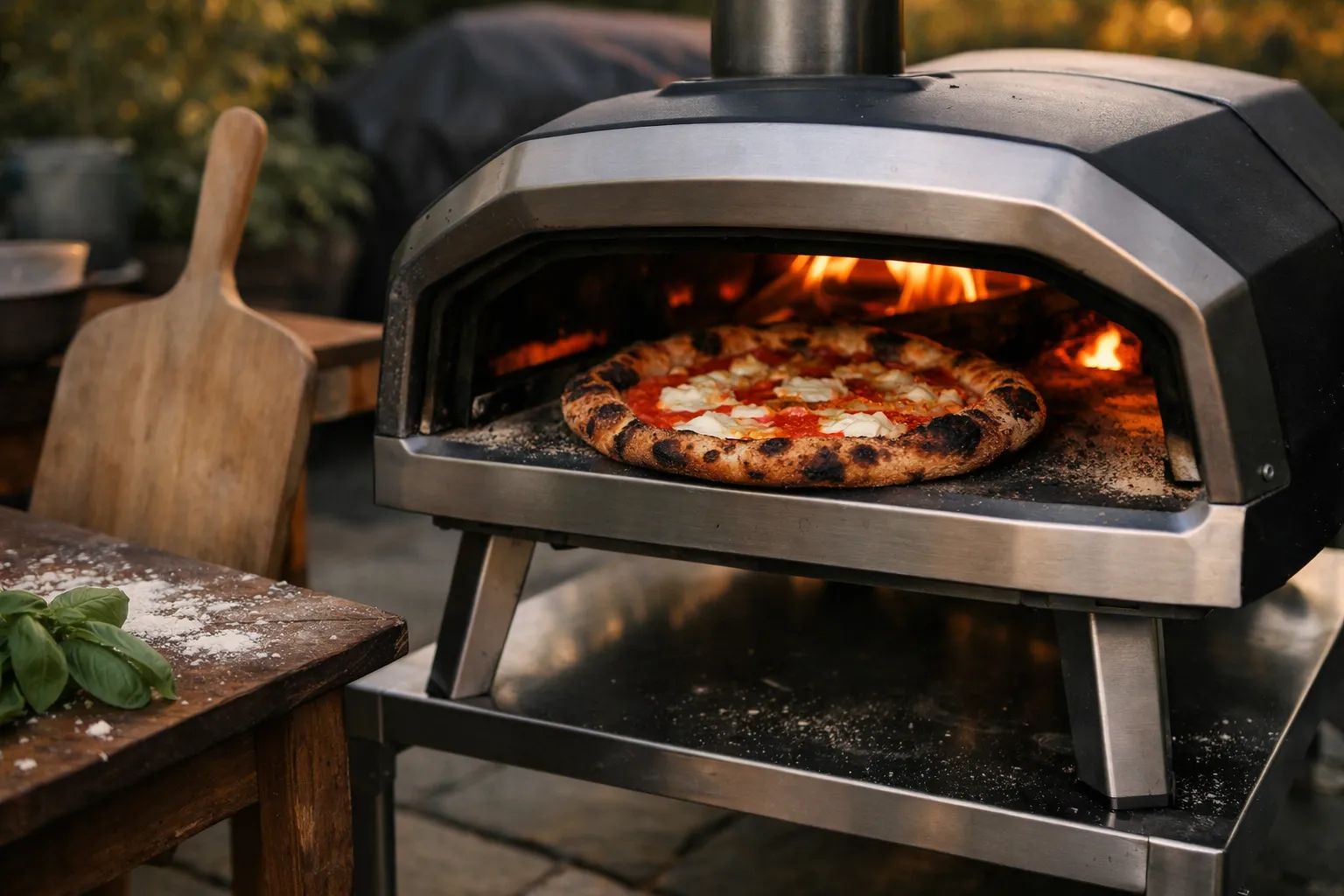
The Ooni Karu 16 remains Ooni’s 16‑inch multi‑fuel outdoor pizza oven: designed to run primarily on hardwood (lump wood or charcoal) with a separate gas burner attachment for a gas option. This July 2026 update revisits performance, recent trends affecting ownership (regulatory and product competition), current pricing, and practical advice for getting the best results this summer.
Background: who makes the Karu 16 and who it’s for
Ooni (based in Scotland, widely distributed in North America, Europe, and Australia) targets serious home cooks who want high‑temperature, restaurant‑style pizza without building a permanent masonry oven. The Karu 16 is for people who want a larger cooking surface than 12" tabletop ovens offer and who value either the sensory signature of real wood‑fired pizza or the option to switch to gas for convenience.
Key specs at a glance
- Cooking floor: 16‑inch stone floor (room for a single large pie or multiple smaller items)
- Fuel modes: wood/charcoal native; gas via sold‑separately burner
- Typical peak temps: up to roughly 500°C (≈930°F) under heavy flame — suitable for Neapolitan‑style pizzas
- Portability: freestanding, intended for backyard/patio use — not an ultralight table model
- Accessories: gas burner, cover, peels, infrared thermometers commonly used
Features analysis — what’s new for mid‑2026
Since our April 2026 evaluation, the Karu’s hardware is unchanged, but two external developments matter for buyers:
- Regulatory environment: wildfire seasons and local burn‑ban policies have prompted many municipalities and HOAs to tighten rules on open‑flame outdoor appliances. Buyers should check local summer restrictions and condo/building policies before relying on wood mode.
- Electric competition has improved: countertop electric ovens (including Ooni’s Volt line and competitors) are now closer in heat performance for everyday convenience. They’re cleaner and often allowed on balconies where open flames are not, narrowing the convenience gap that previously gave the Karu an advantage.
Performance: wood vs. gas — updated best practices
Wood mode still delivers the most distinctive crust — deeper charring, a smoky aroma, and lively blistering. For mid‑2026 buyers, practical tips to reduce variability:
- Use small batches of high‑quality lump hardwood (oak, olive, or apple if available) and let the fuel burn down to steady embers before long bakes.
- Keep an infrared thermometer or built‑in thermocouple (if you have one) to monitor floor and dome temps; aim for a floor temp around 400–450°C (750–840°F) for controlled blistering on 60–90 second bakes.
- Rotate pizzas more frequently when using full flame; place longer‑cooking items near the rear or side to avoid over‑char.
The gas burner attachment remains the practical option for predictable heat and faster turnaround for parties. It’s not a flavor replica of wood, but it delivers consistent thermal conditions and faster dial‑in for groups — useful where time or local restrictions rule out open fire.
Versatility: beyond pizza
The Karu 16’s large stone floor and retained thermal mass make it strong for high‑heat roasting (vegetables, flatbreads), reverse‑searing steaks, and finishing fish. In 2026, we’ve also seen home cooks use the Karu for quick batch‑cooking at outdoor gatherings (two 12" pizzas + vegetables simultaneously) — a practical advantage over most 12" tabletop ovens. For low‑and‑slow baking (cakes, large loaves) the Karu is still a poor fit without significant technique changes.
Build, setup and maintenance — what to expect now
Ooni’s construction for the Karu 16 remains a durable, powder‑coated steel outer shell with an insulated interior and a cordierite/ceramic stone floor. Routine maintenance is unchanged:
- Brush the stone between sessions, remove ash, and scrape food residue while warm (not hot).
- Store under a weatherproof cover when not in use to reduce rust and protect seals.
- For gas installation, use a certified regulator and hose per local code and replace rubber hoses every few years or per manufacturer guidance.
Pricing and value (July 2026)
Typical retail pricing in July 2026:
- Ooni Karu 16 (wood/charcoal unit): commonly listed at about $799–$849 USD MSRP; street prices vary by retailer and region.
- Ooni gas burner attachment (sold separately): commonly priced around $180–$220 USD.
- Useful accessories: covers ($50–$80), 16" peels ($40–$80), infrared thermometers ($30–$80).
Value assessment: the Karu 16 is good value if you will regularly use the larger cooking floor and benefit from multi‑fuel flexibility. If you need a balcony‑safe, plug‑in solution, modern electric ovens now offer comparable convenience at similar or lower total cost when you factor in the gas burner and accessories.
Pros and Cons — July 2026 update
- Pros: Authentic wood‑smoke character; large 16" floor for parties; strong thermal performance for high‑heat cooking; durable build and robust accessory ecosystem.
- Cons: Learning curve for wood mode; gas burner sold separately increases total cost; open‑flame operation can be restricted by local rules; heavier and less compact than tabletop alternatives.
Who it’s for
Buy the Karu 16 if you:
- Want real wood‑fired flavor and will use the larger cooking floor regularly.
- Host outdoors and can legally operate open‑flame or have access to gas.
- Are willing to invest time learning fire management or prefer gas reliability with the optional burner.
Consider alternatives if you:
- Need an apartment/balcony solution (choose an electric oven like Ooni Volt or other high‑heat electrics).
- Prefer the lightest, most portable option for occasional tailgating (consider 12" tabletop models).
- Have strict HOA or local regulations that prohibit open flames or outdoor gas appliances.
Alternatives
- Ooni Volt (electric): Cleaner, balcony‑friendly, and faster to learn — good if you can’t use open flame.
- Gozney Roccbox: A portable gas/propane option with an easier setup for users prioritizing convenience over wood smoke.
- Gozney Dome: Higher‑end, larger thermal mass and broader temperature control for serious outdoor cooks willing to pay a premium.
Verdict
Updated for July 2026: the Ooni Karu 16 remains one of the best multi‑fuel outdoor pizza ovens for home chefs who want larger pies, wood‑fired flavor, and the option to run on gas. Its core strengths are unchanged: real wood character and a roomy stone floor. What has shifted is the buying context — more stringent local flame restrictions in many areas and stronger electric alternatives — so your decision should weigh regulatory constraints and whether you’ll use the larger floor often enough to justify the price and learning curve.
Is the Karu 16 worth buying in 2026?
If you have space to operate a wood or gas outdoor oven, plan to cook frequently for groups, and value authentic smoke and blistering, yes: the Karu 16 is worth it. If you need plug‑and‑play convenience or apartment compatibility, an electric oven will likely serve you better.
FAQ — Practical questions for potential buyers
Do I need the gas burner to use the Karu 16?
No. The Karu 16 functions as a wood/charcoal oven out of the box. The gas burner is optional and recommended only if you want more predictable heat without managing live fuel.
Can I use the Karu 16 on an apartment balcony?
Most apartment balconies and many condo associations restrict open flames. Some allow gas appliances but require advance approval; check building rules and local fire codes. If you need a balcony‑safe solution, consider an electric pizza oven instead.
How often should I rotate pizzas when using wood mode?
Rotate frequently — typically every 15–30 seconds depending on flame intensity. Learn your oven’s hot spots and use brief rotations and repositioning rather than prolonged single‑side exposure to avoid burning the crust.
What maintenance keeps the Karu 16 performing well?
Brush the stone floor after each session, remove ash when cool, keep the exterior covered, and inspect gas hoses and fittings annually. For wood use, avoid excessive creosote buildup by using well‑seasoned hardwood and burning down to embers for cooking.
Should I buy the Karu 16 or a 12" model?
Choose the 16" if you regularly cook for more than two people, want flexibility for larger pies, or plan to cook multiple items at once. A 12" model is lighter, more portable, and may be a better choice for occasional cooks or those tight on storage.