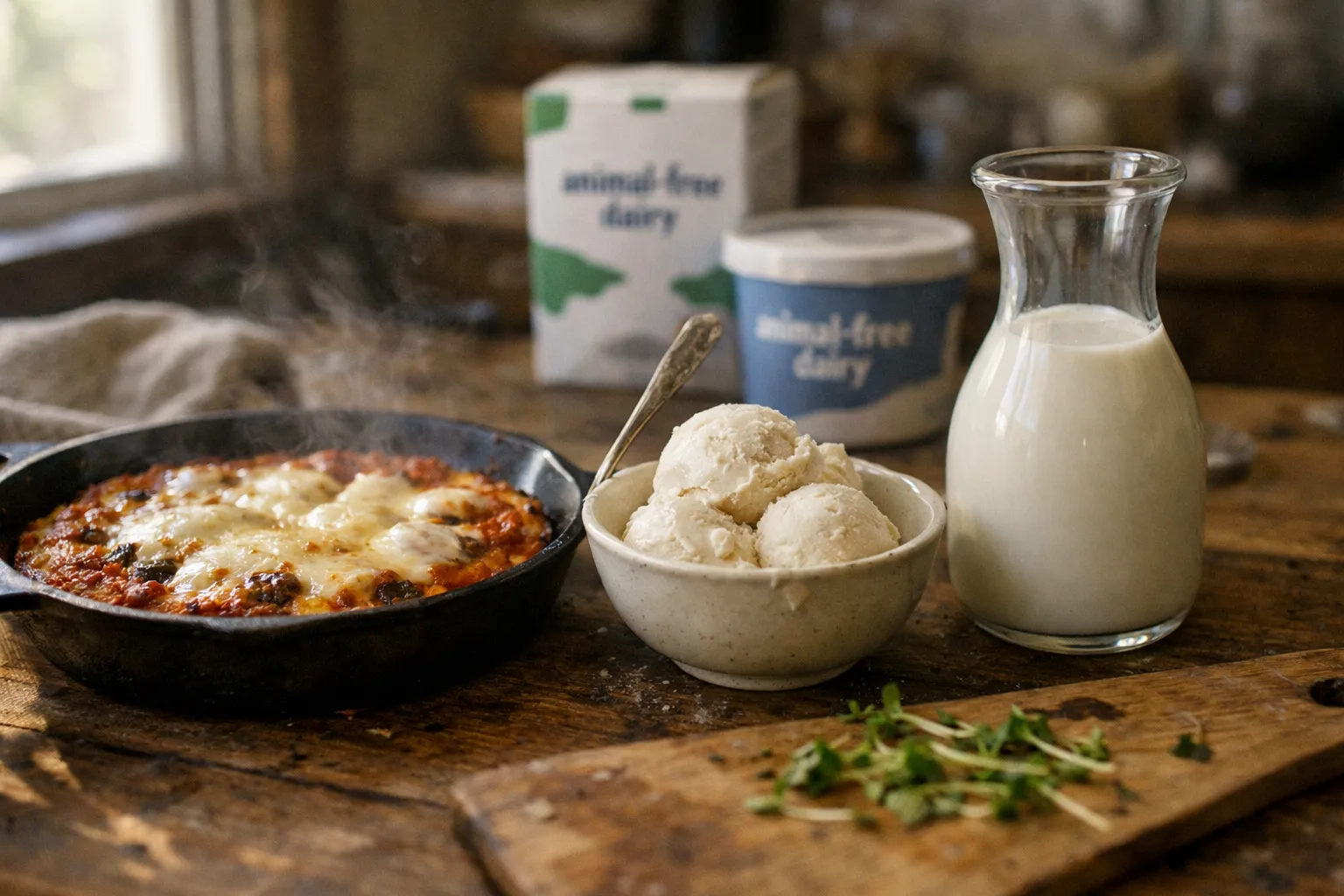
Overview: Precision fermentation — microbes producing dairy proteins without cows — has moved from laboratory promise to growing commercial reality. For home chefs in July 2026, the technology now matters less as an abstract innovation and more as a set of real ingredient choices that affect flavor, texture and how you cook. This update summarizes where the sector stands, what has changed since the technology’s early launches, how products perform in home kitchens, and practical guidance for buying and cooking today.
Background: how we got here and why it matters
Precision fermentation engineers microorganisms (usually yeast) to make specific milk proteins — principally caseins and whey analogs — by expressing the same protein sequences found in cow’s milk. Those proteins are isolated and combined with fats, minerals and cultures to create products that behave like dairy in melting, stretching and mouthfeel. The core promise is: dairy functionality without animals, and a supply chain decoupled from pasture and herd management.
Early commercial activity (2019–2024) included pilot plants, ingredient licensing and branded launches — notably in ice creams and creamers — from companies such as Perfect Day, New Culture and Formo. Since then the conversation has shifted from “can we make it?” to “how broadly will it scale, and what does it mean for kitchen use and sustainability?”
Data and evidence (what we know and how to verify)
- Product availability: Branded specialty items (ice creams, creamers, processed‑cheese analogs) moved from online and high‑end specialty stores into select mainstream retailers during 2024–mid‑2026, with ingredient sales to food manufacturers increasing. For current stockists and SKUs, check brand websites and retailer listings (e.g., refrigerated aisles of national chains, specialty grocers, direct‑to‑consumer stores).
- Cost trends: The economics remain capital‑intensive: fermenter capacity, downstream purification and drying dominate costs. Industry reporting through 2024 showed unit costs falling with scale; by 2026, many companies report improved yields and lower per‑kg costs but not yet universal parity with commodity dairy proteins (verify via company investor or trade filings for up‑to‑date figures).
- Environmental lifecycle assessments (LCAs): Peer‑reviewed LCAs and NGO analyses consistently find outcomes depend on electricity mix and feedstock sourcing. When producers use low‑carbon energy and efficient processes, greenhouse‑gas intensity can be substantially lower than conventional dairy; with fossil‑heavy electricity, benefits shrink. For specific numbers, consult recent LCAs in journals (e.g., Nature Food) and organization reports (Good Food Institute, country regulators) — check publication dates to confirm 2025–2026 updates.
- Regulation and labeling: Regulatory regimes remain jurisdictional. Some regulators accept precision‑fermented proteins under existing ingredient frameworks; labeling rules for “milk,” “cheese” and similar terms continue to be debated between industry groups, dairy associations and regulators. For the latest on naming rules in your country, consult the national food regulator (FDA in the U.S., EFSA in the EU, SFA in Singapore) and industry guidance.
How the approaches compare in the kitchen: functionality, taste and cooking
Functional parity and culinary performance
- Stretch and melt: Precision‑casein formulations reproduce curd structure and meltability more closely than most plant‑only cheeses. In home tests (pizzas, grilled cheese), many precision‑casein‑based products show superior stretch and less oil separation.
- Ice cream and creaminess: Precision‑fermented whey analogs improve creaminess, reduce iciness and stabilize overrun when formulated correctly. That makes them an attractive ingredient for premium ice creams and gelatos used at home.
- Baking, custards and sauces: Because dairy proteins play structural roles (emulsification, gelation), precision proteins reduce recipe rewrites compared with plant proteins. Custards, mousses and certain sauces often require fewer compensating ingredients.
Taste and formulation nuance
Precision‑fermented proteins are ingredients — final flavor and mouthfeel depend on fat choice, mineral balance, starter cultures and formulation. Two brands using the same protein base can taste quite different. Home cooks should expect better parity with dairy in texture than many plant‑only alternatives, but not identical flavor profiles; salt, acidity and fat type will still need adjustment in recipes.
Market dynamics and practical availability for home chefs
By mid‑2026 the marketplace looks layered:
- Specialty branded items (ice creams, creamers, dessert lines) remain the most visible consumer touchpoints.
- Ingredient sales to food manufacturers have increased; that means blended products (precision proteins combined with plant bases to reduce cost) are more common in factory‑made cheeses and processed dairy analogs.
- Pure ingredient forms (protein powders/concentrates) are rolling out but are not yet ubiquitous; expect broader distribution through professional ingredient suppliers before mainstream supermarket shelves.
Where to look: specialty grocers, online marketplaces for alternative proteins, refrigerated dairy/alternative aisles in major chains, and direct purchases from startups. For restaurant‑level use, some producers offer culinary‑grade ingredients via foodservice channels.
Regulatory, labeling and supply‑chain implications (practical matters)
Regulatory clarity varies by country; this affects on‑pack naming and marketing. Consumers should read ingredient statements rather than relying solely on product names. Key supply‑chain realities for home cooks: precision fermentation ties food availability to industrial biotech inputs — sugar or other carbon feedstocks, filtration media and industrial dryers. Local availability will track where producers can source energy and equipment affordably.
Multiple perspectives
Startups and investors: Point to falling costs from improved strain engineering and larger fermenter builds as the path to mainstreaming.
Conventional dairy groups: Raise questions about labeling fairness and rural economic impacts; some call for stricter on‑pack descriptions.
Chefs and product developers: Use precision proteins to solve specific functional deficits (stretch, melt, scoopability), often blending with plant fats and cultures to tune flavor and price.
Environmental analysts: Emphasize the conditional nature of sustainability benefits — electricity source and process efficiency are decisive.
Implications for home chefs
What this means in practice:
- Expect better specialty products (ice cream, creamers, pizza cheeses) that require fewer recipe adjustments than plant‑only options.
- Price premiums remain for pure precision‑protein products; blended products offer an economical halfway point.
- Ingredient transparency matters: read labels for protein source, fat type and culture information to predict cooking behavior.
- Availability will be regional: urban specialty stores and national chains in larger markets are likelier to stock early launches.
Outlook — what to watch through the rest of 2026
Key signals that will shape adoption:
- Major brand partnerships or licensing deals bringing precision proteins into mainstream consumer packaged goods (CPG) lines.
- Public LCAs and peer‑reviewed studies showing consistent environmental advantages under realistic operating assumptions.
- Regulatory decisions clarifying on‑pack naming and ingredient pathways in large markets (U.S., EU, China, Singapore).
- New foodservice and retail listings expanding trial opportunities for home cooks.
Given the state of technology and industry investment, the most likely near‑term path (through 2026–2028) is moderate mainstreaming: more blended products and wider availability of specialty items, with full price parity still dependent on larger scale and tighter process economics.
What home chefs should do now (practical checklist)
- Try small formats: Buy a single‑serve ice cream, creamer or slice of precision‑casein cheese to evaluate melt, stretch and flavor before committing.
- Read labels: Look for clear ingredient lists (which protein, fat source, cultures). If a product claims “dairy‑identical” but lacks protein detail, contact the brand for clarification.
- Blend to stretch value: Combine precision‑fermented products with plant milks in sauces or with conventional dairy in recipes where budget matters.
- Adjust seasoning and fat: Expect to tweak salt and acid; fat type (coconut vs. dairy butter vs. neutral plant oils) will change mouthfeel and flavor.
- Follow sourcing updates: Check trusted sources for regulatory and LCA updates: your national food regulator, the Good Food Institute, and peer‑reviewed journals.
Conclusion
Precision fermentation is no longer purely speculative for home cooks: it supplies tangible functional benefits in specialty products and will increasingly appear as an ingredient in blended mainstream items. The immediate payoff for home chefs is better performance in contexts that depend on dairy proteins — pizza, certain cheeses, ice cream and custards — while broader cost and availability shifts continue to play out. Stay ingredient‑focused, read labels, and treat precision‑fermented products as useful tools rather than full, drop‑in replacements for every dairy use.
Frequently asked questions
Are precision‑fermented dairy products safe to eat?
Yes — products on sale are manufactured under food‑safety standards applicable in their jurisdiction. Companies typically follow standard fermentation and purification practices and submit safety data where required. For absolute certainty, check whether the product or its protein ingredients appear in your national regulator’s food ingredient database or GRAS listings.
Will precision‑fermented dairy replace conventional dairy in my recipes?
Not universally. Precision proteins can replicate key dairy functionalities (stretch, melt, gelation) and reduce the need for recipe changes in many cases, but final results still depend on formulation (fat, mineral balance, cultures). For now, they are best used selectively where you need dairy‑like functionality.
How can I tell a quality precision‑fermented product from a marketing claim?
Look for ingredient transparency (which proteins are present, whether cultures are used), third‑party testing or certifications, clear storage instructions, and credible sourcing statements. Consumer reviews and professional tastings are also useful—start with small purchases to test performance in your recipes.
Are there allergies or dietary issues to consider?
Precision‑fermented proteins are molecularly similar to animal dairy proteins, so they may trigger the same allergies as cow’s milk (casein, whey). They are not automatically lactose‑free unless lactose is removed in processing. Check labels and, when in doubt, consult an allergist.
Where should I look for the latest, verifiable updates?
Consult your national food regulator (FDA, EFSA, SFA, etc.), company investor or press disclosures for production and retail rollouts, and recent LCAs or peer‑reviewed studies (search journals such as Nature Food). Industry groups like the Good Food Institute also publish timely analyses.