
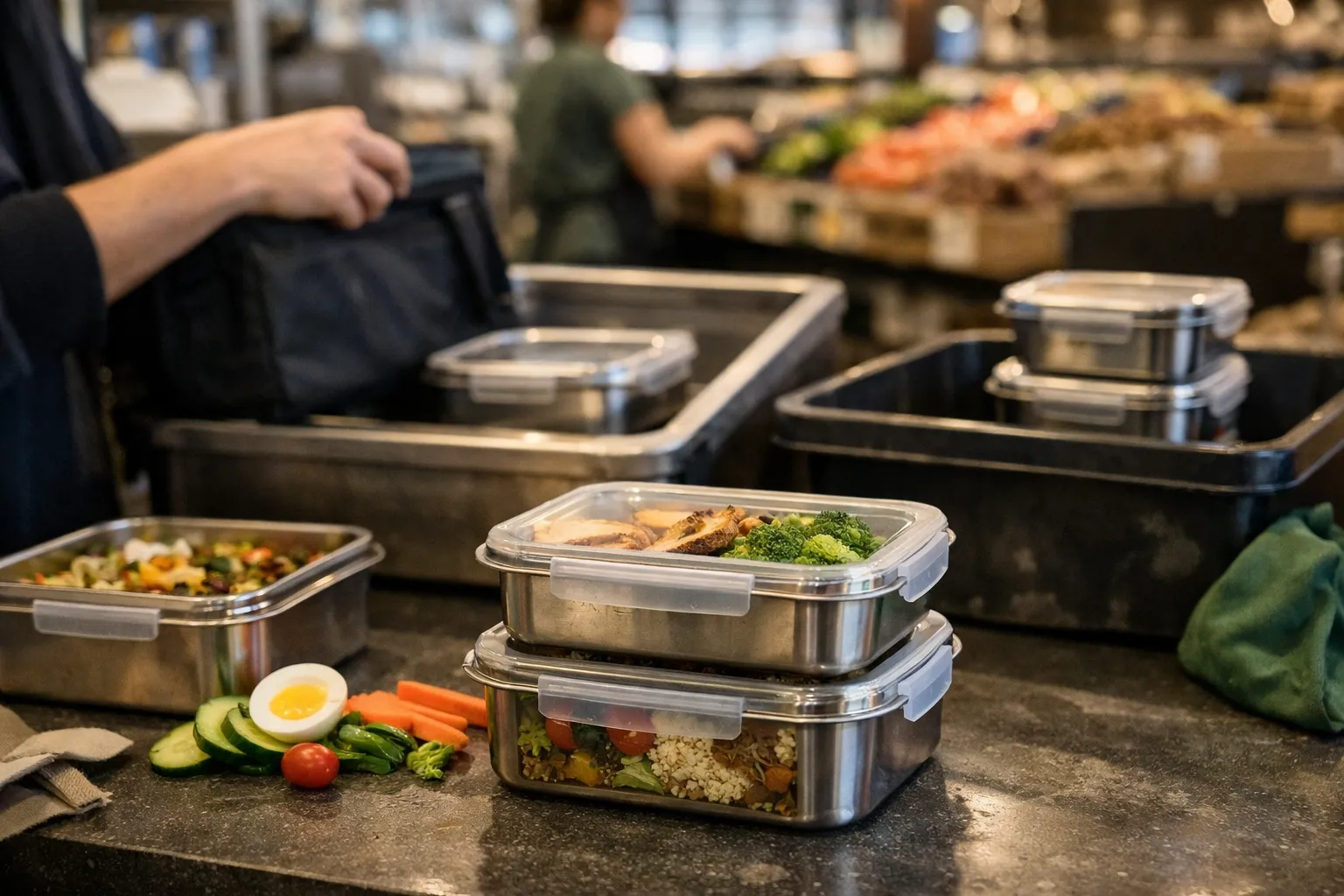
Who, what, when, where, why: As of June 2026, multiple U.S. grocery retailers and meal‑kit providers have rolled out or expanded pilot programs for reusable meal containers in metropolitan test markets, aiming to cut single‑use waste and lower packaging costs. The pilots — running in cities including New York, Seattle and the San Francisco Bay Area — replace disposable trays and plastics with deposit‑style, returnable BPA‑free polypropylene or stainless steel containers. The shift matters to home cooks who batch cook or buy chilled/refrigerated meal components: the numbers and fine print change how you store, reheat and account for food cost.
Why this is happening now
Retailers face two economic pressures that make reusable containers attractive. First, packaging costs rose sharply after 2020; retailers report packaging-related input inflation in the low‑to‑double digits across different segments. Second, municipal regulations and corporate sustainability targets have increased scrutiny on single‑use foodware. Reusable systems promise lower per‑meal packaging cost after the break‑even point (typically 10–25 uses, depending on container type and wash cycle), and a marketing benefit for sustainability‑minded shoppers.
For meal‑prep consumers, the change is practical, not symbolic: reusable containers alter shelf life, storage logistics and the unit economics of batch cooking. Here’s what the pilots show — and what the fine print reveals.
Details: how the pilots work
- Deposit and return model: Customers pay a refundable deposit (commonly $1.50–$3.00 per container) at purchase. Returning containers to a store kiosk or courier trigger a refund. Some pilots offer credits instead of cash.
- Material choices: Two container classes dominate: food‑grade polypropylene with gasketed lids (lightweight, stackable) and stainless steel (heavier, longer lifespan). Polypropylene units aim for 50–100 reuse cycles; stainless steel targets 300+.
- Cleaning and sanitation: Retail partners typically use commercial dishwashers reaching 160–180°F (71–82°C) and follow third‑party sanitation validation. Pilots require customers to rinse and—sometimes—pre‑stack containers before return; a small number of programs accept visibly dirty returns but charge a cleaning fee per item.
- Labeling and traceability: Containers include QR codes or RFID tags to track cycles and link to sanitation logs, which retailers use to calculate lifecycle cost and safety compliance.
The numbers: cost, shelf life, and economics
Look past marketing. The headline savings are real but conditional. Retail partners in early pilots report per‑meal packaging savings of 10–25% after amortizing container cost across reuse cycles. Break‑even depends on container type and logistics:
- Example model: A $3 stainless steel container amortized over 200 uses equals $0.015 per use; a $1.50 polypropylene unit amortized over 50 uses equals $0.03 per use. Compare those to $0.20–$0.60 per single‑use disposable container commonly used for chilled meals.
- However, logistics add costs: reverse logistics, collection kiosks, third‑party washing, and losses/attrition (customers failing to return containers). Early pilots report attrition rates ranging from 8%–22% in the first six months — a major variable that raises effective per‑use cost.
- Shelf life: Reusable containers themselves don’t extend food shelf life. Chilled prepared components follow the same safety windows: typically 3–5 days for cooked proteins and mixed dishes under 40°F (4°C). Meal preppers must still manage refrigeration and proper cooling timelines. The container change affects only packaging waste and handling.
Impact for meal‑prep and batch cooking at home
The reusable model changes a few practical decisions for home cooks who batch cook or buy chilled components:
- Cost planning: If you buy batch meals in reusable containers, track deposit credits. If you forget returns, the unrefunded deposit effectively raises your cost per meal by $1.50–$3.00.
- Storage and stackability: Reusable containers often stack better and have tighter seals than single‑use trays, which can improve refrigerator real‑estate efficiency for weekly batch cooking.
- Cooling and reheating: Metal containers (stainless steel) are not microwave‑safe; polypropylene generally is. Check labels. That affects reheating choices and transfer needs—important if you prefer reheating in the container to reduce dishes.
- Food safety: The numbers tell a different story than marketing copy: sanitation depends on commercial washing and traceability. For home returns, vendors typically require rinsing and may refuse or fee‑charge for heavily soiled items.
- Meal planning: Reusable pilots often align with chilled, ready‑to‑finish meal components (cooked grains, roasted veg, sauced proteins) rather than raw bulk ingredients. Expect more “batch‑and‑finish” offerings optimized for reheating and combining at home.
Stakeholder reactions
Retail sustainability directors say reusable pilots reduce downstream waste and can lower long‑term packaging spend once logistics mature. Waste‑reduction advocates welcome the reduction in single‑use volume but emphasize strict sanitation oversight. Some consumer‑rights groups note hidden costs: unreturned deposits and consumer inconvenience can dilute net savings if program design is poor.
"Reusable containers are promising if attrition and logistics are solved," says Sarah Chen, Senior Financial Analyst at Meal Prep Pro. "The math only works when returns reach a predictable level. For home cooks, the question is: will the convenience outweigh the deposit tracking and occasional extra trips?"
Practical steps for meal preppers
- Check the deposit system before you buy. Note deposit amount and refund method (cash, card refund or store credit).
- Confirm microwave compatibility and whether the container is oven‑safe or requires transfer to a different dish for reheating.
- Rinse returns immediately. If a program charges cleaning fees for dirty returns, factor that into your cost per meal.
- Keep a small return schedule—combine returns with weekly errands to avoid losing credits.
- If you batch cook at home and use reusable containers provided by a retailer, ask whether the container is intended for repeated home use or return only; some reusable programs use containers that are not meant for indefinite household reuse.
What’s next — what to watch in the next 6–12 months
- Attrition data: Pilots will publish or leak return‑rate figures. Watch for attrition moving toward single digits — that’s when per‑meal savings solidify.
- Regulatory moves: Local health departments will issue detailed sanitation guidance. Any requirement for commercial‑grade washing will increase program costs.
- Standardization: Look for industry standards (RFID, stackable dimensions) that make cross‑retailer returns possible. Standardization lowers logistics cost and improves convenience.
Will reusable containers really save me money?
Sometimes. If you reliably return containers and choose the right material (polypropylene for microwave convenience, stainless for longevity), total per‑meal packaging cost can fall 10–25% versus single‑use. But if you lose deposits or face cleaning fees, the effective cost can be higher.
Are reusable containers safe for batch‑cooked meals?
Yes—if the vendor uses validated commercial sanitation and you follow return/prep instructions. Reusable containers do not change the required cooling and refrigeration timelines for cooked food.
Should I keep my own reusable containers instead?
For many home meal preppers, owning a set of high‑quality containers (glass or microwave‑safe polypropylene) remains simpler and often cheaper over time. Use retailer reusable programs when they offer clear refunds and convenience that match your routine.