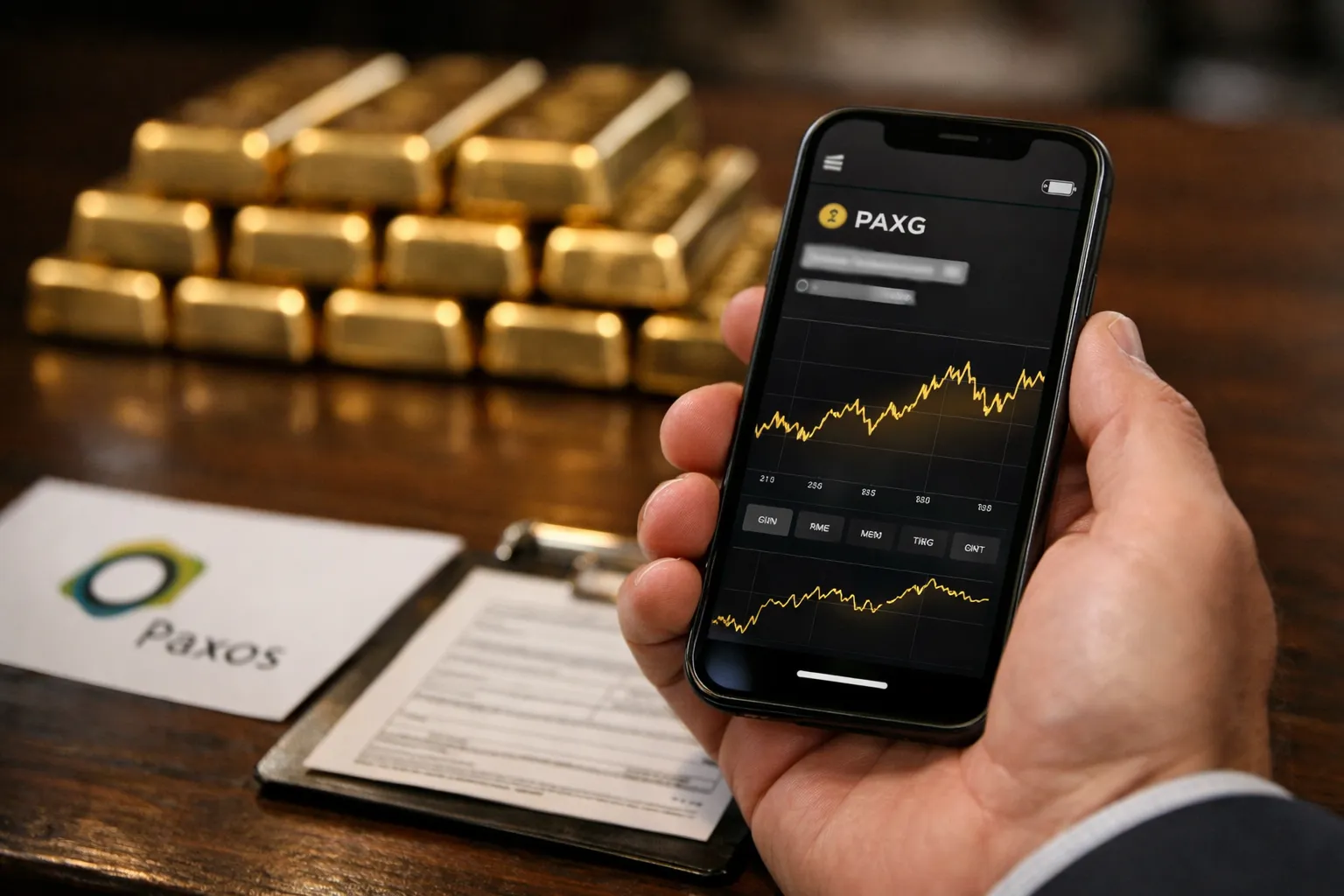
Tokenized gold promises the divisibility and frictionless transfer of crypto with the perceived safety of allocated bullion. PAX Gold (PAXG), issued by Paxos Trust Company, is one of the longest-running tokenized-gold products in the market. In this review (June 2026) I examine what PAXG actually delivers for gold investors: how the gold backing and custody work, liquidity and trading mechanics, fees and tax considerations, and the practical trade-offs compared with ETFs and physical allocated storage.
What is PAXG?
PAXG is an ERC‑20 token (and available on several other chains) that Paxos says is backed 1:1 by fine troy ounces of London Good Delivery gold. Paxos, a NYDFS‑chartered trust company, publishes attestations and statements about the physical gold that backs outstanding tokens. Paxos also states holders can request redemption of tokens for allocated physical gold or cash, subject to minimums and Paxos’ published processes.
Key features
- 1:1 allocated backing: Paxos reports that each PAXG equals one troy ounce of LBMA‑quality gold held in custody on behalf of token holders.
- Custodians and audits: Paxos uses regulated vault operators and publishes periodic attestations on reserves; the company is subject to NYDFS oversight.
- On‑chain transferability: PAXG is transferable like any token — fractional, instantaneous (subject to block times), and programmable.
- Redemption option: Token holders can redeem PAXG for physical gold or cash through Paxos, with minimums and processing procedures that matter for investors wanting physical delivery.
- Multi‑chain distribution: PAXG has been issued on Ethereum and other networks to lower transaction costs and increase access.
What PAXG does well
- Low entry point and divisibility: Unlike a one‑ounce bar, PAXG can be held in tiny fractions, making precise portfolio sizing and micropurchases easy.
- Immediate, global transfer: Traders and private investors can move gold exposure across wallets and platforms without bank‑to‑bank settlement delays.
- Transparency on supply: The token’s on‑chain supply and Paxos’ attestations make outstanding backing relatively easy to verify compared with opaque private vault arrangements.
- Programmatic uses: PAXG can be integrated in smart contracts, enabling collateralised lending, liquidity pools and structured products that use allocated‑gold exposure.
- Regulated issuer: Paxos’ NYDFS charter and public reporting reduce some counterparty concerns compared with unregulated token issuers.
Main drawbacks and risks
- Counterparty and trust dependency: PAXG is only as reliable as Paxos’ custody, attestations, and redemption processes. Token holders rely on Paxos (and its custodians) rather than direct ownership of a segregated bar.
- Redemption friction: Although redeemable, physical delivery involves minimums, paperwork, fees and shipping/logistics — not instant or cost‑free.
- Smart‑contract and chain risk: The token standard and bridge contracts introduce technical risks (bugs, exploits). Paxos has published audits, but smart‑contract risk is non‑zero.
- Regulatory uncertainty: Token rules continue to evolve across jurisdictions. Regulatory actions could affect PAXG liquidity or Paxos’ operations in specific markets.
- Transaction costs: On‑chain gas or bridge fees (especially on congested chains) can raise effective trading costs for small transactions.
Costs — what to expect
PAXG itself does not levy a recurring management fee like many ETFs; however, investors face several cost layers:
- Trading spreads and exchange fees: Buying PAXG on exchanges or OTC platforms involves bid/ask spreads and platform commissions.
- Blockchain fees: Gas or bridge fees can be material for small trades, though multi‑chain issuance reduces this for many users.
- Redemption and delivery charges: Paxos publishes redemption fees and minimums — these are relevant for investors who plan to take physical possession.
- Custody and insurance implicit costs: The cost of custodial storage and insurance is embedded in the structure and reflected in issuer spreads and service charges.
How PAXG compares with ETFs and physical allocated gold
- Vs. gold ETFs (e.g., IAU, GLD): ETFs are highly liquid and familiar to institutional investors, with clear fee structures and brokerage access. PAXG can be cheaper for micro‑sized trades and programmable on‑chain, but ETFs avoid smart‑contract risk and are settled through regulated securities infrastructure.
- Vs. allocated physical bars: Direct allocated ownership eliminates intermediary redemption steps and some counterparty layers. PAXG adds transferability and divisibility but increases reliance on an issuer and custodial attestations.
Who should consider PAXG?
- Crypto‑native investors who want gold exposure native to on‑chain wallets and DeFi workflows.
- Traders seeking low‑friction, fractional exposure to gold for short‑term trades or arbitrage across venues.
- Investors using gold as collateral in digital lending protocols — where tokenized, verifiable collateral is required.
Conversely, conservative physical‑only investors who prioritize direct possession, minimal counterparty layers, and low regulatory complexity may prefer allocated bars in a regulated vault or a traditional gold ETF.
Practical checklist before buying
- Confirm on‑chain balance visibility and check Paxos’ latest reserve attestation.
- Understand redemption terms and minimums if physical delivery might be needed.
- Factor blockchain fees and exchange spreads into your cost calculations.
- Check your jurisdiction’s tax treatment of tokenised assets and confirm reporting requirements with a tax advisor.
- Assess how token custody will be managed (self‑custody vs. custodial wallets) and the operational security implications.
Verdict
In June 2026 PAXG remains a compelling option for investors who want the mobility and programmability of tokenized assets combined with allocated‑gold backing. Its strengths lie in divisibility, on‑chain transparency and integration into digital finance. But those benefits come with trade‑offs: dependence on Paxos and custodians, smart‑contract and bridge risks, and real-world redemption frictions.
For gold‑investment enthusiasts: treat PAXG as a useful tool in a broader toolkit. It’s well‑suited for nimble traders, DeFi users and investors seeking precise, portable exposure. It is less appropriate as a sole repository for long‑term, physical‑possession bullion allocation unless you plan and budget for redemption and delivery mechanics. As always, verify current attestations and redemption terms with Paxos before allocating material capital — regulatory and operational details can change.