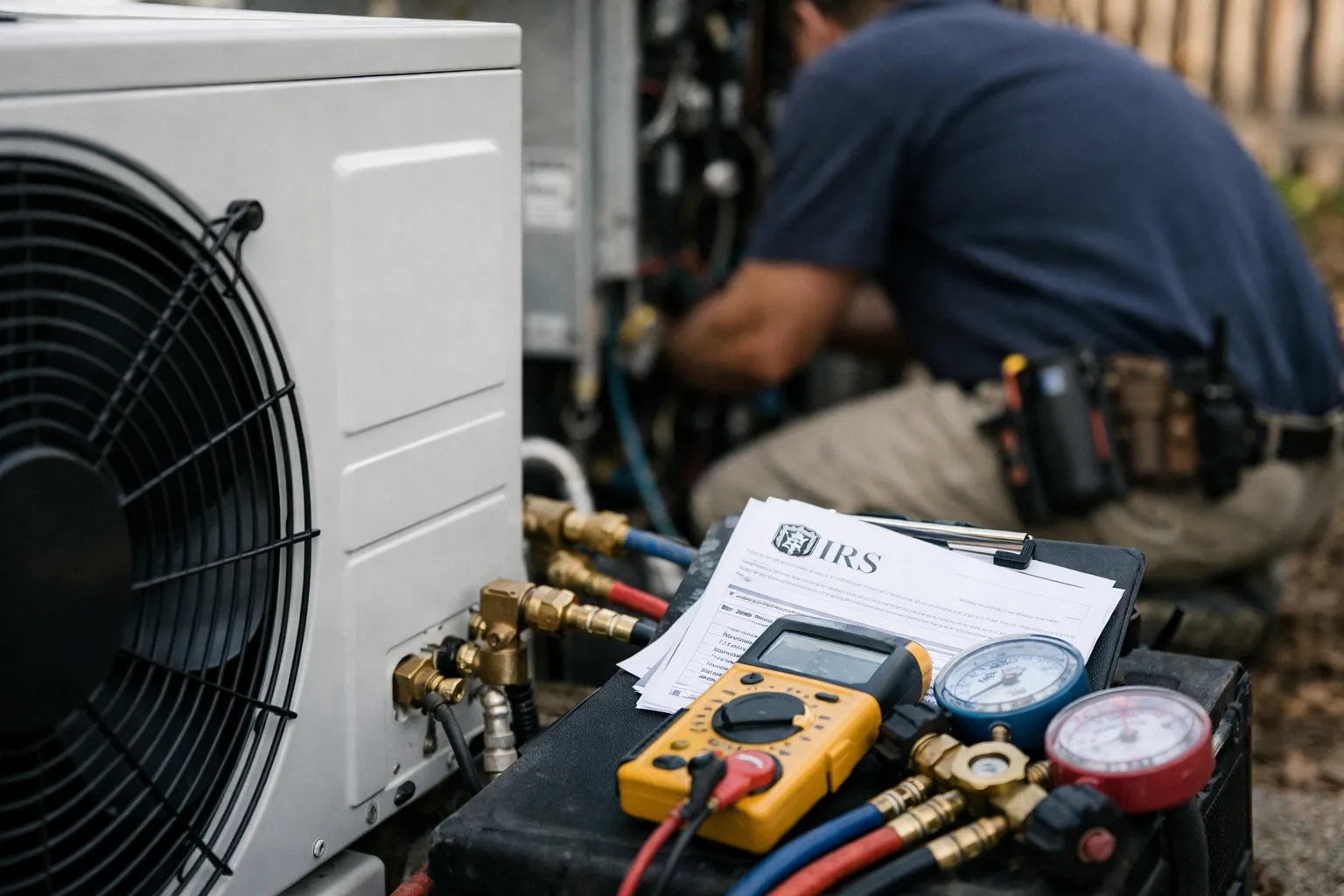
Washington, D.C. — Sept. 15, 2026 — The Internal Revenue Service's March 2026 final guidance tightening eligibility and documentation for residential heat‑pump tax credits continues to reshape HVAC sales, installation and recordkeeping practices. Since the guidance took effect, manufacturers, trade groups and contractors have introduced new verification tools and workflows; contractors say these changes are increasing upfront paperwork but reducing downstream audit risk when done correctly.
What changed — and why it matters now
The core of the IRS guidance remains the same: eligibility now rests on three verifiable pillars. Installations must be performed by qualified technicians; products must be traceable to an approved model list; and claims must be supported by a standardized documentation package. Those rules—first finalized in March 2026—were intended to curb fraud and improve auditability for credits created under the Inflation Reduction Act (IRA).
Through the summer of 2026, the practical effect has intensified. Contractors report longer lead times for tax‑credit jobs, manufacturers have accelerated development of serial‑number traceability tools, and several regional utility programs have adjusted their rebate paperwork to align with IRS requirements. For contractors and dealers, the next 90 days are critical: projects installed now are likely to be subject to IRS review starting late 2026 through 2027.
Specific developments since June 2026
- Manufacturer verification portals: Major OEMs have rolled out dealer portals or enhanced existing dealer systems to produce downloadable compliance packets (product eligibility statements, serial‑number export, and proof-of‑shipment records). Contractors should confirm portal access with every OEM they deal with.
- Standardized customer worksheets: Several trade groups circulated model customer‑signed worksheets and installer attestations in July–August 2026. Those forms are increasingly accepted by tax advisers and were designed to match the IRS's documentation expectations.
- Installer credential standardization: Local permitting authorities and some national chains are now using a common credential ID format for technicians—a combination of course provider, issuance date and unique ID—making verification in audits simpler.
- Insurance and finance products updated: At least two national equipment-financing firms updated their loan agreements to include boilerplate language confirming whether an installation is intended to support an IRA tax credit, to reduce lender exposure to disallowed claims.
Why HVAC firms are feeling the effects
Contractors told HVAC System Guide that compliance activity has moved from incidental to operational. Sales teams now routinely include a compliance checklist in proposals; installation supervisors audit serial numbers at the jobsite; and accounting departments require a “credit pack” before invoicing at the tax‑credit price.
Practical changes contractors are reporting in September 2026:
- Proposal and pricing adjustments. Many firms add a compliance handling fee (typically $50–$250 per job, depending on complexity) or explicitly list longer lead times for tax‑credit projects.
- Centralized digital records. Firms are keeping a single searchable repository containing purchase orders, manufacturer eligibility statements, installed‑unit serial numbers, technician credential IDs, customer attestations and photos of installed equipment and nameplate.
- Pre‑qualification calls. Sales reps are conducting a short eligibility interview during quoting to confirm primary‑residence and income‑attestation requirements when applicable, reducing unsupported claims later.
Where audits and disputes are occurring
The IRS guidance explicitly elevated claims lacking verifiable product traceability, insufficient installer proof, or incomplete customer attestations to higher audit risk. In real cases since March, disputes have clustered around three issues:
- Mismatch between installed unit serial numbers and models appearing on manufacturer lists
- Installer qualifications that could not be corroborated by a training or credential record dated at or before installation
- Customer attestations that did not clearly document a primary‑residence requirement or income screening where applicable
Contractors facing disputes often resolved them by producing the necessary manufacturer packet or by obtaining retroactive affidavits from certified installers; however, retroactive fixes increase friction and may not always succeed in IRS reviews.
Updated recommendations — what to do this month
Based on observed industry practices through August and early September 2026, HVAC System Guide recommends the following immediate steps:
- Secure manufacturer compliance packets before installation. Do not accept verbal assurances—download the OEM product‑eligibility statement and serial‑number report and attach them to the job file.
- Record serial numbers at the site and in your ERP. Take both a close‑up photo of the unit’s nameplate and a wide shot showing the unit in place; log the serial number into your central database within 24 hours of install.
- Standardize installer credentials. Keep a copy of technician certificates, continuing‑education records and an internal credential ID that maps to the certificate; require technicians to present IDs on site and sign the customer worksheet.
- Adopt the model customer worksheet. Use a single, customer‑signed form that documents primary residence, intent to claim the credit and any income attestation required—store a scanned copy in the job folder.
- Train sales and accounting together. Run a joint training so sales teams know what accounting needs to issue the final invoice and accounting knows which documents constitute an acceptable “credit pack.”
Industry reaction and examples
Trade associations — including the Air‑Conditioning, Heating, and Refrigeration Institute (AHRI) and the Air Conditioning Contractors of America (ACCA) — have pushed for machine‑readable product lists and a standardized credential format to lower compliance costs for small firms. Several regional utilities have signaled they will accept OEM compliance packets as part of their rebate audits, aligning utility and IRS expectations and reducing duplicate documentation for customers.
On the manufacturer side, several OEM dealer portals now allow bulk export of serial numbers tied to purchase orders, which contractors report has reduced the time to assemble audit packets from days to hours when used correctly.
Impact — who gains and who bears costs
Smaller contractors without centralized recordkeeping bear the largest short‑term compliance burden. Firms that invest in digital traceability and standardized workflows gain two advantages: lower audit risk and a sales differentiator for customers seeking tax‑credit assurance. Over time, better documentation should reduce disputes and lower the total cost of compliance for reputable firms.
What to watch next
- Whether the IRS issues a searchable, machine‑readable approved‑model list or a formal installer credential standard—both remain requests from industry groups.
- Utility program alignment through late 2026 and 2027; greater alignment would reduce duplicate paperwork for customers.
- IRS audit patterns in 2027: contractors should track which documents are most often requested to refine internal checklists.
Bottom line
The March 2026 IRS guidance has moved from policy to practice. By September 2026, the industry has adopted workable verification tools and standardized forms—but compliance now requires explicit, repeatable workflows. Contractors that enforce serial‑number capture, maintain installer credential files, and bundle a complete manufacturer compliance packet at closeout will reduce audit exposure and protect their customers' ability to claim IRA heat‑pump credits.
Frequently asked questions
Do I need to have the manufacturer packet before I invoice the customer?
Yes. Best practice is to assemble the complete compliance packet—including the OEM eligibility statement and recorded serial number—before issuing the final invoice that reflects the tax‑credit price. That packet is your primary defense in an audit.
What counts as acceptable proof of installer qualification?
Acceptable proof is a dated certificate or credential from an approved training provider that includes the technician’s name, a unique course or credential ID, the date issued and the scope of training. Internal verification records that map that credential to the technician are also important; keep both the original certificate and a digital copy in the job file.
Can I take the photo of the nameplate instead of recording the serial number manually?
Yes. A clear close‑up photograph of the unit nameplate showing the model and serial number, plus a wide photo showing the unit's placement, is acceptable and provides additional context for auditors. Enter the serial into your database as soon as possible and attach the photos to the job record.
What if a customer refuses to sign the attestation worksheet?
Without a signed attestation, the claim is higher risk. Explain the importance to the customer and include the signed worksheet as a condition for providing the tax‑credit price. If the customer still refuses, document the refusal and consider offering a non‑credit price or a compliance handling fee to cover potential future audit work.
Where can I get model forms and checklists?
Trade groups such as ACCA and AHRI have circulated model worksheets and installer credential templates; check your trade‑association resources and your OEM dealer portal for up‑to‑date templates. Adopt one standardized package across sales, installation and accounting to minimize gaps.