
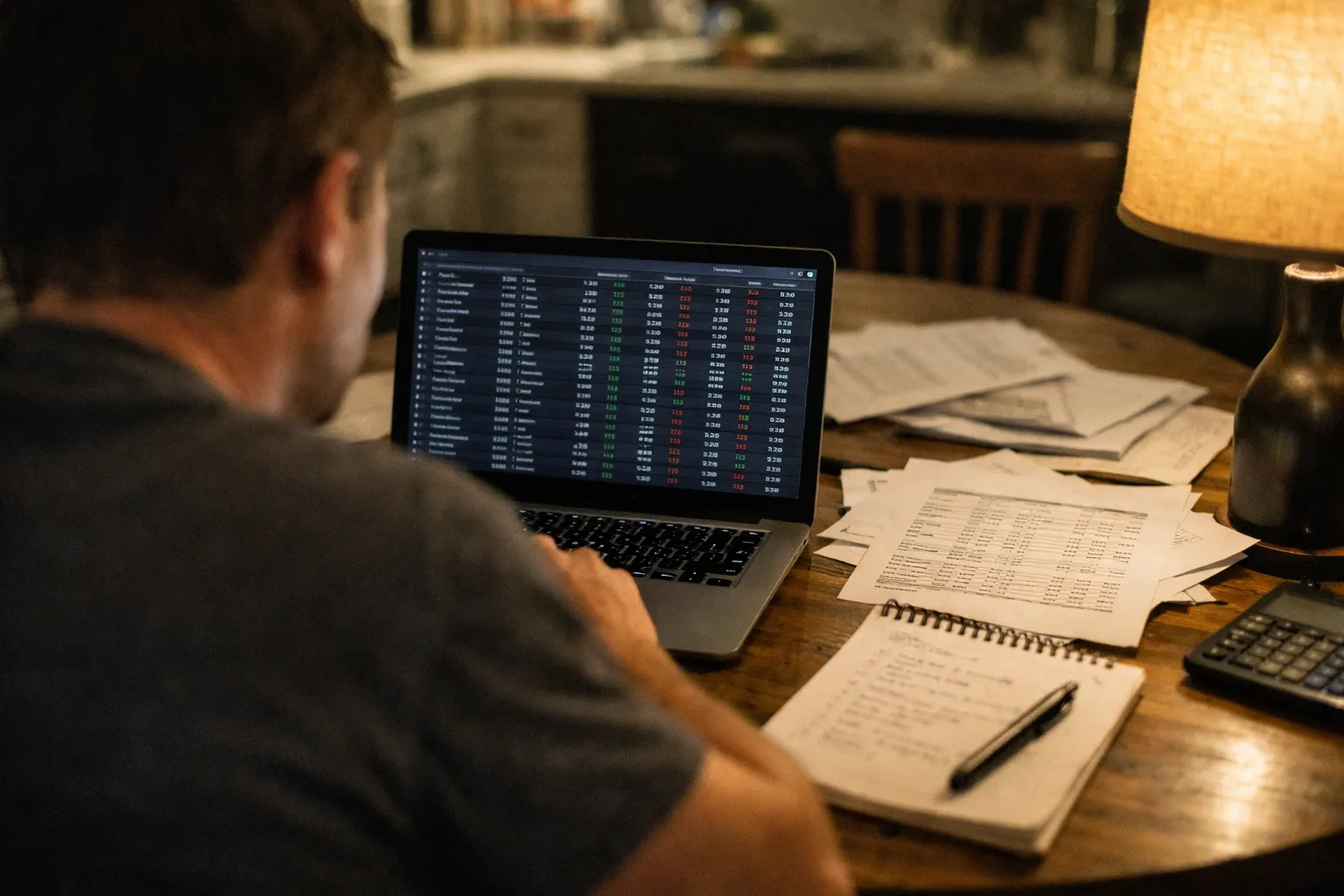
Who: retail and active individual investors. What: the persistent myth that “more trades = more gains.” When: July 2026 update. Where: U.S. equity and listed-derivatives markets. Why it matters: the same behavioral and structural forces that Barber and Odean identified two decades ago are now amplified by AI signals, denser options flow, and platform design—so trading more often still destroys after-cost, after-tax returns.
Context: the classic finding, now with louder noise
Barber and Odean’s 2000 paper, “Trading Is Hazardous to Your Wealth,” showed individual investors’ turnover erodes returns once you account for costs and taxes. That basic truth hasn’t changed. What has changed between 2022 and mid-2026 is the noise environment and the plumbing retail orders ride through.
Three structural shifts matter for anyone tempted to tinker every hour:
- Ubiquitous AI layers: Broker apps and third-party feeds now embed model-derived "buy/sell" flags, sentiment cards and short one-line rationales. They increase temptation to trade without improving unique informational edges.
- Options and derivatives gravity: Options open interest and hedging flows exert stronger and faster pull on underlying stocks—especially near popular strikes and expiration cycles—creating return-chasing traps for stock-only traders.
- Execution and tax realities: Hidden micro-costs—worse-than-advertised fills, wider realized spreads in volatile windows, and short-term tax rates—compound so one extra round trip a month can meaningfully shave net performance.
Fresh, verifiable patterns through July 2026
We don’t need another academic paper to see it in action. Look at how things played out in H1 2026:
- Major broker apps, including Robinhood and Schwab, expanded AI-driven “signal” cards in 2025–26. Those cards increased click-to-trade behaviors among active users even after firms added disclaimers that the cards were research prompts, not advice.
- Options expirations in Q1–Q2 2026 repeatedly produced short-term magnet moves into popular strikes across mid- and large-cap names. Traders who entered those moves on the way up often faced mean reversion when gamma exposure rolled off after expiration.
- Across volatile intraday sessions in 2026 earnings windows, we saw clear examples where retail chased headlines summarized by third-party NLP feeds—and experienced larger-than-expected slippage during thin late-afternoon liquidity.
The practical takeaway: faster tools and louder signals make it easier to feel decisive—but they don’t make you right. If your trading signal is the same feed everyone else sees, you are usually late and you pay for being first-to-click.
Why more trades still cost you (and why this hurts now)
Be blunt with yourself. Faster inputs make overtrading cheaper in appearance and more expensive in reality. Key failure modes in 2026:
- Micro-cost stack: spreads, slippage, partial fills, and short-term taxes add up. For small accounts, fixed-dollar slippage is proportionally huge.
- AI-amped confirmation bias: a model’s “buy” badge amplifies conviction without improving uniqueness. Treat AI as a hypothesis generator, not an execution mandate.
- Options-driven noise: concentrated open interest near current prices creates temporary price attraction. Stock-only traders who buy into those moves often lose when gamma fades.
- UX-driven impulse: embedded one-click trading, push alerts and gamified elements increase trade frequency without improving decision quality.
Updated July 2026 playbook — fewer, better trades (10 rules)
Keep the "less but better" idea, but add 2026-specific protections. These are practical and actionable this week.
- One-sentence thesis + provenance log: Before any order, write a one-sentence reason and log the signal source (personal research, earnings read, AI summary, options flow from FlowAlgo/Cheddar Flow, etc.). If the source is “an alert,” don’t trade until you can say why that alert matters.
- 48–72 hour buffer for AI alerts: If triggered by an automated summary, wait 48–72 hours unless you hold a documented long-term edge. Markets absorb low-quality noise fast.
- Hard turnover cap by account size: Set a monthly round-trip cap. Active enthusiasts: start at 4–6. Smaller accounts: 2–3. If you hit the cap, only replace with a documented upgrade thesis.
- Separate research and execution time blocks: Do research evenings/weekends. Execute within a chosen 30–90 minute market window to avoid intraday impulse trading.
- AI = hypothesis, not decree: Require at least one independent confirmation—valuation, fundamentals, or options flow—before acting on a model output.
- Options-awareness rule: If OI is concentrated within ~2% of price and expiration is within two weeks, downgrade short-term signal reliability and avoid trading that noise. Use flow tools (FlowAlgo, Cheddar Flow, SqueezeMetrics) to inspect the put/call skew and dealer gamma.
- Execution checklist: Prefer limit orders with realistic price bounds; pre-set acceptable slippage; inspect filled execution reports monthly to estimate average spread paid.
- Tax-aware trimming: Favor trims over full exits for long-term holdings; track realized short-term vs. long-term gain monthly. Net performance after tax is what counts.
- Auto-block for impulse channels: Turn off one-click trading on mobile, mute push alerts that encourage instant trades, and disable in-app AI trade buttons unless you intentionally opt in.
- Quarterly scoreboard — after-cost, after-tax return: Track that number for each taxable account. Also record round trips, realized short-term gains, and trades initiated by AI prompts.
Impact: who benefits, who loses
If you’re a hobbyist checking prices six times a day, you are at risk. If you’re a disciplined investor with a documented process and limited turnover, you win: less noise, lower costs, more compounding. Institutions have long enforced discipline—retail needs to borrow that playbook.
Reactions — common pushback and the simple counters
“But I’ll miss alpha if I don’t trade.” Fine—alpha exists, but it’s rarer once you pay spreads, slippage and taxes. Ten marginal trades rarely beat two high-conviction ones. Also: not all automation is bad. Use AI and options-flow tools to generate and backtest ideas, not to replace sell discipline.
What to watch next (next 6–12 months)
- Broker transparency on AI outputs: expect clearer provenance toggles and optional disconnects from 3rd-party signal cards.
- Ongoing regulatory scrutiny of execution quality and payment-for-order-flow economics—any changes would alter implicit retail costs.
- More retail-focused analytics products combining options flow and gamma maps—learn to read large-strike concentrations if you trade around earnings.
FAQ — Practical questions investors ask now
How many round-trip trades per month should I cap at in 2026?
There’s no universal number. A practical starting cap is 4–6 round-trip trades monthly for an active enthusiast. For smaller accounts, reduce that to 2–3. The smaller the account, the larger the percentage hit from fixed slippage.
Can I trust AI alerts from my broker?
Use them as idea generators. Require one independent check: fundamentals, valuation, or confirmation from options/flow you understand. If you can’t validate the alert in two minutes, don’t trade on it.
How do I spot options-driven “magnet” moves?
Scan concentrated open interest around near-term expirations. If a strike within ~2% of price has disproportionately high OI and dealer gamma exposure looks large, treat short-term directional moves as suspect and avoid trading into them.
What single metric should I report quarterly?
After-cost, after-tax return on the account. Also track round trips, realized short-term vs. long-term gains, and average spread/slippage paid. That dataset tells whether discipline is working.
We love being active investors. But being active isn’t the same as being effective. In sports, you don’t win by sprinting the entire game—you pick your plays and execute when it counts. Same here: pick fewer, higher-quality trades, document the why, and protect your net return. Do that through July 2026 and you’ll see the difference.