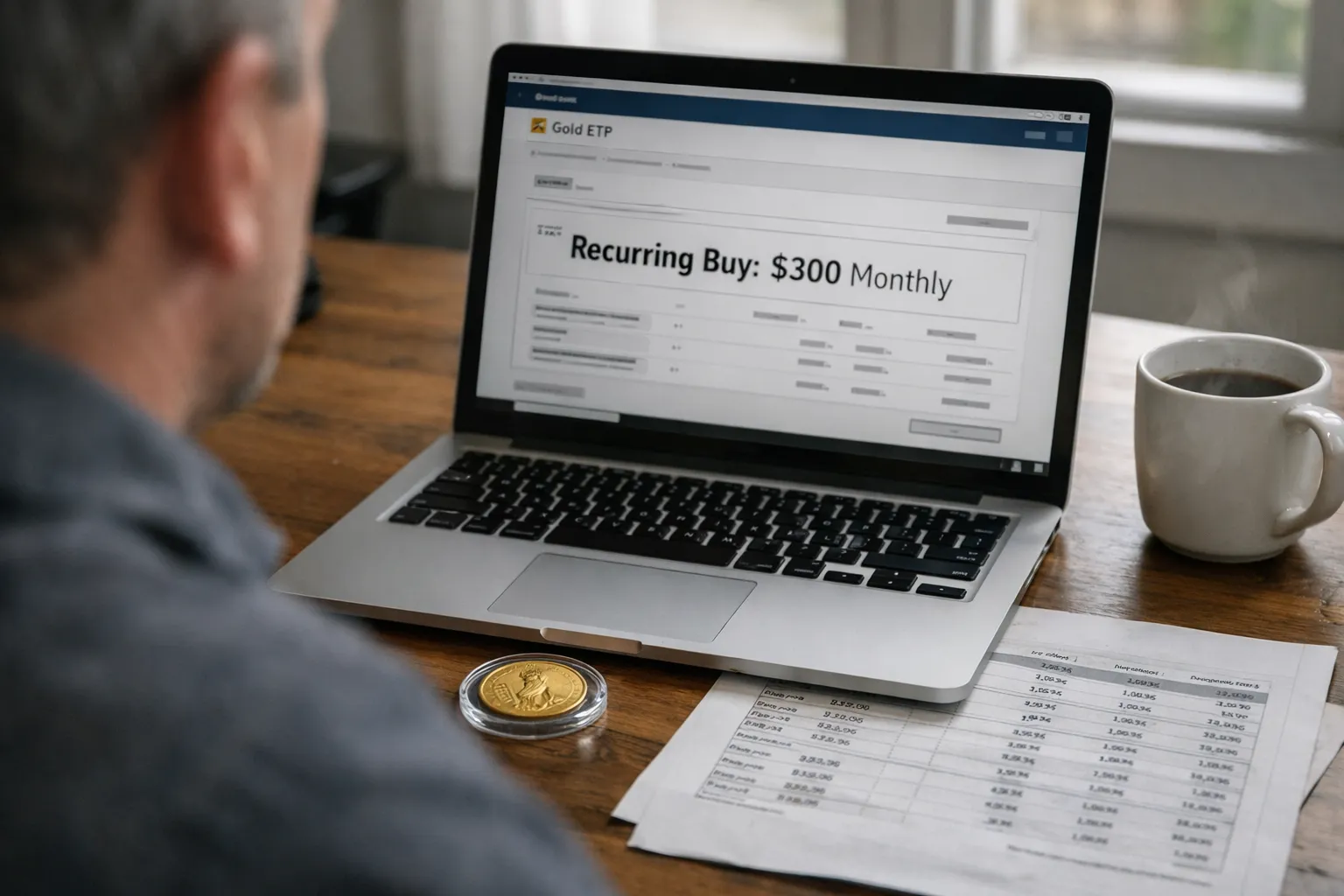
Dollar‑cost averaging (DCA) — investing a fixed sum at regular intervals — is a longstanding method for reducing timing risk. For gold investors who want steady exposure without trying to time volatile moves, a disciplined DCA program can simplify execution and control costs. This guide walks gold investors through a practical, step‑by‑step DCA plan for mid‑2026, comparing available vehicles, automation methods, realistic cost calculations, tax and recordkeeping checkpoints, and an operational checklist you can execute this week.
1. Decide your objective and horizon
Begin by clarifying why you want gold exposure and over what time frame. Common objectives:
- Portfolio diversification / inflation hedge (long horizon, 5+ years)
- Liquidity reserve or tactical allocation (medium horizon, 1–5 years)
- Speculative accumulation (short horizon)
Your objective determines vehicle choice, storage preferences and tax planning. For a long‑term allocation, allocated physical gold or low‑cost physically‑backed ETFs are typical. For shorter horizons where liquidity matters, ETFs or highly liquid digital allocated products can be preferable.
2. Choose the vehicle: pros, cons and practical selection
There are three broad ways to DCA into gold. Each has tradeoffs in costs, custody, liquidity and tax treatment.
Physical bullion (bars or government‑mint coins)
- Pros: Tangible ownership, no counterparty to a fund manager; preferred in regulatory or currency‑risk scenarios.
- Cons: Dealer premiums on purchase, resale spreads, storage and insurance costs, and potential VAT in some jurisdictions.
- Practical tip: For DCA, favor smaller, consistently available sizes (1/10 oz, 1 oz coins, or 100g bars). Kilo bars have lower premiums but are harder to buy monthly if you’re on a small budget.
Physically backed ETFs and trusts
- Pros: Trade like stocks, low operational friction, minimal incremental cost to buy via brokerage, frequently smaller spreads than dealer markups.
- Cons: Ongoing expense ratio, fund structure and custody counterparty risk, and possible differences in tax treatment across jurisdictions.
- Practical examples: Large, liquid funds remain the easiest to DCA through brokerage platforms. When selecting, compare expense ratio, average daily volume (liquidity), and the fund’s disclosure on physical holdings.
Allocated digital gold and vault token providers
- Pros: Often combine electronic convenience with allocated physical backing; some services provide insured custody and proof of allocation.
- Cons: Varying levels of transparency, sometimes higher running fees, and regulatory treatment differs across countries.
3. Set the mechanics: frequency, amount and start date
Common frequencies are weekly, biweekly or monthly. Practical considerations:
- Choose an interval that matches cash flow—monthly often aligns with pay cycles and is simplest for recordkeeping.
- Set an amount you can sustain regardless of price moves. The power of DCA comes from consistency, not frequency.
- Pick a start date and automate where possible to remove decision friction.
Example: A conservative investor might commit $300 per month for five years. A tactical investor could use $1,000 monthly with quarterly rebalancing.
4. Cost comparison: build a simple monthly ledger
Costs differ by vehicle. Build a simple monthly cost model before you start. Key line items:
- Purchase cost: dealer premium (physical) or spread/commission (ETFs)
- Running costs: storage & insurance (physical) or ETF expense ratio
- Exit costs: dealer buyback spread or brokerage commission/slippage on ETF sale
- Taxes: capital gains, VAT, or collectibles tax (jurisdiction‑specific)
Illustrative example (figures are examples for planning, not guarantees):
- Physical 1‑oz coins: dealer premium 4% at purchase, resale spread 3%, storage & insurance 0.3%/yr.
- Large physical ETF: fund expense 0.20%–0.40%/yr, bid/ask spread negligible on liquid ETFs, brokerage commission zero with many brokers.
Using a simple spreadsheet, project total cost over your horizon. For many investors the lower ongoing drag of an ETF outweighs higher initial premiums of physical when investing small monthly sums; physical becomes more cost‑efficient at larger lump sums (e.g., kilo bars).
5. Automate purchases and build execution rules
Automation reduces behavioral risk. Options:
- Brokerage recurring buys: set up a monthly buy order for an ETF (specify market, limit, or dollar amount if the broker supports fractional shares).
- Dealer auto‑ship: some bullion dealers offer monthly purchase plans with invoicing and optional storage enrollment.
- Bank or payment provider standing order into a digital gold provider.
Execution rules to avoid slippage:
- Use limit orders if spreads are wide or volumes thin; market orders are usually fine for highly liquid ETFs.
- If buying physical through a dealer, request a fixed sale price window (e.g., quote valid for 24 hours) to avoid surprise premiums.
- Track payment and settlement dates to ensure you don’t miss a purchase cycle.
6. Taxes and recordkeeping
Tax rules vary. Key points every gold investor should note:
- Keep a purchase log with date, vehicle, quantity, purchase price (in local currency), fees and storage costs. This simplifies capital gains calculations.
- In the United States, physical gold and some ETFs are taxed as collectibles with a higher long‑term capital gains rate (up to 28%). Consult a tax advisor for your jurisdiction.
- Some countries charge VAT on physical bullion purchases (or allow exemptions for bars but not coins). Electronic gold platforms and ETFs may be VAT‑efficient in Europe; check local rules.
Tip: When you rebalance or sell, retain original purchase invoices and settlement confirmations. Accurate records reduce tax disputes and allow you to calculate annualized returns precisely.
7. Storage and security choices for physical DCA
If you choose physical bullion, decide between home storage and professional vaulting:
- Home: immediate control, but requires secure storage (safe rated for burglary/fire) and separate insurance. Home storage can complicate estate planning and may have higher insurance premiums.
- Professional vault: insured custody, third‑party audits, and easier verification for resale. Fees usually charged as a fixed annual storage fee or percentage of value.
When using a vault provider, verify:
- Insurance scope (including transit and theft)
- Independent audits and chain‑of‑custody reporting
- Withdrawal and delivery fees and lead times
8. Monitoring, rebalancing and exit rules
Set rules before you start to avoid emotional reactions:
- Monitoring cadence: quarterly performance check with a simple dashboard (total invested, market value, IRR).
- Rebalancing: if gold drifts from target allocation by a preset threshold (e.g., ±3–5%), rebalance using new DCA funds first, then partial sales if necessary.
- Exit triggers: define conditions to pause or stop DCA (e.g., you reach target allocation, changes in tax law, or a change in personal financial circumstances).
9. Common pitfalls and how to avoid them
- Chasing price moves: DCA removes the need to time the market. Avoid changing amounts based on short‑term price action.
- Poor vehicle choice: high fees or opaque custody can erode returns. Evaluate total cost over your planned horizon, not just headline convenience.
- Neglecting tax consequences: selling without understanding tax treatment can reduce realized gains substantially—plan with a tax professional.
- Underestimating liquidity needs: if you might need cash soon, prefer liquid ETFs or keep a small cash buffer to avoid forced sales during stress.
10. A simple starter plan you can implement this week
Follow these 7 practical steps to launch a DCA program:
- Set objective and horizon (e.g., 10% portfolio allocation over 3 years).
- Choose vehicle (ETF for monthly $200–$1,000 plans; physical for lump sums or investors prioritizing possession).
- Decide frequency and amount (monthly on payday; e.g., $300/month).
- Open or confirm brokerage/dealer account; enable recurring buy or standing transfer.
- Document cost assumptions in a spreadsheet (premiums, expense ratios, storage fees, expected tax rate).
- Automate the purchase and set limit/market order preferences.
- Schedule quarterly reviews and keep purchase receipts and statements in a designated folder.
Conclusion
Dollar‑cost averaging into gold is a practical, low‑emotion way to build exposure over time. The right choice of vehicle depends on scale, liquidity needs and tax residence. For small, regular sums, low‑cost physically backed ETFs frequently offer the lowest friction; for larger, long‑term allocations, allocated physical gold with professional vaulting can be cost‑effective. Whatever route you choose, the fundamentals are the same: set clear objectives, automate purchases, mind total costs (purchase + running + exit fees), keep meticulous records for taxes, and follow pre‑set rebalancing and exit rules.
Start with a realistic plan you can sustain. The value of DCA is not predicting the short‑term direction of gold, but removing human timing error and building exposure through a proven, repeatable process.