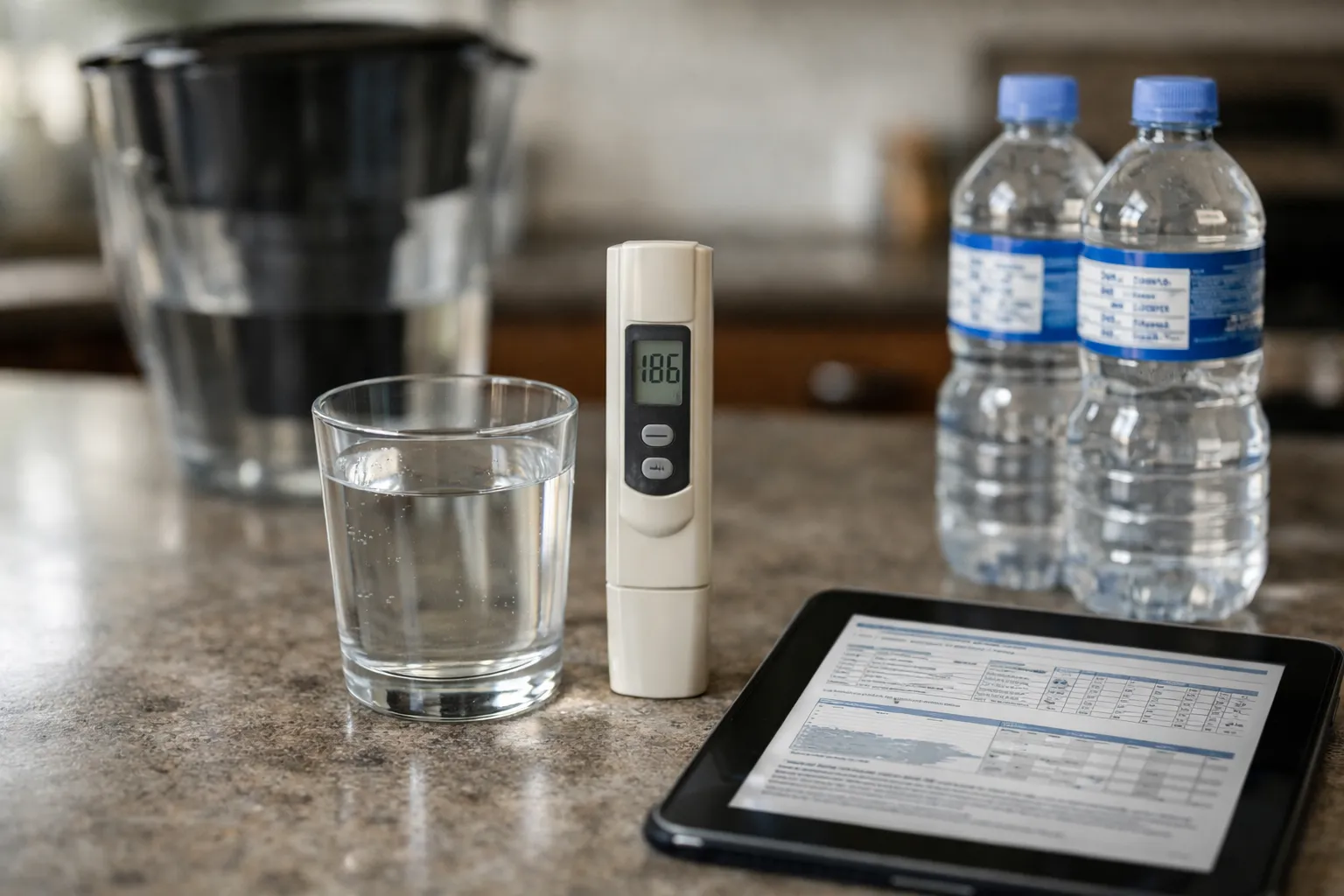
Water is an invisible ingredient with outsize influence on baking and brewing. In 2026 more home cooks and specialty coffee enthusiasts are treating water as a routine variable because utilities, technology and product choices have changed—and so have the consequences for dough, extraction and equipment longevity. This guide shows food enthusiasts how to test kitchen water, interpret the numbers for bread, coffee and tea, pick contemporary treatment options, and adjust recipes to get consistent, repeatable results.
Who should read this and why it matters now
This article is for home bakers, coffee lovers, tea drinkers and anyone who wants predictable results from their ovens, kettles and espresso machines. Since 2021 U.S. regulatory changes and wider adoption of disinfectants like chloramine, plus greater consumer uptake of point-of-use (POU) systems, have made water chemistry more variable at the tap. At the same time, higher‑efficiency RO systems, catalytic-carbon filters and commercial remineralization products have become mainstream tools you can buy and use at home. Understanding your water in 2026 saves flavor, time and machine repairs.
Prerequisites / What you should know before testing
- Have a clean sample container (glass or food‑grade plastic) and understand whether your water is municipal or from a private well.
- Gather basic test tools: a digital TDS meter, pH meter or strips, and hardness test strips. Smartphone-connected test kits and lab services are more accessible now if you want detailed mineral breakdowns.
- Know if your home uses softened water or has a treatment system already. Ion‑exchange softeners change sodium levels; RO systems produce very low‑mineral water.
- If your plumbing predates 1986 or you have a lead service line, prioritize lead testing. Updated federal rules have pushed many utilities to inventory and replace lead lines—check your utility’s website for local programs.
Step 1 — Test your water: practical options (from quick to precise)
Follow this sequence to build a reliable profile:
- Pull your municipal water-quality report. Find your Consumer Confidence Report (CCR) or latest water quality page on the utility website. It lists disinfectant type (chlorine vs. chloramine), typical pH range, and often hardness or alkalinity. If you have a private well, obtain the most recent lab results or order a well test from a state-certified lab.
-
Do basic home tests. Buy or borrow:
- a TDS meter (digital) for ppm readings;
- hardness strips (give Ca+Mg in mg/L or ppm as CaCO3);
- a pH test kit or handheld pH meter;
- chlorine/chloramine test strips if your CCR indicates disinfectant residuals are present.
- Order a lab mineral panel if you need precision. For recipe tuning and equipment decisions, a certified lab report that lists calcium, magnesium, sodium, sulfate and alkalinity is valuable. Labs typically return results in days and are inexpensive compared with equipment repairs or repeated trial-and-error.
- Test for safety contaminants when appropriate. If you have older plumbing, galvanized lines, or a private well, get lab tests for lead, nitrates and bacteria. These are safety tests, not flavor checks.
Step 2 — How to read the numbers (what matters for food)
Focus on five measurements and what they mean in the kitchen:
- Total Dissolved Solids (TDS) — overall mineral load, reported in ppm. Low TDS can produce weak coffee extraction and slack dough; very high TDS can mute coffee acidity and accelerate scale formation.
- Hardness (calcium + magnesium) — strengthens gluten and supports yeast. Common ranges (mg/L CaCO3): soft 0–60, moderately hard 61–120, hard 121–180, very hard >180. These classifications remain useful for recipe adjustments.
- Alkalinity (bicarbonate) — buffering capacity, expressed as mg/L CaCO3. High alkalinity resists acid development in sourdough and mutes coffee and tea brightness.
- pH — most drinking water is 6.5–8.5. It affects fermentation kinetics and tea/coffee extraction but is usually less important than alkalinity.
- Disinfectants (chlorine/chloramine) — even low levels can cause off‑flavors and inhibit yeast. Chloramine is more common now because utilities use it to reduce disinfection byproducts; it requires special carbon media (catalytic carbon) or certified filters for removal.
Step 3 — Choose a treatment strategy (2026 options and updates)
Your goal determines the solution: remove disinfectants, reduce hardness/scale, or create a neutral baseline water you can consistently remineralize.
Contemporary options and when to use them
- Activated-carbon pitcher or under‑sink carbon block — inexpensive; removes free chlorine and improves taste. For chloramine, select a filter specifically labeled for chloramine removal (look for catalytic carbon or specific chloramine reduction testing).
- Catalytic-carbon or carbon-block POU filters certified for chloramine — recommended where utilities use chloramine. Check NSF/ANSI test claims on packaging for chloramine reduction.
- Under‑sink reverse osmosis (RO) with permeate pump or booster — produces very low‑TDS water. Modern systems (2024–2026 models) have improved recovery rates (lower wastewater) and faster flow; look for systems with permeate‑pump or high‑efficiency membranes to reduce waste water to close to 1:1 or better.
- Remineralization cartridges and commercial mineral blends — widely used in specialty coffee. Brands and concentrated mineral packets (e.g., Third Wave Water and similar formulations) let you add controlled calcium, magnesium and bicarbonate back into RO water for reproducible extraction. Many baristas now use these for competition‑level consistency.
- Ion‑exchange water softeners — remove hardness but replace Ca/Mg with sodium or potassium. Softened water protects boilers but can alter flavor and dough behavior; avoid using softened water for baking or drinking unless you account for added sodium.
- Whole‑house systems — protect appliances and address taste at the point of entry. If scale and machine longevity are priorities, combine whole‑house scale control with POU carbon/chloramine treatment and a separate RO + remineralization for brewing/baking.
Practical modern recommendations
- If your water is chlorinated and you mostly brew coffee/tea, start with a certified carbon filter. For chloramine, use a catalytic-carbon filter designed and tested for chloramine reduction.
- If scale is your main issue for kettles and espresso machines, choose a POU RO with a high‑efficiency membrane and remineralization cartridge for brew water. This protects machines while preserving flavor when you remineralize to a known profile.
- If you have a water softener, keep an alternate unsoftened source for cooking and brewing (bottled or RO + remineralized) because sodium from softening can affect dough and taste.
Step 4 — Tailor recipes and technique to your water
Once you know your profile, make measured adjustments. Always change one variable at a time and document results.
Bread and dough
- Low-calcium (very soft) water: gluten may be slack. Increase mixing time and, if needed, reduce dough hydration by 1–2 percentage points or add a small, measured amount of a commercial calcium salt used for baking. Test small batches before scaling up.
- Hard/high-alkalinity water: fermentation can be faster and loaves tighter. Shorten bulk ferment and proof times and use a lower-alkalinity water or blend RO with tap water for long ferments to preserve sourdough acidity.
- Softened water: because sodium replaces Ca/Mg, reduce added salt by 5–10% and expect weaker gluten; consider using unsoftened water for mixing if flavor and crumb are priorities.
- For consistency: adopt a baseline water (filtered or bottled with known label) when testing recipe changes and record hydration, dough temperature and proof times.
Coffee
- Flat, under-extracted cups: your water may be too low in minerals. Remedy with a commercial remineralizer, a small percentage blend of tap with RO water, or a bottled spring water with moderate mineral content.
- Dull or soapy cups: check alkalinity. High bicarbonate buffers acidity; use lower-alkalinity water for lighter roasts and single-origin brews.
- Chlorine/chloramine off‑flavors: always use carbon‑treated water for brewing.
- Espresso machines: follow manufacturer water guidelines. Many manufacturers in 2026 recommend POU RO with controlled remineralization and regular water testing; consult your manual and service recommendations to balance scale control with corrosion risk.
Tea
- Green and white teas: prefer low-to-moderate hardness and low alkalinity to preserve delicate aromatics. Filtered or low‑alkalinity bottled water helps.
- Black tea: more robust and forgiving, but still benefits from chlorine-free water for clear flavor.
Step 5 — Practical workflows for modern home kitchens
Two repeatable setups depending on how much effort you want to invest:
- Everyday home cook: Use a certified under‑sink carbon block or a high‑quality pitcher for chlorine removal. Keep one branded bottled spring water with a transparent mineral label for delicate teas or recipe tests. This approach fixes most taste issues with minimal installation.
- Serious home baker/coffee enthusiast: Install a POU RO system with a permeate pump and a dedicated remineralization cartridge. Use the RO + remineralized water as your baseline and keep measured mineral packets for fine tuning. Maintain a log of water profile, recipe adjustments and tasting notes.
Maintenance, sustainability and safety updates
- Replace filters and membranes on schedule. Modern RO units and filters include smart indicators or app alerts; follow manufacturer timelines. Expired filters can breed bacteria or fail to remove chloramine.
- RO wastewater: newer systems are more efficient, but RO still produces waste. Choose a high‑efficiency system, route reject water to toilets or plants where appropriate, or consider blended approaches (partial RO + tap) to reduce waste.
- Bottled water: convenient but not always preferable. Studies have repeatedly found microplastics in some bottled waters and labels can vary—use bottled water sparingly for testing or special cups, and prefer recyclable or refillable containers when possible.
- Safety first: if tests or municipal notices show lead, nitrates or bacterial contamination, follow public-health guidance immediately. Use devices certified for those contaminants while arranging remediation and check your utility’s lead service line replacement program.
Common mistakes to avoid
- Assuming "clear" tap water is neutral for brewing—taste and buffering matter.
- Using softened water for baking or drinking without accounting for added sodium.
- Buying an RO system without planning for remineralization—very low‑mineral water can produce flat coffee and aggressive corrosion in some machines.
- Ignoring certifications—look for NSF/ANSI claims for chlorine, chloramine and contaminant reduction where relevant.
Pro tips
- Document everything: keep a small log of water profile, filter changes, recipe tweaks and tasting notes. Reproducibility is the goal.
- For coffee, start with a small mineral packet (or 10–30% tap with RO) and adjust incrementally—big jumps change extraction and flavor unpredictably.
- If you pull many espresso shots weekly, invest in a dual approach: whole‑house scale control plus a POU RO + remineralizer just for the machine.
- When buying bottled water for testing, choose brands that list calcium, magnesium and alkalinity. If labels are absent, don’t rely on that product for controlled experiments.
Quick troubleshooting checklist
- Coffee tastes chlorine-y: switch to carbon-treated water and test for chloramine; use catalytic-carbon if your utility uses chloramine.
- Bread proofs too fast and is tight: check for very hard water or high alkalinity; shorten proof times or use a blended lower-alkalinity water.
- Scale forms quickly: install dedicated POU scale control (RO or softening) for kettles and espresso machines and descale on the manufacturer schedule.
- Tea tastes dull or soapy: try lower-alkalinity or bottled spring water with low bicarbonate.
Choosing bottled water as a shortcut (2026 guidance)
If you need a reliable one-off source for recipe testing, select a spring water that lists mineral values. Prefer moderate calcium and magnesium (not zero), low alkalinity, and low sodium. Use bottled water deliberately for testing—not as a long‑term sustainability solution.
Final notes
Water is a tunable ingredient and treating it intelligently is now easier and more important than ever. Spend 30–90 minutes testing your tap, pick an appropriate POU treatment, and run a few controlled taste tests. In 2026 there are more options—catalytic carbon for chloramine, higher‑efficiency RO units, and standardized remineralization products—so you can achieve both reliable flavor and machine protection. Document your water profile and your recipe adjustments: once you dial it in, your loaves, cups and kettles will reward you with consistent performance.
FAQ
How often should I test my kitchen water?
For flavor-focused users, test basic parameters (TDS, hardness, pH) annually or after any noticeable taste change. Test immediately if your utility issues a boil-water advisory, changes disinfectant, or you replace plumbing. If you rely on a private well, test for bacteria/nitrate annually and after any flooding or nearby construction.
Is reverse osmosis always the best choice for coffee?
Not always. RO gives you a clean baseline to precisely remineralize, which is ideal for specialty coffee and repeatability. But untreated RO is too low in minerals for good extraction and can produce more wastewater. For casual brewers, a quality carbon filter or a modest bottled spring water may be simpler and more sustainable.
Will a water softener protect my espresso machine?
Ion‑exchange softeners reduce scale by removing calcium and magnesium, protecting boilers. However, they replace those ions with sodium or potassium, which can affect taste and dough. A common practice is to use whole‑house softening for plumbing protection and a dedicated POU RO + remineralization for brewing to balance machine longevity and flavor.
Can I use bottled spring water every day to brew coffee?
You can, but consider cost, sustainability and label transparency. Bottled water varies widely; choose brands that publish mineral content and avoid products with unusually high alkalinity or sodium. For daily use, a properly sized POU system with remineralization is usually a better long‑term solution.
What certifications should I look for when buying filters?
Look for NSF/ANSI certifications relevant to your concern: 42 for chlorine taste/odor, 53 for certain contaminant reductions, and manufacturer test claims for chloramine if applicable. For lead or microbial concerns, use devices certified specifically for those contaminants. Always verify claims on the NSF directory or the manufacturer’s certified data sheet.