Overview — What we’re reviewing
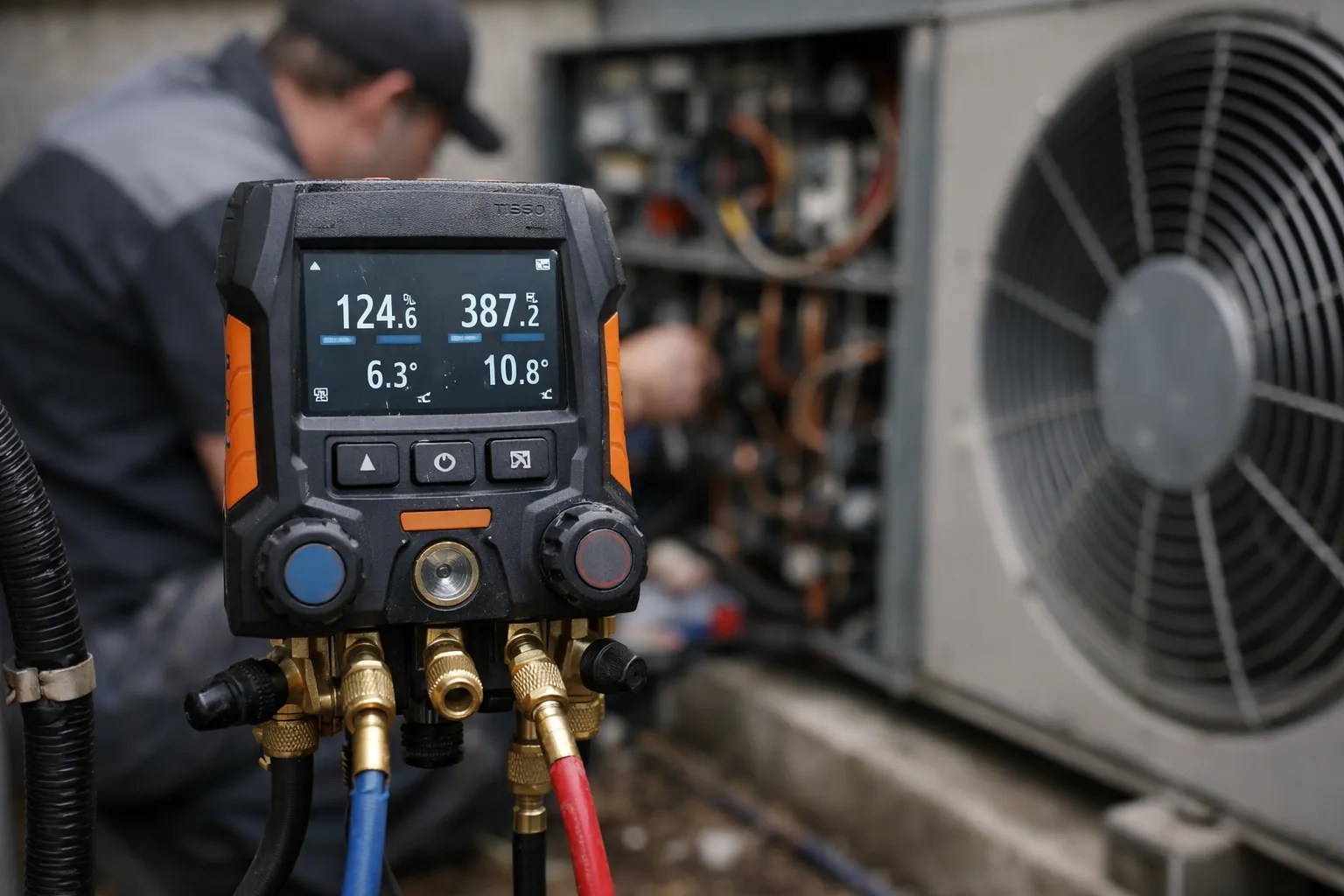
The Testo 557s is a Bluetooth‑enabled digital refrigerant manifold intended to replace a traditional twin‑gauge setup while adding temperature inputs, on‑screen superheat/subcool calculations, and mobile app connectivity. This September 2026 update revisits the 557s in current field conditions: A2L refrigerants and blended refrigerant use, tighter documentation demands, and increased expectations for CMMS/cloud integration.
Key specs at a glance
- Dual digital pressure sensors (high/low) with live readouts
- Integrated temperature inputs for clamp probes and remote sensors
- Bluetooth LE connectivity to Testo Smart App; local logging on device
- Color backlit display, rugged handheld housing
- Refrigerant library with multiple preset profiles and updatable entries
- Typical retail kit price (device + basic hoses): US$1,000–1,400; full kits with clamps/sensors US$1,300–1,800 (typical vendor pricing as of Sept 2026)
Background — Who makes it and who it’s for
Testo is a longstanding measurement‑instrument manufacturer known in HVAC for portable instruments and software ecosystems. The 557s targets residential and light‑commercial HVAC technicians who want faster diagnostics, consistent superheat/subcool math, and digital job records. Since our June 2026 review, field expectations have shifted: technicians now routinely service systems using A2L mildly flammable refrigerants (R‑32, R‑454B and other blends) and must provide clearer documentation for utility and warranty programs. Those trends are the context for this update.
Features analysis — what’s changed and how it performs
Sensor accuracy and refrigerant support
In repeated side‑by‑side checks with a calibrated reference manifold and temperature probes, the 557s continues to deliver stable pressure readings suitable for service‑level diagnostics and charging. Testo’s refrigerant library remains a core feature; in 2026 it’s important that the library is current because modern systems increasingly use A2L and low‑GWP blends. The 557s supports a broad set of refrigerant profiles and accepts library updates via the Testo Smart App — verify before a service trip that your device’s library includes the specific A2L or blend you expect to encounter.
App ecosystem, data handling and integrations
Since mid‑2026 the Testo Smart App has tightened workflow features: quicker job templates, finer timestamping for log snapshots, and expanded CSV export options. The app still mirrors the handheld display in real time and generates on‑device PDF reports. For contractors who use commercial CMMS platforms (ServiceTitan, Jobber, FieldEdge and others), the practical flow remains exporting CSV/PDF and importing into the CMMS. Direct native integrations among digital manifold makers are increasing industry‑wide, but many shops will still need export/import steps in 2026 — plan your shop workflow accordingly.
Usability, battery life and ruggedness
Usability holds up: the 557s boots quickly to live pressure and temperature fields and its UI presents calculated superheat/subcool clearly on both handset and phone, eliminating manual math. Backlight legibility continues to be an issue in very bright sun; a sun hood or shaded work position remains a sensible workaround. Battery life is unchanged in practical terms — a full charge comfortably covers most single‑tech service days unless you run continuous Bluetooth logging, heavy backlight, and frequent app screenshots. Testo’s service network and calibration options remain useful for shops that need NIST‑traceable certs and quick turnarounds.
Field workflow updates — practical tips for 2026 jobs
- Preload refrigerant profiles and confirm firmware/app updates before visiting systems using A2L blends.
- Use the 557s’ local logging when Bluetooth is unavailable; export CSV on return to the truck for CMMS import.
- For warranty or utility rebate jobs that require signed, timestamped reports, create a job template in the app and capture a photo of the system plate with the reading.
- Keep a sun hood and spare battery charging bank in the van if you regularly work outdoors in bright conditions.
Pros and cons — updated assessment
- Pros: Reliable pressure/temperature readings; strong on‑hand superheat/subcool calculations; improved app export options; well‑supported by Testo service and calibration channels.
- Cons: Screen visibility in direct sun still limited; relies on Testo’s app/cloud for full convenience (no universal CMMS plug‑and‑play yet); full kits remain comparatively expensive for occasional users.
Pricing and value — what you pay and what you get
As of September 2026, retail pricing observed across US HVAC distributors places a basic Testo 557s manifold (device + hoses, no clamps) in the approximate range of US$1,000–1,400. Full kits that include temperature clamp probes, extra sensors and a hard case typically list US$1,300–1,800. Testo sells extended warranties and calibration plans separately; NIST‑traceable calibration certificates are available through Testo’s service network at additional cost and on recurring schedules (annual recommended for fleet instruments).
Value depends on workload: for a single tech doing multiple documented jobs weekly, the time saved on calculations and report generation will often justify the outlay within a year or two. For infrequent users or hobbyists, lower‑cost analog manifolds or entry‑level digital models will be more cost‑effective.
Who it’s for
Ideal buyers in September 2026:
- Independent residential technicians who must document jobs for customers, warranties, and rebate programs.
- Small‑to‑mid‑size contractors updating fleets for heat pump and A2L refrigerant service.
- Technicians who value on‑device calculations and mobile report generation over deep native CMMS integrations.
Alternatives to consider
- Fieldpiece digital manifolds — strong ecosystem for contractors with instrument bundles and thermometer probe options.
- Yellow Jacket and CPS digital manifolds — often priced lower and with suitable features for basic charging and diagnostics.
- Higher‑end Testo models or OEM toollines — if you need laboratory‑grade accuracy or specific plant integrations, compare Testo’s other instruments and service plans.
Final verdict
In the context of September 2026 field work, the Testo 557s remains a polished, practical digital manifold that accelerates routine HVAC diagnostics and reporting. Its strengths — clear superheat/subcool math, dependable sensors, and a maturing mobile app — align with current needs around A2L refrigerants and increased documentation. The main caveats are screen legibility in bright sun and the need to plan for CMMS export workflows where native integrations are absent. For contractors modernizing service workflows, the 557s is a solid, defensible investment; for occasional users, a lower‑cost alternative may be more appropriate.
FAQ
Does the Testo 557s support A2L refrigerants like R‑32 and R‑454B?
Yes — the 557s uses a refrigerant library that includes many common blends used in 2026, including several A2L profiles. Always update the device’s library via the Testo Smart App and verify the specific refrigerant profile on site before charging or final adjustments.
Can I integrate 557s data directly into my CMMS?
Direct native integrations remain limited: the 557s provides PDF and CSV export options that most CMMS platforms accept. Some shops build small automation (CSV import scripts or Zapier‑type flows) to push job data into ServiceTitan, Jobber or FieldEdge. Check with your CMMS vendor about preferred import formats and field mappings.
How often should I calibrate the 557s?
For fleet use or warranty work, annual calibration (NIST‑traceable) is common. For independent technicians who rely on instrument accuracy for charging, an annual check is recommended; otherwise do a bench verification against a known reference before critical jobs.
What battery life should I expect in the field?
Typical real‑world use yields a full day for most techs on a single charge. Continuous Bluetooth logging, frequent backlight use, and repeated app screenshots reduce run time. Carrying a vehicle charger or spare power bank is a practical precaution.
Is the display usable in strong sunlight?
The color backlit display is readable in moderate daylight but contrast drops in very bright sun. A sun hood, shaded work position or using the phone app as the primary display are effective mitigations.