
Overview — What we're reviewing
The Tojiro DP Gyuto is a VG‑10–cored, sanmai‑style Japanese chef’s knife made in Niigata (Tsubame‑Sanjo). This August 2026 update checks current street prices, real‑world cutting performance, maintenance best practices in 2026, marketplace shifts since the spring, and practical buying safeguards so you can decide whether the DP still earns its mid‑range reputation.
Background — Who makes it and who it's for
Tojiro is a long‑established Japanese maker headquartered in Niigata prefecture. The DP line targets serious home cooks who want authentic Japanese construction and consistent factory geometry without boutique prices or exotic powdered steels. The DP remains a workhorse choice for cooks who sharpen their own blades and want a practical daily knife.
What you get: specifications and construction
- Blade steel: VG‑10 stainless core with softer stainless cladding (sanmai). Tojiro has not moved the DP to powdered steels; the DP remains VG‑10 as of Aug 2026.
- Hardness: ~58–61 HRC (factory variance). Expect ~60 HRC on typical DP gyutos.
- Sizes: Common: 210 mm and 240 mm. Smaller petty sizes (180 mm) still available in the line.
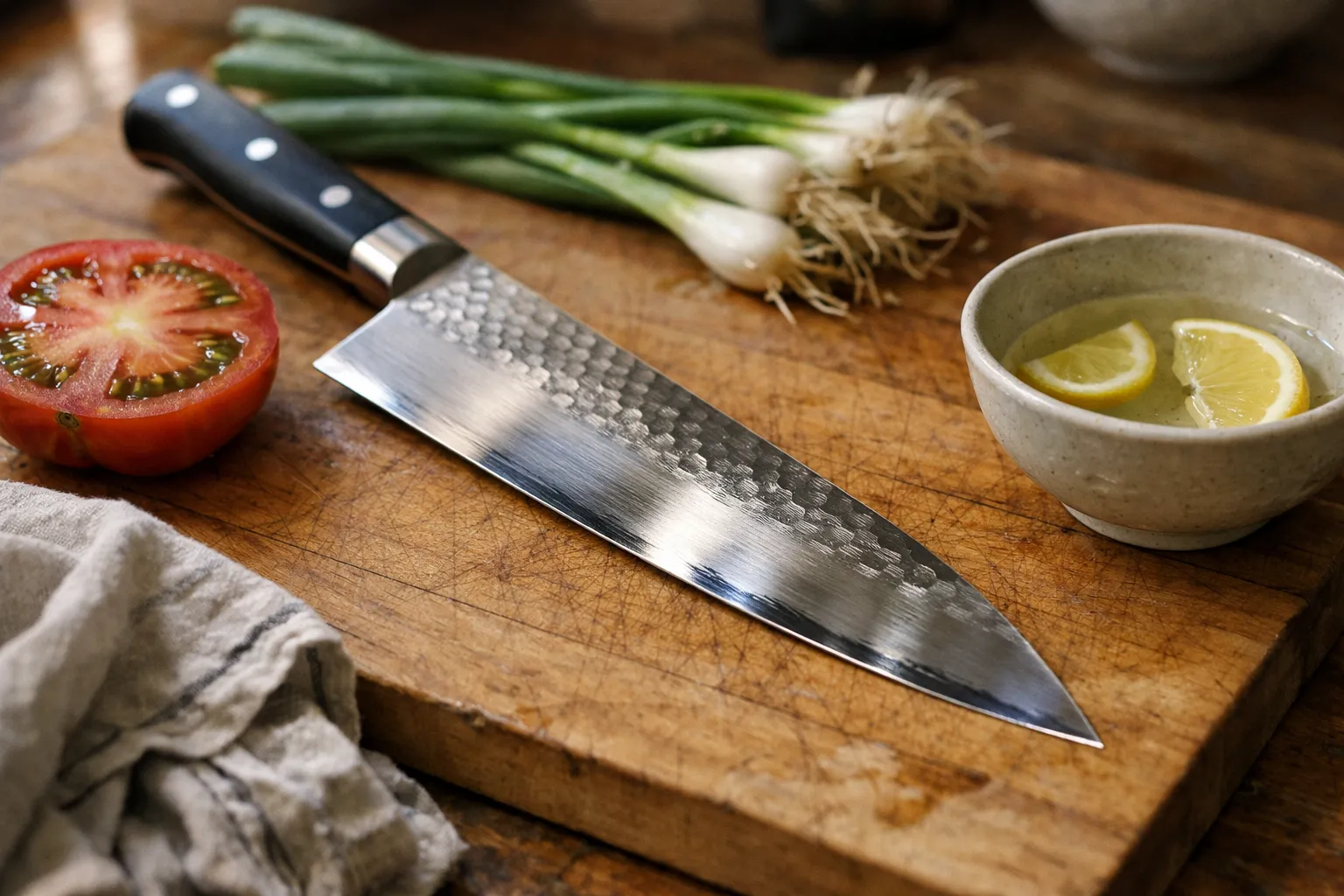
- Finish: Polished or tsuchime (hammered). Tsuchime models reduce sticking and remain popular in bundle listings.
- Handle: Resin western D or octagonal handles — durable, low‑maintenance, not premium wood.
- Price (Aug 2026): Typical street prices have edged up since spring: expect roughly $95–$160 for a 210 mm DP and $140–$220 for hammered or 240 mm variants, depending on seller, regional taxes and occasional sales.
Features analysis — Cutting performance and use
Geometry remains the DP’s strength. The factory edge is a medium‑thin Japanese profile (about 15° per side), which balances acute cutting with everyday toughness. In kitchen testing and user reports in 2026, the DP continues to excel at routine chef tasks:
- Slicing proteins: Clean, controlled slices for poultry, fish and roast; when freshly sharpened the DP competes with higher‑priced mid‑range knives for slicing performance.
- Vegetable work: Balanced blade and moderate belly suit both rocking and push‑cut techniques used in home prep.
- Edge retention: VG‑10 holds a practical edge for its price class. For daily home use (no bones/frozen), expect several weeks between wet‑stone touch‑ups; ceramic honing every 1–3 weeks is typical.
Limitations remain unchanged: the DP is not a specialty sashimi slicer nor a bone‑on butcher’s blade. The ~60 HRC VG‑10 core can chip if used on frozen foods or struck against bone.
Ergonomics, balance and maintenance (2026 updates)
Weight and balance remain modest and user‑friendly. Resin handles are sanitary and low‑maintenance but offer less warmth and micro‑fit than wooden handles on premium models.
Maintenance in 2026: guided sharpening systems and affordable Japanese water‑stones have continued to improve. For most owners the practical sequence is:
- Reprofile on a 1,000 grit stone only if necessary (factory bevels are serviceable).
- Use a 3,000–6,000 grit stone to restore and polish the edge; finish at 8,000+ if you prefer a mirror polish and finer bite.
- Ceramic rod or strop for between‑use maintenance — but do not rely on rods to replace wet‑stone work.
Newer, budget guided systems and inexpensive flattened stones make it easier for beginners to maintain a consistent edge, but nothing matches the control of freehand wet‑stone sharpening for long‑term edge geometry.
Market context and trends (2024–Aug 2026)
- Powdered steels in mid‑range: The shift of some mid‑range brands to powdered stainless (SG2/SG3 equivalents) that began in 2024 continued into 2026. That narrows the performance gap at higher mid‑range price points — but those knives typically cost more than a standard DP.
- Seller scrutiny and authenticity: The popularity of mid‑range Japanese knives has increased gray‑market and counterfeit listings. Buying from authorized retailers remains the most reliable way to ensure authentic finish, correct stamps and valid warranty coverage.
Pros and cons — Specific evidence
- Pros: Real Japanese manufacture; reliable VG‑10 core and repeatable factory geometry; broad size options; widely available at predictable prices; low‑maintenance handle materials.
- Cons: Resin handle lacks premium feel; VG‑10 isn’t the longest‑holding steel compared with powdered options; counterfeit and gray market listings are a persistent buyer risk.
Pricing and value
Street prices in August 2026 typically run $95–$160 for 210 mm DPs; hammered or 240 mm units usually retail $140–$220. Those ranges reflect modest inflation and shipping costs since spring. Compared with mid‑range knives that now use powdered steels, the DP’s value is predictable manufacture and a serviceable, user‑friendly blade — it's still the sensible buy for cooks who want a durable daily knife without chasing the hardest possible steel.
Who it's for
- Home cooks upgrading from stamped supermarket knives and ready to practice wet‑stone sharpening.
- Food enthusiasts who want authentic Japanese manufacturing and a dependable daily chef’s knife on a budget.
- Anyone who prioritizes consistent factory geometry and low‑fuss maintenance over the final degree of razor‑thinness or maximal edge life.
Alternatives to consider
- MAC Professional (8" MTH): Thinner geometry and often sharper out of the box; typically a bit pricier but favored for slicing performance.
- Shun Classic or Premier (8"): Higher‑finish options using VG‑MAX or similar steels with premium handles — more costly but more finished presentation and fit.
- Wüsthof Classic (8"): German stainless, heavier and more forgiving for chopping and bone work; different cutting feel and edge profile.
Verdict
Updated for August 2026: the Tojiro DP Gyuto remains one of the clearest value propositions in kitchen cutlery. The competitive landscape has shifted — some mid‑range competitors now offer powdered steels — but the DP still delivers dependable Japanese manufacture, sensible geometry and approachable maintenance at a price most home cooks can justify. Buy a DP if you want a reliable, low‑fuss daily chef’s knife; avoid it if you need maximum edge‑holding or a blade built for heavy, bone‑on work.
Your rights when buying
Before you pay, read the seller’s returns and warranty policy. In the EU and UK you commonly have a statutory 14‑day right to return online purchases; in the U.S. consumer protections vary by state and seller. Buying from an authorized dealer preserves manufacturer warranty and reduces counterfeit risk — keep your invoice, original packaging and photos of maker’s stamps and serial marks. For warranty disputes or consumer‑law questions, consult a qualified attorney or your local consumer protection agency.
Next steps — Practical advice
- Choose size by typical prep: 210 mm for agility and smaller boards; 240 mm for long slices and larger veg.
- Buy from authorized dealers (examples: Korin, ChefKnivesToGo, or reputable local cutlery shops) to ensure authenticity and warranty coverage.
- Invest in a 1,000 grit base stone and a 3,000–6,000 grit finishing stone (or a guided system to learn) and practice on inexpensive blades first.
- Photograph stamps and packaging at delivery; keep receipts to support warranty or return claims.
- If you repeatedly need longer edge life for your prep, compare DP pricing to powdered‑steel mid‑range options before deciding.
FAQs
Is VG‑10 still a good choice in August 2026?
Yes. VG‑10 remains a practical, corrosion‑resistant mid‑range steel that balances edge retention and toughness. Powdered steels yield longer edge life at higher cost, but VG‑10 continues to offer strong day‑to‑day value.
How often should I sharpen a Tojiro DP?
For regular home use (daily veg and protein, no bones), expect wet‑stone sharpening every 6–12 weeks and ceramic honing every 1–3 weeks depending on use. Heavy users or cooks who do lots of slicing will need stones more frequently.
How can I avoid counterfeit Tojiro knives?
Buy from authorized retailers listed on Tojiro’s official site, check maker’s stamps and packaging, compare price to typical street ranges, and keep purchase documentation. If something looks too inexpensive to be genuine, it often is.
Should I buy the tsuchime (hammered) finish?
Yes if you want reduced drag and easier food release; the hammered finish also hides minor scratches. Choose polished if you prefer a uniform, traditional look.
Can I use the Tojiro DP on frozen foods or bones?
No. The DP’s hardness and edge geometry make it prone to chipping against frozen food or bone. Use a heavy cleaver or purpose‑built boning tool for those tasks.
Note: This article provides practical guidance but not legal advice. For warranty disputes or consumer rights specific to your jurisdiction, consult a qualified attorney or consumer protection agency.