
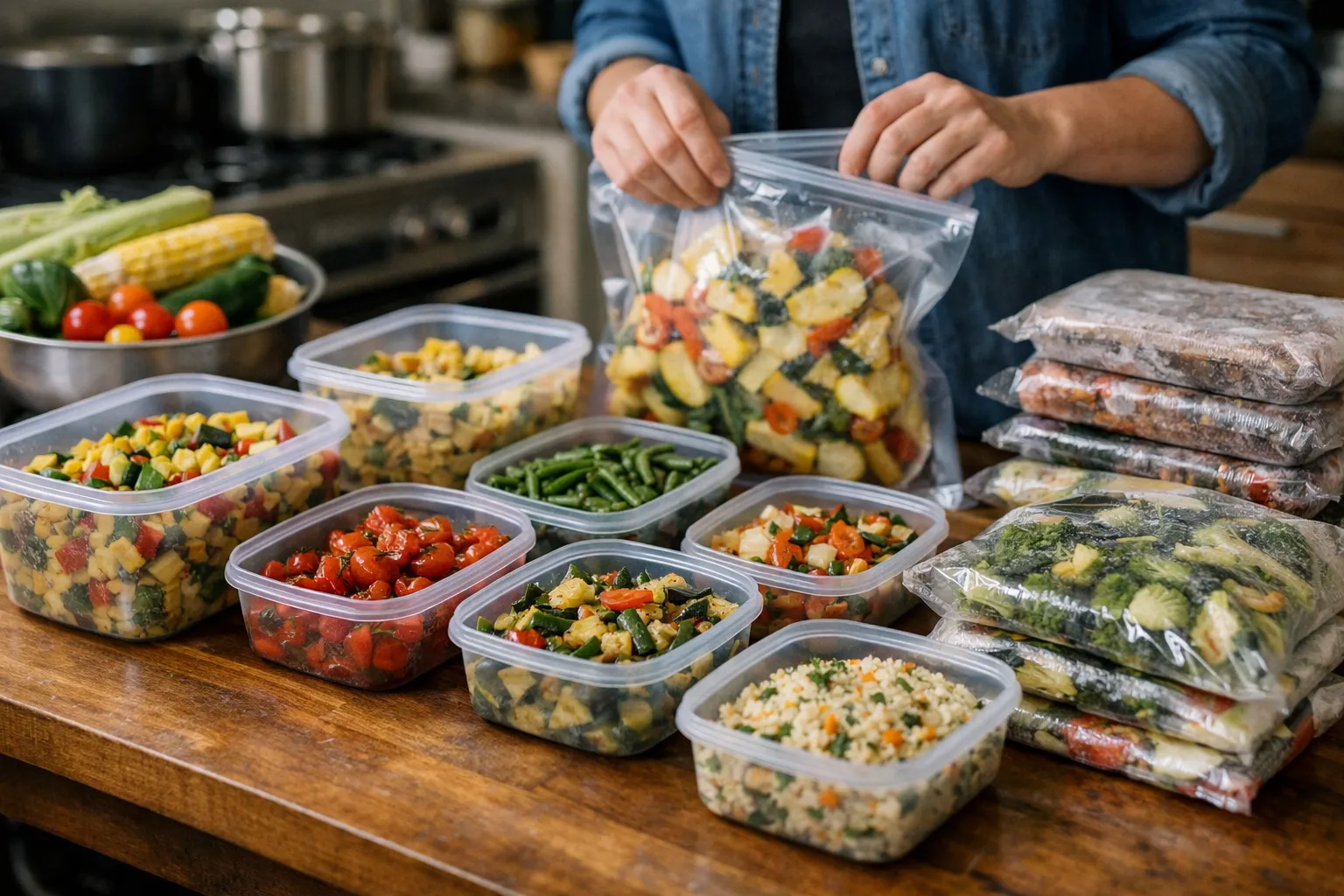
By Dr. Emily Torres — This guide shows home cooks and meal planners how to build a practical two‑week, freezer‑first meal plan that highlights summer seasonal vegetables (corn, peppers, zucchini, green beans, tomatoes prepared for freezing, summer squash, and eggplant). You’ll get a clear shopping and prep strategy, verified blanching & freezing times, packaging and labeling methods, reheating instructions and safety checks so meals stay tasty and nutritious. Research suggests freezing can preserve nutrients as well as—or better than—fresh produce that sits for days (Rickman et al., 2007; Academy of Nutrition and Dietetics). Always follow food‑safety steps below.
Prerequisites & context
Before you start, make sure you have:
- A reliable freezer that maintains 0°F (−18°C) or below and enough space for 14–20 meal portions.
- Containers: a mix of 1–3 cup freezer‑safe containers, heavy‑duty freezer bags, and (optional) a vacuum sealer.
- Tools: large stockpot, blanching basket or slotted spoon, ice bath (bowl + ice), baking sheets, sharp knives, cutting boards, kitchen scale or measuring cups, freezer thermometer and labels/marker.
- Knowledge of any household dietary restrictions (allergies, low‑sodium needs). If you have medical diet questions, consult a clinician or registered dietitian.
Step 1 — Plan the two‑week template (30–60 minutes)
Why: A simple template reduces decision fatigue and streamlines batch cooking. You’ll prep versatile bases that mix-and-match into lunches and dinners.
- Choose 4–5 base types to rotate: roasted vegetable medley, tomato‑pepper sauce, vegetable curry base, corn & bean succotash, and mixed stir‑fry veggies.
- Decide portion size: 1–1.5 cups of vegetables per meal component (adjust if serving as main vs side). For a family of two eating once daily from the freezer, plan 14 portions; for four people, plan 28 portions.
- Create a seasoning plan: freeze most bases with minimal salt. Add acid (lemon, vinegar), salt and fresh herbs when reheating to refresh flavor.
- Make a shopping list organized by prep workflow: items to blanch (green beans, corn, peas), items to roast (eggplant, zucchini, bell peppers), and items to cook down into sauces (tomatoes, onions, peppers).
Step 2 — Sourcing and selecting summer vegetables
Why: Fresh, ripe produce gives best flavor and nutrient density. Buying in season lowers cost and environmental footprint.
- Where to shop: farmer’s markets, CSA boxes, or grocery chains with proven turnover for fresh produce. Look for firm, brightly colored vegetables without soft spots.
- Quantity rule of thumb: For 14 portions, plan ~8–10 lb of mixed vegetables total (yields depend on cooking method—roasting reduces weight by ~20–30%).
- Special notes: Tomatoes are best frozen after cooking (sauces or roasting) because raw freezing alters texture. Leafy greens freeze well when blanched and squeezed dry (e.g., chard, spinach), but use them in mixed dishes rather than as standalone salads.
Step 3 — Blanching & pre‑cooking (90–150 minutes)
Why: Blanching stops enzymes that degrade color, flavor and nutrients; it noticeably improves frozen texture for many vegetables (National Center for Home Food Preservation — NCHFP).
Follow NCHFP blanching times as a baseline. These are approximate; adjust for size:
- Beans, asparagus, broccoli florets: 3 minutes
- Sliced carrots: 2–3 minutes
- Peas: 1.5–2 minutes
- Corn kernels: 4 minutes
- Zucchini & summer squash (sliced): 1–1.5 minutes
Step‑by‑step:
- Bring a large pot of water to a rolling boil; prepare an ice bath in a separate large bowl.
- Work in batches: add prepared vegetables to boiling water for the blanch time, then immediately transfer to the ice bath to stop cooking.
- Drain thoroughly and pat dry—excess water increases freezer ice crystals and harms texture.
For roasting‑to‑freeze (peppers, eggplant, tomatoes): roast on baking sheets at 425°F until edges brown and moisture reduces. Cool on trays before portioning.
Step 4 — Portioning, packaging & vacuum sealing (30–60 minutes)
Why: Portioning saves reheating time and prevents repeated thawing/refreezing. Proper packaging reduces freezer burn and preserves flavor.
- Cool cooked items to room temperature (but do not leave out >2 hours). Transfer to shallow pans to speed cooling if needed (CDC/USDA guideline: refrigerate within 2 hours).
- Portion into meal‑sized amounts. For mixed dishes, 1–2 cups per portion works for sides; 2–3 cups for mains.
- Use these packing options:
- Freezer bags, laid flat: remove as much air as possible; label flat for stackable storage.
- Rigid freezer containers: leave ½‑inch headspace for liquids.
- Vacuum sealing: best for long storage and quality retention—ideal for sauces and vegetable medleys.
- Label each package with contents, date, and reheating suggestion (e.g., “Roasted pepper-tomato sauce; thaw overnight; simmer 5–7 min”).
Step 5 — Freezer storage and shelf‑life guidance
Why: Food remains safe at 0°F indefinitely, but quality declines. Make choices to preserve texture and flavor.
- Quality windows (guideline, USDA/NCHFP):
- Blanched vegetables (individual): best quality 8–12 months.
- Cooked vegetable bases & sauces: best quality 3–6 months (higher fat or dairy shortens quality life).
- Mixed meals with high-fat components (creamy sauces): 2–3 months for best texture.
- Organize with FIFO (first in, first out). Put newer packages behind older ones and keep a freezer inventory list on the door.
Step 6 — Thawing & reheating for best texture and safety
Why: Correct thawing preserves food safety and texture.
- Thaw in the refrigerator overnight when possible. Sauces and small portions may be reheated from frozen (stovetop or oven) if done until internal temp reaches 165°F (74°C) throughout (USDA/CDC).
- For stir‑fries: add frozen vegetables directly to a hot wok or skillet; they will release some water—cook on higher heat to evaporate moisture and regain caramelization.
- Add fresh herbs, acid (lemon, vinegar) or a splash of olive oil after reheating to brighten flavors.
Common mistakes to avoid
- Skipping blanching on sensitive vegetables (green beans, broccoli): leads to dull color and mushy texture after thawing.
- Packing while still hot: this raises freezer temp and creates condensation/ice crystals; cool briefly (but not beyond 2 hours) before sealing.
- Over‑seasoning (especially salt): flavors concentrate on freezing; under‑season and finish when reheating.
- Using thin grocery freezer bags without removing air: leads to freezer burn and oxidized flavors.
- Expecting raw textures: lettuce or cucumbers won't survive freezing as salads—use greens only for cooking or smoothies.
Pro tips from batch‑cooking professionals
- Flash‑freeze on trays: arrange single layers on baking sheets, freeze 1–2 hours, then transfer to bags to prevent clumping (works well for corn kernels, sliced zucchini, roasted peppers).
- Portion sauces into silicone muffin pans and freeze; pop out disks and bag them for single‑serve sauce portions.
- Double‑bag soups and stews with vacuum sealing to minimize freezer burn for longer storage.
- Keep an “acid jar” (lemon wedges/vinegar) on hand in the fridge—adding acid when reheating revitalizes frozen veg flavors.
- Track inventory with a simple spreadsheet or whiteboard. Note date cooked and recommended use‑by window.
Why freezing can be healthy
Frozen vegetables often retain nutrients as well as fresh produce that’s been transported and stored for days. A review by Rickman, Barrett and Bruhn (2007) concluded that freezing preserves vitamins and phytochemicals effectively compared with fresh produce that undergoes storage and handling. The Academy of Nutrition and Dietetics also notes that frozen vegetables are a convenient, nutrient‑dense option when fresh is not available.
Safety reminders and sources
Food safety authorities advise refrigerating or freezing cooked foods within 2 hours of cooking (1 hour if ambient temperature is above 90°F/32°C). Reheat leftovers to 165°F (74°C). For blanching times and detailed preservation techniques, see the National Center for Home Food Preservation (NCHFP). For storage guidelines and freezing safety, consult USDA Food Safety and Inspection Service (FSIS) and CDC food safety pages.
Sample two‑week freezer‑first schedule (example)
Batch once per week (two big sessions per month) or once every two weeks depending on family size.
- Session A (day 1): Roast 6 lb mixed vegetables (eggplant, zucchini, peppers). Make two 2‑cup portions for dinners, four 1‑cup portions for lunches. Freeze roasted tomato‑pepper sauce in six 1‑cup portions.
- Session B (day 2): Blanch green beans, corn kernels and peas. Portion into 8–10 mixed stir‑fry bags (1–1.5 cups) with a small packet of dry seasoning.
- Session C (day 8): Prepare a vegetable curry base (onions, tomatoes, peppers, cooked lentils optional). Freeze in 6 portions with reheating and rice instructions.
FAQ
Can I freeze a cooked dish that contains dairy (cream, cheese)?
You can, but expect texture changes. Creamy dishes may separate on thawing; reheat gently and whisk or blend to recombine. For best quality, freeze dairy components separately when possible.
How long is frozen vegetable sauce safe to eat?
At 0°F (−18°C) food is safe indefinitely, but for best taste and texture aim to use vegetable sauces within 3–6 months. Label dates clearly and use older packages first.
Do I need to blanch all vegetables before freezing?
No. Root vegetables, peas, and green beans benefit most from blanching. Some vegetables like peppers, mushrooms and onions are fine roasted or sautéed and frozen without blanching. Refer to NCHFP blanching guidance for specifics.
Will freezing destroy vitamins?
Freezing can preserve vitamins and phytochemicals effectively because it halts enzymatic degradation. Studies (e.g., Rickman et al., 2007) indicate that properly frozen produce compares favorably to fresh produce that has undergone storage and transport.
What’s the best reheating method to keep vegetables from getting soggy?
Use high heat methods where possible: oven roasting, sautéing in a hot skillet, or broiling for roasted pieces. For soups and sauces, simmer gently; add fresh herbs and acid at the end to brighten flavors.
Final note: Freezer‑first meal planning is a practical way to stretch seasonal produce, cut waste and save weekday time. Start with small batches, take notes on what your household prefers, and adjust blanching or seasoning levels. If you have medical dietary needs (sodium restrictions, food allergies), check with a registered dietitian or your healthcare provider before making big batch changes.
Sources: National Center for Home Food Preservation (NCHFP); USDA Food Safety & Inspection Service; Centers for Disease Control and Prevention (CDC); Rickman, Barrett & Bruhn, "Nutritional comparison of fresh, frozen and canned fruits and vegetables" (J Sci Food Agric, 2007); Academy of Nutrition and Dietetics guidance on frozen produce.