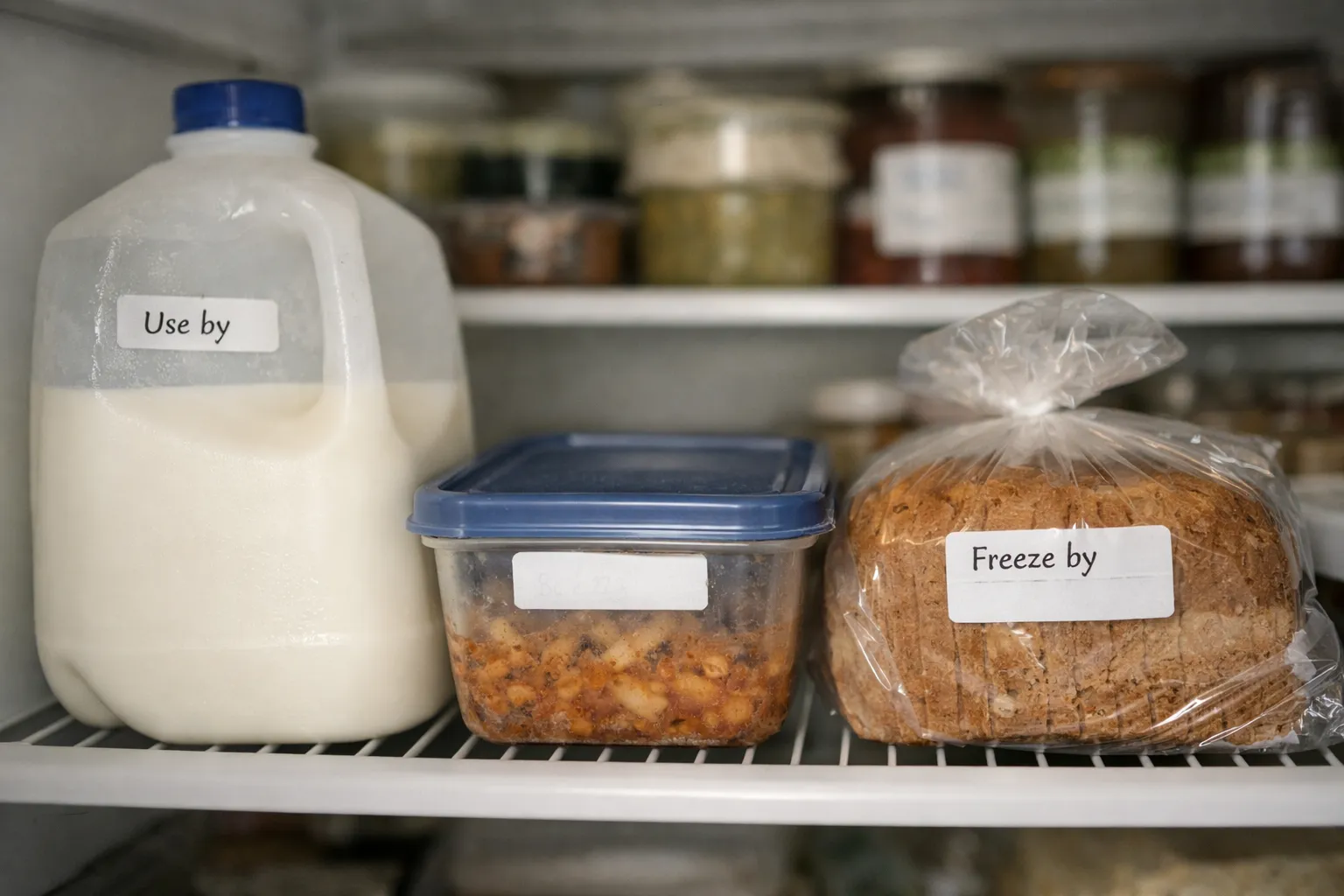
Who: A coalition of U.S. retailers and food manufacturers that launched a voluntary three‑label framework in 2024–2025.
What: An update on adoption, research and practical guidance for home cooks relating to the three standardized phrases—“Use by” (safety), “Best if used by” (quality) and “Freeze by” (preservation).
When: Status and data current as of August 2026.
Where: National rollout efforts across supermarket chains, private‑label programs and selected national brands; education pilots in 12 states and several large metro areas.
Why it matters: Clear date labels are intended to reduce household food waste, simplify shopping decisions and align food‑safety messaging—changes that affect what you keep, freeze, donate or toss.
Context: how we got here
Confusion over date labels has been identified for years as a key driver of household food waste. In 2024 a group of major retailers and manufacturers introduced a voluntary, three‑phrase framework to separate safety decisions from quality and preservation prompts. The aim: cut avoidable waste without compromising food safety by making label language consistent across stores and brands.
Where adoption stands in August 2026
Rollout has been steady but uneven. Private‑label programs at several large supermarket chains began applying the three phrases in mid‑2025; by early 2026 more national brands started pilot programs on select SKUs (bread, dairy, prepared meals and fresh meat items). Implementation strategies have varied:
- Private‑label first: Many grocers prioritized their store brands to control packaging change timelines and coordinate in‑store signage.
- Pilot categories: Retailers focused initial changes on high‑volume, perishable categories where the distinction between safety and quality is most valuable—milk, ground meat, deli salads, yogurt, and bread.
- Phased geography: Several chains rolled pilots through metropolitan markets before national deployment, enabling targeted customer education (shelf tags, digital messaging, in‑app tips).
Important caveat: participation remains voluntary. Smaller manufacturers and specialty producers are adopting more slowly due to redesign costs and regulatory caution. As a result, shoppers will still encounter mixed labeling on many national‑brand products through 2026.
New evidence and trends
Early results from retailer pilots and academic teams released in 2026 indicate modest reductions in household waste when labels are paired with consumer education. Key findings reported by participating chains and university partners include:
- Pilot stores that combined label changes with shelf signage and short how‑to videos saw shoppers report greater confidence distinguishing safety versus quality dates.
- In pilot households that tracked waste for eight weeks after education, average edible food discarded because of date confusion declined compared with a control group—largest effects seen with dairy and baked goods.
- Freezing prompts increased on‑site freezing of bread and produce in households that received a single instructional email or app notification tied to purchased items.
Those early positive signals are tempered by consistent findings across pilots and focus groups: labeling alone is insufficient. Consumers need repetitive, clear messaging and simple rules for sensory checks and storage.
Practical examples now appearing in stores
- Dairy: Fresh pasteurized milk increasingly carries “Use by” for safety‑critical doses; yogurt and aged cheeses more often carry “Best if used by.”
- Meat and prepared meals: Ground meat and heat‑and‑serve entrees retain “Use by” where refrigeration beyond a date increases risk; prepared salads may carry both “Best if used by” and an optional “Freeze by” when freezing maintains texture.
- Bakery and produce: “Best if used by” for peak quality is becoming common on bakery items; “Freeze by” prompts appear on loaves and certain vegetables that freeze well (e.g., excess zucchini or berries).
Impact for home cooks
What this means in your kitchen: clearer label language can reduce needless throwing‑away if you pair it with practical habits. Use “Use by” as a clear safety cutoff—donate or discard unopened items before that date. Treat “Best if used by” as a quality signal: food can be safe beyond that date if sensory checks (smell, look, texture) pass and you handle reheating or refrigeration properly. Follow “Freeze by” prompts to capture peak quality for later use.
Updated recommendations and best practices (August 2026)
- Adopt a simple labeling routine at home: Write the date cooked/ opened on leftovers with a permanent marker. Use “eat‑by” bins for the fridge (first in, first out).
- Use sensory checks for “Best if used by” items: Smell, inspect and reheat to steaming hot (165°F/74°C) when appropriate—especially for cooked dishes and deli items.
- Follow “Freeze by” prompts: Freeze bread, portion and vacuum‑seal or use freezer bags for meats and prepared meals before the “freeze by” date to maintain texture and flavor.
- Leverage tech: Many grocery apps now show a product’s date‑label meaning and offer storage tips—enable notifications for “freeze by” reminders tied to purchases.
- Donate smart: Unopened nonperishables and longer‑life items should be donated well before “Use by” dates; for perishable items check local food‑bank acceptance rules.
Stakeholder reactions and outstanding issues
Food‑waste advocates and many food‑safety researchers have welcomed clearer language while reiterating that education is essential. Consumer groups emphasize the need for consistent national guidance; some states have launched public campaigns to explain the labels to residents. Industry lawyers caution that liability concerns still influence how conservative companies are with “Use by” dates—some firms continue to set shorter safety dates to reduce perceived risk.
“Labels are only as good as the outreach behind them,” said a food‑safety researcher involved in a 2026 pilot evaluation. “Where retailers invested in clear shelf signage and quick how‑to content, consumers changed behavior.”
What to watch next
- Wider private‑label adoption throughout late 2026 and into 2027 as packaging cycles complete.
- Publication of peer‑reviewed evaluations from university partnerships working with retailers; these will provide more rigorous estimates of waste reduction and behavior change.
- Possible federal guidance or model state legislation aimed at reducing label fragmentation—watch announcements from the U.S. Food and Drug Administration and state health departments.
How should home cooks act now?
Start treating labels as one tool among many. Respect “Use by” for food safety, use sensory checks for “Best if used by,” take “Freeze by” prompts seriously, and incorporate simple labeling and storage routines at home. If your store or brand hasn’t switched labels yet, apply the same rules to recent purchases and use freeze/donate options when in doubt.
FAQ
Will my favorite brand switch to the three labels?
Possibly—but it depends. The framework is voluntary. Many large retailers prioritized private‑label changes first; national brands and smaller producers are adopting on variable timelines. Check brand websites or retailer product pages for SKU‑level updates.
Is food unsafe after a “Best if used by” date?
No—“Best if used by” indicates peak quality, not safety. Use sensory checks (smell, look, texture) and proper reheating to judge safety. If in doubt with perishable items, follow conservative handling: heat thoroughly or discard.
How long can I freeze things after a “Freeze by” date?
“Freeze by” tells you when to freeze to preserve best quality. Properly frozen foods can remain safe for months if kept at 0°F (−18°C), though quality declines over longer storage. Label packages with freeze date and use within manufacturer or USDA recommended windows (e.g., ground meat 3–4 months, cooked meals 2–3 months for best quality).
Where can I learn more about safe storage and freezing techniques?
Reliable sources include the USDA Food Safety and Inspection Service and your local cooperative extension. Retailer apps and packaging QR codes increasingly link to practical, product‑specific storage and freezing instructions.
Bottom line
The three‑phrase date‑labeling framework is gaining traction but is not yet universal. Evidence from 2026 pilots suggests the labels reduce avoidable waste when paired with clear consumer education. For home cooks, the immediate opportunity is practical: use the labels as intended, add simple home‑labeling and storage routines, and take advantage of “Freeze by” prompts to stretch groceries further.